Aerobag cycling airbag named one of TIME’s Best Inventions of 2026
The Aerobag, the protection system for cyclists that began testing this year in the professional peloton, has just received one of the most important international recognitions for innovation. The American magazine TIME has included it among the 300 best inventions of 2026, a recognition that comes as the UCI works to regulate the use of these devices in competition.
TIME recognizes Aerobag as one of the best inventions of 2026
A few months ago, we reported in Brújula Bike that the Aerobag airbag would begin to be used in training by WorldTour teams during 2026. Now, the project developed in Belgium by Bert Celis's team has just received significant international support.
The magazine TIME has included Aerobag in its selection The Best Inventions of 2026, in the category Sports & Fitness. This is an annual selection that brings together 300 innovations from different sectors, evaluated based on aspects such as originality, impact, effectiveness, and ambition.
Airbags have been used for years in sports like motorcycling, but their adaptation to road cycling poses particular challenges. Weight, aerodynamics, freedom of movement, and the need to identify a fall before impact are some of the challenges manufacturers are trying to solve.
RECOMENDADO
Henri Kiefer’s brutal crash puts Alpinestars’ new airbag to the test
The Castelli airbag weighs as much as two gels and will be tested in the WorldTour

This airbag protects the child even before touching the ground

Two suits of armour, two lances and two e-bikes: this video has already racked up over 5 million views
Short on time to train? Here’s how to keep improving on the bike
Reserve steps up to 32-inch wheels with its new carbon XC wheelsets
Aerobag proposes a solution that barely modifies the cyclist's usual clothing. The device integrates into the straps of the shorts and uses nine sensors that analyze the rider's movements 200 times per second. When the algorithm detects a situation compatible with a fall, the system deploys an inflatable structure designed to protect especially vulnerable areas, such as the neck and torso.
The electronics and the CO₂ cartridge are housed in a small module located on the back. After activation, the system can be reused by replacing the corresponding cartridge.
A project born after the death of Bjorg Lambrecht
Behind Aerobag is a story directly related to one of the accidents that shocked cycling the most in recent years. The death of young Belgian rider Bjorg Lambrecht during the 2019 Tour of Poland was the event that drove Bert Celis to seek a solution capable of providing additional protection to the helmet.
Celis, an engineer and cycling enthusiast, then began a development that has taken several years to reach its current state. His goal was to ensure that riders could have an additional protection system without penalizing their athletic performance.
The company has worked to facilitate the integration of the device into cycling clothing. Additionally, WorldTour teams like Picnic PostNL and Visma Lease a Bike have already tested the technology, although its widespread use in competition is still pending the corresponding regulatory advances.
Airbags are getting closer to the professional peloton
TIME's recognition comes in a particularly important year for this technology. Aerobag is not the only manufacturer trying to bring a protection that is already established in other disciplines to road cycling.
In April, Van Rysel presented a competition suit with an integrated airbag, developed alongside In&motion, a company experienced in systems used in motorcycling. Their device can deploy in about 60 milliseconds and is designed to protect different areas of the torso.
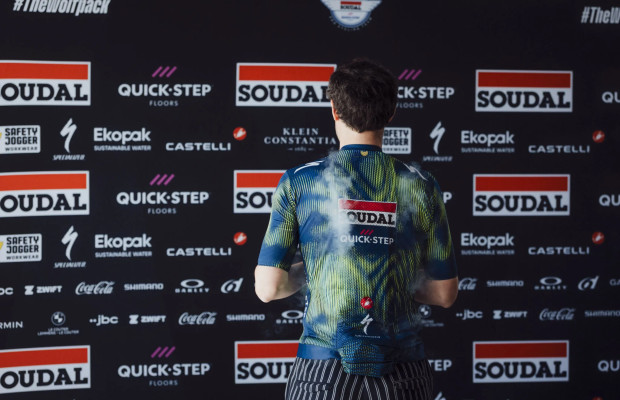
Months later, we learned about the Castelli prototype, developed with Soudal Quick-Step, which stands out for weighing only 70 grams. In this case, the system concentrates protection mainly on the spine, aiming to minimize the weight of the device.
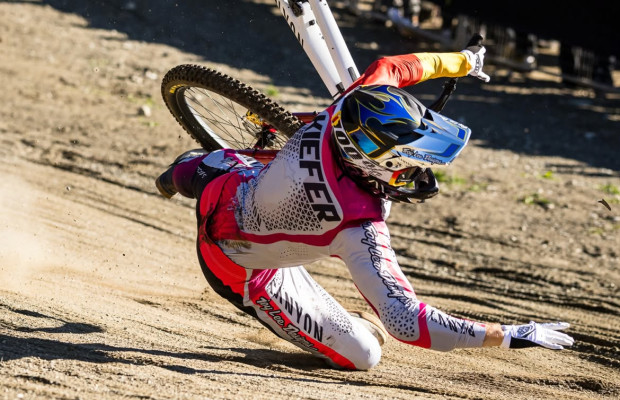
In mountain biking, the technology has already begun to demonstrate its usefulness in real situations. One of the most recent examples was Henri Kiefer during his spectacular fall at the Whistler DH World Cup. The German was using Alpinestars' Tech-Air MX system and, after the accident, publicly highlighted the importance of having used that protection.
They are different solutions, but all respond to the same need: to increase the protection of the cyclist in case of an accident without compromising the demands of each discipline.
The UCI has also begun to take action. In February 2026, the international body opened a call for collaboration with manufacturers and specialists in the development of airbags and new protective garments.
The goal is to establish a technical and regulatory framework that allows the integration of these devices both in training and in competitions.
For Aerobag, its inclusion among TIME's best inventions represents recognition for a technology that still has to overcome some steps before consolidating in professional cycling. But it also confirms the growing interest in a solution that could significantly expand the protection currently offered by cycling equipment.
También puede interesarte
Mountain bike
Henri Kiefer’s brutal crash puts Alpinestars’ new airbag to the test
Bike Equipment
The Castelli airbag weighs as much as two gels and will be tested in the WorldTour
Bike Equipment
This airbag protects the child even before touching the ground
eBike
Two suits of armour, two lances and two e-bikes: this video has already racked up over 5 million views
Training
Short on time to train? Here’s how to keep improving on the bike
Mountain bike
