Henri Kiefer’s brutal crash puts Alpinestars’ new airbag to the test
The final of the DH World Cup in Whistler left one of those falls that are hard to explain even after watching it several times. Henri Kiefer arrived at the huge drop at the finish line without a chain and with both feet off the pedals, landed as best he could, and ended up sliding violently on the ground. Despite the spectacular accident, shortly after he confirmed that he was fine and highlighted a protection he was wearing under his jersey: the new Tech-Air MX airbag from Alpinestars.
Henri Kiefer explains what caused his spectacular fall in Whistler
The accident occurred when Kiefer was completing a great final. The current German champion had finished third in the standings and during his run was maintaining a Top 5 position until the last split. Everything changed in the final meters.
The Canyon CLLCTV rider himself later explained what had happened. In the last section of the woods, he hit the chainring against a rock and continued towards the finish area. When he started pedaling again before the last drop, the damaged chain ended up coming off, causing both feet to slip off the pedals just before the jump.

RECOMENDADO
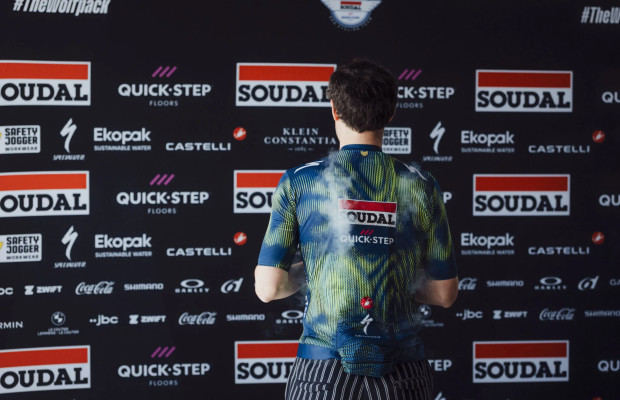
The Castelli airbag weighs as much as two gels and will be tested in the WorldTour
An indoor trainer can do more for your training than you think: here are 7 reasons to own one
How to change the feel of the brakes without having to buy new ones
Goodbye to watts per kilogram as the sole benchmark—fatigue decides who’s the best
The Megamo West 2027 gets a new range from €2,399 and remains a great choice

Short Track today and elite XCO on Saturday: the final World Cup of the year arrives with different days and times than usual
Kiefer managed to hold onto the handlebars for a good part of the flight and landed still on the bike, but with no real chance of regaining control. After the landing, he ended up falling and sliding on the ground while his Canyon Sender was launched past him across the finish line.
The bike initially recorded a time that would have placed Kiefer sixth, although the result was later corrected because it is the rider who must cross the finish line on the bike. He finally appeared 23rd, 17.203 seconds behind.
Shortly after, Kiefer posted a video to reassure those who had seen the fall.
“I’m alive. It was crazy”, he began explaining before recounting the hit on the chainring, the loss of the chain, and how he arrived at the jump with both feet off. After being checked by the team physiotherapist, he confirmed that he was fine and added a particularly significant phrase: “I’m very grateful to have worn the airbag”. Kiefer repeated his gratitude for the system and assured that he hoped to be back at the start in Lake Placid to try to finish the season well.
How the new Alpinestars airbag works
Airbags are not new in the DH World Cup. In 2024 we already saw in Les Gets the first system of this type used in mountain bike competition, when the Dainese Pirelli Canyon CLLCTV debuted the D-air Bike prototype. That development brought to MTB a technology in which Dainese had years of experience mainly from motorcycling.
What is new in Whistler is the system that Kiefer was wearing. Alpinestars presented the Tech-Air MX with a specific algorithm for downhill at the end of August, so it had only been on the market for about a month when the German's fall occurred. Its official price is 599.95 euros.
The product is based on Alpinestars' experience with its airbag systems for motorsports, but its operation has been specifically adapted for DH. The brand claims to have started collecting data with professional riders in 2022 to develop an algorithm capable of interpreting situations specific to this discipline such as jumps, drops, strong compressions, sudden changes in terrain, or loss of control.
And precisely there lies one of the most interesting aspects of Kiefer's fall. The airbag remained undeployed during the jump and the initial landing, and activated later when the system identified the fall, before the rider's body impacted the ground. The images clearly show that sequence.
According to Alpinestars, once the accident is detected, the Tech-Air MX needs approximately between 32 and 45 milliseconds to deploy, depending on the size. Once inflated, it provides additional coverage over the shoulders, chest, back, and upper arms. It operates autonomously, without external sensors or GPS, and the specific downhill mode is managed through the Tech-Air app.
It is impossible to determine what injuries Kiefer would have suffered without this protection or which ones the airbag specifically prevented. Too many factors are involved in a fall to establish that relationship solely based on the images. What can be confirmed is that the system detected the fall, deployed before impact, and Kiefer was able to confirm shortly after that he was fine.
También puede interesarte
Bike Equipment
The Castelli airbag weighs as much as two gels and will be tested in the WorldTour
Training
An indoor trainer can do more for your training than you think: here are 7 reasons to own one
Mechanics
How to change the feel of the brakes without having to buy new ones
Road
Goodbye to watts per kilogram as the sole benchmark—fatigue decides who’s the best
Gravel
The Megamo West 2027 gets a new range from €2,399 and remains a great choice
Mountain bike
