We tested the new Specialized S-Works Evade 4: it doesn't revolutionize the series, but it improves almost everything
The new S-Works Evade 4 does not attempt to reinvent a model that was already the favorite of many, and that is probably its greatest success. Specialized has not sought a visual revolution or a huge leap in lab numbers. What it has done is something much more complicated: to polish practically all the small weak points.
Review of the Specialized S-Works Evade 4: when an aero helmet stops feeling like an aero helmet
After several weeks of using it, the overall feeling is that the Evade 4 does not radically change what the Evade 3 already offered, but it does improve many details that together make the helmet clearly more pleasant to wear. Especially when temperatures rise or rides get longer.
And that is quite a merit because the Evade 3 was already, for many, one of the best aero helmets on the market.

Specialized has prioritized real sensations over chasing watts
RECOMENDADO
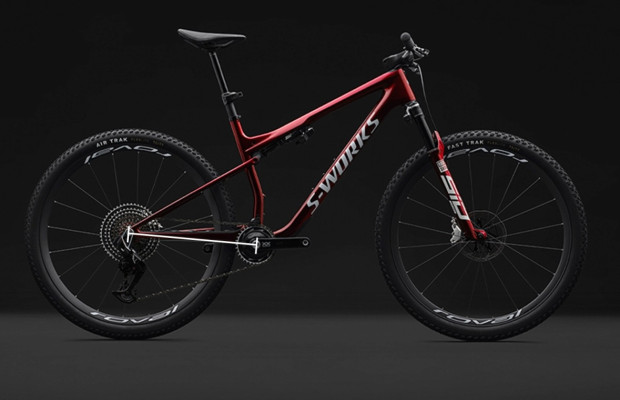
Specialized Epic 9: Models, weight and prices for the entire new range
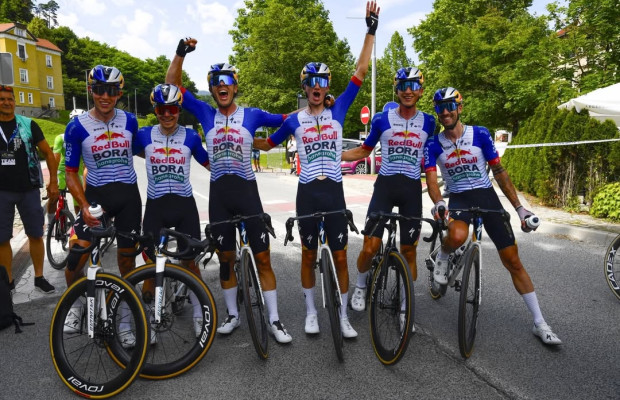
The possible Specialized Tarmac SL9 is already competing: three appearances in three races fuel the rumors
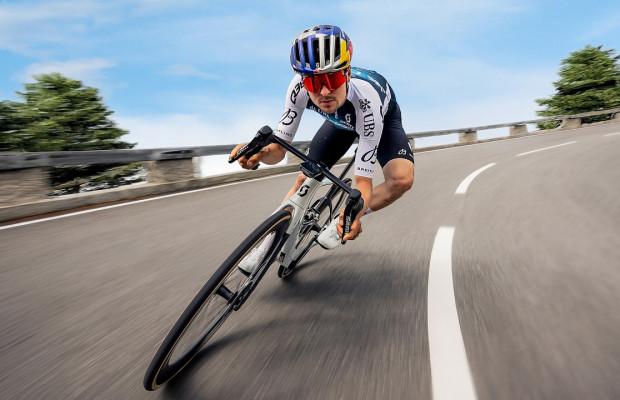
From struggling to enjoying it: tips to build confidence on descents
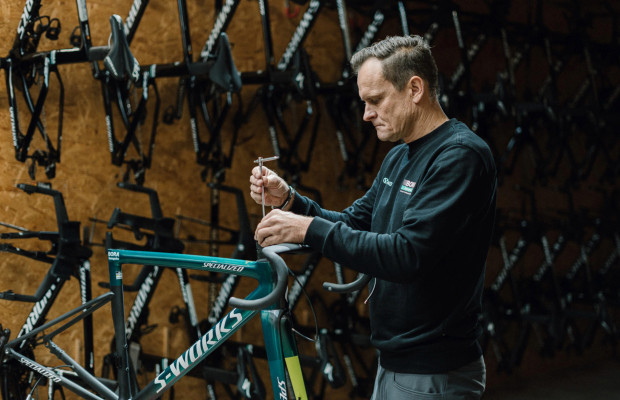
Are you properly positioned on your bike? These are the measurements you should check
The 2026 MTB World Championships get underway: dates, schedules and where to watch
Free aerodynamics for your bike: small changes that make you faster
There is something interesting in the approach of the Evade 4. While many brands remain obsessed with announcing “the fastest helmet ever created,” Specialized has opted for a quite different approach. It is also true that they can afford it because the Evade 3 is one of the helmets with the best aerodynamic performance on the market.
In fact, the brand itself acknowledges that the aerodynamic differences compared to the Evade 3 are minimal. The goal here was not to gain another miraculous watt in the wind tunnel, but to make an aero helmet more comfortable, more stable, and less hot in real use.

And honestly, after trying it, that philosophy is more noticeable than it seems on paper.
Because the Evade 4 conveys less of a “specialized racing helmet” feeling and more of a premium helmet designed for constant use.
The ventilation no longer seems to be the weak point of the helmet
Probably this is where the experience changes the most compared to previous generations.
Aero helmets have always had a very clear limitation. They work very well when you ride fast, but they start to accumulate heat as soon as the speed drops, especially when climbing long hills or on humid days.

With the Evade 4, that still exists to a certain extent—no aero helmet can completely escape physics—but the margin has improved significantly.
We have used it on days close to 30 degrees, and it is surprising how natural the airflow feels. The helmet ventilates better than it visually appears. Even at a relaxed pace, enough air continues to flow to avoid that typical “trapped” head feeling that appears in other aero models.
Part of that improvement surely comes from the return of the front MouthPort, which returns after disappearing in previous generations. But above all, it is perceived that Specialized has worked a lot on the internal air circulation rather than simply opening larger holes.
And the best part is that the helmet still feels compact and quiet even when riding fast.

The big leap is in the fit
Beyond ventilation, probably the most important change in the Evade 4 is how it adapts to the head.
Here, Specialized has done a very serious job. The new internal shape changes the feeling quite a bit compared to the Evade 3. The helmet is slightly wider and distributes lateral pressure better, something that many users who found the previous Evade a bit more critical with certain head shapes will surely appreciate.

In our case, the fit clearly improves. The helmet wraps better around the occipital area, and small pressure points that could appear after many hours disappear.
The new BOA FS2 system also helps a lot. The closure distributes tension much more evenly and allows for precise adjustments without the need to tighten excessively.
It is one of those small changes that do not look too impressive on a technical sheet, but that end up making a real difference when you have been on the bike for several hours.
More comfortable, although not lighter (it didn’t need to be)
Interestingly, the Evade 4 gains a few grams compared to the previous generation. On paper, it might seem like a step back, but in practice, it is hard to imagine that anyone will notice an extra 20 grams on their head.
Our unit was very close to the declared weights (287g in the CE version) and still feels clearly light once on. More importantly, the helmet maintains stability very well.

It does not move when you lower your head, does not create strange inertia with crosswinds, and conveys a very solid feeling when riding fast or sprinting out of the saddle.
This explains quite well why the Evade remains one of the most visible helmets in both the amateur and professional peloton. Specialized has managed to maintain that fast and stable behavior without turning the helmet into something uncomfortable for daily use.
The details are especially well resolved
There are small details that reinforce that feeling of a very refined product.
The glasses holder works really well and holds the arms securely even on gravel or broken roads.
The new interior padding is also very convincing. There is less foam than usual, which helps the helmet retain much less sweat on hot days. The new Mips Air Node Pro pads practically disappear once the helmet is on and do not interfere with either ventilation or fit.
Everything feels more refined than before, even if the visual change seems relatively small.

Is it worth changing from an Evade 3?
Probably this is the most complicated question.
If someone already has an Evade 3 and is happy with it, the difference is not so radical as to automatically justify the change. The previous one was already an excellent helmet and is now also starting to be found at significant discounts.
But if we are purely talking about the product, the Evade 4 is indeed better in practically every aspect (it is not a radical change, but there is an improvement). It ventilates a bit more, fits better, is more comfortable, and feels more refined in daily use.
The problem is that it also falls directly into a price range where every improvement costs a lot of money. The 329 euros still place it among the most expensive helmets on the market, although it is no longer the most extreme within the premium segment.
After testing it for several weeks, the final feeling is quite clear. The Evade 4 manages to combine aerodynamics, ventilation, stability, comfort, and aesthetics very well. And that is probably the reason why the Evade remains one of the easiest helmets to recommend within the high-performance segment.
The Evade 4 is still expensive. It remains a clearly premium helmet. But it is also probably one of the few current aero helmets that you genuinely want to use every day, both on the road and on MTB.
También puede interesarte
Mountain bike
Specialized Epic 9: Models, weight and prices for the entire new range
Road
The possible Specialized Tarmac SL9 is already competing: three appearances in three races fuel the rumors
Road
From struggling to enjoying it: tips to build confidence on descents
Road
Are you properly positioned on your bike? These are the measurements you should check
Mountain bike
The 2026 MTB World Championships get underway: dates, schedules and where to watch
Road
