This study supports INEOS's secret to combating heat in the Tour
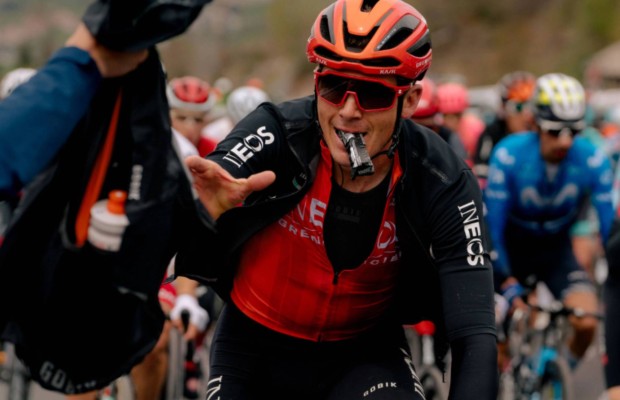
The image caught attention during the team time trial that opened the 2026 Tour de France. While most riders were finishing their warm-up on the rollers, INEOS cyclists were dipping their hands and forearms into containers of ice-cold water before taking the start. This was not an improvisation or an eccentricity of the British team: behind this strategy lies a scientific basis that supports its benefits for competing in hot conditions.
INEOS's curious method to combat heat in the Tour has scientific backing: a study demonstrates its benefits
One of the most comprehensive works on this technique was published in 2023 in the journal Frontiers in Physiology by a group of researchers from Hiroshima University. The study analyzed whether cooling only the hands and forearms during a brief rest period was sufficient to improve subsequent performance in hot environments.

Cooling the body without losing leg warm-up
RECOMENDADO
France does not rule out suspending stages of the Tour due to the heatwave
"You can die from a heat stroke": the doctor from Astana warns about the symptoms and why cyclists do not detect them
When to skip training and rest without feeling guilty
Free aero gains for your bike: small changes that make you faster
More power, less fatigue: how nitrates could help you on the bike
An indoor trainer can do more for your training than you think: here are 7 reasons to own one
One of the major dilemmas before a time trial is arriving at the start with perfectly activated legs while avoiding excessive body temperature increase. Cooling the entire body can hinder muscle preparation, while not doing so increases thermal stress and accelerates fatigue.
The solution proposed by the researchers is to cool only the hands and forearms, an area with a high capacity for heat exchange due to the presence of numerous arteriovenous anastomoses (AVA), small blood vessels that allow cooled blood to return quickly to the body's core.
The study: 15 minutes was enough to improve performance
To test its effectiveness, the researchers recruited eleven university football players who performed an intermittent exercise protocol in hot conditions. During a 15-minute break, the participants submerged their hands and forearms in water at a temperature between 15 and 17 °C, while in another session they received no cooling.
View this post on InstagramAdvertising
The results were clear. The immersion reduced body temperature and skin temperature, decreased heart rate and cutaneous blood flow, and improved the thermal sensation of the athletes. Most importantly, these changes translated into better performance during the second part of the exercise, preventing the drop in power that usually occurs when the heat starts to take its toll.
The authors also highlight that the body temperature dropped by about 0.54 °C, a reduction greater than that obtained in other studies that combined different cooling methods. (Frontiers)
A simple and much more practical technique
The study emphasizes that another important advantage is its ease of application. Unlike full-body ice baths or other much more complex strategies, all it takes is a container of cold water and a few minutes of immersion to achieve a significant reduction in thermal stress.

Precisely this simplicity explains why teams like Netcompay INEOS have begun to incorporate this technique in competitions held under high temperatures, such as the Tour de France. Furthermore, this year it gained even more prominence after the UCI banned the use of popular ice socks during the opening time trial, forcing teams to seek new ways to keep body temperature low without compromising the prior warm-up.
También puede interesarte
Road
France does not rule out suspending stages of the Tour due to the heatwave
Road
"You can die from a heat stroke": the doctor from Astana warns about the symptoms and why cyclists do not detect them
Training
When to skip training and rest without feeling guilty
Road
Free aero gains for your bike: small changes that make you faster
Nutrition
More power, less fatigue: how nitrates could help you on the bike
Training
