Shimano enters a new era with the EP810, a motor combining 100 Nm of torque, a weight of just 2.3 kg, 720 Wh of battery capacity and automatic shifting and assist mode
Shimano presents its new generation of electric systems for e-MTB with the EP810, a motor that reaches 100 Nm of torque, offers up to 750 W of maximum power, and reduces its weight to 2.3 kg. In addition, the Japanese brand launches an electronic platform capable of automatically managing both gear shifts and assistance levels, adapting to the terrain and the pedaling style.

Shimano EP810, a new platform that bets on intelligent automation
The evolution of motors for electric mountain bikes is entering a phase where maximum power is no longer the only argument. The way that power is delivered, the overall weight of the system, its electronic management, and integration with the transmission are becoming increasingly important. In this context, the new Shimano EP810 arrives, a system that combines a lighter and more powerful drive unit with a deep renewal of its electronic functions.
The new DU-EP810 motor develops up to 100 Nm of torque and 750 W of maximum power, with a declared weight of 2.3 kg. These are the figures with which Shimano places this platform at the top of its catalog of systems for electric bicycles, especially oriented towards MTB.
RECOMENDADO

New Shimano EP5 and E5100
Honda officially unveils the RN0, its new carbon eMTB with a 100 Nm Shimano motor and a highly unusual suspension design

The Traka goes global with seven events, live broadcasts and a grand finale in Spain
Geraint Thomas puts numbers to INEOS’ decline: “We’re at 20% of what we used to be”

Eddy Merckx bows to Pogačar, while Contador goes even further: “He’s the greatest of all time”

226ERS launches LACT8, its first lactate gel, available in four different flavors

However, the main novelty comes with what the brand calls True Auto, a concept that integrates two different technologies: AUTO SHIFT, responsible for automatically selecting the gear ratio, and AUTO ASSIST, which adjusts the motor's assistance level based on riding conditions.
The goal is to reduce the cyclist's interventions on the controls and ensure that the bike responds more naturally to changes in slope, cadence, or effort.
A 2.3 kg motor with a magnesium casing and assistance up to 160 rpm
The heart of the new platform is the DU-EP810 unit. Shimano has developed a compact structure, with a magnesium alloy casing that incorporates cooling fins to improve heat dissipation generated during operation.
This solution aims to maintain consistent performance when the motor operates under high loads, especially on prolonged climbs or situations of high assistance demand.

The announced weight of 2.3 kg also represents one of the main arguments of this generation. The reduction in mass and the compact design are aimed at facilitating integration into the frame, improving the bike's handling, and increasing ground clearance in technical areas.
Another highlighted feature is its ability to provide assistance across a very wide range of cadences. Shimano announces operation up to 160 rpm, with power delivery designed to respond to both slow pedaling situations with high torque demand and accelerations at high cadences.
This is particularly interesting in technical MTB, where conditions can change constantly. A climb with steps requires pedaling at low cadence and with a lot of load, while overcoming the obstacle may require immediate acceleration without the motor losing continuity in assistance.
The brand also claims to have revised the internal structure to reduce mechanical noise and achieve quieter operation.

True Auto: the motor and transmission start to work as a single system
One of the main innovations of the Shimano EP810 is the integration between motor management and electronic shifting. The new platform allows for the automation of both processes through the True Auto system.
To do this, the electronics continuously interpret various riding parameters:
- Pedaling cadence
- Torque exerted by the cyclist
- Speed of movement
- Terrain slope
- Motion information used by control algorithms
With this data, the system can modify the level of assistance and select the most appropriate gear ratio without the cyclist having to intervene constantly.
This is not simply about adding an automatic shift to an e-MTB. Shimano seeks to coordinate the response of the transmission with the power delivery of the motor to achieve smoother and more predictable transitions.

Third generation AUTO SHIFT: automatic shifts with XTR, XT, DEORE, GRX, and CUES
The new AUTO SHIFT Gen 3 is the latest evolution of Shimano's automatic shifting technology.
The system combines electronic Di2 transmissions with an updated algorithm and motion sensors that help interpret the terrain conditions and the cyclist's behavior.
Based on that information, the electronics determine when to make a gear shift to maintain an appropriate ratio for the riding needs.
One of the innovations is that the cadence preference can be modified directly from the bike, with an adjustment range of ±3, without the need to open the mobile app or access complex settings.
The announced compatibility covers different ranges and modalities of the brand:
- Shimano XTR Di2.
- Shimano DEORE XT Di2.
- Shimano DEORE Di2.
- Shimano GRX Di2.
- Shimano CUES Di2.
The integration of GRX and CUES demonstrates that the new architecture is not limited exclusively to high-performance MTB, although the EP810 is presented as a platform especially oriented to this segment.

AUTO ASSIST and TRAIL+: the motor adapts assistance to the slope
The second part of True Auto is AUTO ASSIST, a new function integrated into the TRAIL+ mode.
Unlike an assistance mode with a more fixed behavior, AUTO ASSIST dynamically modifies the motor's response according to the terrain slope and the information received about pedaling.

Shimano describes three main situations. On climbs, the motor adapts the power delivery to provide the necessary assistance in a controlled manner. The management aims to improve traction, avoid loss of grip, and reduce the tendency of the front wheel to lift on steep slopes. On descents, the system reduces assistance to favor bike control. And on flat terrain, the electronics minimize energy consumption when high motor intervention is not needed.
This operation has direct implications for both riding and autonomy. Instead of maintaining a uniform response, assistance is continuously adjusted to the detected needs.
However, Shimano does not provide figures to quantify the potential energy savings compared to its previous generations.

Assist Remain and Carry Over: two functions to overcome technical obstacles
The new EP810 also incorporates an evolution of the algorithms that manage the continuity of assistance.
In technical MTB, pedaling is not always perfectly circular or constant. When facing roots, rocks, or steps, it is common to momentarily reduce pressure on the pedals or interrupt it for a fraction of time to position the cranks in a certain position.
These situations can cause abrupt variations in assistance. To reduce them, Shimano introduces two specific functions.

Assist Remain smooths the motor's response when the cyclist's contribution briefly decreases or becomes irregular. Its goal is to avoid sudden interruptions and provide a more continuous assistance delivery.
Assist Carry Over allows assistance to be maintained for a brief interval after the cyclist has stopped pedaling. This extension can help preserve the necessary inertia to overcome an obstacle.
An important feature of Carry Over is that its duration can be customized based on terrain, riding style, or competition needs.
In this way, Shimano allows adjustment of one of the parameters that most influences the behavior of an e-MTB in technical areas: how long the motor continues to operate after pedaling stops.
Hill Hold and Lift & Shift: solutions for starting on extreme slopes
Another important novelty of the EP810 is the incorporation of specific functions for situations where the cyclist is forced to stop mid-climb.
The first is Hill Hold, which allows the use of motor assistance to help keep the bike in position when the Walk Assist mode is activated on an upward slope. This reduces the need to continuously hold a brake lever while the cyclist prepares to restart.

The second is Lift & Shift, which leverages the integration between the motor and the electronic transmission to facilitate the selection of a lower gear after stopping. Its operation is carried out through a specific sequence: the cyclist holds down the assistance reduction button to activate Walk mode, lifts the rear wheel, and presses the same button twice. The system then automatically executes a shift to a lower ratio.
This function allows preparing the transmission to restart without the need to perform a conventional shifting maneuver while pedaling.
On steep slopes, where regaining movement from a stop can be particularly challenging, the combination of both technologies aims to facilitate restarting and reduce the necessary effort.
New Shimano CONNECT app and D-FLY+ wireless protocol
The launch of the EP810 is not limited to the motor-transmission set. Shimano also presents a new connectivity architecture that will continue in its future platforms.
The SHIMANO CONNECT app brings together in a single interface the system customization options, component updates, and activity logging.
Among its features is a lock system, as well as new assistance configuration options. The brand also highlights the possibility of downloading compatible firmware updates during a ride and proceeding with their installation later, avoiding interrupting the activity.

Connectivity relies on D-FLY+, a new wireless protocol developed to improve data transmission speed and strengthen communication protection, but which is not compatible with previous generations of D-FLY.
This means that it is a new generation of connectivity, and not simply an update of the previous wireless protocol.
New wireless controls, displays, and USB-C port
Shimano also presents two display options.
The SC-EN700 is a compact cycle computer designed to be installed on the top tube of the frame, a location that allows for a clear handlebar and facilitates discreet integration.

On the other hand, the SC-EM810 is designed for the handlebar and features a color display that shows information such as speed, estimated range, distance traveled, time, assistance mode, and the status of automatic shifting.

To control the various functions, the wireless remote SW-UT600-LR appears, with three buttons and the possibility of installation on the left or right.

By eliminating control wiring, Shimano aims to simplify the riding position and expand integration possibilities.
Another addition is the EW-USB30-C module, which provides a USB-C port to power external devices from the bike's electrical system.

Its declared output is 5 V and 1.5 A, equivalent to a maximum power of 7.5 W, sufficient to power or charge certain compatible devices during the ride.
Shimano BT-EN827 battery of 720 Wh and two charger options
The new ecosystem includes the integrated BT-EN827 battery, designed to be installed in the diagonal tube of the frame. It has a nominal capacity of 720 Wh, a voltage of 43.2 V, and an approximate weight of 4.1 kg. Its dimensions are 420 × 84 × 73 mm.

Shimano offers two different chargers for this generation: the EC-EN832 of 2 A and the EC-EN834 of 4 A, aimed at those who need faster recharging.
The brand does not detail official charging times or autonomy figures for the EP810 and BT-EN827 set.
As always happens in an e-MTB, real autonomy will depend on factors such as the weight of the set, accumulated elevation, type of terrain, temperature, assistance mode, and the power provided by the cyclist himself.
Technical features of the new Shimano EP810
|
Feature |
Shimano EP810 |
|---|---|
|
Drive unit |
DU-EP810 |
|
Maximum torque |
100 Nm |
|
Maximum power |
750 W |
|
Motor weight |
2.3 kg |
|
Assisted cadence |
Up to 160 rpm |
|
Casing |
Magnesium alloy |
|
Cooling |
Integrated fins |
|
Automatic management |
True Auto |
|
Automatic shifting |
AUTO SHIFT Gen 3 |
|
Automatic assistance |
AUTO ASSIST (TRAIL+) |
|
Technical functions |
Assist Remain, Carry Over, Hill Hold, Lift & Shift |
|
Connectivity |
D-FLY+ |
|
Application |
SHIMANO CONNECT |
|
Announced battery |
BT-EN827, 720 Wh |
|
Battery voltage |
43.2 V |
|
Battery weight |
Approximately 4.1 kg |
|
Chargers |
2 A and 4 A |
|
USB-C port |
5 V / 1.5 A |
|
Displays |
SC-EN700 and SC-EM810 |
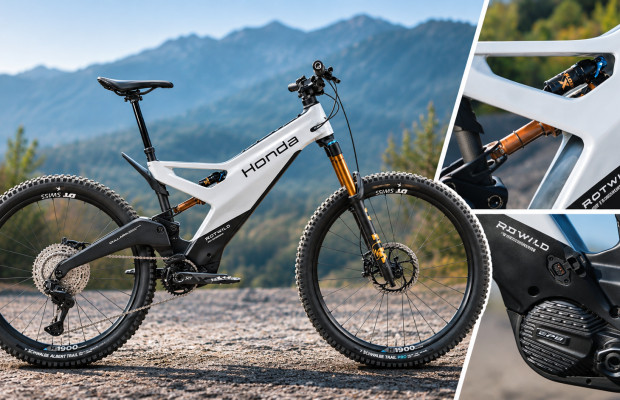
The new Shimano EP810 is already starting to be available on the market in bikes like the new Orbea Rise or the Honda RN0, but many more manufacturers are expected to mount it on their lighter models as this system achieves complete setups well below 20kg.
También puede interesarte
Bike components
New Shimano EP5 and E5100
Mountain bike
Honda officially unveils the RN0, its new carbon eMTB with a 100 Nm Shimano motor and a highly unusual suspension design
Gravel
The Traka goes global with seven events, live broadcasts and a grand finale in Spain
Road
Geraint Thomas puts numbers to INEOS’ decline: “We’re at 20% of what we used to be”
Road
Eddy Merckx bows to Pogačar, while Contador goes even further: “He’s the greatest of all time”
Nutrition
