Pidcock surprises with cooling gloves that make INEOS's ice system seem outdated
The image of Tom Pidcock during the warm-up before the individual time trial of the 2026 Tour de France has not gone unnoticed. The British rider from the Q36.5 Pro Cycling Team appeared on the roller with striking mittens connected by tubes to a cooling unit, a much more sophisticated evolution of a technique we had already seen on the first day of the race, when INEOS riders submerged their hands and forearms in buckets of ice water before the start.
Why does Pidcock warm up with cooled mittens?
Although the system is different, the goal is exactly the same: to reduce body temperature without cooling the legs, which must remain fully activated before a time trial.
The mittens used by Pidcock are part of localized cooling systems for hands and forearms, a technology that is increasingly being seen in high-performance sports. Instead of relying on containers with cold water, the device circulates refrigerated liquid inside mittens that maintain a constant temperature throughout the warm-up.
The advantage is evident as it allows the rider to stay on the roller until just a few minutes before the start. They can continue pedaling while the system continues to extract heat from the body, without needing to interrupt the warm-up to submerge their arms in ice.
Why cool precisely the hands?
RECOMENDADO
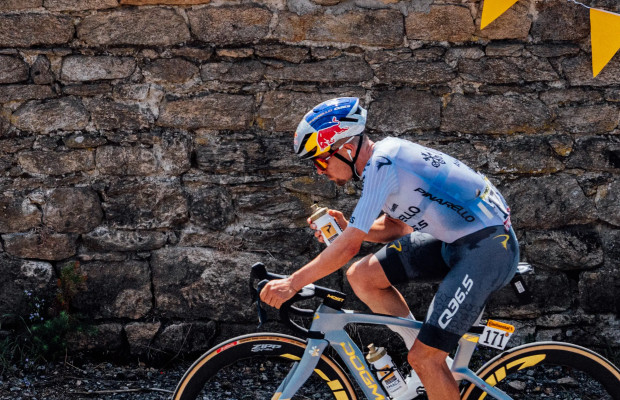
A fine of 400 francs and 20 seconds for Tom Pidcock in stage 15 of the Tour
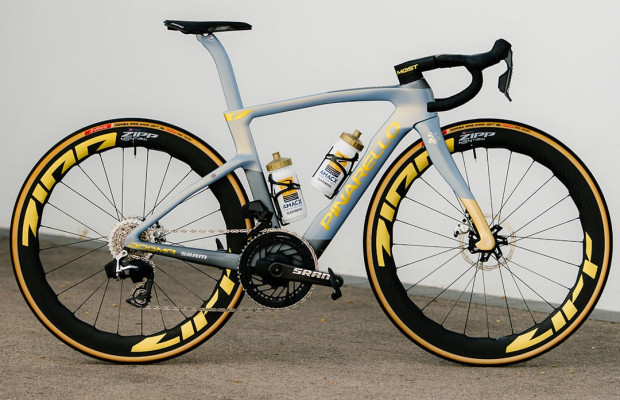
A closer look at the Pinarello Dogma F on which Tom Pidcock is shining at the 2026 Tour de France
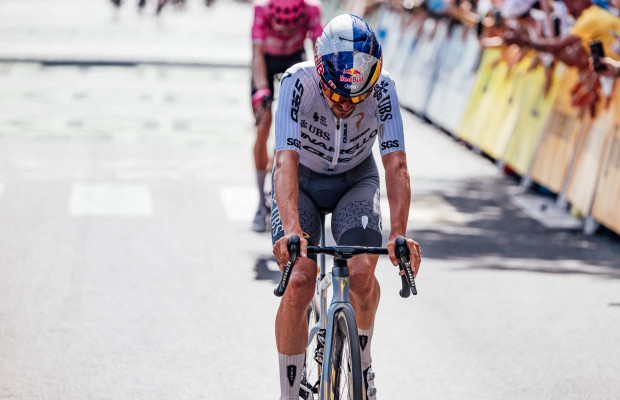
"They have thrown all that 'white shit' on top": Pidcock falls and blames the stains on the asphalt in the Tour
Cycling improves how we think, remember and process information: a new study confirms it
From struggling to enjoying it: tips to build confidence on descents
Are you properly positioned on your bike? These are the measurements you should check
The explanation remains the same as that supporting INEOS's strategy and that is covered in this 2023 study in Frontiers in Physiology. The hands and forearms contain a high concentration of arteriovenous anastomoses (AVA), small blood vessels specialized in heat exchange.
By cooling this area, the blood quickly reduces its temperature before returning to the core of the body, helping to decrease thermal stress without directly affecting the leg muscles, which remain prepared to produce maximum power from the starting ramp.
This balance is especially important in a time trial, where the warm-up must be very intense, but it also rapidly increases body temperature.
From the ice bucket to technology
During the inaugural time trial of the Tour, we already saw INEOS riders using a very simple version of this strategy with buckets of ice water, an image that caught attention after the UCI banned the use of popular ice socks during the opening day.

Pidcock has now taken that same concept a step further. Instead of relying on a container of ice, he uses a specific system that maintains cooling continuously while completing the entire warm-up on the roller.
Everything points to this type of device becoming an increasingly common sight in grand tours, especially in time trial stages held under high temperatures, where gaining a few tenths of a degree in body temperature can translate into maintaining power for longer when the effort really begins.
También puede interesarte
Road
A fine of 400 francs and 20 seconds for Tom Pidcock in stage 15 of the Tour
Road
A closer look at the Pinarello Dogma F on which Tom Pidcock is shining at the 2026 Tour de France
Road
"They have thrown all that 'white shit' on top": Pidcock falls and blames the stains on the asphalt in the Tour
Training
Cycling improves how we think, remember and process information: a new study confirms it
Road
From struggling to enjoying it: tips to build confidence on descents
Road
