“It’s really difficult for the heavier riders”: Evenepoel warns Van der Poel and Van Aert ahead of the World Championships
Remco Evenepoel has already been able to test the circuit that will decide the next world champion in competition, and his conclusion points directly to two of his major rivals. The Belgian believes that the difficulty and, especially, the duration of the climbs in Montreal could pose serious problems for heavier riders like Mathieu van der Poel and Wout van Aert.
Evenepoel analyzes the World Championship circuit after testing it in the GP of Montreal
In statements to WielerFlits, Evenepoel explained that the way the climbs in Montreal are tackled could end up penalizing heavier cyclists. “With the way the longest climb is raced, it is really difficult for the heavier riders,” the Belgian assured after competing in the GP of Montreal.
This is not an assessment made on paper, as Evenepoel was able to verify it himself last Sunday.
The GP of Montreal ended with victory for Isaac Del Toro ahead of Paul Seixas. Both managed to distance themselves from the other favorites in the final laps, while Brandon McNulty finished third and Evenepoel came in fifth, 35 seconds behind. The 13.4-kilometer circuit featured continuous climbs and had the Côute Camillien-Houde as one of its main selection points.
RECOMENDADO
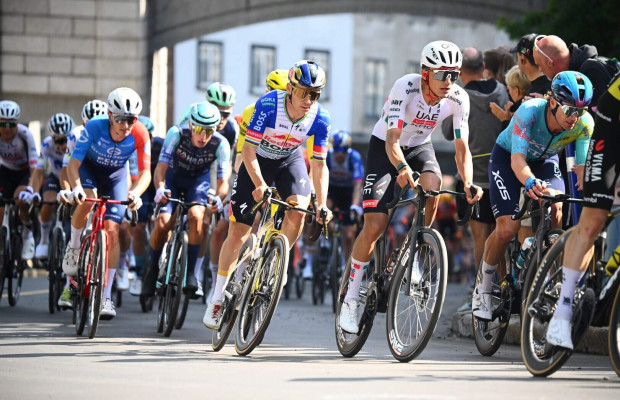
Evenepoel’s mid-race outburst and his explanation of his performance in Montréal
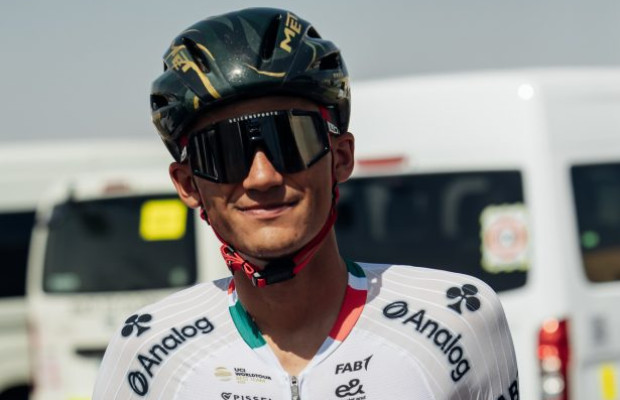
UAE secures Isaac del Toro until 2031
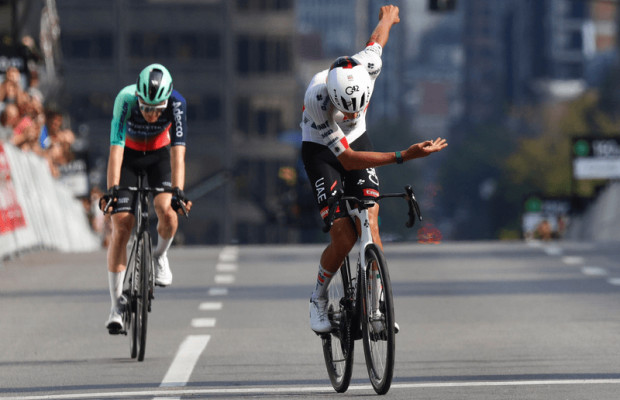
Isaac del Toro beats Seixas at the GP Montréal and Evenepoel falls short two weeks before the World Championships
How to train on the bike when life gets in the way of a fixed training plan
Which workouts do you enjoy most, and what do they reveal about you as a cyclist?
Short on time to train? Here’s how to keep improving on the bike
Precisely the profile of those who occupied the top positions caught Evenepoel's attention. “If you look at the average weight of the top 10, we might be talking about 63 or 65 kilos”, he explained.
This does not mean that Evenepoel rules out Van der Poel or Van Aert. “They are not heavy riders, but cyclists like Wout and Mathieu can survive this on an exceptional day”, the Belgian clarified.
The World Championship will be even longer and less explosive
There is also an important difference between what happened on Sunday and what we will find on the next September 27. The elite men's World Championship will have 273.7 kilometers, compared to just over 215 km raced in the GP of Montreal. Additionally, before entering the circuit, there will be approximately 100 kilometers of approach from Brossard.
For Evenepoel, this change could considerably alter the race's development. “First, we will have 100 flat kilometers. We will be able to get into the race a bit, while here it was full throttle from the start. And the race will be much longer, so in the end, it will be less explosive and depend more on endurance”, he explained.
Del Toro and Seixas already demonstrated that the circuit selects a lot
What happened on Sunday also fits with Evenepoel's reading. Paul Seixas was the one who launched the decisive move about 12 kilometers from the finish and managed to leave the other favorites behind. Isaac Del Toro managed his effort better, later caught up with the Frenchman, and ended up winning the final climb.
The most significant thing is that both Del Toro and Seixas admitted afterward that they had not felt their best. The Mexican stated that he did not feel particularly well during the day, while Seixas also explained that his feelings were far from perfect. Even so, they were able to leave Evenepoel, Tom Pidcock, Giulio Ciccone, and company behind.
Seixas came out particularly strengthened from Montreal. The Frenchman explained that since the Tour, he had noticed an improvement in his power and that he still saw room for further progress before the World Championship. Del Toro was much more cautious and refused to place himself directly among the favorites despite his victory. “This is still cycling,” the Mexican reminded.
Evenepoel himself also did not want to turn the result of the GP into a direct prediction of what will happen in two weeks. The Belgian acknowledged after the race that he had not had good legs in Montreal and pointed to the lack of recovery after his victory in Quebec and the travel between both events. Despite this, he finished fifth and was able to close a gap that had reached around 30 seconds with the leading group almost solo.
“I draw no conclusions from here. In two weeks, it will be about 60 kilometers more. Then it will be a completely different race, with much more fatigue,” he explained after the test.
También puede interesarte
Road
Evenepoel’s mid-race outburst and his explanation of his performance in Montréal
Road
UAE secures Isaac del Toro until 2031
Road
Isaac del Toro beats Seixas at the GP Montréal and Evenepoel falls short two weeks before the World Championships
Training
How to train on the bike when life gets in the way of a fixed training plan
Training
Which workouts do you enjoy most, and what do they reveal about you as a cyclist?
Training
