“It won’t stop a rider from winning a race”: Paul Seixas could be the next to test Van Rysel’s airbag
The integrated airbag in a racing suit that Van Rysel presented last April continues to advance towards its possible use in the professional peloton. Olav Kooij has already tested the system, and Paul Seixas could be the next rider from Decathlon CMA CGM to use this technology, which is also gaining increasing interest from the UCI.
Paul Seixas could be the next to try Van Rysel's revolutionary airbag
Safety has become one of the major challenges in professional cycling, and airbags are getting closer to becoming a reality within the peloton. Van Rysel, the bicycle and equipment brand from Decathlon, is making progress in the development of its suit with an integrated airbag and has already received positive feedback from professional riders.
According to the Belgian newspaper La Dernière Heure, Olav Kooij has tested the device and has given his approval. The next to do so could be his teammate Paul Seixas, one of the great promises of world cycling and one of the standout riders on the French team.
Van Rysel confirms the first tests of its airbag and points to Paul Seixas
Last April, we reported on Brujulabike how Van Rysel had presented a suit with an integrated airbag that brought technology used in MotoGP to cycling. The project, developed alongside the specialized company In&motion, aims to add protection in case of a fall without compromising the aerodynamics or the freedom of movement of the cyclist.
RECOMENDADO
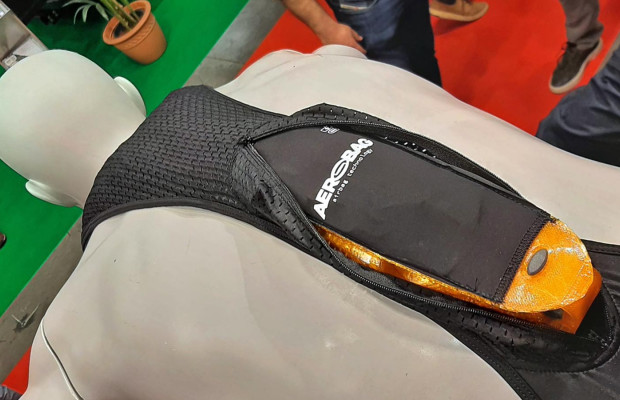
Aerobag cycling airbag named one of TIME’s Best Inventions of 2026
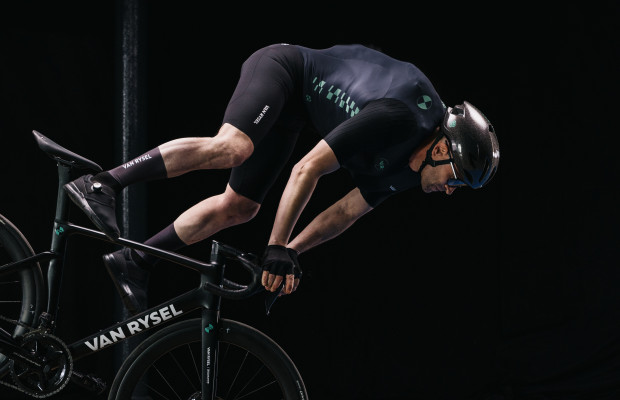
From MotoGP to cycling, Van Rysel presents its integrated airbag for cyclists

MAAP retains the Maglia Rosa and prepares a new look for the 2027 Giro
226ERS LACT8 GEL is now available: 45 g of carbs, 5 g of lactate and four flavors to choose from
Financial blow for INEOS: TotalEnergies leaves the team after just 18 months
The cycling Super League wasn't dead after all: it returns with 24 top-tier teams under a new name, Collective Cycling Group
Now, Perrine Chudy, global communications director of Van Rysel, has explained to the Belgian media the advances made during its development.
"We have been working on this product for over three years", Chudy assures, who also confirms that the system has already been used by one of the sprinters on the team.
"We have conducted numerous aerodynamic tests. It will not prevent a rider from winning a race. Olav Kooij has already tested it and has given his approval."
The next step could come with Paul Seixas, although for now, it has not been communicated when he would conduct the tests or under what conditions.
One of the main features of the system is that the airbag is not placed as an independent vest, but is incorporated into the racing suit itself.
The suit has a target weight of approximately 700 grams, of which about 500 corresponds to the protection system. Its electronics analyze the cyclist's movements up to 1,000 times per second and allow the airbag to deploy in about 60 milliseconds when a fall is detected.
The protection focuses on particularly vulnerable areas, such as the chest, neck, and spine.
The additional weight, ventilation, and aerodynamic behavior remain fundamental aspects to ensure that a system with these characteristics can be used in WorldTour races.
The UCI works to regulate airbags in professional cycling
The development of Van Rysel comes at a particularly important time for this technology. The Union Cycliste Internationale itself has been working for months to facilitate its arrival in professional cycling.
The initiative has a goal that goes beyond studying the different devices available. The organization wants to establish a technical and regulatory framework that allows these systems to be integrated into training and, especially, in competition.
To this end, the UCI proposed the creation of working groups alongside manufacturers, independent specialists, and representatives of professional cycling, with the participation of SafeR, the structure responsible for promoting safety improvements in the peloton.
Decathlon has responded to this initiative and maintains the ambition that its technology can extend to the professional peloton within two to three years.
However, testing with riders and technical validation is only part of the process. The use of these devices in competition still needs to advance in its development and have the corresponding regulatory backing.
Cycling airbags gain prominence and TIME recognizes them as one of the inventions of the year
Van Rysel is not the only company working on this technology. One of the projects that has gained the most attention during 2026 is Aerobag, a protection system developed in Belgium that has already been tested by professional teams.
In fact, last October TIME magazine selected the Aerobag airbag as one of the 300 best inventions of 2026, within its annual selection of innovations.
Although both projects aim to improve cyclist safety, they use different solutions. While Van Rysel opts to integrate the device into the racing suit, Aerobag incorporates part of its system into the straps of the shorts and deploys inflatable protection around the neck and torso.
The emergence of different alternatives, the interest from the UCI, and the direct involvement of WorldTour teams are accelerating the development of a technology that until recently seemed difficult to adapt to the demands of road cycling.
The tests by Kooij and the possible incorporation of Seixas into the Van Rysel program represent a new advance. It remains to be seen how these systems will perform under real competition conditions and when they can be used regularly, but the airbag has already ceased to be merely an experimental concept.
También puede interesarte
Road
Aerobag cycling airbag named one of TIME’s Best Inventions of 2026
Road
From MotoGP to cycling, Van Rysel presents its integrated airbag for cyclists
Road
MAAP retains the Maglia Rosa and prepares a new look for the 2027 Giro
Nutrition
226ERS LACT8 GEL is now available: 45 g of carbs, 5 g of lactate and four flavors to choose from
Road
Financial blow for INEOS: TotalEnergies leaves the team after just 18 months
Road
