“I leave the rest up to my intuition”: Van der Poel explains why he never makes a plan before a race
Mathieu van der Poel has a way of competing that doesn't always fit with the tactical logic of professional cycling. He attacks when he sees fit, collaborates with his rivals even when it may be detrimental to him, and rarely seems concerned about conserving energy. The Dutchman explained what lies behind that mentality and why he believes it is the best way to approach races.
Van der Poel explains his way of racing: without a fixed plan and trusting his instincts
Recalling statements made by Mathieu van der Poel in August during an interview with Pirelli. His words help to understand one of the keys to his competitive attitude and also some of the decisions that have generated the most criticism for him. During the 2026 Tour of Flanders, for example, there was questioning of his decision to collaborate by taking turns with Tadej Pogačar when both were in a breakaway, instead of adopting a more conservative approach to try to wear down the Slovenian. However, Van der Poel defended his way of racing at that time and made it clear that he did not intend to change it for a strategy based solely on managing his energy in relation to his rival's.
His explanations to Pirelli allow for a better understanding of this stance. There, Van der Poel acknowledges that he usually does not design a fixed strategy before the start. He knows the course, identifies the points where it will be important to be at the front, and knows how to interpret his feelings, but he prefers to decide what to do as the race unfolds.
"During a race, so many things can happen that I always try to race on instinct and never really prepare a plan before the start," explains the Dutchman.
RECOMENDADO
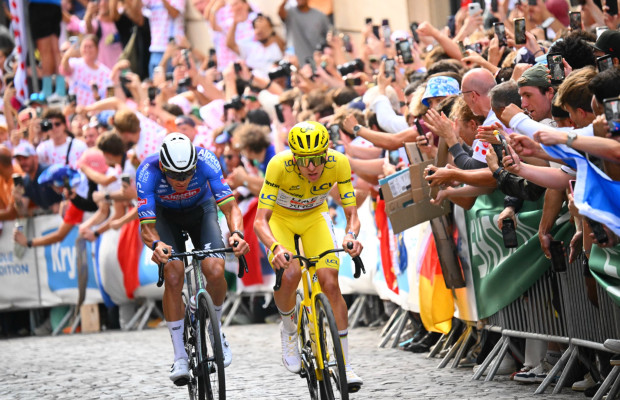
Pogačar surprises with his three favorite riders: Van der Poel, Evenepoel, and Vingegaard
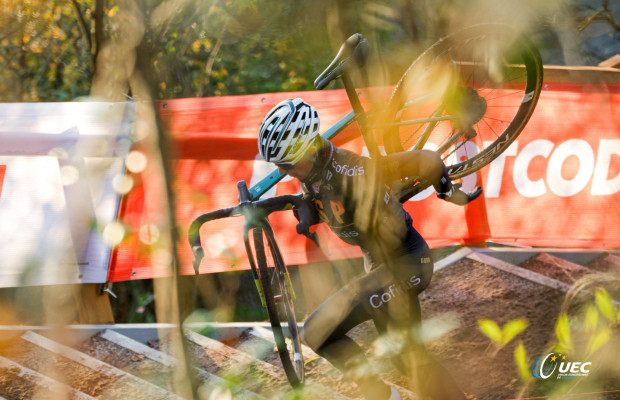
2026 European Cyclocross Championships: favorites, schedule and how to watch live
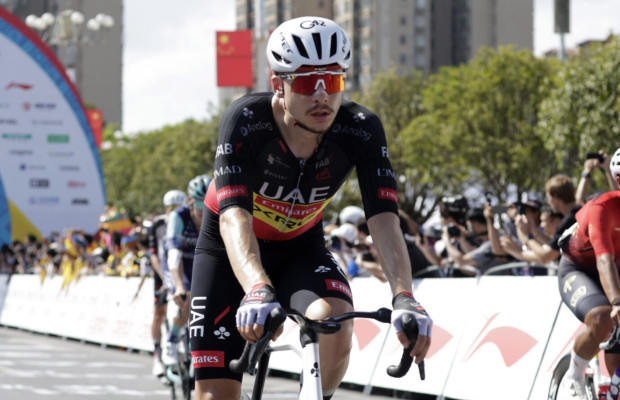
Movistar signs Belgian champion Rune Herregodts, who leaves UAE to take on a bigger role in the Classics

Drafting is about more than just sitting on the wheel: here's how to save even more energy
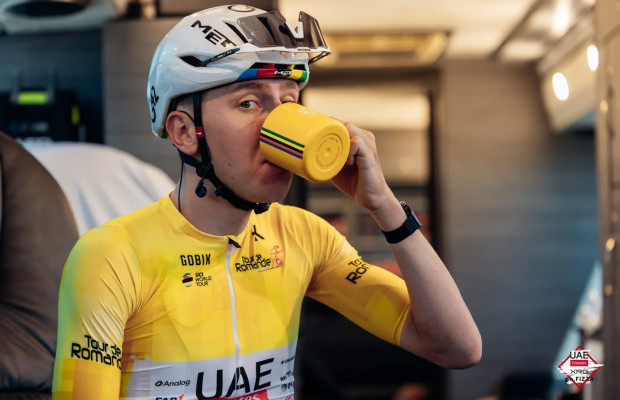
A resting heart rate of 38 bpm and an HRV of 100, but Pogačar’s best asset is that he “sleeps like a log”
Unexpected turn for Ghost: German MTB brand finds a buyer at the last minute
"Of course, I know there are key moments when you need to be at the front, but for the rest, I let my intuition decide."
This is not about ignoring tactics or renouncing preparation. His philosophy consists of not being constrained by a strategy that could cease to make sense as circumstances change.
And, as he acknowledges, there is another important reason for doing it this way: "This approach works for me mentally, it keeps me relaxed because I'm simply prepared for any scenario".

Why he continues to take turns with Pogačar even if it may harm him
One of the best examples of this philosophy occurred during the last Tour of Flanders. Van der Poel was the last rider able to keep up with Pogačar's pace, but his decision to continue collaborating with him drew criticism.
From a strictly tactical perspective, stopping taking turns might seem like an alternative to conserve energy and force the Slovenian to do all the work. However, the Dutchman has never shown much interest in developing that kind of approach when he believes he can compete for the win.
Before the Paris-Roubaix, he already explained his stance: "I did what I had to do. I was in a position to win, but I don't think not collaborating would have changed the outcome or increased my chances."
He also introduced an argument that went beyond sporting performance: "Not collaborating would also have been a bit unsportsmanlike. Tadej and I are going to cross paths for years. It's better to get along."
Van der Poel prefers to actively participate in the race, seize his opportunities, and accept that this choice may end up benefiting another rider. It is his way of competing, even if it is not always the most conservative option.
"Nowadays, it's simply about being the strongest"
The Dutchman also believes that cycling itself is changing and that this evolution has reduced, in certain scenarios, the margin for traditional strategies.
"I think nowadays it's simply about being the strongest. Cycling has changed a bit in recent years; putting tactics aside, you need exceptional legs to win a race."
To explain this transformation, he gives two recent examples. A few years ago, it was hard to imagine that the decisive move in Milan-San Remo could happen on the Cipressa. Now it is a point where the favorites must be perfectly positioned.
A similar situation occurs in the Tour of Flanders, where in 2026 the decisive selection began about 100 kilometers from the finish.
This hardening of the classics forces riders to stay alert for much longer and leaves fewer opportunities to conserve energy while waiting for a specific moment.
Van der Poel acknowledges that in some of his best performances, physical superiority has ultimately prevailed over any tactical approach. When the legs respond exceptionally, many decisions lose some of their importance.
An intuition that he has also developed thanks to cyclocross and MTB
The ability to interpret a race does not appear spontaneously. Van der Poel has spent his whole life accustomed to making quick decisions on the bike, especially in disciplines where conditions change constantly.
The Dutchman believes that cyclocross has contributed to developing that skill. Reading the mud, choosing a line, or deciding what tire pressure to use are aspects that require observation and adaptability.
In MTB, something similar happens, with multiple alternatives to overcome an obstacle and very little time to decide which is the best.
This experience also translates to events like Paris-Roubaix, where the choice of pressures or how to tackle a cobbled sector can be as important as power.
Van der Poel acknowledges that he has always enjoyed that part of cycling, even though some decisions are difficult to explain because they fundamentally depend on feelings. His competitive philosophy seems to follow the same principle: observe, interpret, and act.
También puede interesarte
Road
Pogačar surprises with his three favorite riders: Van der Poel, Evenepoel, and Vingegaard
Cyclocross
2026 European Cyclocross Championships: favorites, schedule and how to watch live
Road
Movistar signs Belgian champion Rune Herregodts, who leaves UAE to take on a bigger role in the Classics
Road
Drafting is about more than just sitting on the wheel: here's how to save even more energy
Road
A resting heart rate of 38 bpm and an HRV of 100, but Pogačar’s best asset is that he “sleeps like a log”
Mountain bike
