Cannondale ends an era: closes its historic US headquarters and moves its leadership to Europe
Cannondale moves forward with one of the largest reorganizations in its history. After announcing the closure of its official MTB team and one of its European factories, the company has confirmed that it will leave its historic headquarters in Connecticut, in the United States. The decision will affect 143 workers and will involve relocating its global operations center to Europe.
Cannondale leaves Connecticut after more than 50 years and relocates its global headquarters to the Netherlands
The transformation process at Cannondale continues to add significant decisions. The American brand, owned by the Pon.Bike group since 2022, has announced the closure of its offices in Wilton, Connecticut, where the brand was born and where much of the corporate structure that has supported the company for decades is located.
According to the documentation submitted on October 21 to the Connecticut Department of Labor, the measure will affect 143 jobs. The first layoffs are expected to occur on December 21, 2026, and will continue gradually until the end of 2027, although the company hopes to have concluded the usual activities of the offices by mid-next year.
The official notification leaves no doubt about the scope of the measure. Maggie Lansdale, global vice president of Human Resources at Cycling Sports Group, the division of Pon to which Cannondale belongs, confirms that the closure will be permanent and will affect practically the entire workforce linked to these facilities.
RECOMENDADO
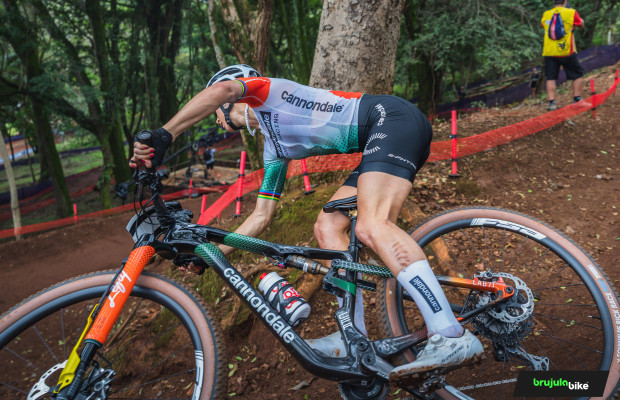
Shocking News in MTB: Cannondale Will Shut Down Its Official Racing Team After the 2026 Season

From a pickle factory to the cutting edge of cycling: the Cannondale story

Lapierre’s problems reach the WorldTour and put Picnic PostNL under pressure

Roglič’s future remains undecided as rumours of a return to Visma grow

The lactate product Pogačar used at the Tour is now on sale: what it promises and what the science says
Adjust the width of a carbon handlebar in seconds without cutting it: meet the new Newmen Phase
Among the affected positions are responsibilities in departments directly related to bicycle development, such as the mountain bike engineering manager, global R&D management, engineering management, and road product managers.
The closure also has a significant historical component. Cannondale was founded in Wilton in 1971 and took its name from a train station in the town. Although its headquarters have changed location within the state over the years, Connecticut has been linked to the brand's identity since its origins.
Europe will concentrate the management and development of Cannondale bicycles
The reorganization will mean that Woudenberg, in the Netherlands, will become the new global headquarters of Cannondale. Until now, these facilities operated as its European headquarters.
Meanwhile, Freiburg, in Germany, will concentrate the global functions of research, development, and engineering, leveraging the technical structure that the brand already maintains in this city.
In North America, Cannondale will establish a new commercial operations center on the west coast of the United States, where other brands of the Pon.Bike group, such as Santa Cruz and Cervélo, are also located.
The change will not only be geographical. Cannondale will also modify its distribution and retail support model in the United States. Over the next six months, it will introduce a shared commercial structure in which representatives can work with several brands of the group.
This will allow distributors selling Cannondale, Santa Cruz, or Cervélo bicycles to have a single point of contact for certain commercial dealings and support services.
The company insists that this integration will not mean the disappearance of each manufacturer's identity, as the brands will maintain their own catalogs, products, and relationships with cyclists.
The closure of Cannondale Factory Racing and a European factory completes the shift
The decision to leave Connecticut is not an isolated move. In recent months, Cannondale has announced several changes that are profoundly altering its industrial, sporting, and commercial structure.
One of the most significant for mountain biking was the announcement of the closure of Cannondale Factory Racing at the end of the 2026 season, a decision that ended more than three decades of official presence in the elite of international XC.
The team disappears precisely after a season of great results, with Luca Martin winning the overall titles of XCO and XCC in the World Cup. Both Martin and Cole Punchard, two of its main riders, have already confirmed their future with Decathlon Ford Racing Team.
To replace its traditional competition structure, Cannondale announced the creation of Cannondale Rogues, a new program that will start in January 2027 and will combine professional athletes, ambassadors, content creators, and community-oriented activities.
This sporting change is complemented by the industrial reorganization announced in June. Pon.Bike plans to close the Cannondale assembly factory in Almelo, Netherlands, by the end of 2027, a measure that will affect approximately another 120 workers. Its production will be moved to other group facilities in Lithuania and Germany.
Between the closure of Wilton and Almelo, the two decisions therefore affect about 263 jobs, although they correspond to different facilities and processes.
Cannondale will not disappear, but its structure will be very different
The closure of the U.S. offices does not mean that Cannondale will abandon the market or stop developing bicycles. The company maintains its commercial activity and product programs, but is reorganizing its resources to integrate more closely with the other brands of Pon.Bike.
The Dutch company acquired Cannondale in 2022 as part of the purchase of Dorel Sports, a transaction that also included manufacturers such as GT, Schwinn, and Mongoose in its portfolio.
Since then, the group has been introducing changes in several of its brands, including the suspension of much of GT's operations and an increasing commercial and industrial collaboration among its different companies.
In the case of Cannondale, the disappearance of its historic XC team, the future closure of its Dutch assembly plant, and the relocation of its global headquarters represent three far-reaching decisions in just a few months.
The brand that for decades made Connecticut one of the reference centers of American cycling innovation will continue to develop bicycles, but it will do so from an increasingly integrated international structure within Pon.Bike.
También puede interesarte
Mountain bike
Shocking News in MTB: Cannondale Will Shut Down Its Official Racing Team After the 2026 Season
Road
From a pickle factory to the cutting edge of cycling: the Cannondale story
Road
Lapierre’s problems reach the WorldTour and put Picnic PostNL under pressure
Road
Roglič’s future remains undecided as rumours of a return to Visma grow
Nutrition
The lactate product Pogačar used at the Tour is now on sale: what it promises and what the science says
Mountain bike
