Can a gravel race bike and two wheelsets replace a road bike? More and more riders are making the switch
The new competition gravel bikes are becoming lighter, more aerodynamic, and closer to high-performance road models. An evolution that is leading many cyclists to consider an alternative that until recently involved too many compromises: using a single bike for both modalities. With two sets of wheels, one for gravel and another for road, the possibility of doing without a second bike starts to make sense. Even some brands have already begun to commercially exploit this idea.
The new gravel racing bikes are starting to encroach on road bike territory
For years, the choice between a road bike and a gravel bike was quite clear. Although both shared many elements, their differences in geometry, weight, tires, and components meant that each offered clearly superior performance in its terrain.
However, the evolution of competition gravel is changing that separation. Races are becoming increasingly demanding in terms of speed and efficiency, and manufacturers are transferring solutions to their new models that until recently were reserved for high-end road bikes.
Frames with aerodynamic profiles, integrated and narrower handlebars, high-profile carbon wheels, and weights approaching 7 kg are features that we already find in some of the most advanced gravel racing bikes.
RECOMENDADO
From the Sport to the S-Works: weights, models, and prices for the new Specialized Crux 5
Megamo Silk 2027: new builds and a mullet version for its most racing-focused gravel bike

BBB Cycling unveils three new gloves for riding in cold, wet weather without sacrificing handlebar feel

Paul Magnier wins the opening stage of the Tour of Guangxi and overtakes Gaviria’s stage-win record

The 2026 Tour of Guangxi brings the WorldTour season to a close, with Ayuso, Pidcock and Vauquelin among the favourites

Strava thinks Seixas was “on a motorbike” at Il Lombardia and rejects eight of his efforts
The new Felt Breed is a good example of this evolution. Its design is based on the Nexar, the brand's aerodynamic road bike, with which it shares the concept of an integrated cockpit and similar adjustment dimensions for the cyclist. All this in a gravel bike that claims a weight of just 7.04 kg in its lightest setup.
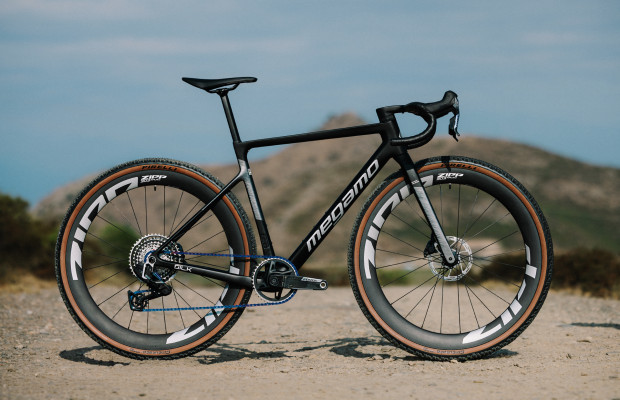
Another model that fits perfectly into this trend is the Megamo Silk, a gravel racing designed to offer maximum performance. Its SLR carbon frame weighs just 940 grams and opts for an aggressive geometry, with a low riding position and an integrated cockpit with handlebars between 360 and 380 mm, measurements very close to those used on the road. Additionally, its compatibility with double chainring transmissions makes it an especially interesting candidate for those looking to alternate between gravel and asphalt using two sets of wheels.
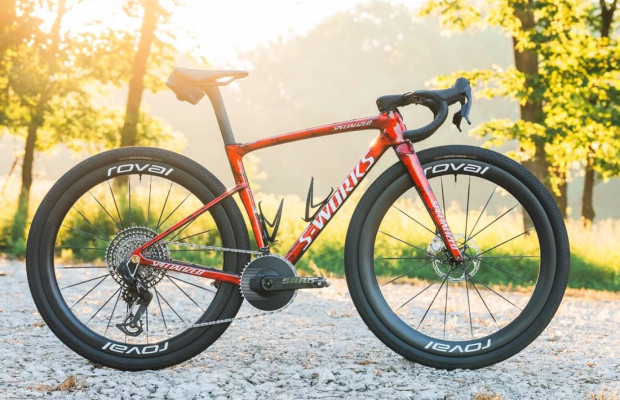
Something similar happens with the Specialized Crux 5, which has incorporated a much more ambitious aerodynamic development without abandoning its philosophy of lightness. Its S-Works version claims 7.1 kg and maintains space for tires up to 55 mm.
These are bikes that are still primarily designed for racing on gravel, but whose weights, riding positions, and aerodynamic characteristics allow for a much more sporty use on asphalt.
The consequence is that some cyclists no longer want to choose between a fast road bike and another for riding on trails, but instead opt to look for a gravel racing bike capable of fulfilling both functions.
Two sets of wheels may be enough to transform the bike
The key to this alternative is relatively simple. It consists of having two complete sets of wheels, each with tires suitable for their use.
For gravel, wheels with tires of 40, 45, or even 50 mm, depending on the type of terrain. For road, lightweight or aerodynamic wheels with smooth tires of 28, 30, or 32 mm.
In this way, the cyclist can considerably modify the behavior of their bike without changing the frame, riding position, or main components.
The change makes particular sense in modern gravel racing bikes, which already have sporty geometries and configurations aimed at maintaining high speeds.
This is not just a theoretical possibility. Changing gravel wheels for road rims with asphalt tires could save about 400 g in total weight and would certainly increase the bike's rolling capacity.
Van Rysel is already selling its new gravel racing with two sets of wheels
Perhaps the most significant example of how this alternative is starting to reach the market is Van Rysel.
In September, the Decathlon brand presented the RCR-G THE ACE, a limited edition that is sold directly with two sets of wheels for road and gravel.
The bike is based on the RCR-G, the competition gravel model that Van Rysel has developed leveraging much of its experience with RCR road bikes.
Its carbon frame has a claimed weight of 885 grams unpainted in size M, uses an aerodynamic design, and accommodates tires up to 50 mm.
The THE ACE edition incorporates a Shimano Ultegra Di2 transmission, an integrated Deda carbon cockpit, and two complete wheel configurations. For gravel, Swiss Side Gravon 500 wheels with 40 mm Vittoria T30 tires. For road, Van Rysel VR50 wheels with 28 mm Continental GP5000 S TR tires. All this for a listed price of 6,600 euros.
What is truly interesting is not so much the model or its equipment but the commercial approach. Van Rysel is selling a gravel racing bike with the explicit intention that it can also be used as a road bike.
Until now, buying a gravel bike and equipping it with a second set of wheels was a decision made by the user themselves. With THE ACE, that possibility becomes part of the manufacturer's original proposal.
It is a sign that brands are also starting to identify an audience interested in investing in a single high-performance bike for different modalities.
How much does a gravel racing bike lose compared to a road bike?
As we have already mentioned, technological evolution has reduced some differences between both categories, but that does not mean they have disappeared. In fact, a recent comparison by Cyclingnews allowed us to quantify that distance.
The British outlet took several of the most advanced gravel racing bikes to the wind tunnel, including the Specialized Crux 5, the Wilier Rave SLR ID2, the Argon 18 Anti Matter, and the Pinarello Dogma GR, and estimated a disadvantage of approximately 18 to 45 watts for gravel compared to aerodynamic road bikes, depending on the models and comparison conditions.
However, the gravel bikes were tested with tires specific to their modality and with riding positions that were not identical to those of road bikes. Therefore, these differences do not necessarily represent what would happen when mounting fast road tires on a current gravel racing bike.
It is precisely here where one of the keys to this trend lies. If the frame already has good aerodynamics and the weight is low, changing the wheels and tires can eliminate some of the usual disadvantages of a gravel bike on asphalt.
Not all gravel bikes are equally valid to replace a road bike
As we have been saying, it is important to distinguish between gravel racing bikes and other models aimed at adventure, long-distance routes, or technical terrains.
Although all can ride on asphalt, the differences in geometry and components can be considerable. A gravel bike with a relatively upright riding position, very wide handlebars, and especially stable geometry will still behave differently from a competition road bike, no matter how lightweight wheels and fast tires are installed.
Transmission must also be considered. Common single-chainring configurations in gravel can work perfectly on the road, but the choice of chainring and cassette must allow for tackling both the slopes of trails and the usual speeds of road outings.
An especially short gear ratio can be limiting on fast descents or in groups that ride at high speeds. And choosing a chainring that is too large to improve performance on the road can penalize the ability to tackle demanding climbs off the asphalt.
That is why gravel racing bikes compatible with double chainrings can be especially interesting for those prioritizing mixed use.
Other mechanical details must also be taken into account, such as the compatibility of hubs, cassettes, and brake discs of both wheel sets. Although changing the wheels may take just a few minutes, it may be necessary to adjust small alignment differences to avoid rubbing.
In short, having two sets of wheels significantly expands the possibilities of a bike, but it does not automatically turn any gravel bike into a racing road bike. On the other hand, and perhaps the most common, it is likely that most cyclists do not want a competition bike in both modalities, but this option does allow them to enjoy gravel and asphalt without the need to have two bikes at home.
También puede interesarte
Gravel
From the Sport to the S-Works: weights, models, and prices for the new Specialized Crux 5
Gravel
Megamo Silk 2027: new builds and a mullet version for its most racing-focused gravel bike
Bike Equipment
BBB Cycling unveils three new gloves for riding in cold, wet weather without sacrificing handlebar feel
Road
Paul Magnier wins the opening stage of the Tour of Guangxi and overtakes Gaviria’s stage-win record
Road
The 2026 Tour of Guangxi brings the WorldTour season to a close, with Ayuso, Pidcock and Vauquelin among the favourites
Road
