Why change something that works? The Tour could say goodbye to Montmartre in 2027
After two editions in which the final stage of the Tour de France has become one of the most spectacular moments of the entire race, the organization could return in 2027 to the traditional circuit of the Champs-Élysées and do without the climbs to Montmartre. A surprising decision considering the sporting success and the reception that the new format has had.
The Tour de France 2027 could return to its traditional final stage in Paris
The information comes from the French regional newspaper Le Progrès, which published a reconstruction of the possible route of the Tour de France 2027 this Thursday. Among the new features it anticipates is that the final stage would recover its traditional format in the Champs-Élysées, without the cobbled ascents to the Côte de la Butte Montmartre.
For the moment, there is no official confirmation from ASO, but the information suggests that the organizers would be willing to abandon one of the most successful modifications that the Tour has experienced in recent years.

RECOMENDADO
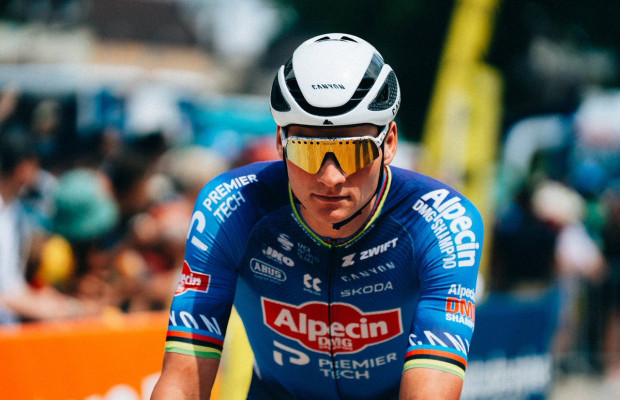
Van der Poel, Pogacar, and Evenepoel meet in Montmartre to decide the finale in Paris: schedules and key points of the final stage of the 2026 Tour
ITA apologises to Cavallar but maintains that the doping test was carried out correctly
Another car enters a UCI race as the peloton demands urgent safety measures
How to change the feel of the brakes without having to buy new ones

DT Swiss expands its gravel suspension range with the new F 132 and releases the F 132 ONE
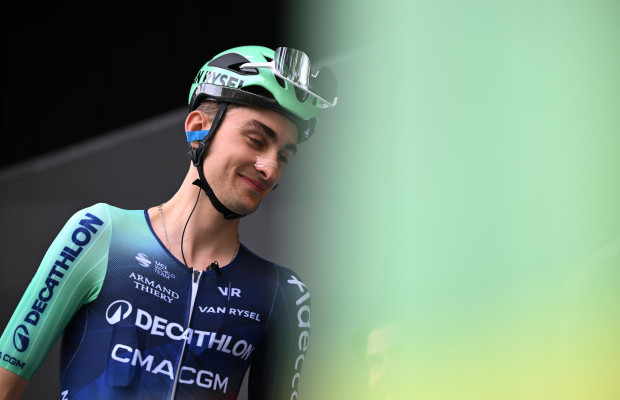
Paul Seixas is close to deciding his future: Decathlon prepares a mega-offer to keep him
The climb to Montmartre, 1.1 kilometers at 5.9%, appeared for the first time in the Tour route in 2025, taking advantage of the extraordinary setting left by road cycling at the Paris 2024 Olympic Games.
Until then, the final stage of the French round had been following the same script for almost half a century. A day of celebration for the overall winner, with photographs, toasts, and a relaxed pace for much of the route, before the sprinter teams took control to prepare for the final sprint. The inclusion of three passes through Montmartre completely changed that approach.
Two years that transformed the end of the Tour de France
In 2025, the new formula offered a conclusion that would have been difficult to achieve with the traditional route. Tadej Pogačar, despite having secured the overall classification, decided to race the stage as if it were a classic.
The result was an extraordinary duel between Pogačar and Wout van Aert that ended with the Belgian's victory, able to drop the yellow jersey on the cobblestones of Montmartre and arrive solo at the Champs-Élysées.
The impact was also reflected in the audiences. According to data published by France Télévisions, the final stage of 2025 gathered an average of 5.2 million viewers in France and reached a peak of 8.7 million, the highest recorded by the Tour in twenty years.
But possibly the best proof of what the new route had achieved came with Mathieu van der Poel.
The Dutchman had to abandon that Tour of 2025 due to pneumonia and watched Van Aert's victory from his home. He would later acknowledge that, while watching that stage, he could only think about returning the following year to try to win it. And that is exactly what he did.
The final stage of the 2026 Tour de France delivered one of the most memorable finishes in recent years. Van der Poel and Pogačar attacked in Montmartre, worked together to keep the peloton at bay, and staged a spectacular chase that ended with the Dutchman holding off the sprinters' return by a narrow margin. A victory that Van der Poel himself ranked among the top three of his career.
That conclusion also sparked enormous television interest, with a peak of 8.3 million viewers in France, the highest of the 2026 edition.

ASO wanted to make Montmartre a tradition
The most surprising aspect of the information published now is that it contradicts the intentions expressed by the organization itself.
After the success of 2025, Pierre-Yves Thouault, deputy director of the Tour de France, acknowledged in an interview with Le Parisien that ASO intended to consolidate the climb in future editions.
"We obviously want to continue passing through Montmartre. The success has exceeded our expectations", the race official stated at the time.
The organization even began working with the authorities of Paris to improve issues related to safety and public access, with the intention of maintaining the route in the coming years. The bet seemed so right that it has also continued in other grand tours.
In September, La Vuelta a España 2026 ended with a spectacular stage in Granada, with four climbs to the Alhambra that broke the usual scheme of a final day reserved for sprinters. Tobias Halland Johannessen took the victory after an intense finish, while Enric Mas was able to celebrate his triumph in the overall classification.
Both routes have shown that it is possible to maintain the festive character of the last day of a grand tour without giving up a genuine competition for the stage victory.
Moreover, the formula expands the winning options for explosive riders and classics specialists, without necessarily excluding sprinters. In fact, for 2026 the Tour had increased the distance between the last climb to Montmartre and the finish line precisely to offer more opportunities to the sprinters.
On October 22, we will find out
If the information is confirmed, the change would again favor pure sprinters, who would regain one of their great opportunities for victory after three weeks of competition.
However, it would also mean giving up a route that in just two editions has managed to transform a traditionally predictable day into one of the most anticipated on the calendar.
For now, ASO has not confirmed the elimination of Montmartre nor explained the reasons for a possible change.
The official route of the Tour de France 2027 will be presented next October 22, at 11:00 AM, at the Palais des Congrès in Paris. It will be then that we will know whether the organization maintains its commitment to the spectacle or recovers the formula that for decades turned the final stage into a ceremonial stroll with a final sprint.
También puede interesarte
Road
Van der Poel, Pogacar, and Evenepoel meet in Montmartre to decide the finale in Paris: schedules and key points of the final stage of the 2026 Tour
Road
ITA apologises to Cavallar but maintains that the doping test was carried out correctly
Road
Another car enters a UCI race as the peloton demands urgent safety measures
Mechanics
How to change the feel of the brakes without having to buy new ones
Gravel
DT Swiss expands its gravel suspension range with the new F 132 and releases the F 132 ONE
Road
