We tested the Megamo Reason 2027: the eMTB that has changed the market evolves and raises the bar
The Megamo Reason was introduced just a year ago and has quickly become one of the reference eMTBs. But why update a bike that has been on the market for such a short time? In its second version, the Megamo Reason 2027 has catapulted its capabilities thanks to the new Avinox M2S electric system, more powerful than ever, and a setup that makes this bike shine even more. We have already tested it thoroughly, and here are our impressions.
The Megamo Reason and Avinox Revolutionize the eMTB Market
The Megamo Reason has undoubtedly been one of the major protagonists of the last year. It was one of the first to bet on the Avinox motor, newly arrived in the eBike market, but it soon became clear that its power, weight, and size figures were as good as they seemed and have literally shaken the segment. Now, with the new Avinox M2S system, the combination continues to gain ground.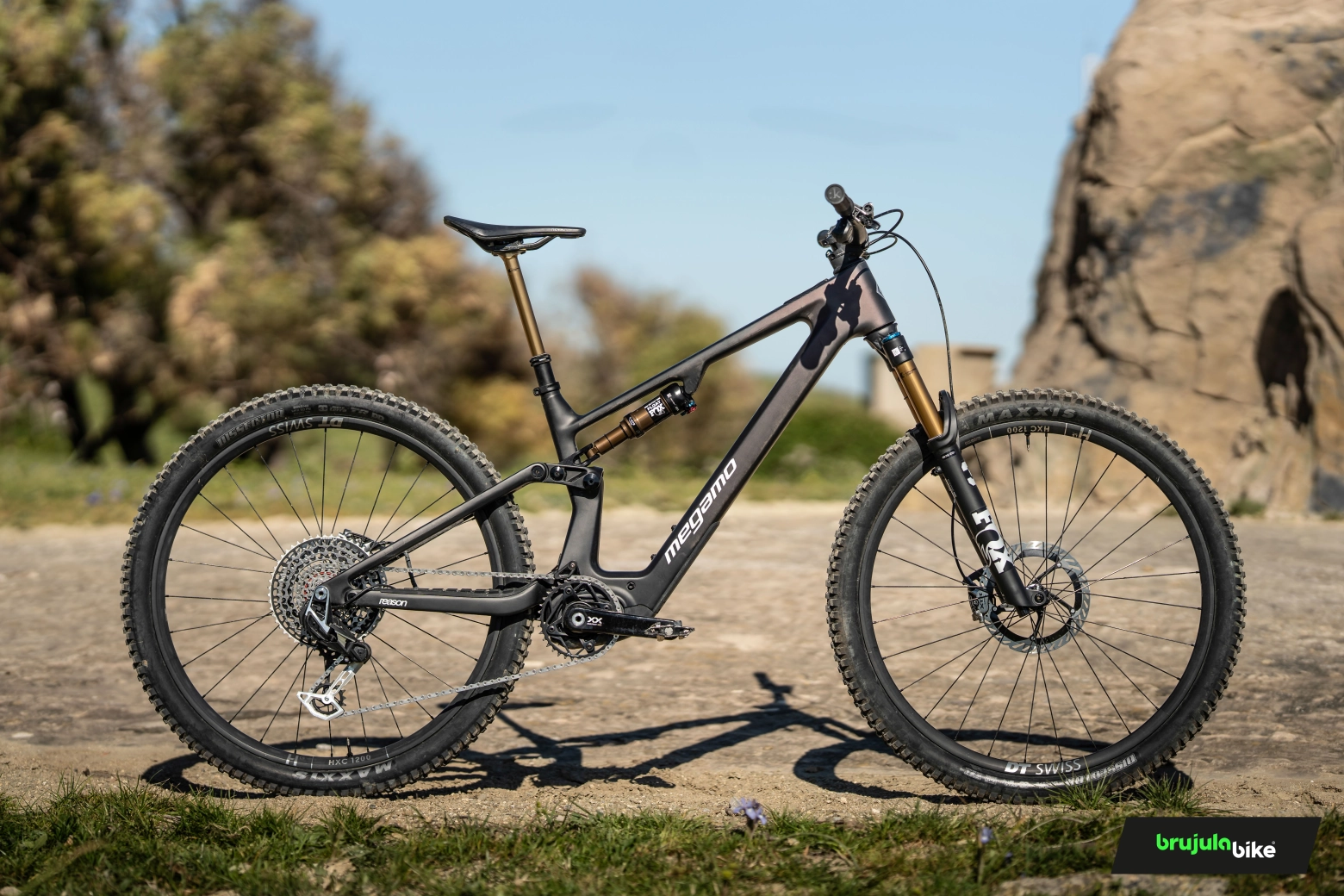
One of the most distinctive features of the bike is its aesthetic, with very refined lines. Despite mounting a high-capacity battery, with 800Wh, it is extremely thin, allowing for a diagonal tube of very contained dimensions, far from the oversized designs common in many eBikes.
RECOMENDADO

This cycling bell goes through the noise-canceling headphones

Pogacar and the limits of the tire: Roubaix will determine how far one can go

How, when, and how much: the ultimate guide to carbohydrates for cyclists
Specialized opens the urban premium market with the new Vado 3
Paul Seixas plays the role of Pogacar in the Itzulia: he wins stage 2 with a long-range attack and seals half the race
Evenepoel loses the coach who was supposed to bring him closer to Pogačar
The new generation maintains the same platform that has delivered such good results, although it introduces some adjustments in the setups to expand its capabilities. The range is still structured in two versions. On one hand, the Reason with 160 mm of travel on both wheels, with a more robust and enduro-oriented focus. On the other, the Reason Air, with 140 mm, lighter and with a more versatile approach.
Both versions are offered in aluminum and carbon, resulting in a very wide range, with up to 17 different setups and a price range that varies between €4,999 and €13,999.
In terms of platform, Reason and Reason Air share the same frame. The differences in travel are achieved by changing the fork and adjusting the shock, which maintains the same length of 210 mm in both cases, but varies its stroke: 55 mm in the 160 version and 47.5 mm in the 140 version. Geometrically, the variations are minimal and are determined solely by the height of the fork, with slight changes in angles and dimensions.
We have tested the Reason Air. It is a generously long bike, resulting from a very long reach, reaching 481 mm in size M, combined with a 64.5° steering angle, especially aggressive for a Trail bike. The chainstays vary according to size, measuring 453 mm in M, while the seat tube angle reaches 78°, a very marked figure within current trends.
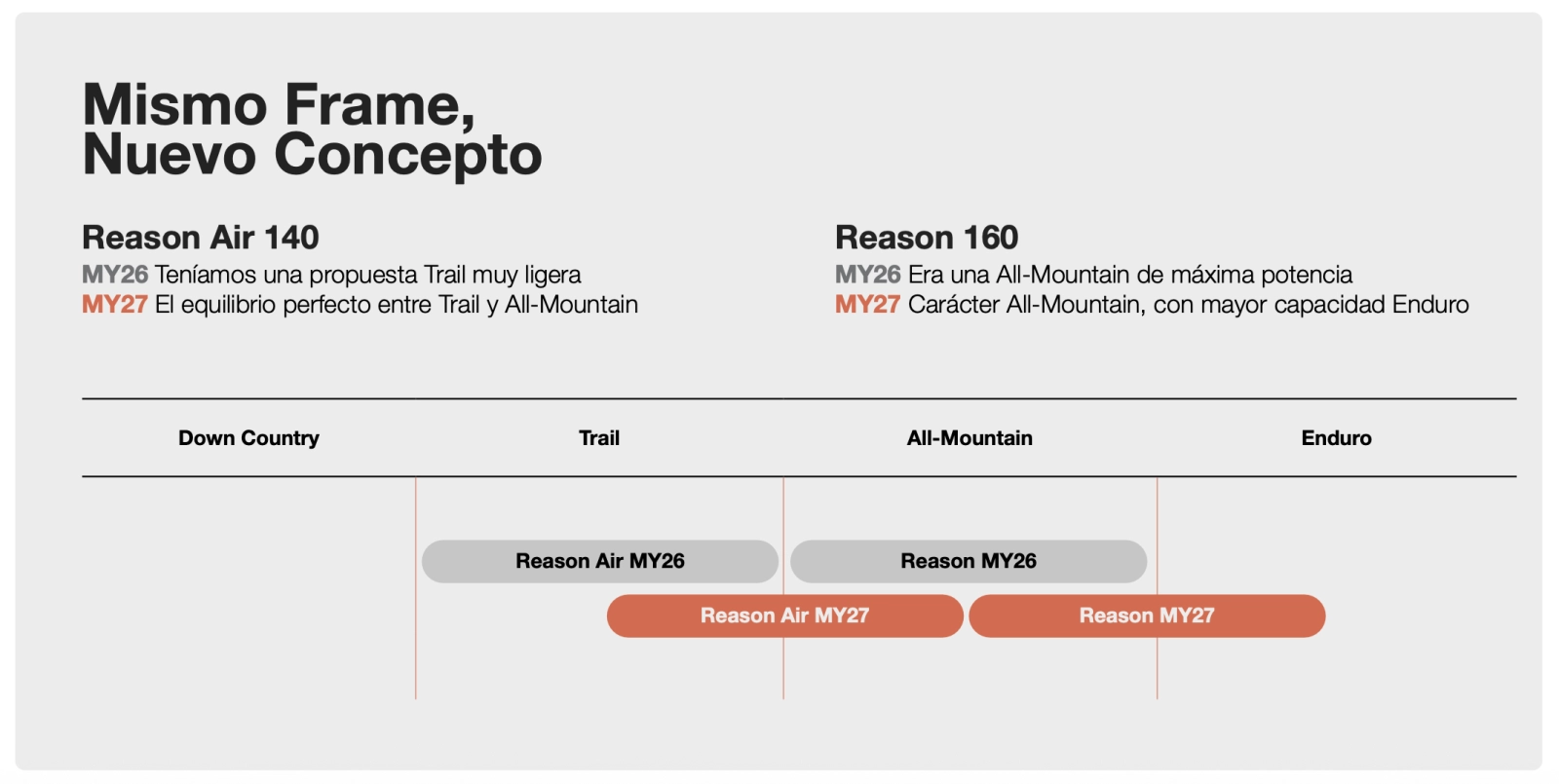
These values correspond to the High position of the flip chip located at the linkage anchor with the shock. The bike allows you to invert it to slightly modify the geometry, although the changes are very subtle, barely 0.2° in the angles and about 3 mm in the bottom bracket height, which ranges between 348 and 345 mm from the ground.
Regarding sizes, the range has grown compared to the previous generation. Until now, it was offered in S, M, and L, all of which were quite generous in length and reach, but from now on, an XL size is also included.
Avinox M2S: The Motor That Has Shaken the Market Takes a Step Further
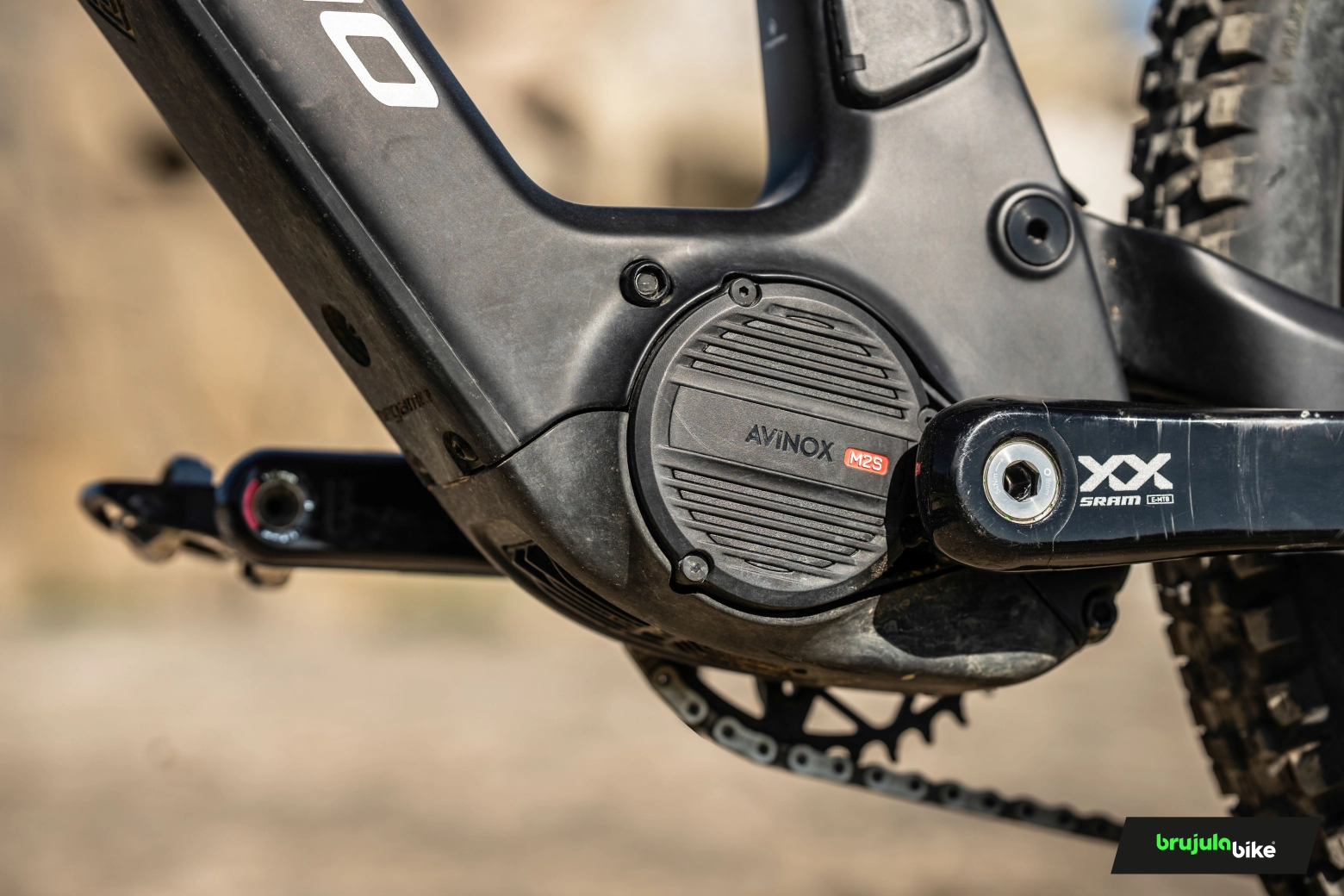
As we have already mentioned, the Megamo Reason stands out for its design and construction, but its "heart" is in the electric system that drives it. The Avinox motor, developed by the Chinese company DJI, has caused a real stir in the market for several reasons.
The first is its figures. In its first generation, it was already above the competition, with a maximum torque of 105 Nm, capable of reaching 120 Nm for 60 seconds in Boost mode, with a peak power of 1000 W, all in a lightweight package, with a 2.52 kg motor and a very streamlined 800 Wh battery that barely reaches 3.74 kg.
With a base like this, it seemed complicated to make a leap forward in such a short time, but Avinox has achieved it with this second generation. Now it comes in two versions, and the Reason mounts the best of them.
The Avinox M2S raises the figures to a peak of 1300 W, with a continuous maximum torque of 130 Nm and a Boost mode that reaches 150 Nm. All this with a minimal weight increase, barely 80 grams, bringing it to 2.6 kg.
Beyond the increase in performance, improvements in operation have also been introduced. The noise and vibration levels have been reduced, and efficiency has increased thanks to the reduction of pedaling resistance. Additionally, the electrical wiring has been reinforced to withstand the increase in current associated with these new power figures.
As for the battery, there are no changes compared to the first generation, and the Megamo Reason continues to use the 800 Wh unit.
Megamo Air CRB 00: Top-Level Components That Enhance Its Performance
The unit we have tested for several weeks corresponds to the Trail-focused version, the Reason Air. It offers 140 mm on both suspensions and opts for a more balanced and versatile setup, with a 36 mm stanchion fork instead of 38 mm and less aggressive tires, among other details.
Even so, both the Reason and the Reason Air have evolved towards more capable and robust setups. In the case of the Air range, this translates into more reinforced tires, the abandonment of the integrated cockpit in favor of a stem and handlebar with a diameter of 35 mm and 20 mm of rise, and the incorporation of posts with infinitesimal adjustment and greater travel, leaving behind the lighter versions of the previous generation. Overall, these decisions result in a slight weight increase, but they clearly enhance their capabilities within All Mountain use.
In our case, we had the opportunity to test the most exclusive model of the range, with a setup that is hard to find even within the eBike segment.
In the suspensions, we find the best from Fox. The fork is a Fox 36 SL Factory Kashima with 140 mm of travel, while the shock is a Fox Float Factory EVOL LV, also with a Kashima finish. This setup is complemented by the Fox Transfer Factory post, which replaces the SL version and offers infinitesimal adjustment and a travel of 180 mm in the size M we tested.
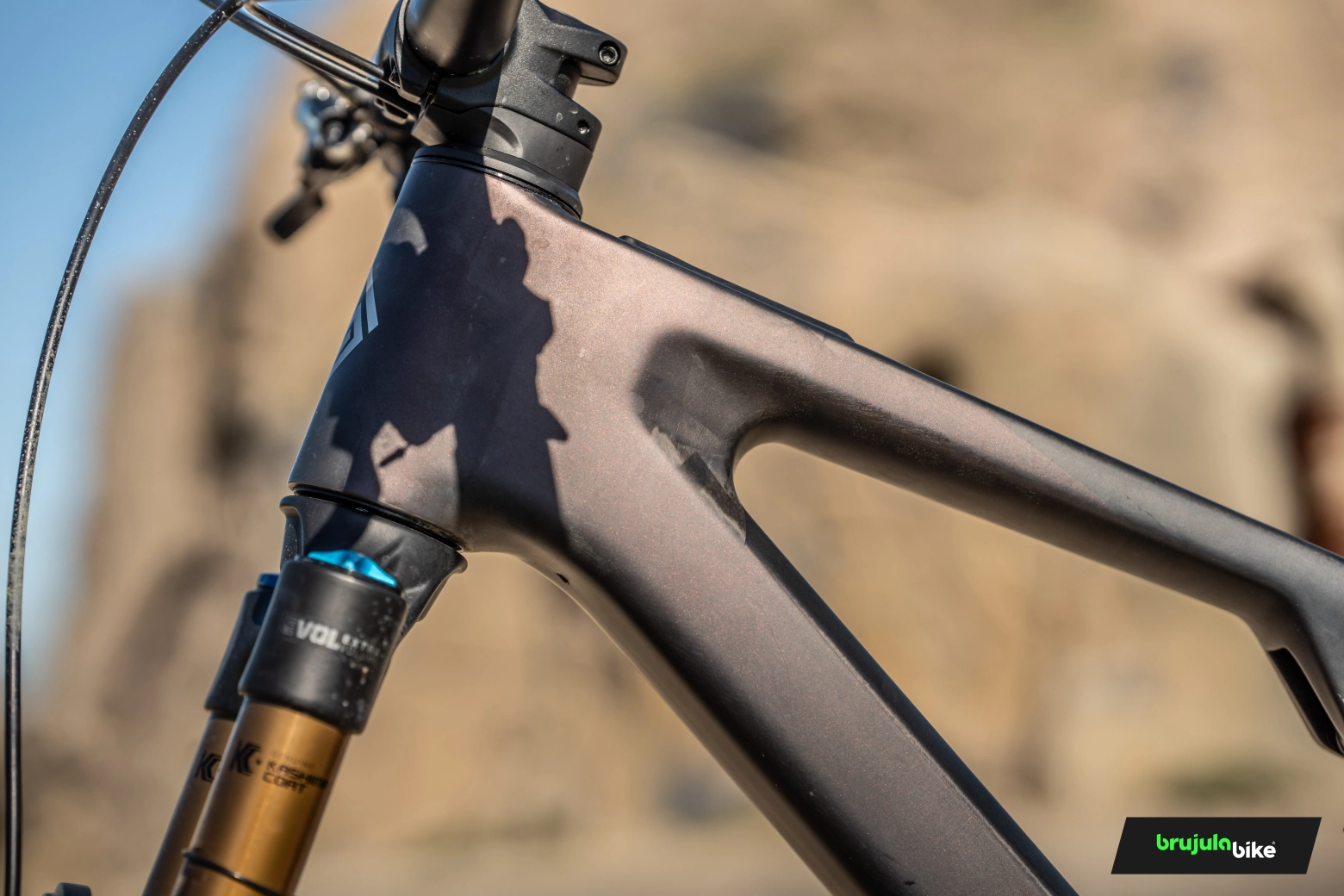
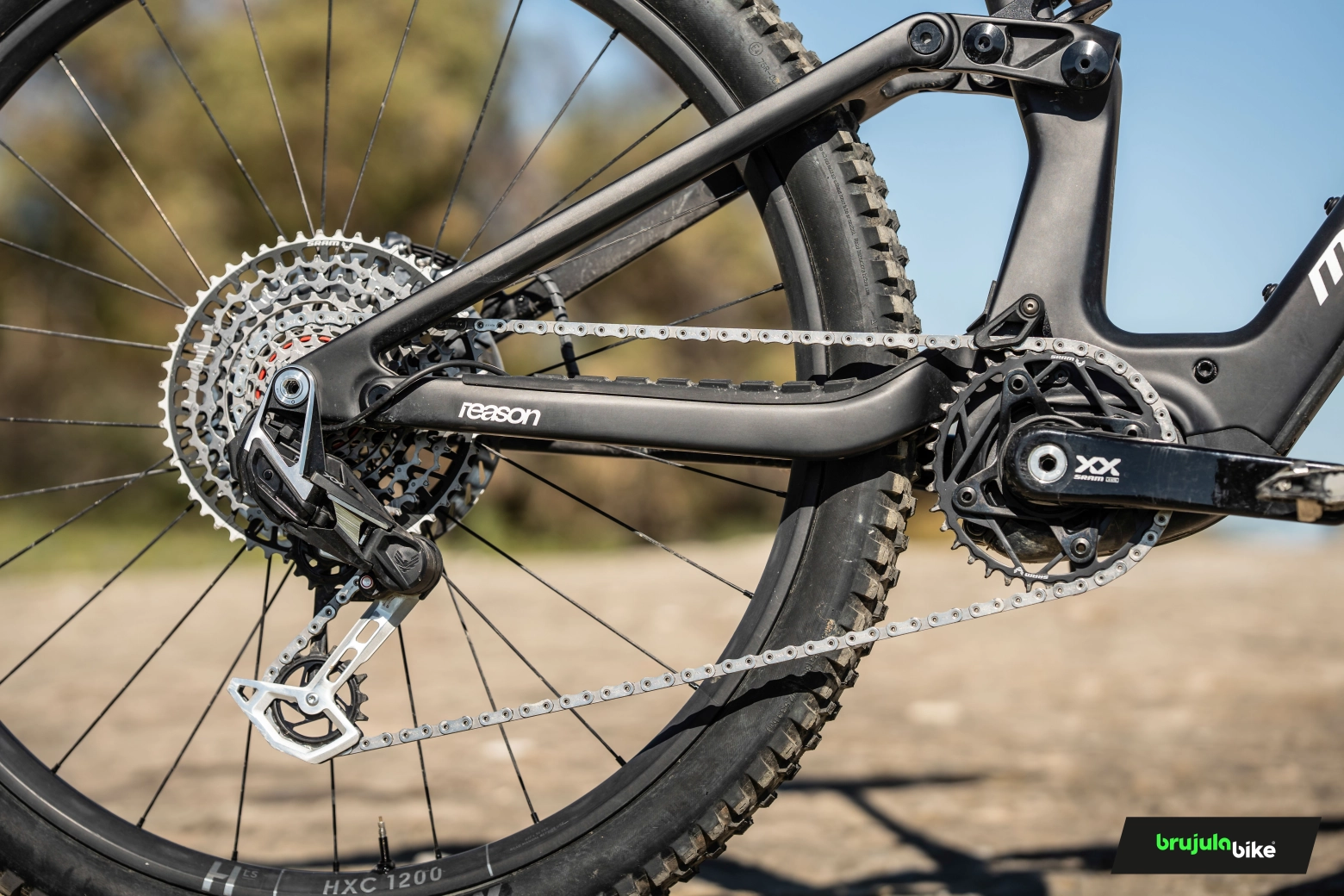
The transmission is handled by SRAM with its complete XX T-Type group, the brand's most advanced option for eBikes. For braking, Shimano is chosen with the XTR M9220 four-piston, accompanied by 203 mm discs on both wheels.
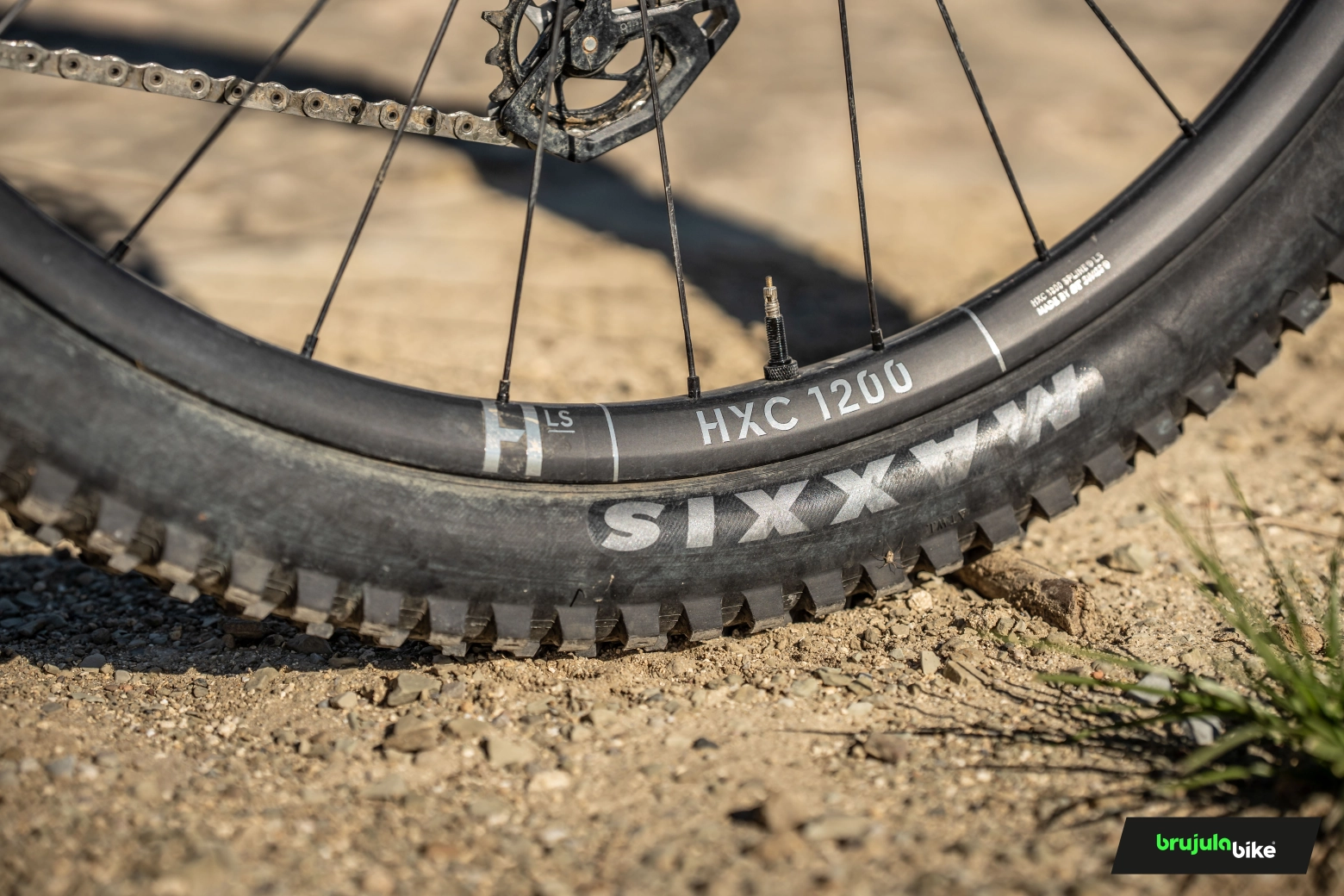
The level is maintained in the wheels, with the DT Swiss HXC 1200 Carbon, designed specifically for eBikes. They incorporate DT 180 Hybrid hubs, flat spokes, and carbon rims with 30 mm of internal width. On them are mounted Maxxis Dissector 2.4” tires, with EXO+ casing on the front wheel and Double Down on the rear.
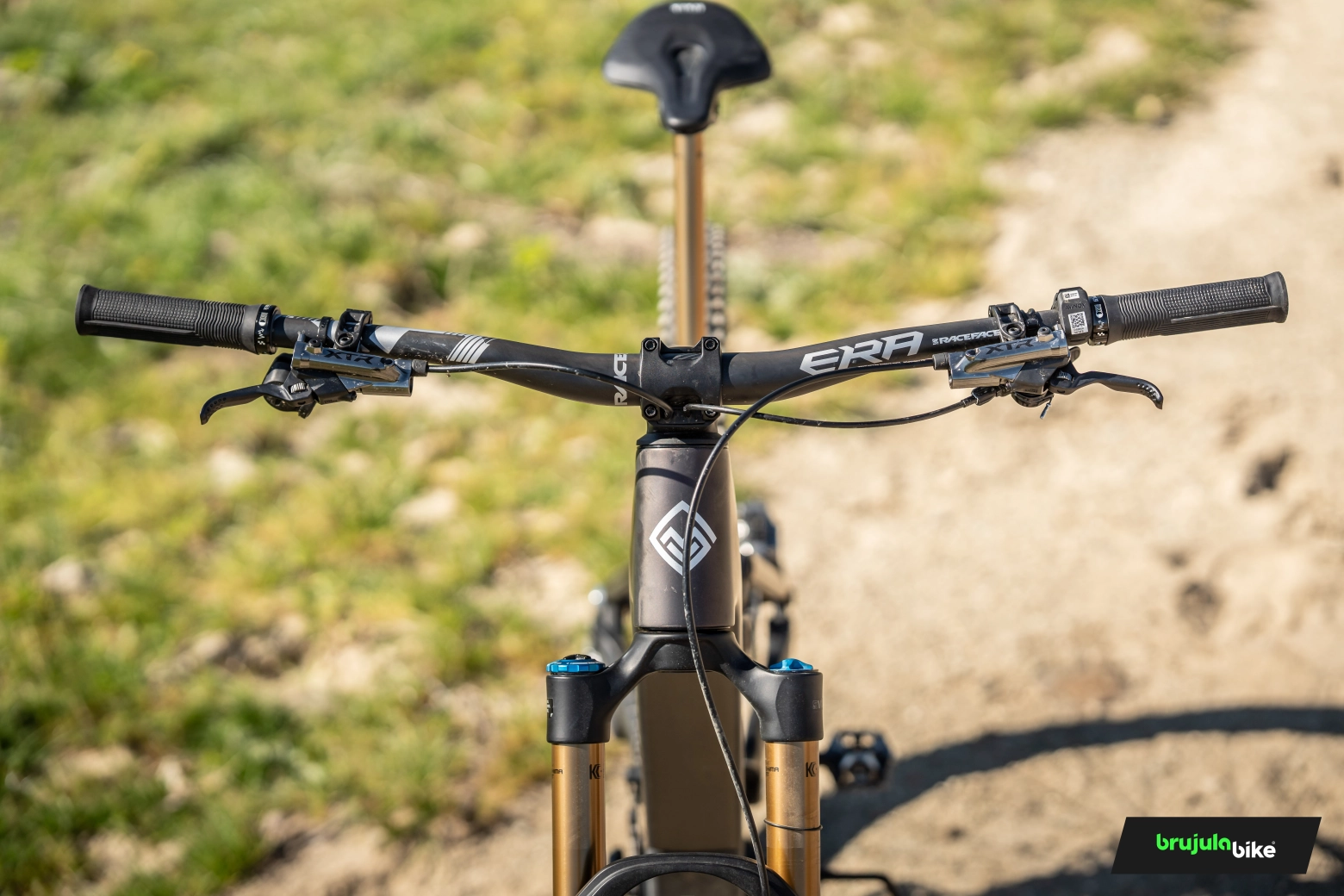
As for the components, this new generation introduces a Satori stem of 35 mm in both length and diameter, along with a Race Face ERA Carbon handlebar of 800 mm width and 20 mm rise. Finally, as it is one of the highest-end models, the bike includes a standard ultra-fast 12 amp charger.
A First Impression That Leaves No Doubts
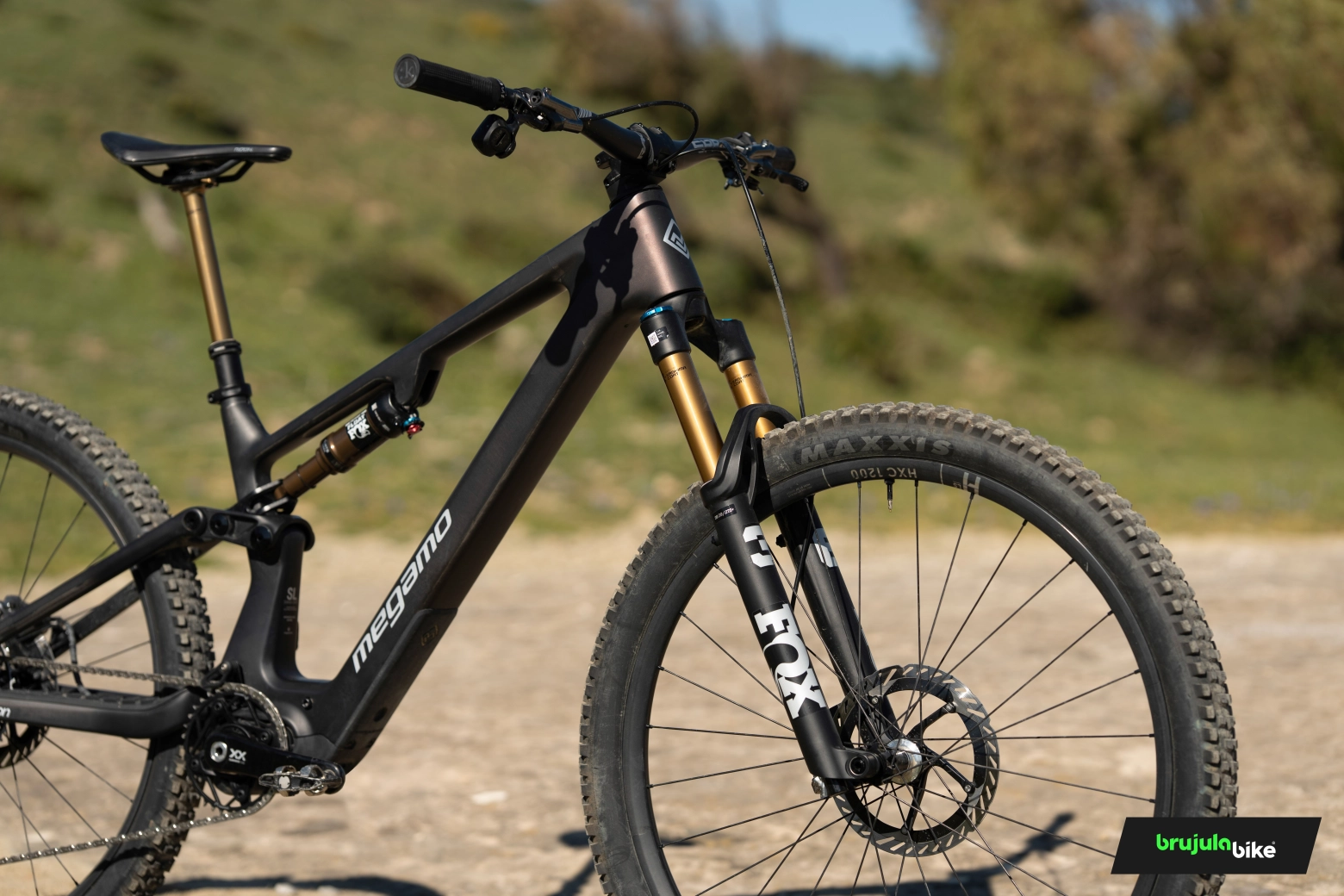
At first glance, the new Megamo Reason 2027 looks like a premium bike, and the unit we tested has a striking matte finish that reveals the carbon veins, accompanied by a gradient in burgundy that reinforces its exclusive character.
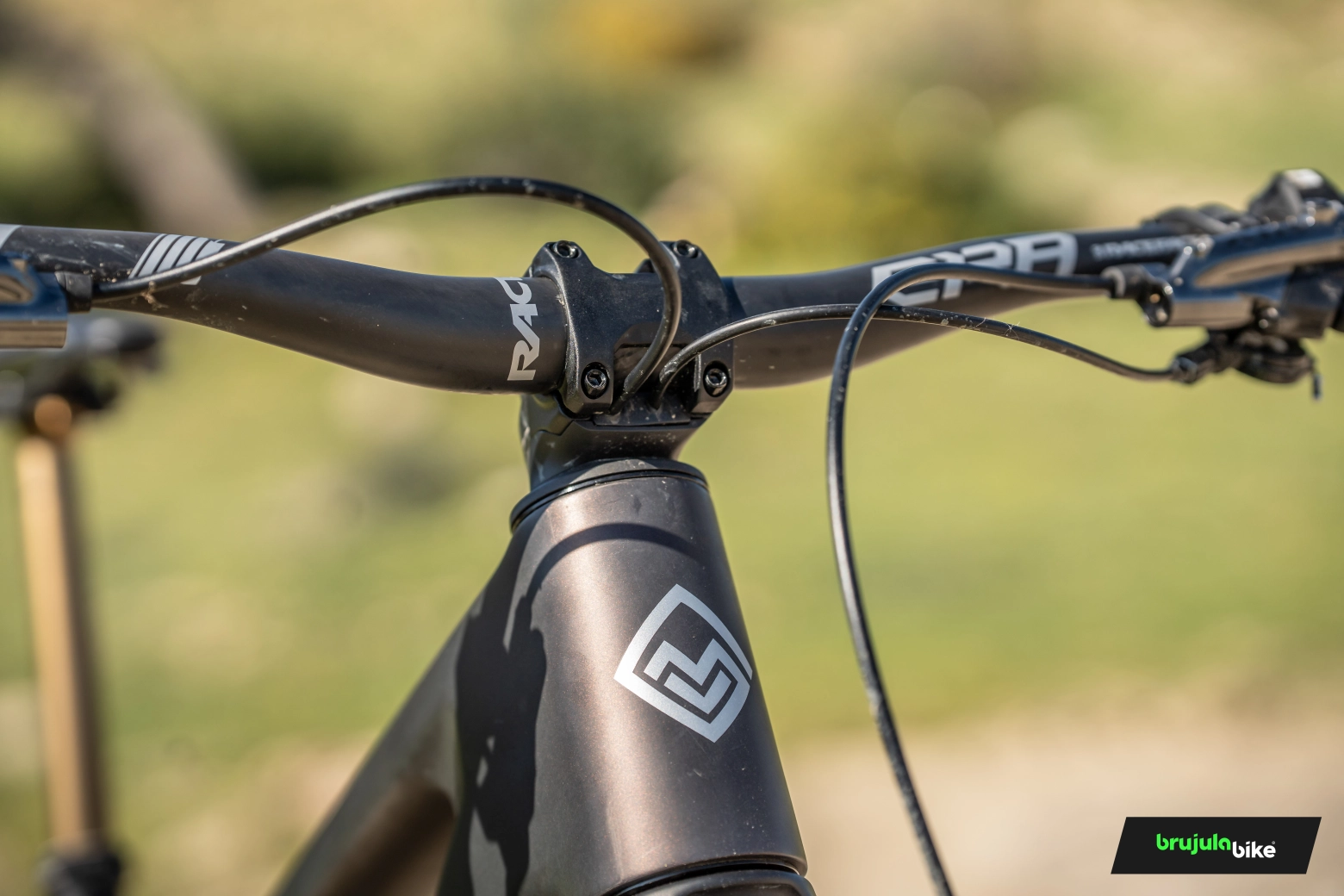
As we have highlighted, the frame stands out for its very clean and streamlined lines. Much of this sensation comes from the diagonal tube, especially contained for being a full-power eBike, to the point of being one of the most streamlined we have ever handled. But it is not just a matter of proportions, but of overall design. Every area of the frame is very well crafted, with special mention to the head area, where the junction between the top tube and the diagonal is resolved very harmoniously, giving continuity to the shapes.
In this area, cable routing through the head is also used, which contributes to that clean aesthetic. The system, signed by Acros, perfectly integrates the entry under the stem and merges with the spacers, in addition to incorporating an internal stop for the handlebar's rotation.
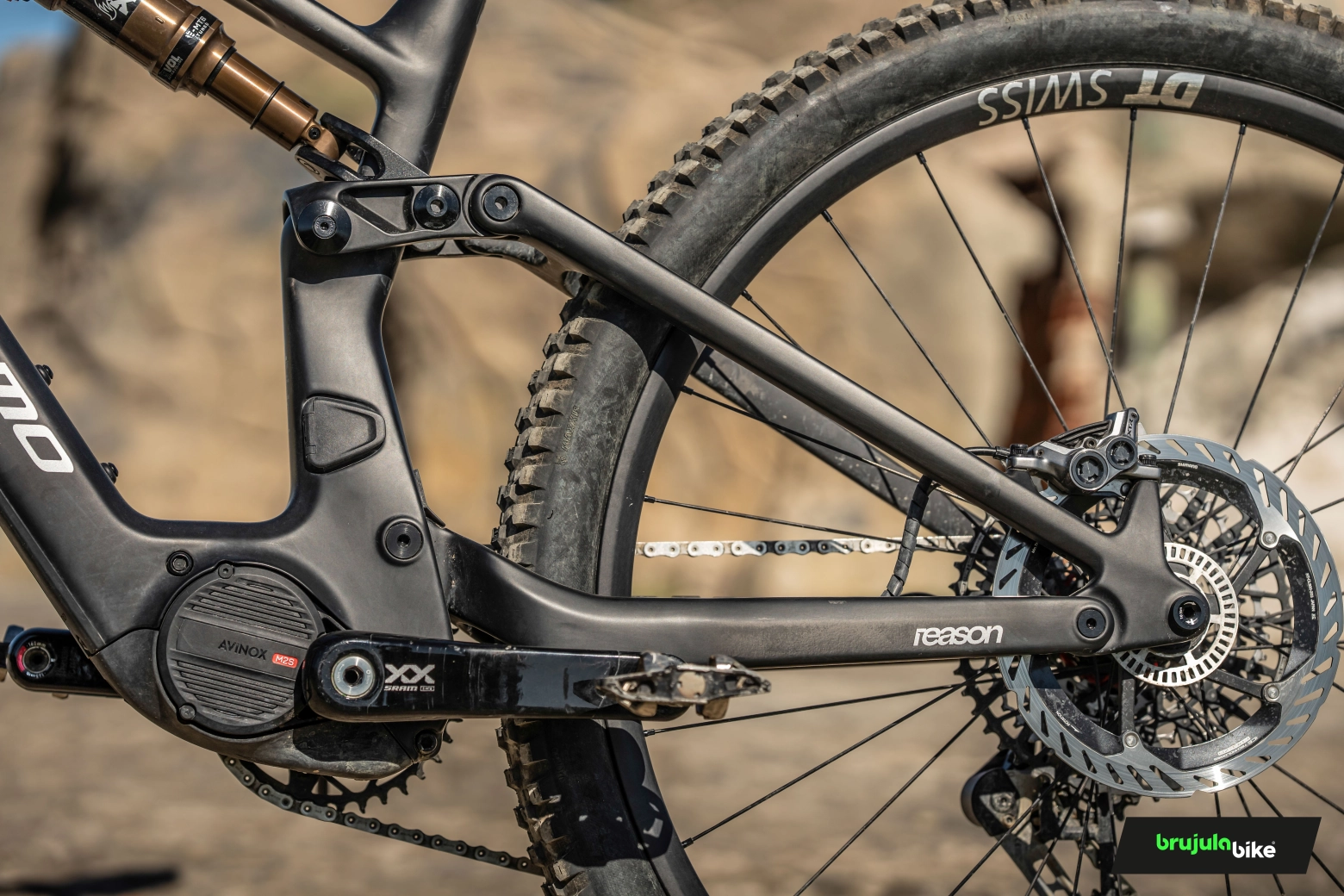
In terms of shapes, flat surfaces predominate in practically all tubes, including the swingarm, although with very softened edges that avoid an excessively aggressive appearance. We also find interesting construction solutions, such as the chainstays that start from a block integrated into the main triangle, improving both rigidity and aesthetics. Another well-resolved detail is the shock mount via blind thread, which leaves the right side completely clean.
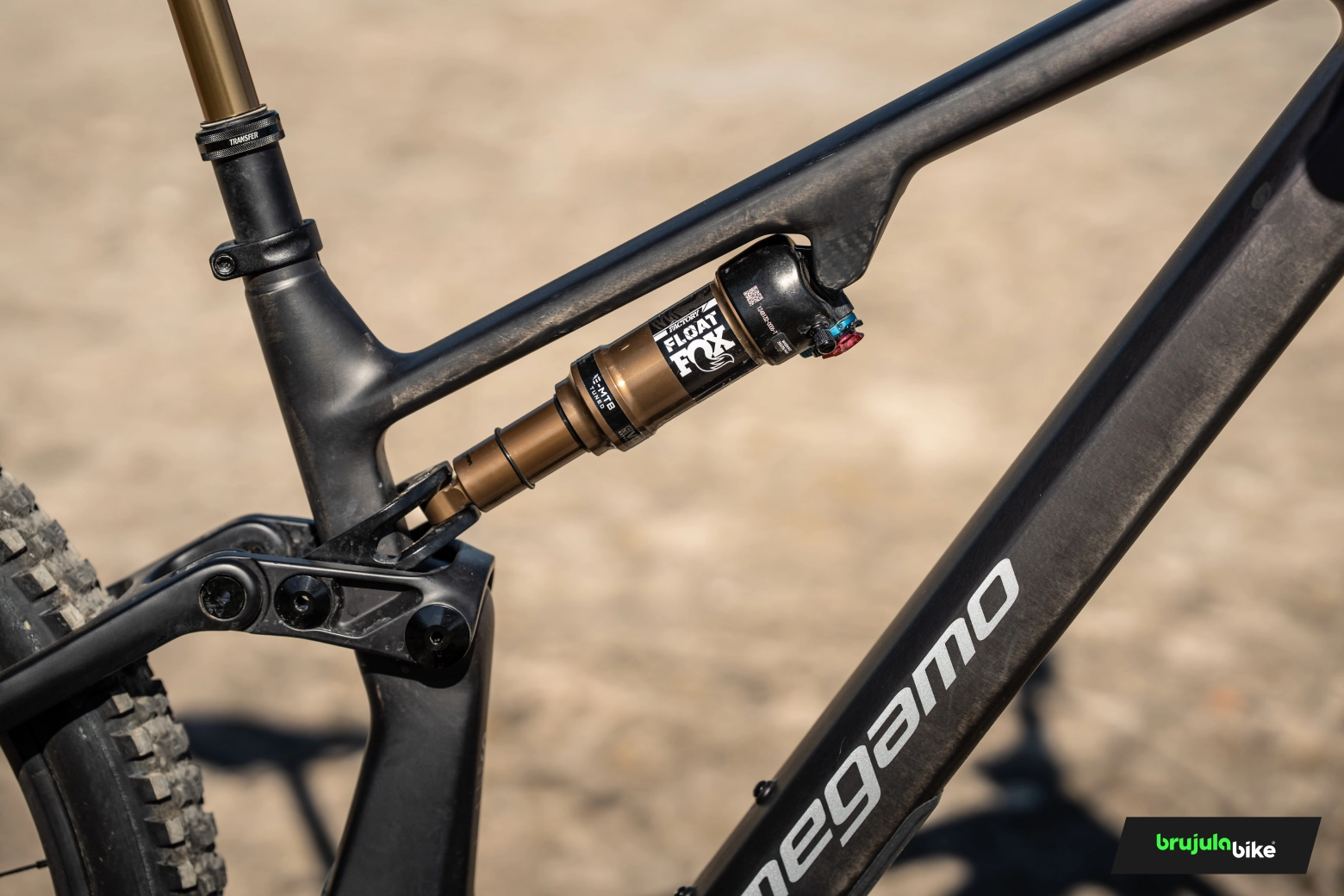
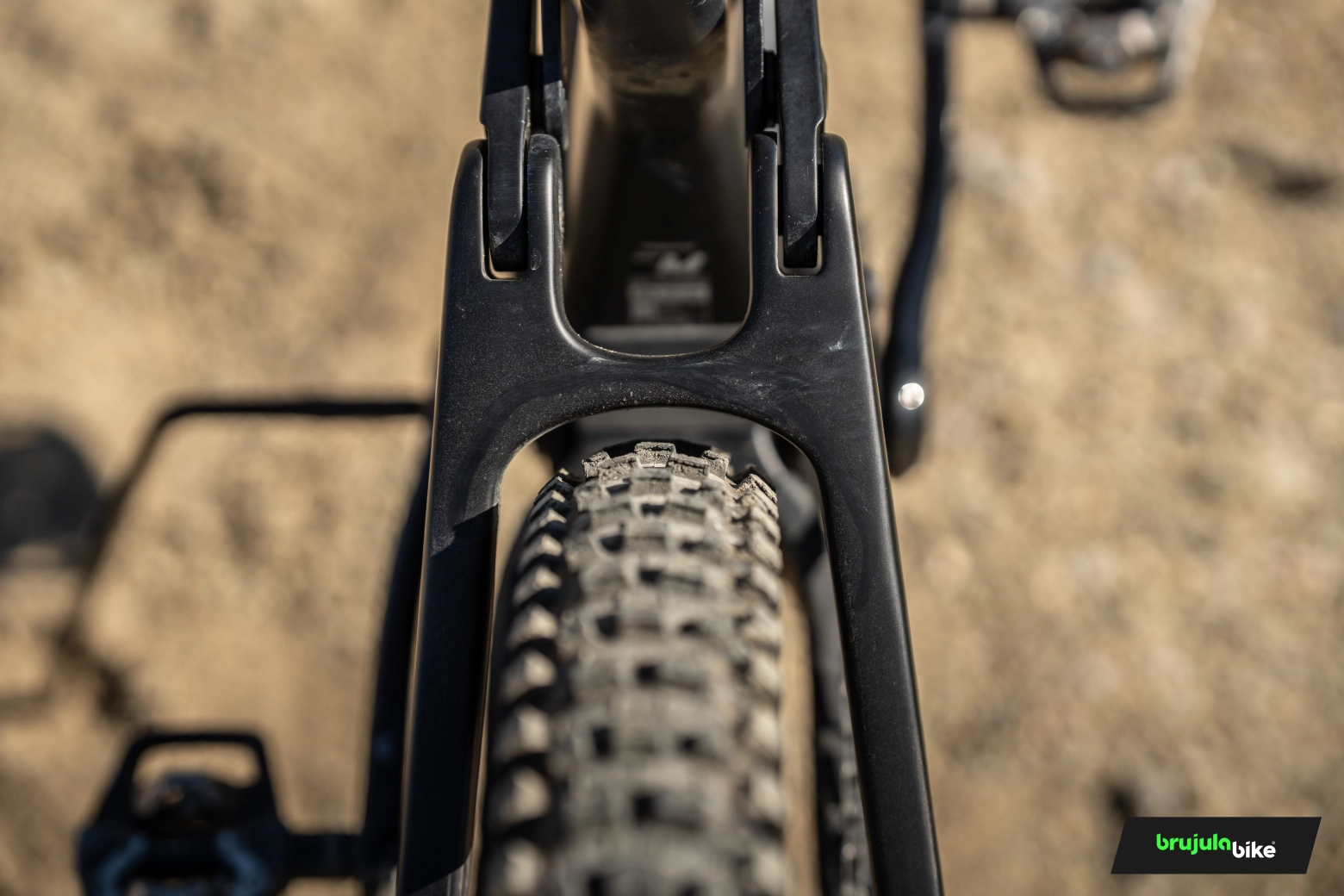
On the stays, a union reinforcement has been added to increase the rigidity of the set. This slightly limits the wheel passage, although it is still more than sufficient for 2.4” tires.
The suspension system uses a 4-bar scheme with a pivot point in the rear area of the chainstays. This is a very common solution in this type of bike, as it offers a good balance between structural simplicity, weight containment, and the ability to adjust the kinematics.
Regarding the setup, the tested unit opts for a very high level in both components and performance, while also maintaining a contained weight. On our scale, it weighed in at 20.05 kg, just at the 20-kilo barrier.
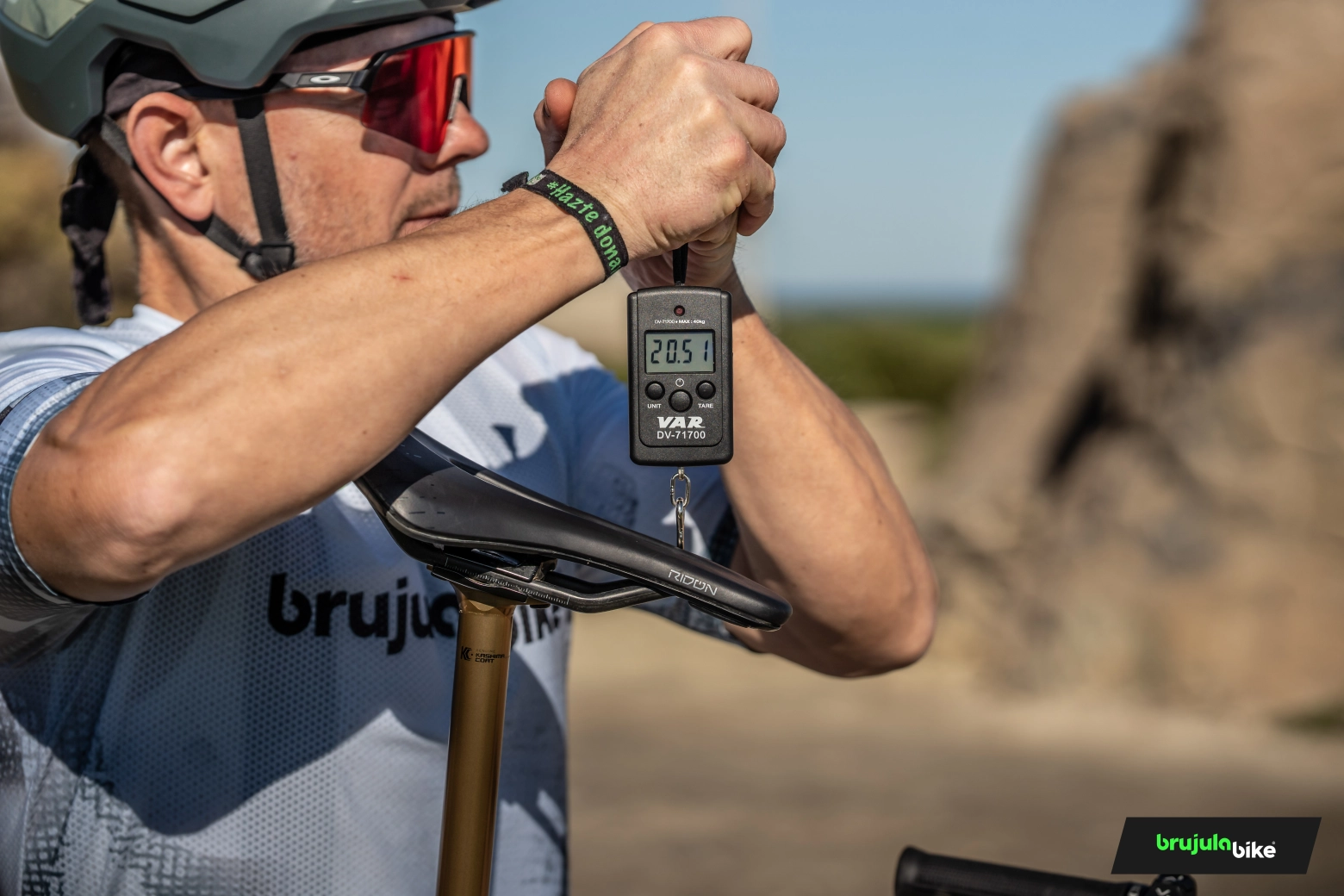
This figure is slightly higher than that of the previous version. According to Megamo, the Reason Air has gained about 832 grams, a figure accepted in favor of improving its capacity and consistency. Part of this increase comes from the new M2S motor, which adds about 153 grams between the motor itself and the thicker wiring. This is complemented by elements such as the handlebar with more rise and a more Trail-oriented focus, the reinforced tires, and the longer post. Overall, these decisions slightly penalize the weight but provide greater versatility. Even so, the Reason remains one of the lightest full-power eBikes with a high-capacity battery on the market.
After the first adjustments, we began testing on the ground. From the first pedal strokes, the position surprised us. Despite its generous reach, it does not feel like an especially long bike. This is due to a very vertical seat angle, which places us forward on the bike, and a stem of only 35 mm that brings the handlebar closer. Additionally, the new handlebar with 20 mm of rise contributes to a neutral and comfortable posture.

In motion, it transmits a remarkable sense of efficiency and, above all, lightness, even with the assistance disconnected. It is one of those eBikes that invite you to pedal without constantly relying on the motor. However, if there is one thing that defines this bike, it is the enormous assistance capacity it offers, as we will see next.
More Power, Better Efficiency, and a Refinement That Goes Beyond Numbers
Much has already been said about the figures that this motor handles, and in its Premium version, it reaches truly high levels of power and assistance. However, the Avinox system goes much further than the numbers and also stands out for its ecosystem and usage possibilities.
The set is completed with a compact and functional wireless remote control, and a display with a touchscreen that is among the best we have seen on an eBike. The image quality is outstanding, and the touch response works perfectly even with gloves. Additionally, from the Avinox App, we can configure what information we want to display on each screen, allowing us to fully tailor the interface to your preferences. As a handy bonus, the system includes a USB-C port for charging external devices.
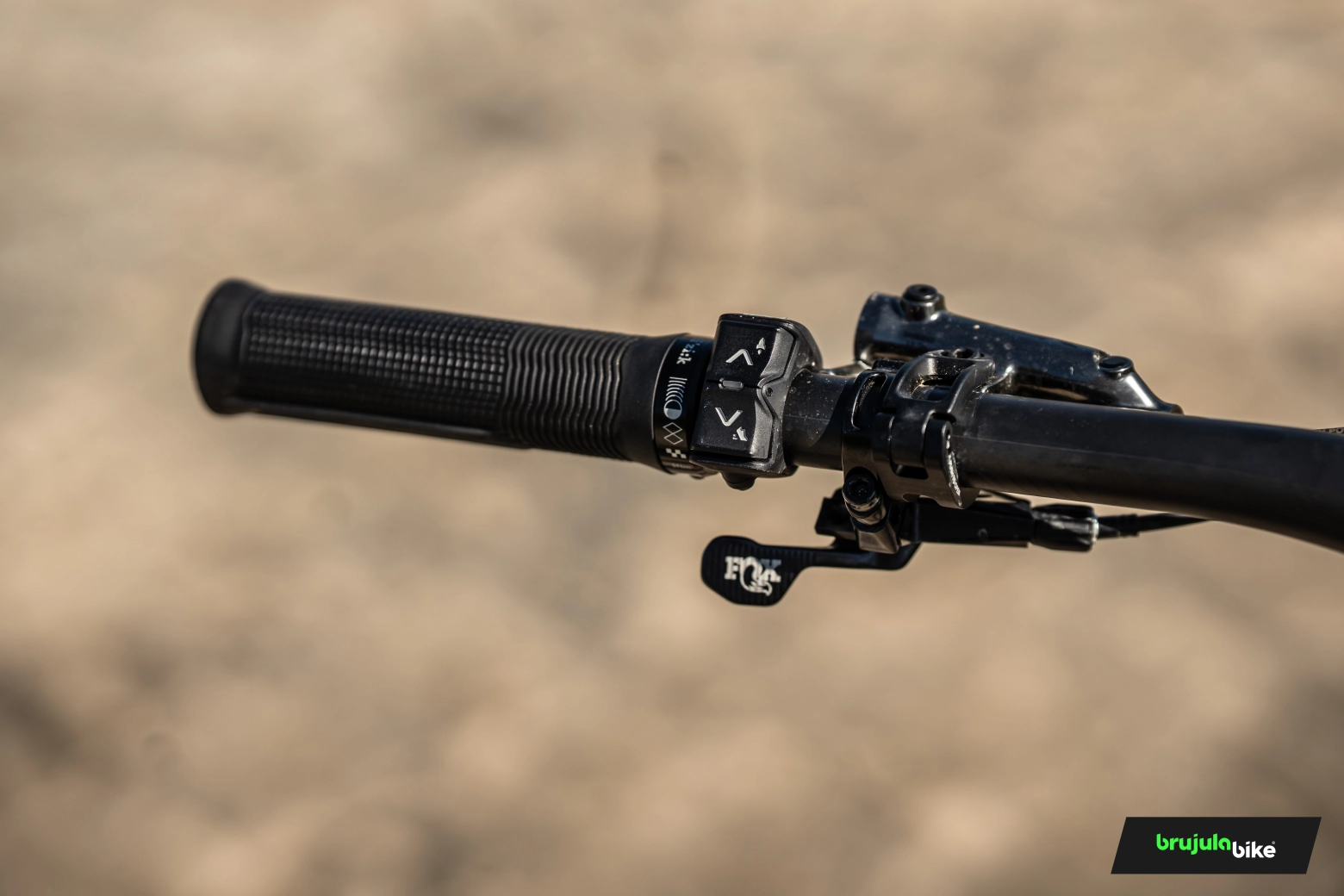
But where it really stands out is in the customization of engine performance. Whether through the display itself or the app, you can adjust multiple parameters for each driving mode, rearrange them to your liking, or even create entirely new, fully customized modes. It’s a highly advanced level of customization that, on its own, would warrant a separate review.
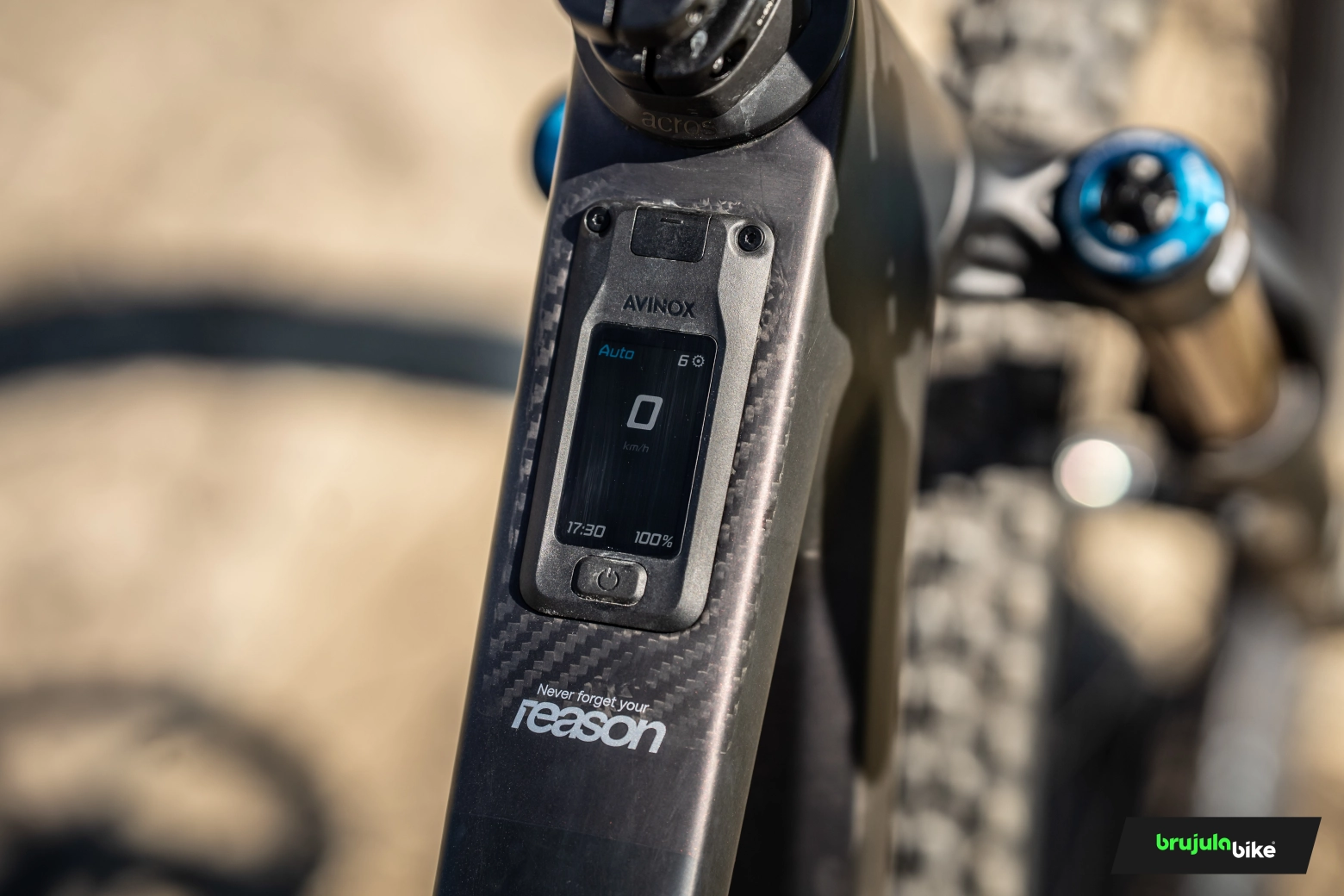
As standard, the system offers four main modes—ECO, AUTO, TRAIL, and TURBO—plus a BOOST mode that goes beyond TURBO, capable of delivering up to 150 Nm for a limited time that can be set for up to 60 seconds. The AUTO and TRAIL modes are dynamic, meaning they don’t simply offer a fixed percentage of assistance but increase it based on demand, thereby reducing the need to constantly switch between modes.
This range of assistance is also configurable. In our case, we set it to the maximum allowed by the app, though we didn’t find an automatic mode that covers the entire spectrum of motor assistance.
During testing, we noticed that the jumps between modes are quite pronounced. While four modes are usually sufficient on other motors, here the power increase is so high—with peaks reaching up to 800% of our wattage output—that the differences between levels are more pronounced. For this reason, the ability to create intermediate modes is particularly useful, and it was something we utilized in our case.
The system also allows you to adjust key aspects such as the responsiveness when you start pedaling or the coasting resistance when you stop pedaling, making it easier to adapt the motor’s character to both your preferences and your skill level. At high assistance levels, this adjustability is essential for achieving a more progressive and controllable power delivery.
Among the most interesting features is the Smoothshift system, which allows you to shift gears even without pedaling, provided the bike is equipped with an SRAM AXS drivetrain. In real-world use, it proves very useful in technical sections, as it lets you select gears in advance or even shift while stationary before tackling a challenging climb. That said, for it to work, you need to relieve the load on the drivetrain by lifting the wheel slightly, as the system blocks the action if it detects resistance.
On the move, and especially when pushing the TURBO and BOOST modes to their limits on very steep climbs, the sensation of power is simply immense. Climbs become more of an exercise in control than in strength, and in some tight corners, extreme caution is required.
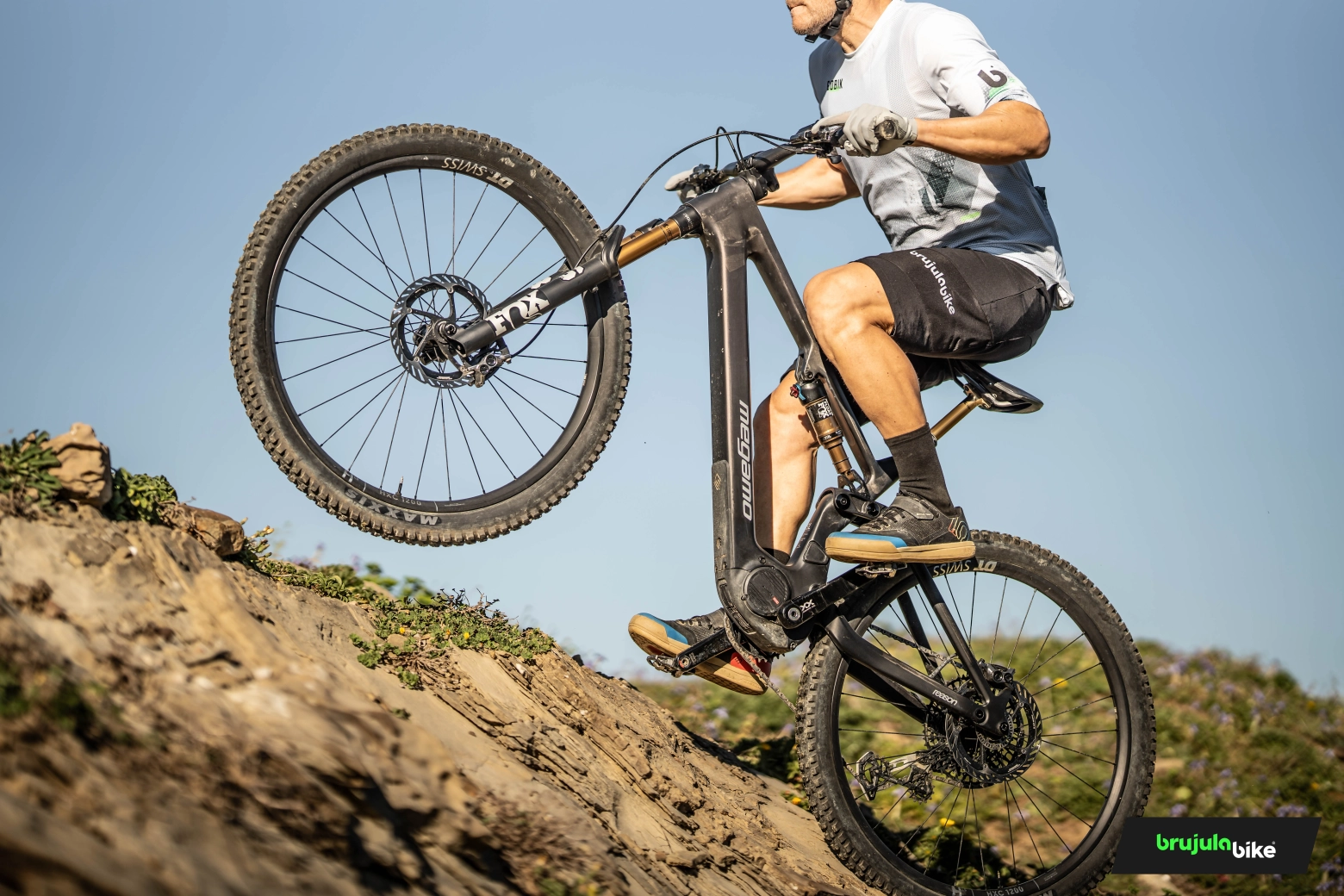
Despite this, we were very pleasantly surprised by the traction control on rough terrain. With such high power figures, one might expect a more abrupt response, but the system manages rear-wheel grip very well. This performance is partly influenced by the use of a grooved disc for the speed sensor—similar to those in ABS systems—instead of a conventional magnet, which allows for continuous monitoring of wheel rotation.
This control is also evident in the operation of Walk mode, which we found to be among the best on the market. However, if there is one aspect that remains critical, it is control of front-wheel lift. On very steep climbs, the power delivery is such that it forces you to maintain a very careful position on the bike to avoid losing your line. Factors such as the vertical seat angle and the overall length of the Reason help here.
As for noise, the motor isn’t completely silent, but it’s clearly below average, especially when we’re not using the most demanding modes.
Our conclusion is that the available power far exceeds what we’ll need in most situations. This is a positive aspect, since the motor rarely operates at its limit, but it also means that if we overuse the higher modes, power consumption skyrockets. The 800 Wh battery allows us to tackle long routes with significant elevation gain when used moderately, though the range suffers if we constantly push the system to its limits.
In our tests, on a demanding ride where we frequently used TURBO and BOOST modes on steep climbs, we covered 35 km and 1,200 meters of elevation gain on rugged terrain, returning with 33% battery remaining. In any case, power consumption depends on multiple factors, and the display itself provides useful information on estimated range based on the selected mode.
Much more than just a powerful bike
Beyond its electric system, the Reason is a very well-designed bike. With 140 mm of travel and a geometry that gives it great versatility, this is clearly a multi-purpose bike, capable of adapting naturally to different riding conditions.
We found it particularly well-suited for road riding. The rider’s position is neutral and comfortable, allowing for long hours in the saddle without excessive fatigue. In this regard, the inclusion of a slightly higher handlebar seems like a wise choice. On an eBike, where the motor reduces the need to force your posture to gain efficiency, this setup provides extra control when the terrain gets rough.

While riding, the rear suspension feels quite stable. Sagging is minimal and even less noticeable when using pedal assist, since the power delivery is more consistent than the pedaling itself. In any case, there’s a lever on the shock that allows you to stiffen the system if you want to minimize these movements as much as possible.
Despite this road-oriented approach, it remains a bike with enough travel and geometry to tackle technical sections and demanding descents. In our tests, we took it to distinctly enduro-style terrain, where it demonstrated great composure and stability.
Initially, we used the flip-chip in the Low position, though after the first few rides we opted to flip it to gain some bottom bracket height, as we occasionally bottomed out on rocky sections. Although the differences are small, that extra margin is appreciated on this type of terrain.
In these more demanding situations, the frame feels stiff and allows for a high level of control. It’s true that, with 140 mm of travel, it doesn’t match the sensitivity of a pure enduro bike when it comes to reading the smallest irregularities, but it absorbs medium impacts with ease and reserves the final stage for a more progressive response to harder landings or impacts.
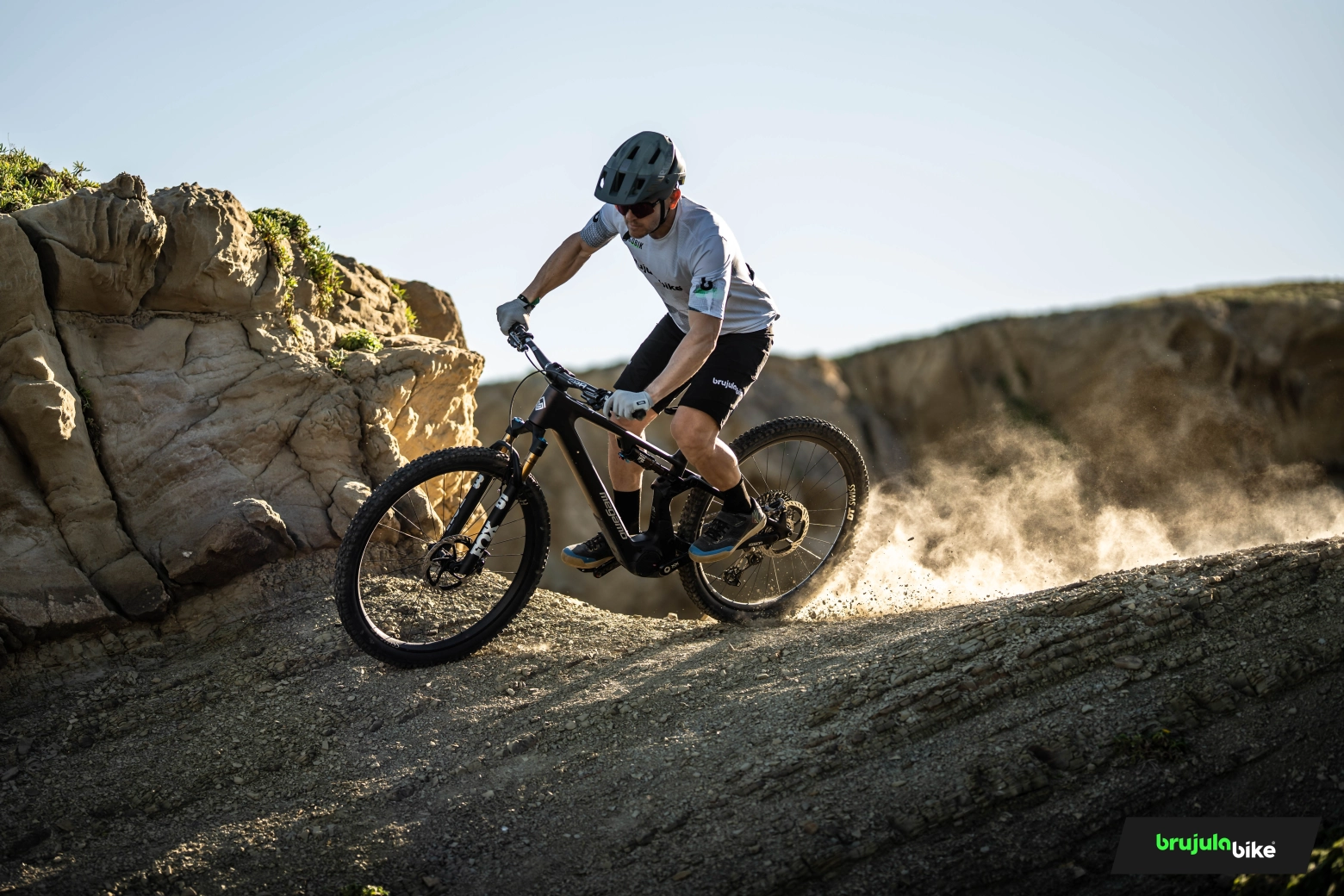
The Fox 36 SL with the new Grip X cartridge has impressed us greatly. It offers excellent sensitivity and more than enough stiffness for the bike’s intended use. It handles hard pedaling and intense braking well without losing precision due to flex. In our case, however, we would have added a few tokens, since when set for our weight, we found it to be somewhat linear throughout its travel.
Overall, the Reason Air holds its own on this type of terrain, though it’s important not to lose sight of its intended purpose. It’s not an enduro bike and lacks both the travel and the knobby tires of the 160mm version. Even so, this new generation leans more toward All-Mountain use thanks to details like the higher-rise handlebar or the long-travel seatpost, which provides a lot of confidence on steep sections. If the main goal is more aggressive riding, the longer-travel Reason is the better choice.
As for the components, the performance lives up to what you’d expect from a top-of-the-line build. The drivetrain operates flawlessly, with precise shifting even under the demands of such a powerful motor. The Shimano XTR brakes offer outstanding power, allowing you to stop the bike decisively and effortlessly in any situation, while maintaining great consistency on long descents—all with first-class feel and ergonomics.
The wheels also stand out for their stiffness and precision, providing confidence on the most technical sections. In short, the bike as a whole lives up to expectations for a machine of this caliber, capable of competing head-to-head with any leading model on the market.
One of the most feature-packed e-bikes available today
The Megamo Reason has established itself as one of the market leaders in its own right, and in this new generation, several key aspects have been refined quite successfully.
After several weeks of riding the Reason Air, it feels like a truly complete bike. It stands out for its meticulous design, its great ability to adapt to a wide range of uses, and its consistently reliable performance. Added to all this is an electric system that, regardless of whether or not we push it to its limits, offers the highest power output on the market.
The Reason range also features a very broad lineup, with up to 17 models catering to different user profiles. Entry-level models start at €4,999 for the aluminum versions, while carbon models start at €5,999.
At the top of the Air version is the model we tested, priced at €11,999. Above that, within the long-travel platform, the range culminates with the Reason CRB 00, whose build quality justifies its €13,999 price tag.
Megamo Reason Air Crb 00: specifications, weight, and price
- Frame: Reason Full Carbon
- Fork: Fox 36 SL Factory, Grip X, 140mm
- Shock: Fox Float Factory Evol LV, 210 x 47,5mm
- Motor: Avinox M2S, 130Nm, 1300W
- Battery: Avinox 800Wh, 35,9V, IP56
- Display: Avinox DP100 2”
- Charger: Avinox 12A Fast Charger
- Rear derailleur: Sram XX AXS T-Type
- Shifter: Sram AXS Pod Ultimate
- Crankset: Sram XX 165mm, 36T chainring
- Cassette: Sram XX T-Type, 10-52T
- Brakes: Shimano XTR M9220, 203mm discs
- Wheels: DT Swiss HXC 1200 Carbon
- Front tire: Maxxis New Dissector 29x2,4” EXO+ 3C MaxxGrip
- Rear tire: Maxxis New Dissector 29x2,4” DD 3C MaxxTerra
- Handlebar: Race Face ERA Carbon 35x800mm, 20mm rise
- Stem: Satori Ursa 35x35mm
- Seatpost: Fox Transfer Factory Kashima 31,6mm
- Saddle: Fizik Terra Ridon X1
- Weight: 20.05kg
- Price: 11,999€
También puede interesarte
Bike Equipment
This cycling bell goes through the noise-canceling headphones
Road
Pogacar and the limits of the tire: Roubaix will determine how far one can go
Nutrition
How, when, and how much: the ultimate guide to carbohydrates for cyclists
Road
Specialized opens the urban premium market with the new Vado 3
Road
Paul Seixas plays the role of Pogacar in the Itzulia: he wins stage 2 with a long-range attack and seals half the race
Road