"We know of a Frenchman who has not been tested in the early morning": the controversy over the anti-doping campaign in the Tour is growing
The nighttime anti-doping controls of the 2026 Tour de France have sparked a debate that goes far beyond the rest of the riders. After the early morning inspections of Tadej Pogacar and Jonas Vingegaard, and with confirmation that other teams have also received visits from the International Testing Agency (ITA) during the last few days, voices within the peloton are beginning to question whether the goal of this deployment is really to detect new cases of doping or, above all, to convey the image that cycling is doing everything possible to combat it.
Anti-doping campaign or fireworks?
No one has gone as far as Matej Mohoric, although he has not been the only one to fuel a debate that gains more strength every day. The Bahrain Victorious rider confirmed in statements to Siol.net that his team was also awakened around five in the morning for a doping control.
“For us, it is uncomfortable. It interrupts our rest and consumes a lot of energy. Once we had a control at five in the morning, which for us is practically the middle of the night.”
Mohoric understands that cycling continues to pay the consequences of its past, but believes that the current system has lost some balance.
RECOMENDADO
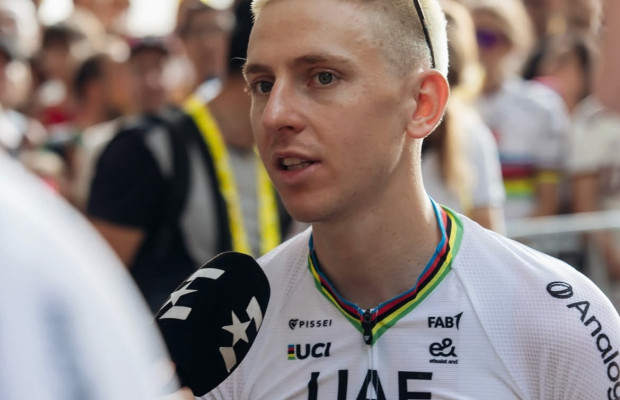
"They have changed my life since January": Pogacar undergoes another test and explains how he is experiencing the anti-doping operation
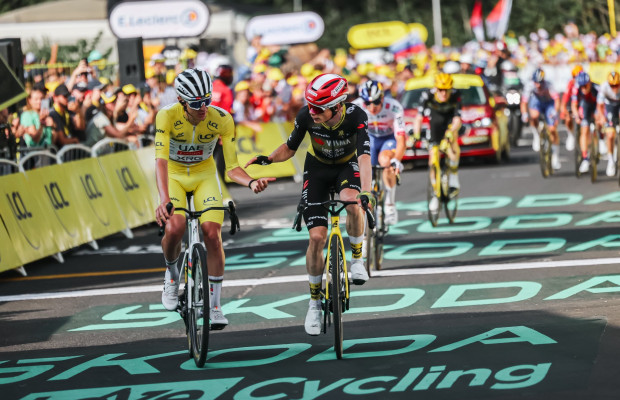
A judge authorized nighttime doping controls for Pogacar and Vingegaard: they are only allowed in the presence of "well-founded suspicions"
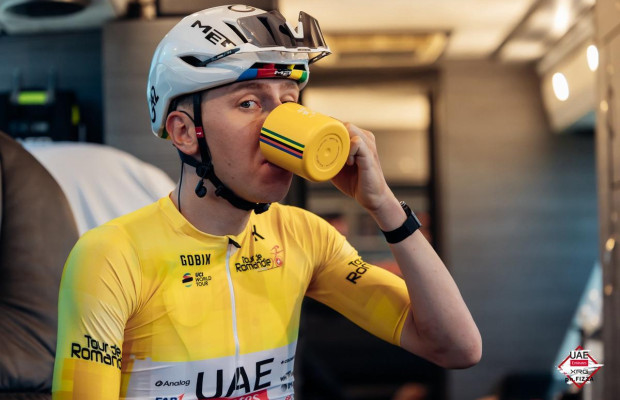
Doping controls wake Pogacar and Vingegaard in the early morning
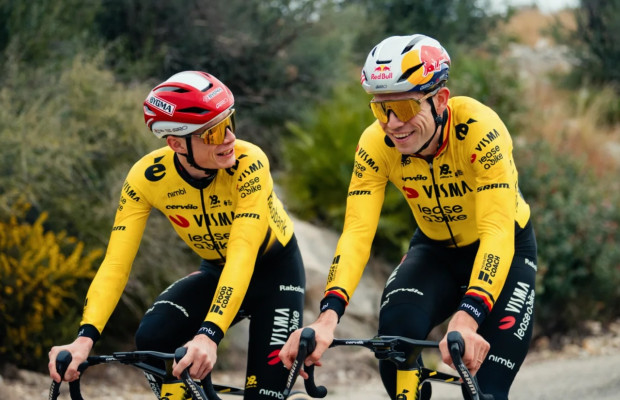
The controversial "power passport" is already underway: Visma and four other teams are participating in the anti-doping trial
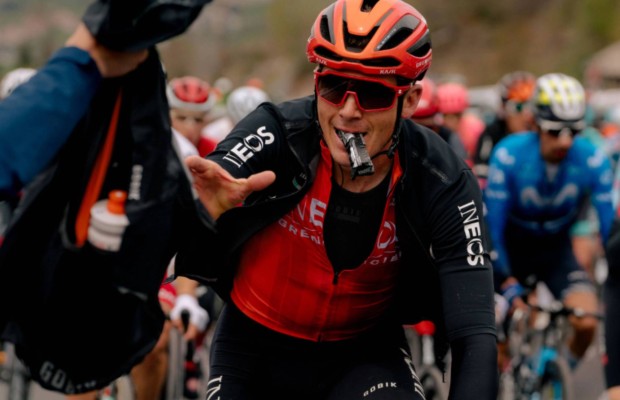
More power, less fatigue: how nitrates could help you on the bike
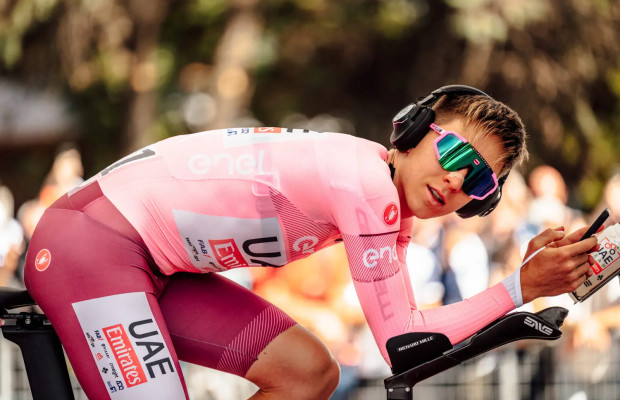
An indoor trainer can do more for your training than you think: here are 7 reasons to own one

“We are paying for the past of cycling. But even so, there should be certain human limits or at least ensure that it is the same for everyone.”
The Slovenian was even more forceful in questioning the philosophy behind the ITA's operation.
“The agency that conducts the controls has a significant budget and somehow has to justify it. I think it is a business; they have to show that they are working, that they are doing controls, and that the sport is clean and fair.”
But Mohoric's criticism did not stop there, and he hinted that not all contenders for the general classification have received the same treatment, pointing directly —though without naming him— at the young Frenchman Paul Seixas, fourth in the general classification and a great hope for French cycling.
“We know that a French rider who is very well placed in the general classification did not have this control.” 
The Slovenian's words have fueled speculation about whether all the favorites are being subjected to the same level of scrutiny. But the truth is that Seixas and the Decathlon CMA CGM also underwent doping controls, although within the usual hours, and not during the early morning.
More voices question the approach
The feeling that the operation is also serving to send a public message of firmness is beginning to spread. The CPA (Professional Cyclists Association) recently expressed its full support for the anti-doping fight but called for a reconsideration of the usefulness of controls that interrupt rest during the Grand Tours.
Its president, Adam Hansen, was very clear: “Current cyclists are paying for the mistakes of previous generations. Is that fair?”
The Australian argued that the priority should be to develop more effective and less invasive detection methods, rather than increasing nighttime inspections.
But not everyone shares that view. One of the biggest advocates of nighttime controls has been Jonathan Vaughters, director of EF Education-EasyPost and a former rider who admitted to doping during his career.
For the American, precisely because he knows how doping practices worked two decades ago, this type of control is one of the most effective tools for detecting microdoses of EPO, growth hormone, or testosterone.
In statements collected by IDLProCycling and later expanded in an interview with Daniel Benson, Vaughters defended that regaining cycling's credibility requires uncomfortable measures.
“Every time you can implement a truly effective method to prevent microdoses and silence those who constantly insinuate that the best riders are doping without any proof, it is something positive for the credibility of the sport.”
A reflection that connects with the question posed this week by journalist Barry Ryan in IDLProCycling: does cycling really want to fight against doping or simply show that it does?
The precedent of carbon monoxide
In 2024, it came to light that several top teams were routinely using carbon monoxide rebreathing (CO) through rebreathing systems, a practice initially used to measure hemoglobin mass but that could also be used for performance-related and physiological monitoring purposes.
But the investigation did not arise from an anti-doping operation. It was the media Escape Collective that uncovered the widespread use of these devices among some of the main WorldTour teams. The repercussions were such that the UCI eventually reacted and subsequently banned the repeated use of this technique outside of a strictly medical context.
That episode left the uncomfortable feeling that one of the most controversial practices in recent years came to light thanks to journalistic work and not as a direct consequence of the anti-doping control system.
Precisely for this reason, while some consider that nighttime inspections are essential to detect practically invisible forms of doping, others are beginning to wonder whether the enormous deployment seen in this Tour is primarily aimed at finding new cases or reinforcing public confidence in a sport that still lives with the scars of its past.
También puede interesarte
Road
"They have changed my life since January": Pogacar undergoes another test and explains how he is experiencing the anti-doping operation
Road
A judge authorized nighttime doping controls for Pogacar and Vingegaard: they are only allowed in the presence of "well-founded suspicions"
Road
Doping controls wake Pogacar and Vingegaard in the early morning
Road
The controversial "power passport" is already underway: Visma and four other teams are participating in the anti-doping trial
Nutrition
More power, less fatigue: how nitrates could help you on the bike
Training
