A judge authorized nighttime doping controls for Pogacar and Vingegaard: they are only allowed in the presence of "well-founded suspicions"
The controversy generated by the anti-doping tests conducted in the early morning on Tadej Pogacar and Jonas Vingegaard during the 2026 Tour de France has taken an important turn. While it was initially only known that both had been awakened in the middle of the night to undergo a test, now L’Équipe has revealed that the action was previously authorized by a French judge, an exceptional procedure that can only be applied when very strict legal requirements are met.
The anti-doping tests on Pogacar and Vingegaard triggered a judicial procedure that is rarely used
According to the French newspaper, the International Testing Agency (ITA) requested authorization from the Judicial Court of Paris to conduct these tests during the night of July 18 to 19. The request was accepted by a judge of liberties and detention, a judicial figure competent to authorize such extraordinary actions.

An exceptional measure that is rarely used
L’Équipe itself points out that this legal mechanism is extremely uncommon. In fact, a source from the anti-doping field consulted by the French newspaper claims that it could even be the first time these provisions, incorporated into French legislation in 2015, have been applied.
RECOMENDADO
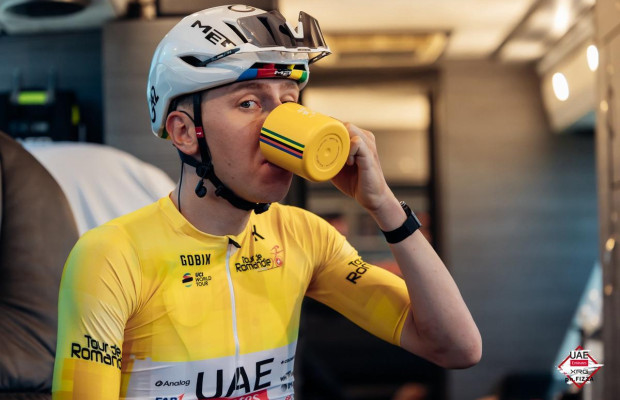
Doping controls wake Pogacar and Vingegaard in the early morning
The controversial "power passport" is already underway: Visma and four other teams are participating in the anti-doping trial
Goodbye to watts per kilogram as the sole benchmark—fatigue decides who’s the best
The Megamo West 2027 gets a new range from €2,399 and remains a great choice
The new cycling regulations in Spain are here: everything that changes from 1 October (this Thursday)

What do the colours of the rainbow jersey mean, and who was the first World Champion?
The judicial authorization does not imply that Pogacar or Vingegaard have committed a doping violation. The newspaper itself emphasizes that the information presented by the ITA to justify the request has not been made public.
However, the regulations do make it clear that a generic suspicion is not enough.
Article L.232-14-4 of the French Sports Code, cited by L’Équipe, states that a judge can only authorize night anti-doping tests when certain circumstances are present.
Translated into Spanish, the text requires the existence of:
“well-founded and consistent suspicions of a violation of anti-doping rules and a risk that evidence may disappear if the test is not conducted immediately.”
Furthermore, French legislation adds another guarantee to protect the athlete's rights. The same article establishes that these actions must respect: “a strict proportionality between the infringement of the athlete's rights and the objectives of the fight against doping.”
These objectives, the regulation reminds, are the protection of equality in competition and the health of the athletes themselves.

Why conduct tests in the early morning?
Although from a sporting perspective, waking a rider a few hours before a mountain stage is very controversial, the reason has a widely known technical explanation in the fight against doping.
Night tests increase the chances of detecting substances that quickly disappear from the body, especially when administered in very small amounts.
One of the most cited examples by specialists is microdoses of EPO. An athlete who administered a small amount during the night could eliminate a good part of the markers before a conventional test conducted many hours later. An analysis conducted in the early morning significantly reduces that window and complicates these types of strategies.
Precisely because of this ability to detect particularly sophisticated doping methods, this type of inspection is reserved for situations considered to be of higher risk.
The Prosecutor's Office confirms the ITA's request
The Paris Prosecutor's Office confirmed to L’Équipe that the ITA formally submitted the request to conduct the tests during the night.
According to the Public Ministry explained to the French newspaper, the public health departments of the courts of Paris and Marseille maintain regular contacts with the UCI and the ITA before the Tour de France. In this specific case, the international agency resorted to the procedure provided for in Article L.232-14-4 to obtain the necessary judicial authorization.
The night tests are part of the extensive anti-doping measures deployed during this Tour de France, coordinated by the International Testing Agency.
Even before the start of the race, more than 360 out-of-competition tests had already been conducted, with an operation consisting of more than 40 agents deployed to the Tour and the expectation of collecting around 600 samples during the three weeks of competition.
The ITA had already warned before the start of the race that tests could be conducted at any time of day or night, always within a control strategy directed through risk analysis and intelligence information.
The new information now known is that, at least in the case of Pogacar and Vingegaard, those night tests were not simply an operational decision of the agency, but required the express authorization of a French judge after assessing that the requirements set by the country's legislation were met.
También puede interesarte
Road
Doping controls wake Pogacar and Vingegaard in the early morning
Road
The controversial "power passport" is already underway: Visma and four other teams are participating in the anti-doping trial
Road
Goodbye to watts per kilogram as the sole benchmark—fatigue decides who’s the best
Gravel
The Megamo West 2027 gets a new range from €2,399 and remains a great choice
Road
The new cycling regulations in Spain are here: everything that changes from 1 October (this Thursday)
Road
