"That night in the cell was the best thing that could have happened to him": the episode that transformed Van der Poel according to his brother
Mathieu van der Poel is today one of the most dominant riders in the peloton, capable of deciding key races with an authority that seems natural. However, within his closest circle, they now place the true turning point of his career in a very specific episode. It was the night before the World Championship in Australia in 2022.
The Before and After of Van der Poel According to His Brother David
His brother David van der Poel explained in an interview with the Dutch media AD that that episode marked a before and after in the way the Dutchman understood cycling. Until then, Mathieu had built his success on an almost instinctive superiority, winning even when the tactical reading was not the best.
“He had been winning throughout his career. At that time, he was winning races even while making wrong tactical decisions. He was simply much better than the rest.”
This natural dominance also shaped his public image for years, associated with a rider capable of improvising and still imposing himself. But everything changed in Wollongong. The night before the road World Championship, an incident at the concentration hotel with some kids ended with Van der Poel spending the night in detention. The next day he abandoned the race without being able to compete under proper conditions.
RECOMENDADO
Megamo hints at its next big revolution and raises expectations
The legendary cork tape from Cinelli evolves 40 years later with new Pro Race and Gravel versions
Pinarello explains the breakage of Ganna's handlebar during the race
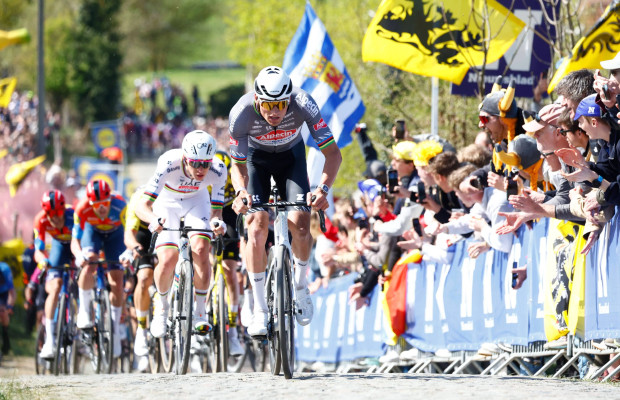
Pogacar, Van der Poel, and Evenepoel elevate the 2026 Tour of Flanders to a generational duel: dates and how to watch
Prologo redefines the road saddle with the new fully integrated Choice
Filippo Ganna spoils Van Aert's great performance at Dwars door Vlaanderen after a thrilling finish
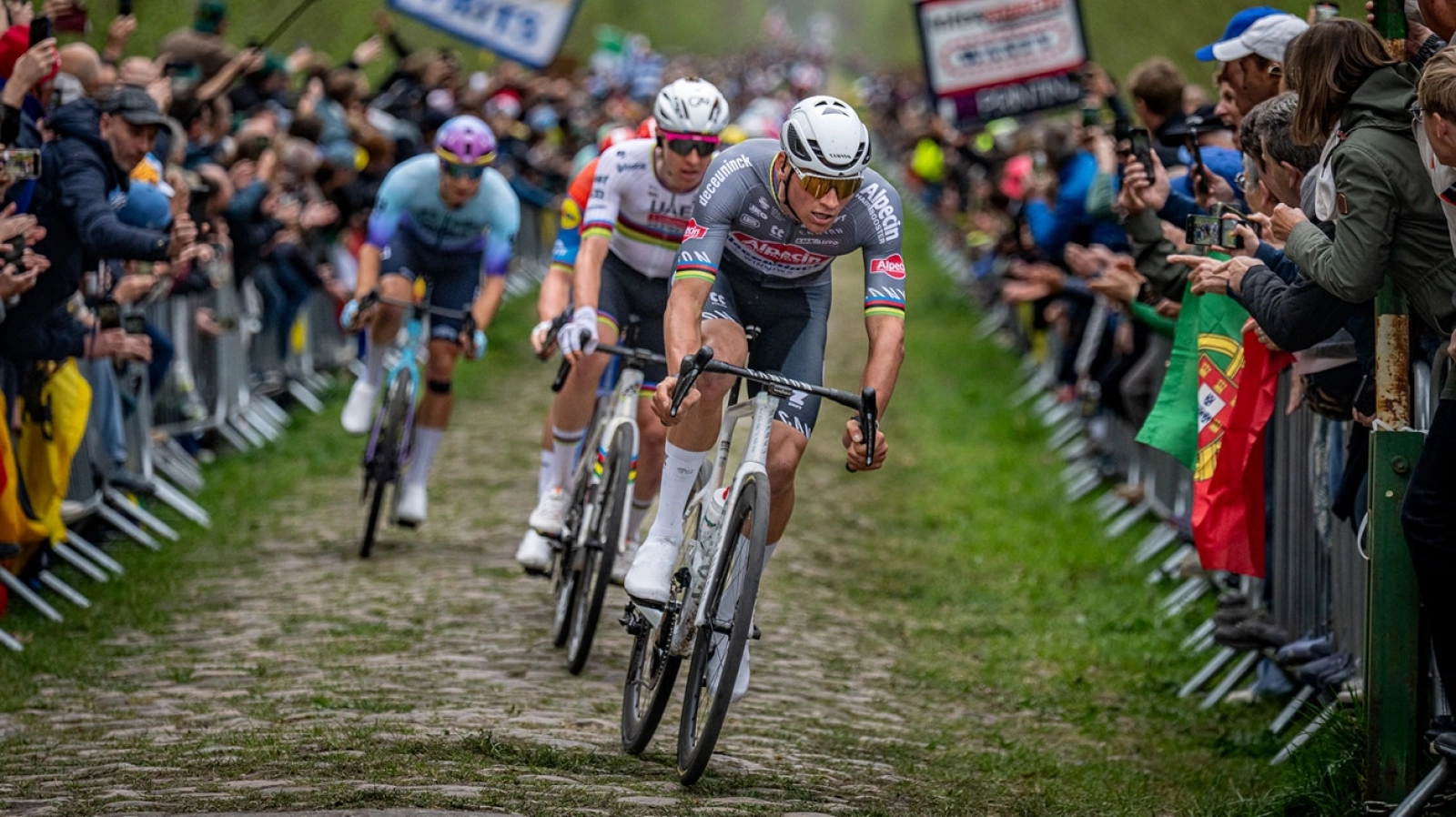
“I had never seen Mathieu so sad and insecure. He was in a very complicated moment.”
That situation, from which he was later exonerated, represented an unexpected emotional blow. For the first time, one of his major goals disappeared even before the race started. According to his brother, that moment provoked a deep reaction in his way of facing the high level.
“That was when the awareness came. That episode in Australia generated disbelief and a sense of injustice. But it also changed something.”
From then on, the change was evident both inside and outside the team. Van der Poel went from relying on his talent to building his performance on much more meticulous preparation and a constant ambition not to let opportunities slip away.
“That night in the cell in Australia was the best thing that could have happened to him, seen in perspective. He started training even harder and did not let any more opportunities slip away.”
The reflection of that transformation came a year later when he conquered the rainbow jersey at the World Championship in Glasgow after a demanding and challenging race. For his circle, that victory had a special meaning, beyond the pure result. “The joy there was enormous. For me, it is his most beautiful victory.”
That night may have been decisive, but certainly, that turning point did not solely arise from what happened in Australia. Months earlier, Van der Poel himself had already begun to rethink his way of competing after a season start affected by physical problems. The Dutchman then acknowledged that his aggressive and unconventional style could be penalizing him in certain races, assuming that the time had come to change. He admitted that those spectacular actions could cost him victories and that, with the current level of the peloton, it was no longer viable to race solely on instinct. That prior awareness suggests that the change was not sudden, but the result of a process that the episode in Australia ended up accelerating and consolidating.
Today, having become an absolute reference in modern cycling, Van der Poel competes with a mix of talent and control that was not always present in his beginnings. The pressure from rivals like Van Aert or Pogacar has reinforced that evolution, but in his closest circle, they still point to that night in Australia as an important turning point.
También puede interesarte
Road
Megamo hints at its next big revolution and raises expectations
Road
The legendary cork tape from Cinelli evolves 40 years later with new Pro Race and Gravel versions
Road
Pinarello explains the breakage of Ganna's handlebar during the race
Road
Pogacar, Van der Poel, and Evenepoel elevate the 2026 Tour of Flanders to a generational duel: dates and how to watch
Bike components
Prologo redefines the road saddle with the new fully integrated Choice
Road