Serious allegations against Picnic PostNL: 71 testimonies expose a culture of fear and severe psychological problems among its riders
The Picnic PostNL is once again at the center of controversy, this time due to much more serious accusations than its sports and financial problems. A journalistic investigation based on the testimonies of 71 people who have worked or are still working in the team denounces an atmosphere of fear, excessive control, and reprisals against those who question the management's decisions. Some former cyclists claim to have suffered significant psychological consequences during their time with the Dutch team.
Picnic PostNL under suspicion: 71 testimonies reveal a culture of fear and serious psychological problems among its cyclists
The investigation, published on October 15 by NOS Sport in collaboration with the specialized media In De Waaier, directly points to the team's top official, Iwan Spekenbrink, and the sports director Rudi Kemna, as central figures in a management model that, according to the collected testimonies, would have progressively deteriorated the relationships between cyclists, technicians, and those responsible for the structure.
A former cyclist admits he considered self-harm
One of the harshest testimonies is from Martijn Tusveld, who was part of the team from 2017 to 2024, when he competed under various names.

RECOMENDADO
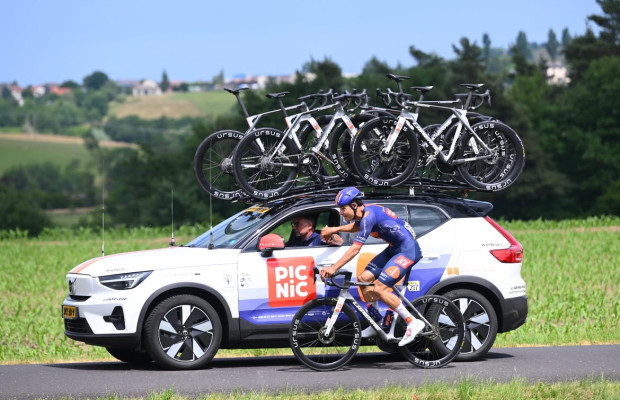
Picnic PostNL denies that it will leave the WorldTour in 2027
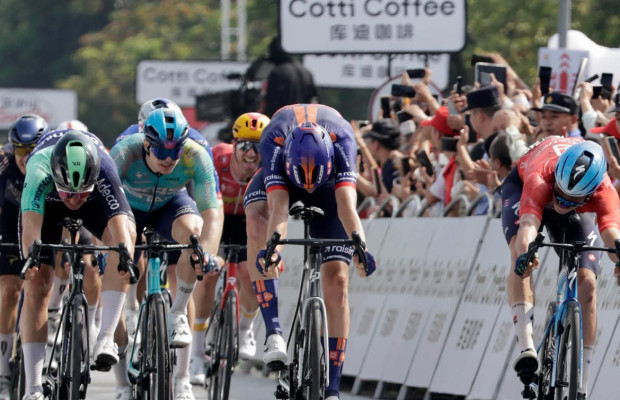
Picnic PostNL end their WorldTour drought in Guangxi with an unexpected win for Frits Biesterbos
How to change the feel of the brakes without having to buy new ones
DT Swiss expands its gravel suspension range with the new F 132 and releases the F 132 ONE
Paul Seixas is close to deciding his future: Decathlon prepares a mega-offer to keep him
The Dutchman traces the origin of his problems back to the 2020 Giro d'Italia. After a stage, Rudi Kemna asked him about the strategy used, and Tusveld expressed his disagreement with some tactical decisions.
According to his account, that intervention had consequences. At the end of the season, management informed him that he was creating a negative atmosphere. His 2021 calendar lost prominence, and he was later told that they would not renew his contract. He ultimately managed to continue for three more seasons thanks to the unexpected departures of two teammates.
In an email sent to Kemna in 2025, which NOS has accessed, Tusveld explained that that episode had completely changed his relationship with the team.
"I started to be afraid. I thought it was best to keep quiet and say yes to everything. And that’s what I did for the following years", he recounted to the Dutch media.
The consequences went beyond sports. Tusveld claims he suffered depressive symptoms during 2021 and admits he considered self-harm. His discomfort continued after leaving the team, and he ended up retiring from professional cycling at the end of 2025.
A control model that hardened after Tom Dumoulin's success
The investigation describes a gradual transformation of the team, especially after Tom Dumoulin's victory in the 2017 Giro d'Italia.
Adriaan Helmantel, who was the Dutchman's personal coach for four years, claims that management began to impose an increasingly rigid structure in which practically any communication between cyclists and specialists had to go through the team leaders.
According to his testimony, coaches lost the freedom to communicate directly with the riders, a decision that harmed individualized work and generated distrust among the different departments.
"It became a dictatorship", Helmantel states while describing the internal functioning that ended up being imposed.

The collected testimonies point to a system in which questioning protocols could be interpreted as a challenge to authority. Several former employees claim that criticisms led to meetings with management and that the recurring message was that any member of the structure could be replaced.
The investigation also includes the case of a former cyclist who sought psychological help and, according to his account, received the response from Kemna that he did not believe in psychologists.
All these situations are documented in the NOS investigation and in De Gehaktmolen, the podcast series published by In De Waaier.
Nicolas Roche also questions the team's management
The accusations are also supported by the testimony of Nicolas Roche, who competed in the structure during the last three seasons of his career.
In an interview published by NOS, the Irishman states that problems began when his individual opinions or decisions conflicted with established protocols.
Roche recalls that he received a warning for extending a training session an hour longer than planned. He also claims that management disapproved of close personal relationships between riders and staff members.
"I believe this management is not suitable for cycling", Roche asserts, considering that the rigidity of the system prevented adaptation to the changing circumstances of races.
The former cyclist also acknowledges positive aspects of his experience, such as the team's commitment to maintaining salaries during the pandemic.
Picnic PostNL remains silent for now in the face of the accusations
The investigation has also found support from the Dutch Professional Cyclists Association (VVBW). Its secretary, Jeroen van Keulen, acknowledges having received several complaints over the past year and a half that align with the problems described by the interviewees.
As he explains to NOS, some riders reached out to the association in situations of severe emotional distress.
The journalists responsible for the investigation presented their findings and questions to the team on October 12. Two days later, they personally offered Iwan Spekenbrink the opportunity to respond from the Picnic PostNL headquarters in Deventer.
Spekenbrink declined to respond both in writing and on camera and for the moment, the accusations do not have a public response from management.
A new crisis at the worst sporting moment for the team
The revelations come in a particularly complicated week for Picnic PostNL, which was already in the spotlight due to doubts about its future in the top category.
At the beginning of October, reports emerged suggesting that the Dutch team was considering voluntarily leaving the WorldTour in 2027 to compete as a ProTeam.
However, the team later denied that possibility and stated that its plans still included remaining in the WorldTour, both with its men's and women's structures.
The situation is particularly delicate because Picnic PostNL initially received a WorldTour license valid only for 2026. Its extension to 2027 and 2028 is contingent upon meeting certain financial requirements set by the UCI.
In sporting terms, the situation seemed to have received a slight boost just hours before the investigation was made public. Frits Biesterbos achieved this Wednesday the first WorldTour victory for Picnic PostNL of the entire season by winning the second stage of the Tour of Guangxi.
The Dutch team was the only one of the 18 men's WorldTour teams that had not yet achieved a victory in a race of this category during 2026. Counting all competitions, Biesterbos's victory was the third of the season.
Now, while trying to secure its continuity in the elite and regain its competitiveness, Picnic PostNL faces a controversy that goes far beyond results.
También puede interesarte
Road
Picnic PostNL denies that it will leave the WorldTour in 2027
Road
Picnic PostNL end their WorldTour drought in Guangxi with an unexpected win for Frits Biesterbos
Mechanics
How to change the feel of the brakes without having to buy new ones
Gravel
DT Swiss expands its gravel suspension range with the new F 132 and releases the F 132 ONE
Road
