Pogačar’s agent explains how the transfer market has changed and why riders are increasingly breaking their contracts
The professional cycling transfer market is undergoing a transformation that just a few years ago seemed unthinkable. Long-term contracts no longer guarantee that a rider will stay with their team until the agreed date, and early terminations have become an increasingly common practice. Alex Carera, representative of Tadej Pogačar and one of the most influential figures in the cycling market, has explained what is causing this situation and why major companies are changing the rules of the game.
From one termination every three years to about ten per season
The recent transfer market for 2027 offers several examples of this new reality. Filippo Ganna has left INEOS to join Lidl-Trek, Giulio Ciccone has left that same structure to join Pinarello-Q36.5, and Richard Carapaz has signed with NSN Cycling Team. None of the riders had completed their previous contracts.
In an interview with La Gazzetta dello Sport, Carera explained that this phenomenon has shifted from being exceptional to occurring approximately ten times per season. According to his estimates, just a few years ago, there was barely one early contract termination every three seasons.
One of the causes lies in the duration of agreements. Teams seek to secure their top riders for increasingly longer periods, especially when it comes to young talents. A good example is the contract of Benjamin Noval with INEOS. However, that same strategy increases the chances of sporting or economic differences arising before the relationship ends.
RECOMENDADO

“You put cobbles in and he’s up there; you make it harder and he’s there; you make it easier and he attacks from further out”: Prudhomme on Pogačar and the 2027 Tour route
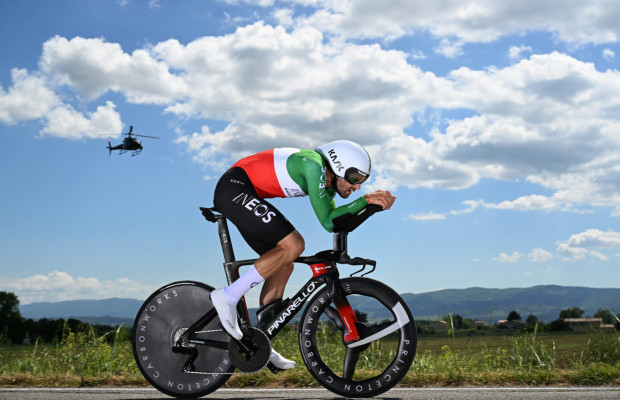
Another transfer bombshell: Filippo Ganna leaves INEOS and joins Lidl-Trek until 2029
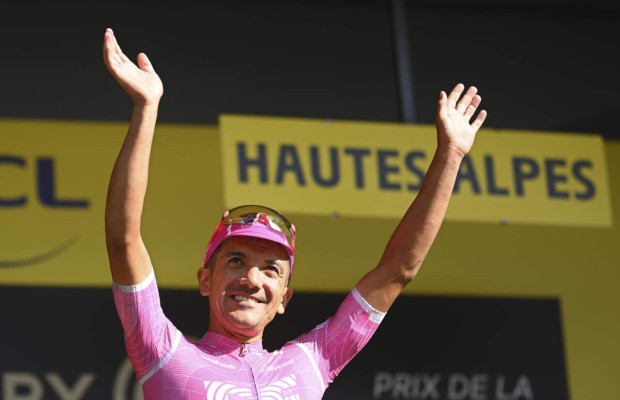
“I’m convinced this is the right place for me”: Carapaz joins Andrés Iniesta’s NSN
Which workouts do you enjoy most, and what do they reveal about you as a cyclist?
“The biggest contract in cycling history for a rider of his age”: INEOS tie down Benjamín Noval until 2031

Thule Epos ParkSecure 3-bike rack review: one of the most advanced on the market, with parking sensors and a fully foldable design
Carera points out that a two-season contract allows for relatively short waiting times to change teams if problems arise. In contrast, when the commitment reaches five years, circumstances can vary considerably, and an early exit begins to become a real alternative.
Major sponsors have changed the rules of the market
But for the Italian representative, there is another even more important factor: the transformation of team ownership.
Traditionally, many professional structures were controlled by their own directors, often former cyclists, and relied on more limited budgets. In that context, taking on significant financial compensation to hire a rider from another team was much less common.
Now the situation is different. Carera identifies UAE, Decathlon, Lidl, and Red Bull as examples of large companies that have taken on a decisive role in the ownership and management of cycling structures.
These organizations view their presence in the WorldTour as a long-term business investment. Therefore, according to the agent, they are more willing to engage in operations that were previously barely considered.
Lidl-Trek itself reflects this evolution. In October 2025, Lidl completed the acquisition of a majority stake in the team, while Trek Bicycle retained a significant stake. The operation strengthened the resources available to recruit riders, develop infrastructure, and build a roster capable of competing for major races.
Carera believes this transformation also explains the growth of budgets. According to his calculations, in 2020, a team with an annual budget of 25 million euros could be considered one of the most powerful in the peloton. Currently, that same budget would place it among the five most modest.
The consequence is that the financially strongest teams can consider paying compensation to immediately acquire the riders they deem essential, rather than waiting for their contracts to end.
The Uijtdebroeks case opened a path followed by Evenepoel and Ayuso
Carera identifies one of the turning points in December 2023, when Cian Uijtdebroeks made a contentious exit from Bora-hansgrohe to join Visma Lease a Bike.
The announcement sparked a contractual dispute that ultimately was resolved through an agreement between the parties. That operation demonstrated that even active contracts could be renegotiated to allow movements between top-level teams. Subsequently, cases of even greater magnitude followed.
Remco Evenepoel left Soudal Quick-Step at the end of 2025, despite having a contract until 2026, to join Red Bull-BORA-hansgrohe.
A similar situation occurred with Juan Ayuso, whose link with UAE Team Emirates-XRG originally extended until the end of 2028. Differences between his sporting expectations and the team's project ended in a mutual termination at the end of 2025. Shortly thereafter, the Spaniard signed with Lidl-Trek until 2030.
Another particularly significant example is Oscar Onley. The Scot had a contract with Picnic PostNL until 2027, but his results attracted the interest of several teams with greater financial capacity.
Picnic initially rejected various proposals until it ultimately accepted his incorporation into INEOS Grenadiers for 2026. In its official statement, the team acknowledged that it had received a proposal that was too attractive for both the structure and the rider himself.
These movements reflect a particularly delicate situation for teams that invest in developing young talents. Even after securing their continuity through long contracts, they may find themselves facing offers that are hard to refuse from structures with much larger budgets.
Pogačar, the great exception in this new market
Despite this scenario of million-dollar transfers and increasingly flexible contracts, Carera believes there is one rider who remains outside these operations: Tadej Pogačar.
The Slovenian represents a particular case due to his sporting, commercial, and media importance. His value to UAE Team Emirates-XRG goes far beyond victories, to the point that his representative does not contemplate a possible exit.

When asked about this situation, Carera asserts that the rider's value is too high and describes his contractual clause as practically symbolic. His explanation concludes with a statement that summarizes the dimension he attributes to the Slovenian champion: "Tadej has transcended cycling."
Moreover, Pogačar officially renewed his contract with UAE Team Emirates-XRG until the end of 2032 last September, reinforcing a relationship that began in 2019.
While the rest of the peloton experiences a phase where long contracts can be broken through negotiations between teams and riders, Pogačar's future seems tied to a single structure.
Carera's statements ultimately depict a cycling world increasingly akin to the market model of other professional sports, where the economic capacity of major owners begins to weigh as much as contractual agreements in shaping rosters.
También puede interesarte
Road
“You put cobbles in and he’s up there; you make it harder and he’s there; you make it easier and he attacks from further out”: Prudhomme on Pogačar and the 2027 Tour route
Road
Another transfer bombshell: Filippo Ganna leaves INEOS and joins Lidl-Trek until 2029
Road
“I’m convinced this is the right place for me”: Carapaz joins Andrés Iniesta’s NSN
Training
Which workouts do you enjoy most, and what do they reveal about you as a cyclist?
Road
“The biggest contract in cycling history for a rider of his age”: INEOS tie down Benjamín Noval until 2031
Bike Equipment
