Megamo confirms it is working on a 32” gravel bike and reveals its prototypes
The craze for 32-inch wheels continues to gain momentum in the gravel scene and is no longer limited to isolated projects or experimental concepts from small brands. We have now confirmed that another major player in the market, Megamo, has been working internally for some time on its own take on a 32-inch gravel bike. And this isn’t just an idea on paper. The Catalan brand already has several functional prototypes and is conducting real-world tests with different users to see if this new size makes sense or if it will end up being just a passing trend.

Megamo is already testing 32-inch gravel tires and shares how it’s developing its prototypes
We were able to speak directly with product manager Ander Corral, who is involved in this project, and the brand’s position is clear. At Megamo, they don’t want to get carried away by the current hype surrounding 32-inch models, but they do believe it’s worth exploring the concept before definitively rejecting or accepting it.

RECOMENDADO
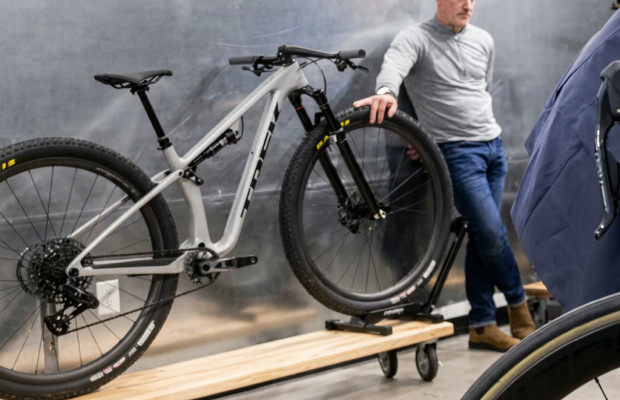
Trek leaks—by mistake?—its new 32" XC bike
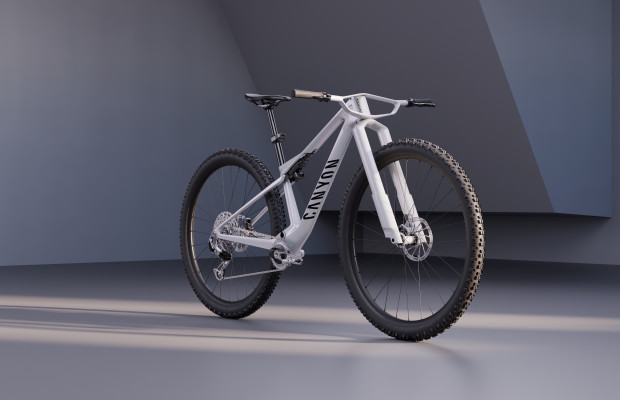
Canyon bets on 32" in its Lux Era: an extreme vision of XC where aerodynamics is more important than weight

An indoor trainer can do more for your training than you think: here are 7 reasons to own one

Goodbye to watts per kilogram as the sole benchmark—fatigue decides who’s the best

What do the colours of the rainbow jersey mean, and who was the first World Champion?

How much prize money does La Vuelta 2026 offer? Here’s what Enric Mas has earned and how it compares with the Tour and Giro
As they explain, the main problem right now is that there is still no commercial material available to conduct real-world tests that would validate this new concept. So, to investigate it, we first have to create it. That is precisely why the brand decided to build its own prototypes from scratch. Megamo has built three different bikes, in sizes S, M, and L, designed for riders of different heights, riding positions, and ergonomic needs.

The key to the project is that Megamo isn’t simply testing “a gravel bike with bigger wheels.” The brand believes that a 32” bike requires a complete rethinking of the bike’s performance and that the concept can only be properly evaluated if the entire design revolves around those wheels.
That’s why Megamo decided not to make the leap to a final carbon frame just yet. The brand believes that such an early stage of development requires maximum freedom to constantly modify geometries and performance—something very difficult to achieve once specific carbon molds have been manufactured. Instead, Megamo has created several aluminum prototypes with variable geometries and numerous adjustments that allow the bike’s performance to be constantly tweaked during testing.

These adjustments include different bottom bracket heights, variations in fork offset, and changes to the head tube angle. All of this allows for significant modifications to the bike’s stability, weight distribution, and handling, in an effort to understand what a 32” gravel bike truly needs.
Another particularly interesting aspect is that Megamo isn’t focusing its testing solely on professional riders. The brand says that much of the development is being carried out with local riders and real users connected to the company itself, because they believe that the people who will ultimately buy these types of bikes won’t necessarily be elite riders.
The idea is to gather feedback from cyclists with very different profiles and assess to what extent the theoretical advantages of 32-inch wheels outweigh the limitations that also arise with this format. Because at Megamo, they acknowledge that there are real issues related to geometry, riding positions, and ergonomics when trying to integrate such a large wheel into a gravel bike.
During testing, they are also experimenting with very different cockpit and riding position setups. From stems with extremely negative angles to more conservative setups, as well as different handlebar types and geometry combinations. The goal is to understand which configuration might work best before making any final decisions.

The brand emphasizes that the project does not guarantee the release of a future 32-inch Megamo gravel bike. Right now, the focus is exclusively on collecting data and determining whether riders would actually see clear benefits compared to current 700c bikes.
The fact that a brand like Megamo is dedicating time and resources to developing specific prototypes confirms that the industry is beginning to take this possibility very seriously. It remains to be seen whether the gravel bike market will end up adopting this size on a massive scale or if ergonomic and geometric limitations will ultimately slow its expansion.
También puede interesarte
Mountain bike
Trek leaks—by mistake?—its new 32" XC bike
Mountain bike
Canyon bets on 32" in its Lux Era: an extreme vision of XC where aerodynamics is more important than weight
Training
An indoor trainer can do more for your training than you think: here are 7 reasons to own one
Road
Goodbye to watts per kilogram as the sole benchmark—fatigue decides who’s the best
Road
What do the colours of the rainbow jersey mean, and who was the first World Champion?
Road
