Lactate gels: the next revolution in cycling is brewing in Spain
During the last decade, professional cycling, and endurance sports in general, have pushed the limits of everything related to race nutrition. Teams have learned to train the gut to absorb amounts of carbohydrates that seemed impossible a few years ago, and today it is common to see riders consuming more than 120 grams per hour in grand tours. Now, a group of Spanish researchers believes that the next big breakthrough could come from a completely different avenue. Their proposal is called ExoLactate and consists of something that until recently seemed impossible: ingesting lactate in gel form during competition.
ExoLactate, the Spanish gel that wants to open a new era in cycling nutrition
Behind ExoLactate are physiologist Aitor Viribay, one of the international references in nutrition applied to endurance sports, Dani Lasa, who has been responsible for the gastronomic experimentation at Mugaritz for years, and Juan Carlos Arboleya, a doctor in physical biochemistry and researcher at the Basque Culinary Center. Together they have developed a technology that seeks to put into practice an idea that has been sparking interest among physiologists and exercise scientists for decades: to use exogenous lactate as an energy source during exertion.
The public presentation of the project took place a few days ago during the "89 Grams" event, organized by the scientific magazine Fissac in Barcelona. Both El País and Revista Corredor, two of the media present at the meeting, highlighted the enormous interest that ExoLactate generated among coaches, nutritionists, researchers, and professionals linked to high-performance sports.
RECOMENDADO
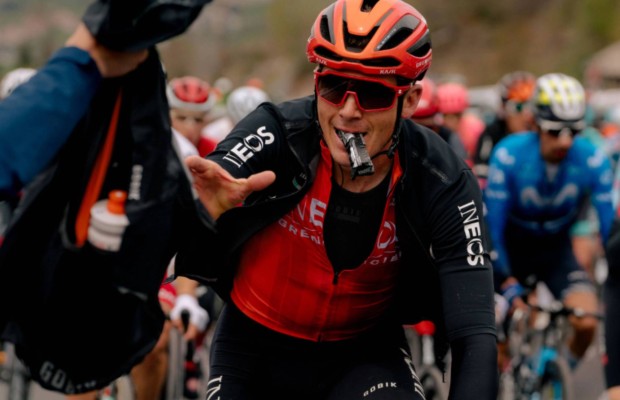
More power, less fatigue: how nitrates could help you on the bike
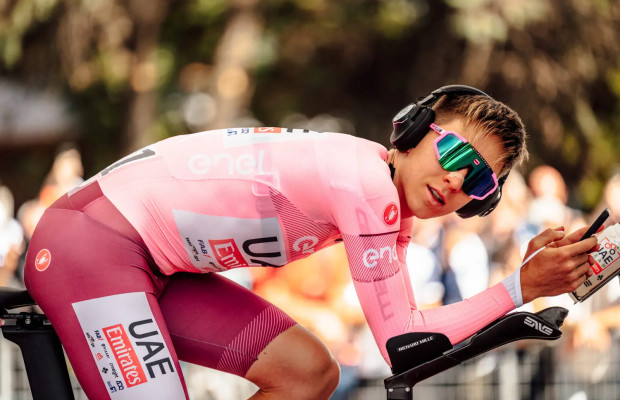
An indoor trainer can do more for your training than you think: here are 7 reasons to own one
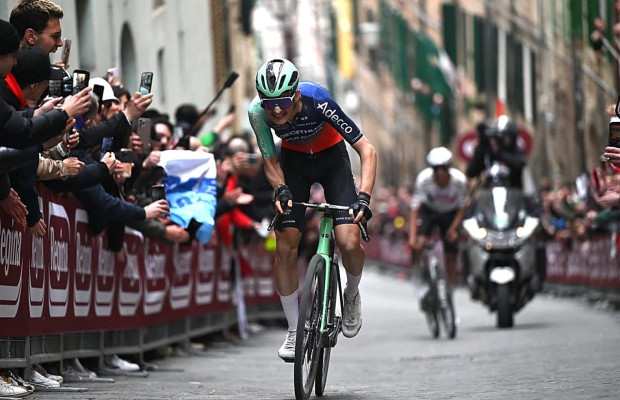
Goodbye to watts per kilogram as the sole benchmark—fatigue decides who’s the best
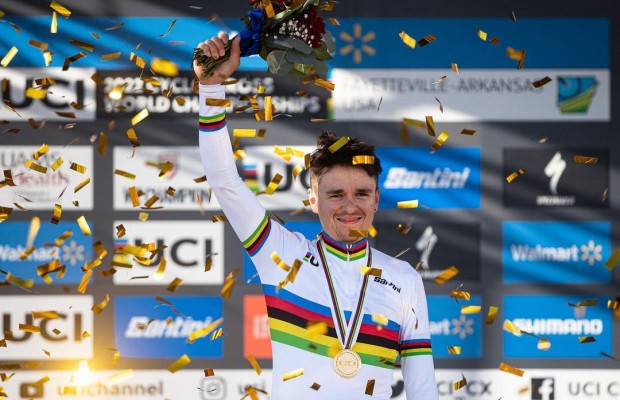
What do the colours of the rainbow jersey mean, and who was the first World Champion?
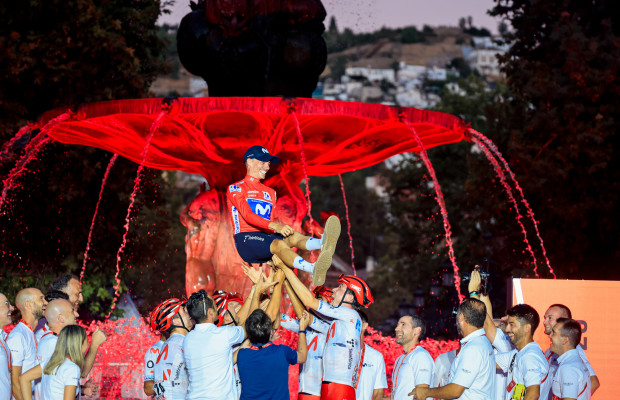
How much prize money does La Vuelta 2026 offer? Here’s what Enric Mas has earned and how it compares with the Tour and Giro
Sign up first, train later: why entering a race can change the way you train
The paradigm shift behind ExoLactate
To understand why ExoLactate is generating so much excitement, it is necessary to comprehend how the scientific view of lactate has changed.
For decades, it was considered a byproduct associated with muscle fatigue. However, modern research has shown that it plays a much more complex role. Lactate acts as fuel for different tissues in the body and actively participates in metabolic regulation during exercise.
Viribay has been advocating this view for years. In fact, he recently explained that an important part of current nutritional strategies based on high amounts of glucose and fructose ultimately aims to increase the internal production of lactate, which will then be used by the mitochondria to generate energy.
The question posed by the creators of ExoLactate is simple. If the body seeks to produce lactate to use it as fuel, what would happen if it could receive it directly from the outside?
The barrier that had remained unresolved for half a century
The use of exogenous lactate is not a new idea. Researchers like George Brooks, one of the leading global references in this field, have been studying its physiological applications for decades.
The real problem has always been technological. Although there were experimental formulations, none had managed to provide sufficient amounts of lactate in a practical, stable, and pleasant way for the athlete.
As explained by its developers during the presentation, ExoLactate overcomes that obstacle through a proprietary encapsulation technology that allows for the administration of relevant doses in formats similar to the energy gels commonly used by cyclists and runners.
The ability to provide between 15 and 25 grams of lactate per hour is precisely one of the aspects that differentiates ExoLactate from previous attempts and one of the pillars on which the patent developed by the Spanish team is based.
A different energy pathway than carbohydrates
One of the most interesting arguments put forth by the researchers relates to intestinal absorption.
Currently, the main limit to increasing the energy available during a competition is not the amount of fuel a cyclist carries, but the body's ability to absorb it. Carbohydrates depend on specific transporters that become saturated when the amounts are very high.
Lactate uses other transport mechanisms, known as MCT. According to the working hypothesis defended by the creators of ExoLactate, this would allow for a complementary pathway to glucose and fructose, potentially increasing the total energy availability during exercise without relying solely on traditional transporters.
In other words, it would not be about replacing current carbohydrates, but rather adding a new nutritional tool to the arsenal of endurance athletes.

ExoLactate has already left the laboratory
Another highlighted aspect during the presentation was that ExoLactate has already been used outside of experimental settings.
According to its creators, the product has been tested by high-level athletes in real training and competition situations, including cyclists and specialists in long-duration endurance events.
So far, no complete scientific studies have been published that allow for precise quantification of its impact on performance, so it will still be necessary to accumulate independent evidence before drawing definitive conclusions. However, the fact that the project has progressed from the laboratory to competition testing is one of the reasons explaining the interest it is generating within the sector.
The next nutritional revolution in cycling?
The emergence of ExoLactate coincides with a moment when concepts such as durability, energy optimization, and fatigue resistance occupy a central position in sports performance.
For years, the evolution of nutrition in cycling has been marked by the ability to ingest and absorb increasing amounts of carbohydrates. ExoLactate proposes a different approach. It does not seek to increase the amount of available glucose or fructose, but to directly provide a molecule that the body itself continuously uses during exercise.
It remains to be seen how far its real impact reaches and whether the initial results are confirmed in future studies and competitions. But for the first time, a technology developed entirely in Spain seems to have found a practical way to transfer exogenous lactate from laboratories to the pockets of jerseys.
If it meets the expectations generated around its launch, ExoLactate could become one of the most striking innovations seen in sports nutrition in recent years.
También puede interesarte
Nutrition
More power, less fatigue: how nitrates could help you on the bike
Training
An indoor trainer can do more for your training than you think: here are 7 reasons to own one
Road
Goodbye to watts per kilogram as the sole benchmark—fatigue decides who’s the best
Road
What do the colours of the rainbow jersey mean, and who was the first World Champion?
Road
How much prize money does La Vuelta 2026 offer? Here’s what Enric Mas has earned and how it compares with the Tour and Giro
Training
