Is this the most advanced bike in the WorldTour? We tested the S-Works Tarmac SL9
The Specialized Tarmac SL9 was presented just before the Tour de France with the promise of being the fastest Specialized in history. A few weeks later, the new generation had already found in the French race the best possible stage to prove it. Remco Evenepoel managed to beat Tadej Pogacar in the grueling finish at Plateau de Solaison, a victory in the Slovenian's own territory that served to confirm much of the work done around this new Tarmac in competition.
We have also been able to test it thoroughly for a season, and these are our conclusions.
The Specialized Tarmac SL9 has been designed to be faster outside the lab
The previous Tarmac SL8 already combined lightness and aerodynamics in a single platform, following a different path than the polarization that other brands bet on, with specific bikes for mountain stages and aerodynamic models for flat riding.
The SL8 had taken this concept to a point that was difficult to improve. It was an extremely lightweight bike, but also had a very low aerodynamic coefficient, backed by its corresponding measurements in the wind tunnel.
RECOMENDADO
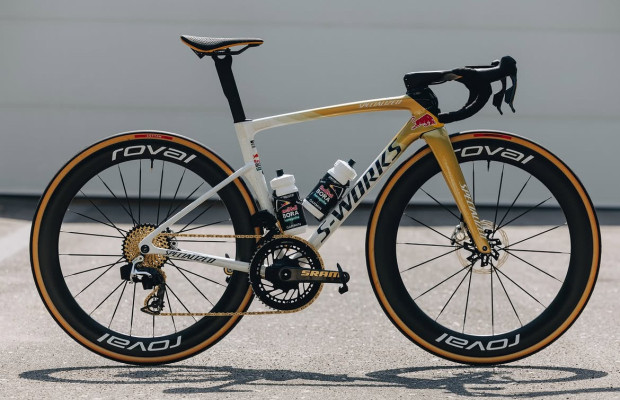
A Closer Look at Remco Evenepoel's S-Works Tarmac SL9 Golden Edition for the Tour de France
Evenepoel defeats Pogacar at Plateau de Solaison and Vingegaard's withdrawal shakes the Tour
An indoor trainer can do more for your training than you think: here are 7 reasons to own one
How to change the feel of the brakes without having to buy new ones
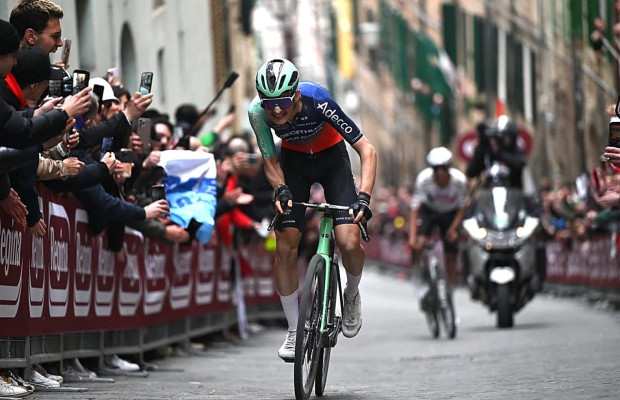
Goodbye to watts per kilogram as the sole benchmark—fatigue decides who’s the best
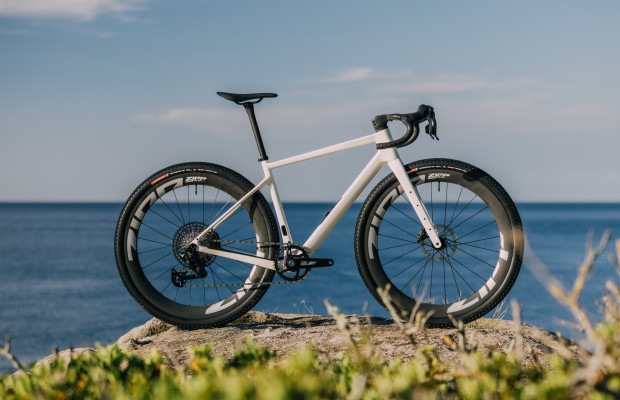
The Megamo West 2027 gets a new range from €2,399 and remains a great choice
To improve the bike in all parameters, Specialized has developed its own scientific method, called “Equation of Speed”. This is based on evaluating and measuring not only the bike separately, and much less isolated parameters, but the whole formed by bike and cyclist in real race situations.
The result of this equation is the “Time to Finish,” that is, the actual time that each modification subjected to measurement can save. The ultimate goal is to achieve the fastest bike in a real scenario, whatever the conditions.
With the Tarmac SL9, Specialized set out to improve aerodynamics while maintaining, at a minimum, the lightness, stiffness, and absorption capacity of the SL8.
To refine every last detail in the aerodynamic study, an attempt has been made to reproduce real use with enormous precision. Even the mannequin used in the wind tunnel moves its legs simulating real pedaling.
One of the areas where the most effort has been made, as indicated by the measurements, has been to minimize the width of the head tube. The so-called Speed Sniffer, as Specialized calls this front part, loses 4 mm in width and allows for a 10% reduction in the bike's frontal area. To achieve this, the fork tube has been offset, leaving the necessary space for the rear brake hose to run on the right side.

In this entire front area, every element is designed to work together in aerodynamic terms. The fork head integrates with the head tube and the down tube through very continuous shapes that seek to direct the airflow in the cleanest and most efficient way possible.
The fork legs, in addition to having a larger profile, are slightly angled inward to direct air towards the frame and reduce turbulence. With the same goal, the space between the down tube and the wheel has also been decreased.
Another detail of the frame, and perhaps the most eye-catching, is the so-called Win Fin. It is the aerodynamic fin located on the seat tube, under the stays, whose function is to channel air towards the wheel, reducing turbulence.

This design is based on observations made in competition, and there, in the decisive moments of the race, riders usually carry a single bottle. Specialized has therefore optimized the bike for this configuration and, according to the brand, only the Win Fin allows for a saving of 0.5 watts.
Along the seat tube, we find extremely narrow shapes that continue into the seat post. This further reduces its width and increases its profile in the upper area.

This is also a result of the measurements taken with the moving mannequin. Specialized checked how the airflow accelerates significantly between the cyclist's thighs, making the seat post one of the elements of the bike with the greatest aerodynamic impact.
But the performance of the Tarmac SL9 does not solely revolve around aerodynamics. Specialized has also sought to optimize weight and stiffness to the maximum.
To achieve this, the stresses that the frame endures have been studied in detail, and the shapes of the tubes have been designed so that their own structure supports these loads, reducing the need to add material and eliminating unnecessary layers of carbon.

The result is a frame weighing only 687 grams in size 56, with a high stiffness index that, according to Specialized's laboratory tests, is capable of withstanding more than 100,000 cycles at 2,377 watts and 100 rpm.
Of course, the Tarmac features a specific layup for each size. This way, it seeks to ensure that each cyclist obtains the same performance regardless of whether they use a size 44 or a 61.
In geometry, we also do not find significant changes compared to its predecessor. After so many generations, the Tarmac is an extremely refined bike for high-performance cycling.
The most notable change is a slight relaxation of the head angle. In size 54, it becomes 72.5° compared to the 73° of the SL8, making the SL9 a bit easier and more stable. The total length also increases by a few millimeters, reaching 986 mm in this size.

In the rest of the measurements, we hardly find changes. The 74° seat tube places us in an optimal position for pedaling, while a reach of 384 mm, a stack of 544 mm, and short chainstays of 410 mm make the Tarmac an agile and responsive bike without resorting to extreme measurements.
S-Works Tarmac SL9: a build directly inherited from the WorldTour
The bike we have been able to test thoroughly for a season has been the top-of-the-line version equipped with SRAM. And, component by component, we find it to be a truly difficult build to surpass.
The SRAM Red group is fully mounted, including a power meter. One detail we particularly liked is the choice of gearing. Specialized has opted for a 10-36 cassette, which maximizes the range compared to tighter options, combined with 37/50 chainrings.
Although it is a bike designed to perform at the highest level, it is still aimed at a final customer who does not have to possess the physical capabilities of a professional.
And precisely in the Tour de France, this SL9 already had the opportunity to demonstrate how far it can go in competition. Remco Evenepoel managed to surpass Pogacar at Plateau de Solaison with this bike, after being able to follow the Slovenian and Isaac Del Toro in a final ascent of 11.3 kilometers at 9%. A particularly suitable scenario for a bike whose gearing seeks precisely to combine aerodynamics, lightness, and stiffness without specializing in a single terrain.
On the handlebars, we find the integrated Roval Rapide cockpit, which contributes both to the clean aesthetics of the bike and to its aerodynamics. It features a slight 4° flare that provides quite a bit of comfort when gripping the lower part. Up to size 54, it is mounted at 38 cm width, increasing to 40 cm in size 56 and 42 cm in larger sizes.

But if there is one component of this Tarmac SL9 that stands out from the usual and raises the overall level even more, it is the wheels.
The Roval Rapide CLX III are a true marvel both for materials and construction as well as for design. To begin with, they break one of the aerodynamic rules that have accompanied us for many years, according to which the rear wheel should have a greater profile.
Specialized, again relying on its own studies in the wind tunnel, has determined that the greatest aerodynamic impact is found in the front wheel. This allows for a slight reduction in the rear profile to gain weight and reactivity.
The result is 51 mm in front and 48 mm in the rear. Additionally, although both share an internal width of 21 mm, the exterior shape of each rim is different to optimize their performance according to their position.
The hubs are Roval, with DT ceramic bearings and a Ratchet EXP core. But the most striking feature is the spokes, made of carbon, with an extremely flat profile and titanium ends. The set announces a weight of 1,305 grams.
On these rims, 30 mm Cotton TLR tires are mounted.
The S-Works Rapide seat post, as we have already mentioned, has been one of the most studied elements during the development of the bike to improve its aerodynamics. On it is installed the brand's star saddle, the S-Works Power with Mirror, with a 3D printed cover and an extraordinary level of adaptability and comfort.
As a finishing touch, and continuing with the overall level of the build, we find CeramicSpeed bearings in both the bottom bracket and the headset.
Our impressions of the S-Works Tarmac SL9: a super bike that doesn't need to draw attention
Expectations were already high before receiving the bike. It is clear that we are facing one of the great protagonists of the professional peloton and one of the most desired bikes on the market.
In person, the SL9 impresses with the level of detail and the quality of its finishes. We hardly find a single tube with a conventional shape, and yet, the whole does not come off as garish. Specialized has managed to combine a classic image with clearly technological solutions quite well.
The front part is one of the best-resolved areas aesthetically. The cockpit and frame practically merge, with perfectly integrated spacers that allow for maintaining some height under the stem without ruining the aesthetics. Below, the union between the frame and fork also stands out, whose shapes seem to continue into one another.

The down tube is particularly stylized at its lower part, while the seat tube, viewed from the front, is extremely narrow.
Of course, another of the elements that draws the most attention is the Win Fin, which has already become one of the visual identity marks of this SL9.
The seat post also stands out for its increased profile in its upper area while simultaneously reducing its frontal width.
As soon as you lift the bike, you are surprised by how light it is, especially considering that it does not renounce aerodynamic shapes and mounts generously profiled wheels.
The scale confirmed our feelings with 6.58 kg without pedals.

In this sense, it seems that the stage in which the arrival of disc brakes, integration, and the growing importance of aerodynamics significantly increased the weight of bikes has definitely been surpassed. This Tarmac SL9 can approach the UCI limit of 6.8 kg even ready to compete.
After weighing it, we installed our pedals and set off.
The position on the Tarmac is quite balanced. It is clear that it is not a long-distance bike and that it seeks performance above all, but it does not force you to adopt as aggressive a posture as one might expect from a model designed to compete in the WorldTour.

Our unit had a couple of spacers under the stem, but even taking this into account, we felt more comfortable than expected.
The test bike was a size 54, which fits perfectly with our height of 174 cm.
During the first kilometers, the silence that the bike transmits stands out. This occurs both on smooth asphalt and when passing over slightly rough surfaces, where it absorbs small bumps without falling apart.
It is also extremely easy to reach high cruising speeds. On one hand, the position invites you to push the pedals; on the other, the bike's efficiency does the rest.
The Tarmac responds immediately to every push and transmits the power to the rear wheel without seeming to lose anything along the way. Both its extraordinary lightness and a very high stiffness where it is needed help with this.
In fact, stiffness is one of the aspects that has impressed us the most about this SL9.
Peddling hard while standing, the sensation of acceleration is spectacular. The bottom bracket area feels like a block that transmits every watt. At the same time, when applying force on the handlebars from side to side, the whole set maintains enormous solidity.
This is a fundamental characteristic in a sprint, but it also contributes to the bike feeling firm and secure when tackling descents at high speed.
Fast climbing, rolling, and descending
The Tarmac SL9 rolls tremendously well, but the best part is that it is difficult to find a weak point.
When climbing hills, it is also not easy to find a rival. The high stiffness we just mentioned, combined with the extraordinary lightness of the set, makes tackling climbs and pushing really addictive. The bike overcomes each ramp with surprising ease.
Both seated and standing, we feel that it advances with enormous ease. Additionally, the chosen gearing offers enough margin to tackle very steep ramps while maintaining an adequate cadence.
But both a stage of the Tour and a cycling outing include all kinds of terrain. And a bike like this also has to convey security when descending.
As we have mentioned, the Tarmac has a balanced geometry that makes it reactive without being excessively nervous. This translates into great ease in tracing curves and correcting trajectory when necessary.
Its high lateral stiffness also makes us feel the bike very firm in every turn, without the small irregularities of the asphalt causing us to lose control even at high speeds.
Throughout our tests, we have been surprised to let go of the brakes more than usual and especially enjoy the descents.
This security is also greatly aided by the 30 mm tires, capable of filtering a good part of the irregularities of the asphalt. The wheels, despite their generous profiles and carbon spokes, do not offer the excessively dry feel we might expect. They work with the frame to filter high-frequency impacts.
Regarding the components, we can only praise the precision of the transmission. Its operation has been impeccable, and especially noteworthy are the controls with very well-designed ergonomics.
The design of the levers also contributes to outstanding braking. The latest generation of SRAM road and gravel groups has improved significantly in this aspect, offering enormous power and an easily modulated feel, to the point of allowing braking with a single finger.
Another small detail that demonstrates the quality of the bearings throughout the transmission is that, with the bike stationary, the cranks spin practically effortlessly and with almost total absence of friction.
The cockpit also deserves special mention. Its design provides a comfortable position and excellent ergonomics in the different grip areas.
And another clearly differentiating element is the S-Works Power with Mirror saddle, which has allowed us to pedal for hours without discomfort.
Conclusions: the great virtue of the Tarmac SL9 is not having to choose
Before testing it, we were already clear that we were facing one of the great protagonists of the market. But after a season using the Tarmac SL9, we have confirmed that the design objectives aimed at creating a bike capable of winning the best races in the world also directly benefit the amateur cyclist.
A pure performance bike like this does not have to be uncomfortable or inaccessible for a non-professional user. On the contrary, many of those gains developed with competition in mind are also clearly perceived in everyday use.
In fact, we believe that the concept of a bike capable of dominating all types of terrain can benefit the customer even more than the professional. Few amateurs can afford to have several specific bikes, and moreover, what is usual in any training, ride, or competition is to encounter very different scenarios.
And there lies probably the greatest virtue of this Tarmac SL9: it is a bike prepared to be extremely fast practically on any terrain.
For now, the Specialized Tarmac SL9 arrives on the market in S-Works version, with SRAM Red and Shimano Dura-Ace builds, both priced at €13,999. The frame kit can also be purchased for €5,799 and the Team Replica versions for €5,999.
Specialized S-Works Tarmac SL9: specifications, weight, and price
- Frame: S-Works Tarmac SL9, FACT 12r Carbon
- Fork: S-Works FACT 12r Carbon
- Brakes: SRAM Red E1
- Shifters: SRAM Red AXS E1
- Front Derailleur: SRAM Red AXS E1
- Rear Derailleur: SRAM Red AXS E1, 12 speeds
- Cassette: SRAM Red XG-1290 E1, 12 speeds, 10-36
- Chain: SRAM Red E1
- Crankset: SRAM Red AXS E1 50/37, Quarq Power Meter
- Bottom Bracket: CeramicSpeed BB Alpha, BSA DUB
- Wheels: Roval Rapide CLX III
- Tires: Cotton TLR, 700x30
- Handlebar: Roval Rapide Cockpit
- Saddle: S-Works Power with Mirror
- Seat Post: S-Works Rapide Post, FACT Carbon, 15 mm offset
- Weight: 6.58 kg
- Price: €13,999
También puede interesarte
Road
A Closer Look at Remco Evenepoel's S-Works Tarmac SL9 Golden Edition for the Tour de France
Road
Evenepoel defeats Pogacar at Plateau de Solaison and Vingegaard's withdrawal shakes the Tour
Training
An indoor trainer can do more for your training than you think: here are 7 reasons to own one
Mechanics
How to change the feel of the brakes without having to buy new ones
Road
Goodbye to watts per kilogram as the sole benchmark—fatigue decides who’s the best
Gravel
