What do the colours of the rainbow jersey mean, and who was the first World Champion?
In every cycling discipline there is a ceiling, and that ceiling is rainbow-coloured. The ultimate achievement for any cyclist is to pull on the jersey that identifies them as World Champion. It is a garment that is instantly recognisable and stays with the winner throughout the following season. But what does the rainbow jersey really mean? Where do its colours come from, and who is allowed to wear it?
The history behind the rainbow jersey
The rainbow jersey will once again be especially prominent in the coming days with the 2026 Montréal Road World Championships. This Sunday, September 20, Marlen Reusser will attempt to defend her title, while in the men’s race, Remco Evenepoel will attempt to win his fourth consecutive World Time Trial Championship, after taking the title in 2023, 2024 and 2025.
A week later, the new road race World Champion will be crowned. This time, there will be a guaranteed change of ownership, as Tadej Pogačar will not be able to defend the rainbow jersey. The Slovenian has called time on his season as a result of the injuries he suffered in his crash at the Vuelta a España and will not be in Montréal.
But where does the rainbow jersey come from?
RECOMENDADO
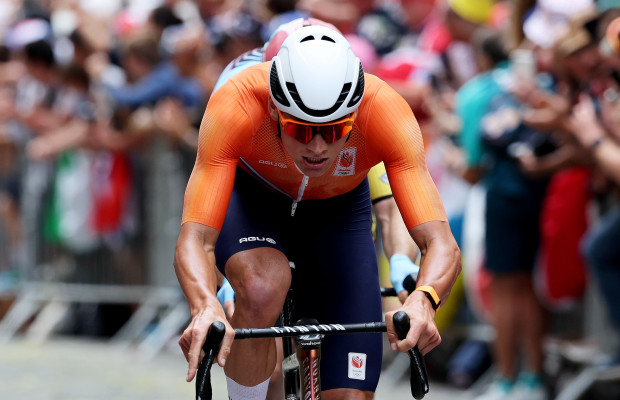
The Montréal World Championships move on to the road races: dates, schedule and TV
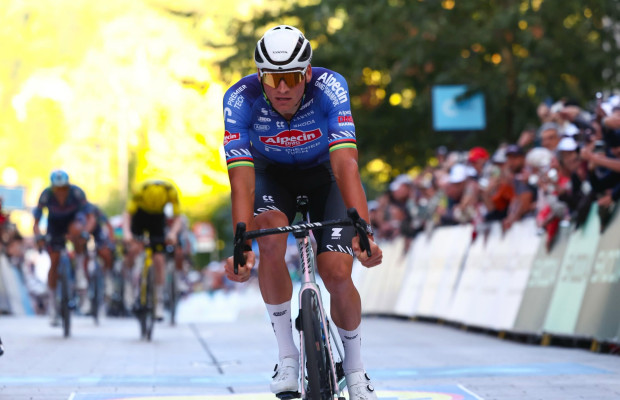
Van der Poel arrives at the World Championships two kilos lighter but warns: “It will be a little difficult for me”
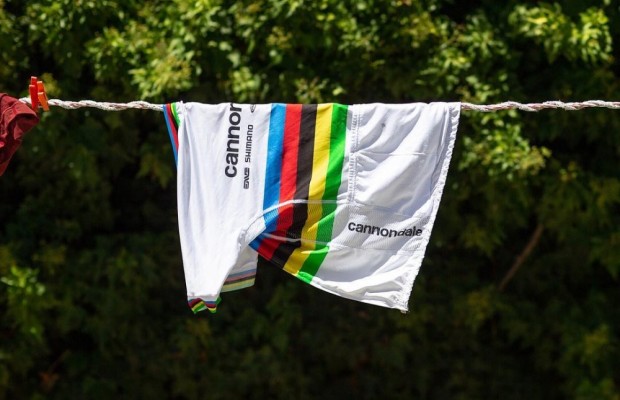
Bad odors and chafing? You’re washing your cycling clothes the wrong way
The most important information about your bike that almost no one checks

The highest-paid cyclists in the world in 2026: Pogacar continues to lead the ranking.

When do helmets have to be changed? Do they have an expiration date?
It is an almost inseparable part of cycling history: the rainbow jersey identifies the current UCI World Champion. Road, MTB, gravel, cyclocross, track, BMX and all the other disciplines recognised by the UCI have their own World Champions, and the rainbow bands make them instantly recognisable.
The design consists of five horizontal stripes in blue, red, black, yellow and green on a white background, a combination closely linked to the visual identity of the UCI and world cycling.

These five colours are the same as those used in the Olympic rings designed by Pierre de Coubertin at the beginning of the 20th century. They have traditionally been associated with the five continents — Europe, Asia, Africa, America and Oceania — although Coubertin himself never officially assigned a specific colour to each continent. The idea was that, together with the white background, the colours could represent the flags of all the countries taking part in the Olympic Games at the time.
Over the decades, the five bands have become one of the most recognisable symbols of cycling in their own right.
The rainbow jersey also has a brand that has been closely associated with its production for decades. Santini has had a relationship with the UCI since 1988 and remains its official partner today. The two parties recently renewed their agreement until 2031, meaning the Italian company will continue producing the official UCI World Champion jerseys for the years to come. The UCI specifically dates Santini’s production of the rainbow jerseys back to 1994.
When is the rainbow jersey worn?
In the multicoloured snake formed by a cycling peloton, certain colours always mean much more than others. Depending on the race, a jersey identifies the leader of the overall, mountains, points or another classification, regardless of which team they ride for.
But the rainbow jersey belongs to another category altogether. It does not identify the provisional leader of a race, but rather the rider who won the most recent World Championship in their discipline.
The World Champion can wear it throughout the year, until the next World Championships are held, but only when competing in the discipline, event and category in which they won the title.

This explains situations that can sometimes seem strange to spectators. Being the Road World Champion does not allow a rider to wear the rainbow jersey in an individual time trial, just as being the XCO World Champion does not entitle them to race in rainbow colours in XCC, gravel or cyclocross unless they also hold that title.
A particularly clear example can currently be found in Remco Evenepoel, who can race in the rainbow jersey in time trials thanks to his three consecutive World titles in 2023, 2024 and 2025. This Sunday in Montréal, he will have the chance to extend that status for another year if he wins his fourth consecutive title.

Alfredo Binda was the first World Champion to wear it
Italy’s Alfredo Binda was the first professional road World Champion in 1927, after winning in Nürburgring at the first edition of the World Championships reserved for professionals.
It took more than three decades to see a woman crowned World Champion. Luxembourg’s Elsy Jacobs won the first women’s Road World Championship in Reims in 1958. The UCI itself dates the inclusion of the women’s event in the World Championships programme to 1958.

Since then, the rainbow jersey has spread as the UCI added new disciplines, events and categories to its World Championships. From road and track, it went on to identify World Champions in MTB, cyclocross, BMX, gravel and many other cycling disciplines.
The rainbow bands remain even after losing the title
Winning a World Championship allows a rider to wear the full rainbow jersey for approximately one year, but having been a World Champion leaves its mark for the rest of a cyclist’s career.

When a rider is no longer the reigning World Champion, they can incorporate the distinctive rainbow bands into certain parts of their kit. That is why they are often found on the sleeves or in other details of former World Champions’ jerseys.
It is a much more discreet distinction than the full jersey, but for any fan, it is an immediate reminder that this cyclist has stood at the very top of their discipline at some point in their career.
También puede interesarte
Road
The Montréal World Championships move on to the road races: dates, schedule and TV
Road
Van der Poel arrives at the World Championships two kilos lighter but warns: “It will be a little difficult for me”
Bike Equipment
Bad odors and chafing? You’re washing your cycling clothes the wrong way
Road
The most important information about your bike that almost no one checks
Road
The highest-paid cyclists in the world in 2026: Pogacar continues to lead the ranking.
Bike Equipment
