Van der Poel is aiming for his fourth Tour of Flanders with a strategy that has worked for him before
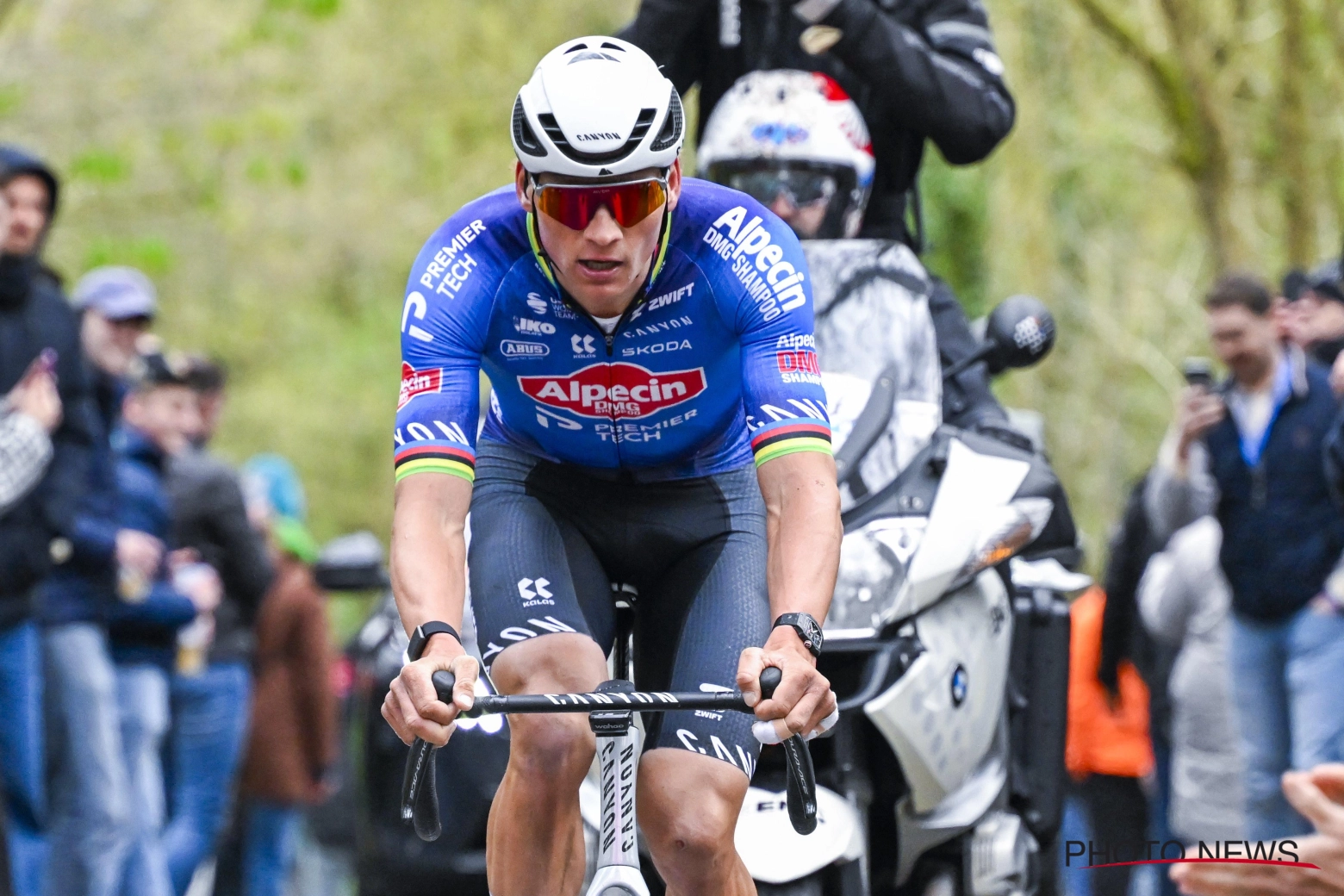
Mathieu van der Poel arrives at the 2026 Tour of Flanders at a moment of competitive maturity that goes beyond his current form. The Dutchman not only aspires to a fourth victory in De Ronde, but he does so backed by a team structure and a race reading that has already proven effective in the major Monuments of the season.
Van der Poel and the plan that already made him win Flanders and threatens to repeat
His approach to the Flemish classic cannot be understood without the context of the previous weeks. Van der Poel has repeated a pattern that has worked for him in the past, combining demand and control in the preparation classics. “E3 Saxo Classic and Gent-Wevelgem were two very good tests. In Harelbeke, I had to empty myself to win. It was close, but I did it. In Wevelgem, I felt less fresh because of that effort, so as a team, we decided to bet on Jasper Philipsen at the finish. And that also worked.” That temporary lack of freshness does not worry him. “The weekend was very similar to that of 2024. Back then, I also won E3, and two days later, I didn’t have enough freshness in Wevelgem. But a week later, I won the Tour of Flanders.”
That balance between performance and recovery has been the axis of his recent preparation in Spain. “In the last week, I have tried to find the right point between gaining those last percentages and maintaining a good feeling of freshness.” A formula he has also applied in other key events on the calendar, such as Milan-San Remo, where absolute control of the race is practically impossible and forces reliance on positioning and sensations.
RECOMENDADO
Bad odors and chafing? You’re washing your cycling clothes the wrong way
Arc'teryx lands in MTB with garments designed for the most demanding terrain
Fizik launches the Kyros, its most versatile helmet for road, gravel, and XC
Megamo hints at its next big revolution and raises expectations
The legendary cork tape from Cinelli evolves 40 years later with new Pro Race and Gravel versions
Pinarello explains the breakage of Ganna's handlebar during the race
Van der Poel himself summarizes it clearly when analyzing La Primavera, a scenario that shares parallels with the unpredictable outcome of Flanders. “It’s a special race, and that’s precisely what makes it so difficult to control. In a race like this, the important thing is to be well positioned on the Cipressa and the Poggio, and then it’s the legs that decide. There isn’t much tactic involved.” That reading, based on the natural selection of the strongest at decisive moments, is the same that he applies to the Flemish walls.
The change in the way the big teams race has also modified traditional scripts. “Since UAE and Tadej Pogacar started racing this way, the dynamics have changed. If a small group goes, the strongest will probably be there. The wind can also play an important role if the attacks come early.” An analysis that fits with an increasingly explosive and less predictable Tour of Flanders.
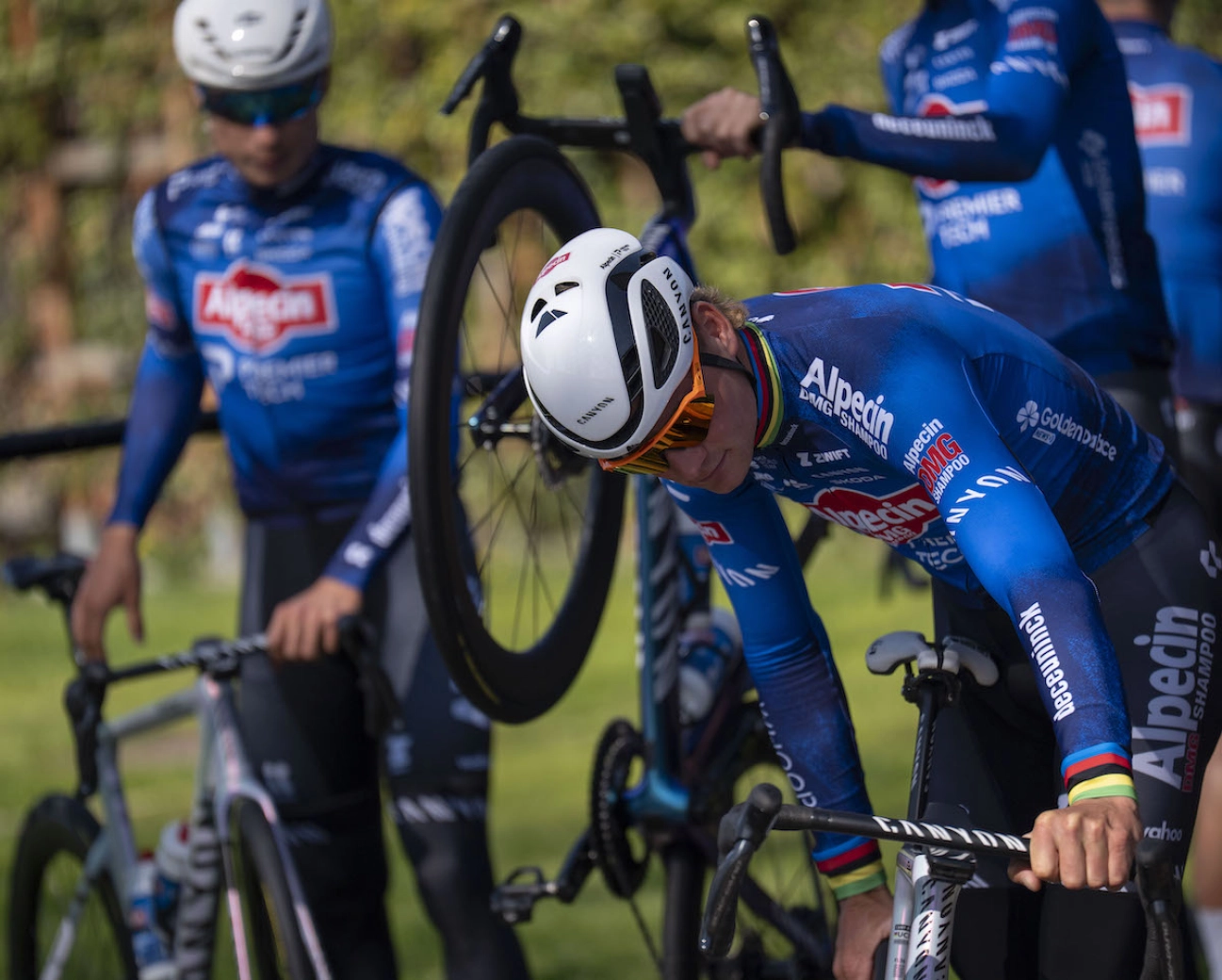
Within that context, the role of the team is once again decisive. The Alpecin-Deceuninck structure has shown a remarkable ability to position its leader at the exact moment in the last Monuments. “In Tirreno, I also saw that the team is ready to position me perfectly for the moment when I have to do it myself. It’s something we have done very well in recent years, and I don’t expect anything different now.” By his side, he will again have an experienced block, highlighted by the continuity of key men. “Silvan will be with me for the sixth consecutive time in the Tour of Flanders. Michael, Oscar, Edward, and Florian bring a lot of experience, while Jonas Geens has progressed a lot in recent months. I trust them all completely.”
The depth of the team also allows playing with more than one card, as has already happened this season with Jasper Philipsen. The Belgian naturally assumes that complementary role. “Mathieu is our absolute leader and one of the few riders capable of following and responding to someone like Pogacar. For me, it’s about being patient. If an opportunity arises at the finish, I will try to take advantage of it.” That duality reinforces the team’s ability to adapt to different race scenarios.
As for the rivals, Van der Poel does not shy away from the increasing competitive level. He places Pogacar as a reference but also acknowledges the progress of Van Aert and Pedersen in recent weeks. They are joined by the unknown of Remco Evenepoel in his debut. “He is a top-level rider and has a very strong team. We must not underestimate him. I’m glad he is at the start because the more strong riders there are, the sooner the race breaks, and that doesn’t hurt me.”
Despite all that context, his approach does not change. “It’s part of the game, and it no longer makes me nervous. When you’re good, you are automatically considered a favorite. I take it as a compliment, and it doesn’t change the way I race.” That naturalness also extends to the historic objective he has ahead. “I am aware of what it would mean, and it would be something very special. But I approach the race as always, trying to win. There was a time when winning just once seemed like a distant dream. Being the only one with four victories would be the greatest achievement, but we haven’t gotten there yet.”
También puede interesarte
Bike Equipment
Bad odors and chafing? You’re washing your cycling clothes the wrong way
Mountain bike
Arc'teryx lands in MTB with garments designed for the most demanding terrain
Bike Equipment
Fizik launches the Kyros, its most versatile helmet for road, gravel, and XC
Road
Megamo hints at its next big revolution and raises expectations
Road
The legendary cork tape from Cinelli evolves 40 years later with new Pro Race and Gravel versions
Road