Can a small shock to the ear improve your fitness? The vagus nerve comes into play
For decades, training, nutrition, and recovery have been the three pillars upon which athletic performance has been built. However, a still very nascent line of research is focusing on a fourth factor: the nervous system. Specifically, several recent studies have analyzed how transcutaneous vagus nerve stimulation (tVNS) could improve exercise capacity, increase VO2max, and even reduce inflammation, two aspects particularly interesting for cyclists and endurance athletes.
Vagus nerve stimulation emerges as a possible pathway to improve physical performance and recovery
The vagus nerve is one of the main communication channels between the brain and the rest of the body. It participates in important functions such as heart rate, breathing, digestion, stress response, and inflammatory processes. It is a fundamental part of the parasympathetic nervous system, responsible for promoting recovery and rest states after exertion.
A study found improvements in VO2max after a week of stimulation
The work that has garnered the most attention was published in 2025 in the European Heart Journal and was led by Professor Gareth Ackland from the William Harvey Research Institute at Queen Mary University of London. The research analyzed 28 healthy adults who used a non-invasive vagus nerve stimulation system for 30 minutes a day over the course of a week.

RECOMENDADO
Sign up first, train later: why entering a race can change the way you train
Cycling improves how we think, remember and process information: a new study confirms it
From struggling to enjoying it: tips to build confidence on descents
Are you properly positioned on your bike? These are the measurements you should check

The 2026 MTB World Championships get underway: dates, schedules and where to watch
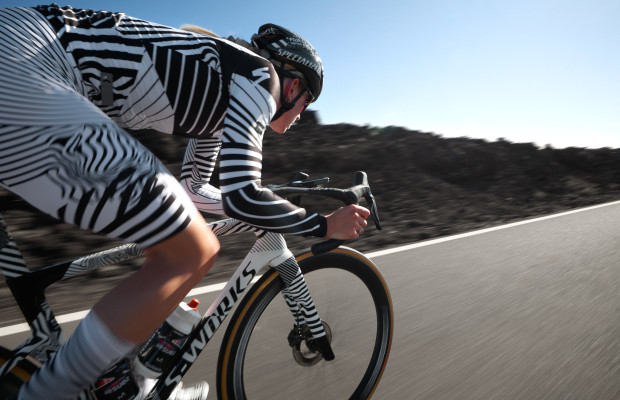
Free aerodynamics for your bike: small changes that make you faster
The results showed a mean improvement of 3.8% in VO2max, one of the most commonly used indicators to measure aerobic capacity. Participants also recorded increases in power achieved during exercise, a higher respiratory rate during maximum efforts, and a greater ability to sustain intense workloads.
In absolute terms, maximum power increased by an average of six watts, and VO2max improved by 1.04 ml/kg/min compared to the placebo treatment. Furthermore, when participants used an identical device but without active electrical stimulation, those improvements did not appear.
Less inflammation and better recovery
Another aspect that caught the researchers' attention was the reduction of certain inflammatory markers observed after stimulation. Although this analysis was conducted only on a small portion of the participants, the results suggest that greater vagal activity could help modulate systemic inflammation.
For cyclists, this is particularly interesting because inflammation plays an important role in both training adaptation and recovery processes. Better control of the inflammatory response could translate into more efficient recovery between demanding sessions or after long-duration competitions.
Why could it work?
Researchers believe the key lies in the relationship between the autonomic nervous system and physical performance. Traditionally, it was thought that individuals with better physical condition developed a higher vagal tone due to training. However, current data suggest that this relationship also works in the opposite direction.
A higher vagal tone promotes better cardiovascular regulation, faster recovery of heart rate after exertion, and a more efficient physiological response during exercise. According to the study's authors, stimulating the vagus nerve could act on these neural mechanisms and improve the body's ability to tolerate intense efforts.

Although the research was not specifically conducted with cyclists or elite athletes, the results open a very interesting avenue for endurance sports.
The researchers themselves believe it is still too early to talk about practical applications in professional sports, but they acknowledge that athletic performance is part of the scenarios they are currently exploring. In fact, Ackland went so far as to say that the results obtained have put “the improvement of athletic performance on the table of possibilities.”
A lot of caution before drawing conclusions
Despite the interest generated, the authors themselves insist that this is only a proof of concept. The study included only 28 healthy participants with an average age of 34 years, so its conclusions cannot yet be extrapolated to high-level athletes or individuals with cardiovascular diseases.
Moreover, it is still unknown what the optimal protocol would be, how long the effects would last, or if athletes with a nervous system already highly adapted could obtain similar benefits.
Training remains the best tool
Experts agree that, for now, the best way to increase vagal tone remains regular physical training. Endurance exercise, especially when combined with high-intensity sessions, improves heart recovery and strengthens autonomic regulation mechanisms naturally.
There are also other strategies associated with greater vagal activity, such as slow breathing exercises with prolonged exhalations, controlled exposure to cold water, or certain relaxation techniques.
Transcutaneous vagus nerve stimulation thus appears as a promising technology that could have future applications in both health and athletic performance. However, current evidence is still far from justifying its use as a new ergogenic aid for cyclists, and much larger studies will be needed before knowing its true potential.
También puede interesarte
Training
Sign up first, train later: why entering a race can change the way you train
Training
Cycling improves how we think, remember and process information: a new study confirms it
Road
From struggling to enjoying it: tips to build confidence on descents
Road
Are you properly positioned on your bike? These are the measurements you should check
Mountain bike
The 2026 MTB World Championships get underway: dates, schedules and where to watch
Road
