"Before, with 6 W/kg you were one of the good ones, now you're just another one on the team": Barguil explains how cycling has changed in just a few years
Professional cycling has transformed at a speed difficult to imagine even for those who have lived it from the inside. Warren Barguil, winner of two stages of the Tour de France and the mountain jersey in 2017, claims that the leap in level has been so great that the performance values that served to fight for the best positions less than a decade ago barely suffice to work in service of a leader today. He explained this in an interview with L’Équipe during the rest day of the Tour.

Warren Barguil believes that cycling has changed too quickly: “People don’t realize”
The Frenchman, who is competing in his twelfth Tour and acknowledges that it will probably be the last of his career, uses a very specific data point to illustrate this evolution. In his victory at the Col d’Izoard in 2017, he produced around 5.9 W/kg, a figure that was then among the best in the peloton. However, he argues that the current level has increased by nearly one watt per kilo.
“People don’t realize how much the level has risen. My generation has seen that gap open. Now young riders are coming in capable of maintaining 7 W/kg for 20 minutes. Before, if you did 6 W/kg you were a good rider. Now you’re just another teammate,” says Barguil.
From cycling for fun to completely structured training
RECOMENDADO
"That's how cycling is": Vingegaard will undergo surgery on his collarbone and avoids blaming anyone for his crash in the Tour
Adidas returns to elite cycling with Alpecin-Premier Tech and Fenix-Premier Tech
"Don't drop me": the message to Pogacar that changed the outcome of stage 15 of the Tour
More power, less fatigue: how nitrates could help you on the bike
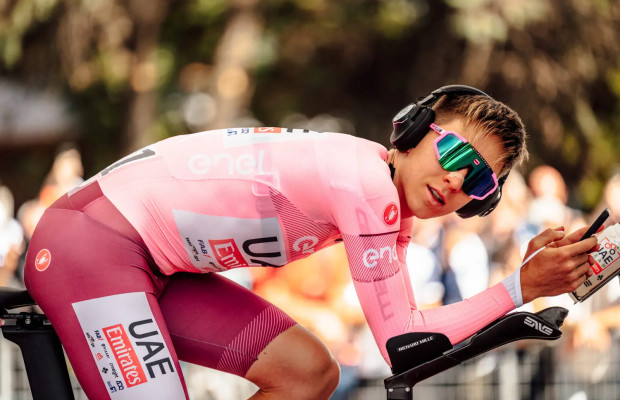
An indoor trainer can do more for your training than you think: here are 7 reasons to own one
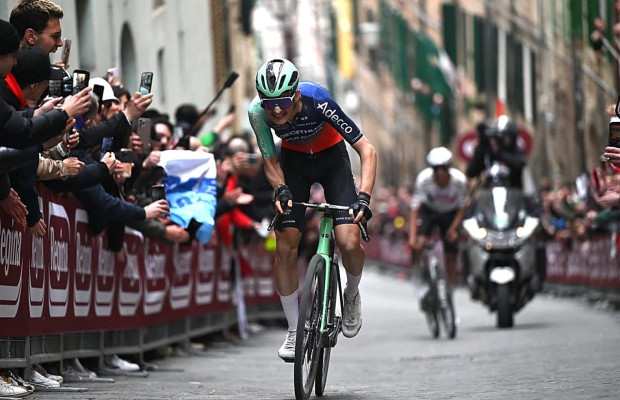
Goodbye to watts per kilogram as the sole benchmark—fatigue decides who’s the best
For Barguil, the change is not limited to numbers. The way young riders enter professional cycling has also changed.
The Frenchman recalls that when he was a junior, he mainly trained for fun, looking to compete with his friends more than optimizing each session. In contrast, he believes that the new generations follow fully planned programs from a very young age.
As an example, he cites his father, also a coach, who decided to stop working with junior riders upon realizing that, to maintain the current competitive level, he would have to demand a training load that he himself considered excessive.
He even claims that today some riders in lower categories want to do four-hour rides during their rest days, a situation he finds concerning.
“Cycling is going too fast”
Barguil also believes that the increase in performance is reflected in the competition itself. He explains that in this Tour breakaways are forming at such a high pace that many riders are nearing their best power records just trying to get into the break.
According to him, in one of the mountain stages, it took nearly 80 kilometers to solidify the break of the day, and many cyclists were very close to breaking their best 20-minute values during that initial effort.
For the veteran Frenchman, that constant intensity explains why average speeds continue to rise year after year and why current cycling “no longer resembles that of a few years ago.”

His concern is for the young
Beyond performance, Barguil believes that this evolution can have significant consequences for those trying to make their way into professionalism.
The Frenchman cites Paul Seixas, who is only 19 years old and one of the revelations of the Tour, although he insists that it is an exceptional case and should not become the norm. In his opinion, many young riders end up burning out physically and mentally trying to reach an increasingly demanding level.
For this reason, he even suggests that the UCI study limiting the participation of younger riders in WorldTour races to reduce that pressure and prevent more talents from leaving the sport before solidifying their careers.
También puede interesarte
Road
"That's how cycling is": Vingegaard will undergo surgery on his collarbone and avoids blaming anyone for his crash in the Tour
Road
Adidas returns to elite cycling with Alpecin-Premier Tech and Fenix-Premier Tech
Road
"Don't drop me": the message to Pogacar that changed the outcome of stage 15 of the Tour
Nutrition
More power, less fatigue: how nitrates could help you on the bike
Training
An indoor trainer can do more for your training than you think: here are 7 reasons to own one
Road
