When does Milan - San Remo 2026 start: profile, route, favorite cyclists, and how to watch
The Classicissima 2026 is already here. This Saturday, March 21, the professional peloton faces the longest and most exciting 298 kilometers of the cycling calendar in the 117th edition of Milan-San Remo 2026. The first Monument of the season presents itself once again as the perfect stage for one of the most anticipated duels in contemporary cycling: Mathieu van der Poel, defending two-time champion, against Tadej Poga?ar, the best cyclist in the world who is still chasing this elusive victory.
Date and Time of Milan-San Remo 2026
This year's edition takes place on Saturday, March 21, 2026. The scheduled Milan-San Remo start is set for 10:00 AM (CET), with an estimated arrival at Via Roma in San Remo around 4:37-4:55 PM, depending on the race pace.
Why does it start in Pavia and not Milan?
Milan-San Remo 2026 starts again far from Milan. This is not a one-time solution, but a consolidated decision. The organization has set Pavia as the starting point at least until 2027, confirming that the change has shifted from being an alternative to becoming part of the current model of the race.
Located about 35 kilometers south of Milan, Pavia offers a more manageable start from an organizational perspective. But the choice is not only based on sporting issues but also on economic balance. The city pays the organization an annual cost (€100,000) to host the start, allowing RCS Sport to ensure the logistical viability of the event.
RECOMENDADO
Watch live: Stage 4 of the 2026 Cape Epic: 87 km with 1,750 m of elevation gain in Greyton
Stage 3, in video: distant attacks, mud, and a complete turnaround in the overall standings
Reversible and ultra-lightweight, this is the new Race Face Era SL handlebar
Fizik Lyra Shoes: new fit, double BOA, and R4 sole for more efficient pedaling
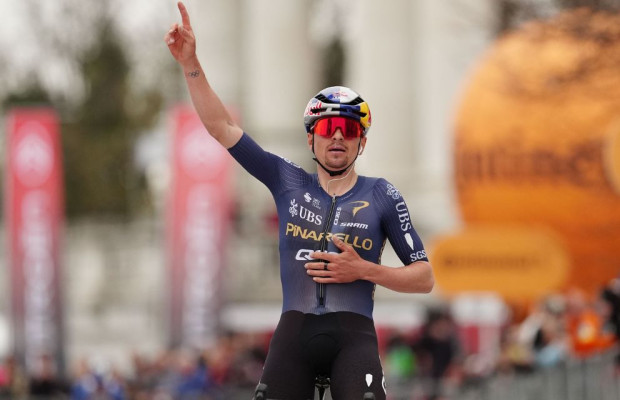
"Always sitting down and you don't know when he's going to start": Pidcock hits the mark in his attack and wins the Milan-Turin
Fulcrum bets on high-speed gravel with the new Sharq GR and Soniq GR
This change also has a real effect on the race. The start from Pavia introduces a cleaner first section, with fewer urban interferences, favoring a more stable development in the early kilometers. Still, it does not alter the essence of the event, and the wear and tear continues to accumulate from the start, maintaining the feeling of a “long approach” to the coast.
Route: the eternal journey to Via Roma
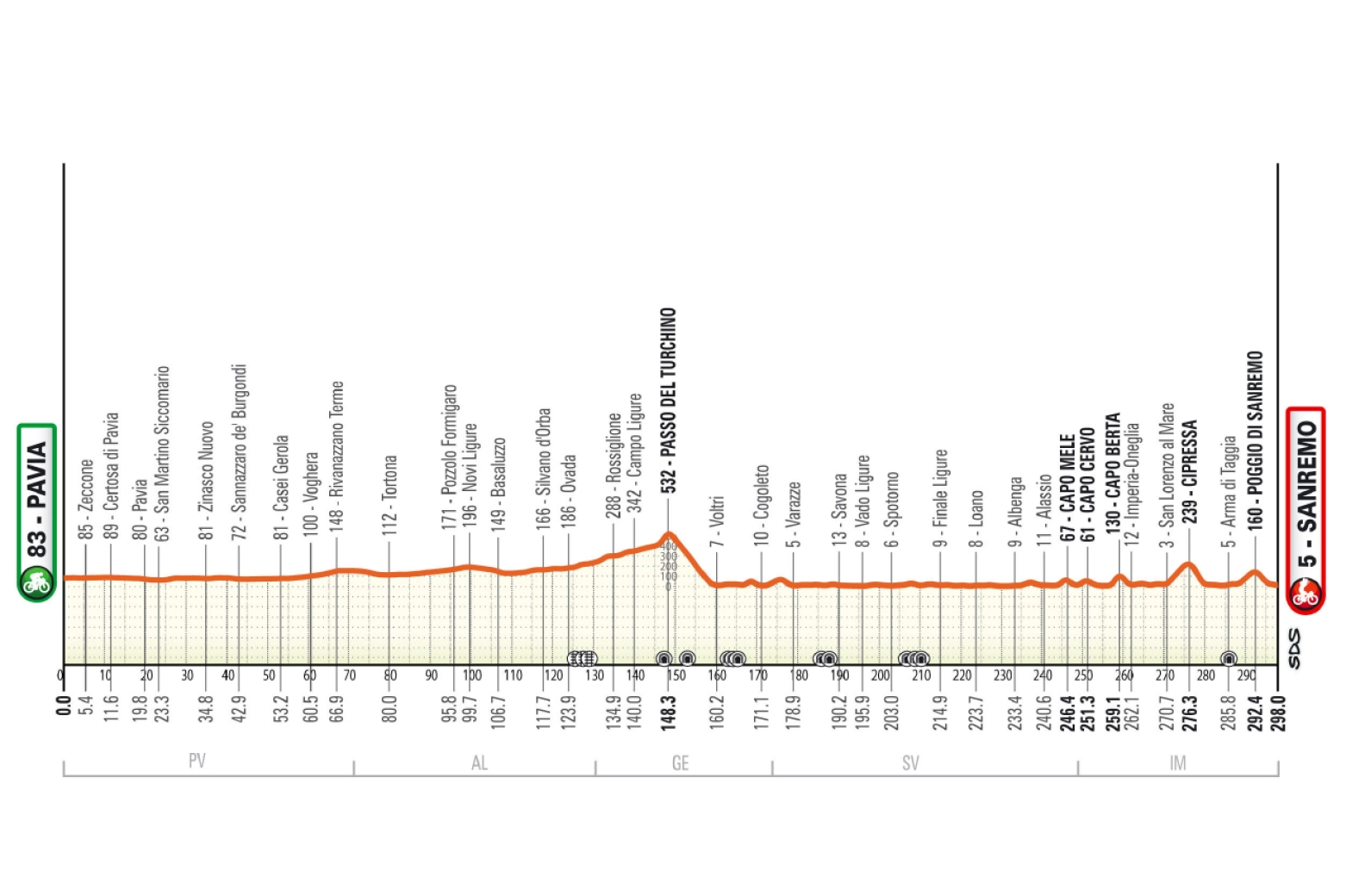
Although the race route varies in each edition, Milan-San Remo 2026 maintains the classic formula that has defined this race for over a century. It consists of 298 kilometers of increasing tension, where the first hours serve as a silent prelude before the race explodes.
The Turchino Pass and the Riviera
After the start, the peloton heads southwest on mostly flat roads until reaching the Passo del Turchino, located approximately halfway through the route. In the early days of the race, this ascent of 26 km at 1.5% was decisive; today it serves more as an initial filter that generates the first nerves before the descent towards Genoa Voltri and the Ligurian coast.
From there, the route winds westward along the Mediterranean. Varazze, Savona, and Albenga mark the way as the peloton regroup and positions begin to matter.
The Three Capi: Mele, Cervo, and Berta
About 50 kilometers from the finish, the Tre Capi appear, three small coastal climbs that wear down the group:
- Capo Mele (1.7 km at 4.2%) – 51.6 km to go
- Capo Cervo (1.9 km at 2.6%) – 47.5 km to go
- Capo Berta (1.8 km at 7.1%) – 39.5 km to go
None of these climbs are selective by themselves, but their accumulation tightens the peloton and positions the favorites for the decisive stretch.
The Climb to Cipressa (The first filter)
At 22 kilometers from the finish, the climb to Cipressa begins: 5.6 km at an average gradient of 4.1% until reaching 240 meters in altitude in the village that bears its name. This is where the less favored contenders launch desperate attacks, although the race is rarely decided on its slopes.
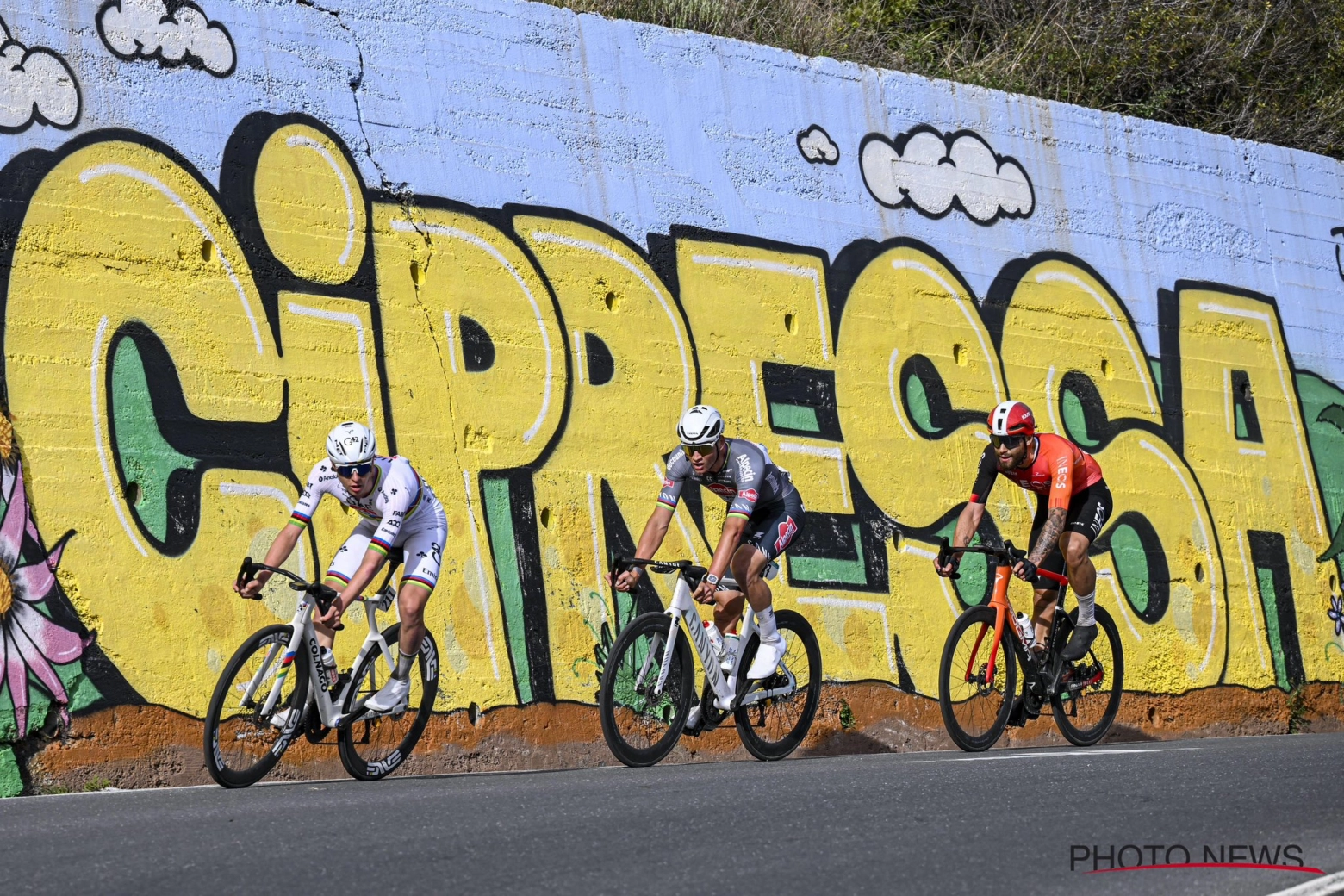
The problem for attackers is the ten flat kilometers that separate Cipressa from Poggio, where an organized peloton can neutralize almost any advantage. Still, Cipressa has gained prominence in recent years: Poga?ar already demonstrated in 2025 that he is willing to attack here to break the race early.
The descent from Cipressa also deserves respect. The descent on the SP77 is extremely technical, with tight curves that require absolute precision. The Italian Niccolò Bonifazio reached dizzying speeds here in his day; Jan Raas, on the other hand, saw his career cut short after a fall in 1984 that left him with permanent back injuries.
The Poggio di Sanremo Profile (Where everything is decided)
The Poggio di Sanremo is the final judge of the Classicissima. Its 3.7 km at an average of 3.7% begins 9 kilometers from the finish and concentrates all the tension accumulated over nearly 290 kilometers.
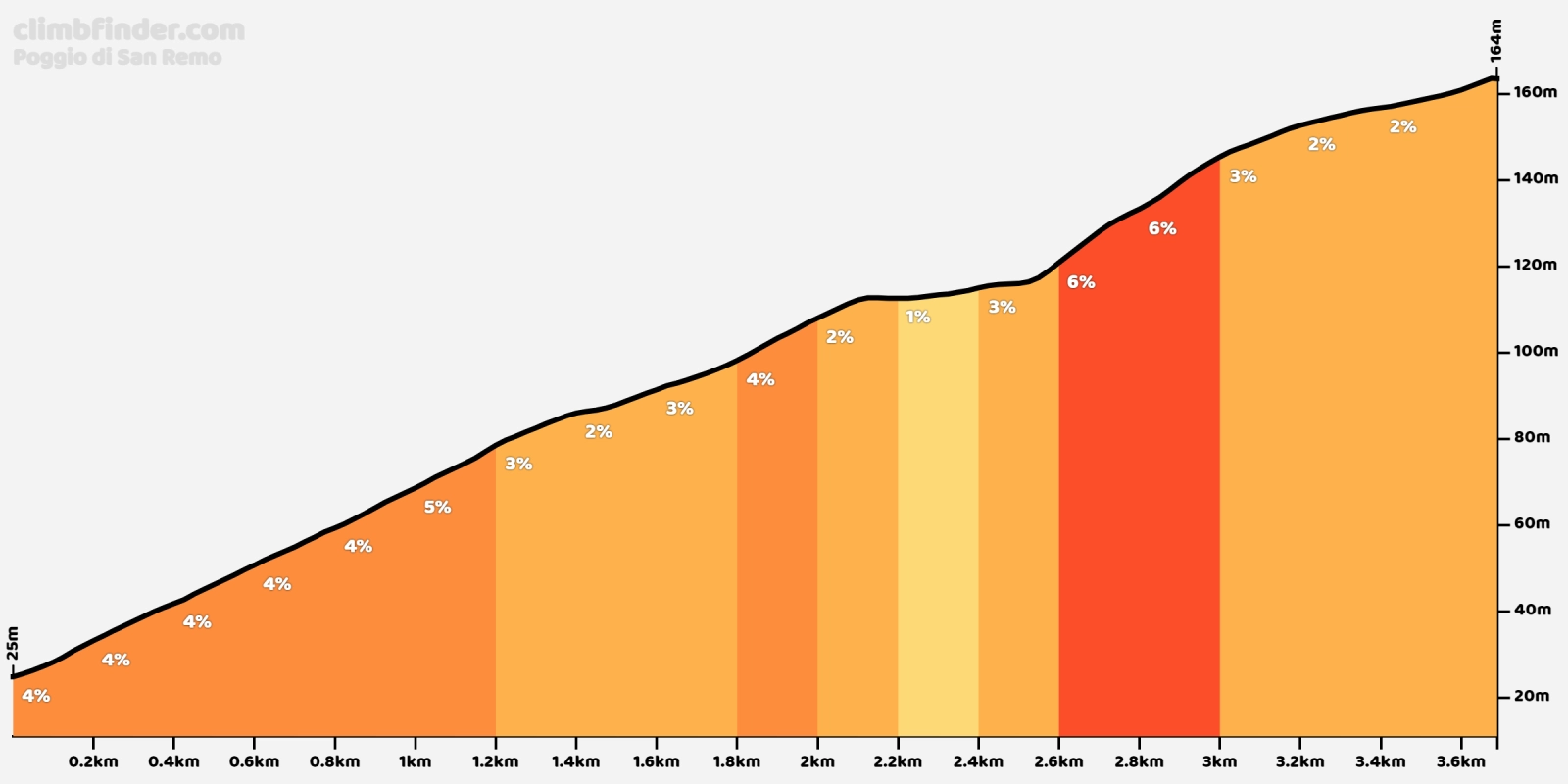
The Poggio di Sanremo profile features four hairpin turns in the first two kilometers, with the road progressively narrowing. Just before reaching the top, the gradient steepens to 8%, the point where decisive attacks usually occur. In 2025, it was exactly here where Van der Poel surprised Poga?ar with a lightning-fast acceleration 300 meters from the summit.
The subsequent descent is as decisive as the ascent. Technical, narrow, and with treacherous curves, it demands nerves of steel and absolute skill. Riders like Matej Mohori? have shown that a brave descent can compensate for shortcomings in the climb.
After the descent, the last two flat kilometers take place on straight roads until the left turn at 850 meters from the finish and the characteristic right turn at 750 meters that leads to the legendary Via Roma.
Favorites for Milan-San Remo 2026
Milan-San Remo has long ceased to be a race for sprinters. It is no longer enough to be the fastest or the strongest on a specific climb. Today, the winner is the one who best understands when to move, and in that regard, the name of Mathieu van der Poel stands out above the rest.
The Dutchman arrives not only as the reigning champion but also as the rider who has best deciphered the new script of the race. His ability to absorb attacks on the Poggio and respond with the same aggression allows him to compete without relying too much on external factors like wind or race pace. Even when Poga?ar has tried to push the race to the limit, Van der Poel has shown that he can follow him without panicking and, at the crucial moment, switch from the role of pursuer to attacker. That control of timing is what makes him the great reference.
Moreover, his form seems aligned with that goal. He has shown solidity at the start of the season and arrives with very measured preparation, something fundamental in a race where accumulated wear weighs more than any specific data. Around him, Alpecin-Deceuninck presents a block that allows him to race without pressure. If the race does not break, they have speed to resolve; if it hardens, they still have presence in the front group.
On the other side is Tadej Poga?ar, the rider who has pushed the most to change the nature of Milan-San Remo. His relationship with this race is almost obsessive, and he is always in the outcome, but he always lacks that final step. The evolution of his approach is evident. He has moved from waiting for the Poggio to trying to blow up the race much earlier, especially on the Cipressa, where he seeks to eliminate sprinters and reduce the group to a more favorable scenario.
However, his margin remains minimal. The very structure of the route works against him, because even after a strong attack on the Cipressa, there is enough terrain for the group to reorganize before the Poggio.
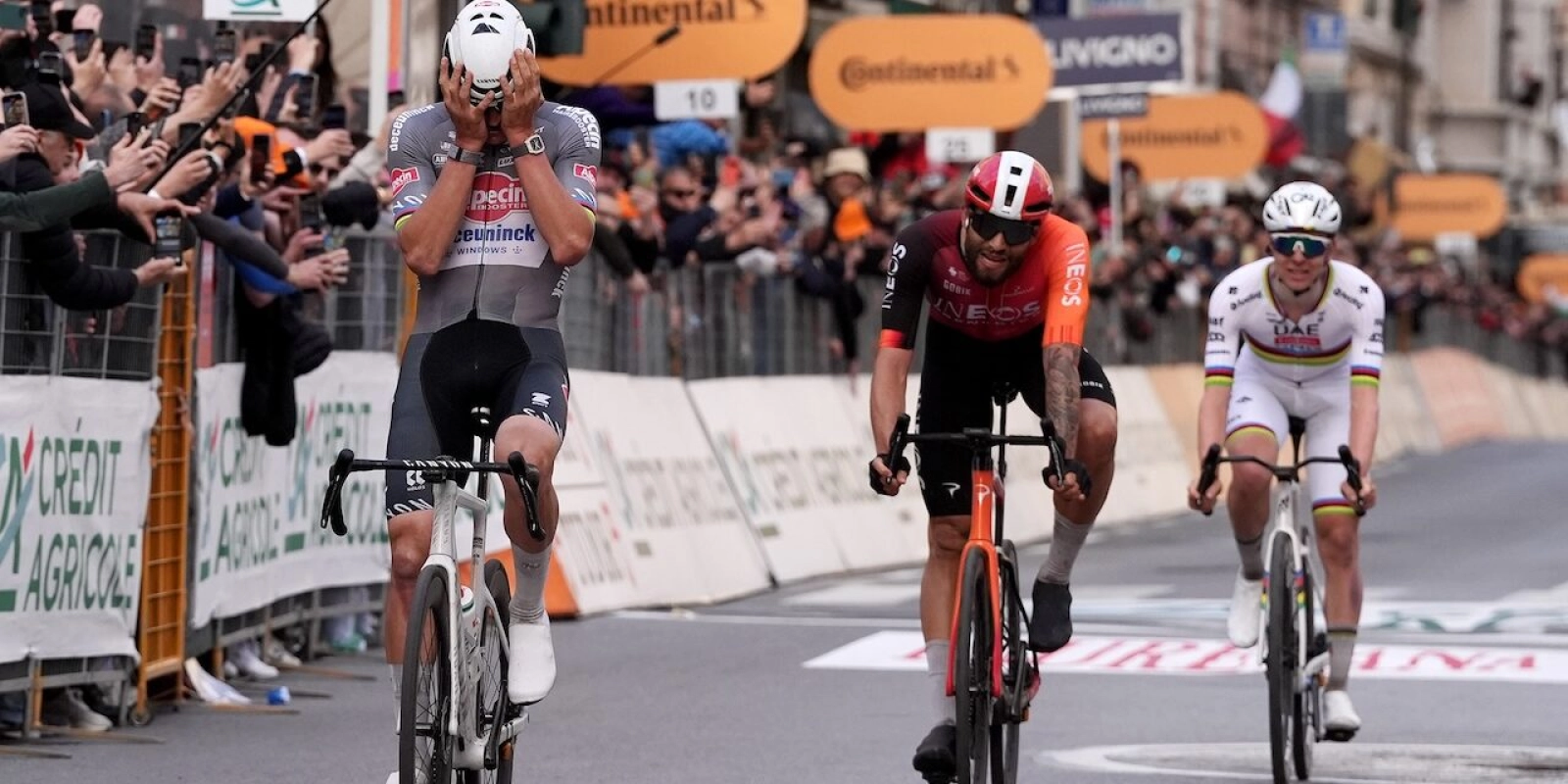
In that balance appears Filippo Ganna, a rider who never seems to dominate the race but always ends up being part of it. His opportunity comes in a reduced finish where he can play his cards without needing to have been the strongest on the climb.
In parallel, there are profiles that do not start as absolute favorites but can alter the race's development, such as Wout van Aert. His profile fits perfectly with what the race demands, but his recent performance raises doubts. Tom Pidcock is also one of them. His ability to move off-script, especially on the descent of the Poggio, makes him a constant threat. He does not need the race to follow a logical pattern, and in fact, the more chaotic it is, the more options he has to appear at the decisive moment.
The Duel Van der Poel vs Poga?ar San Remo 2026
In the end, it all comes back to the same point: Milan-San Remo is not decided by who attacks, but by which attack manages to gain continuity. If the race truly breaks before the Poggio, the scenario favors a rider like Poga?ar. If everything remains controlled until the last climb, the terrain tilts back towards Van der Poel. And if there is regrouping, the field opens up, and completely different profiles come into play.
How to watch Milan-San Remo 2026 on TV?
For fans wondering where to watch Milan-San Remo 2026, Eurosport (also available through Max) will offer the complete broadcast from the start in Pavia, with intensified coverage in the final hours.
También puede interesarte
Mountain bike
Watch live: Stage 4 of the 2026 Cape Epic: 87 km with 1,750 m of elevation gain in Greyton
Mountain bike
Stage 3, in video: distant attacks, mud, and a complete turnaround in the overall standings
Mountain bike
Reversible and ultra-lightweight, this is the new Race Face Era SL handlebar
Bike Equipment
Fizik Lyra Shoes: new fit, double BOA, and R4 sole for more efficient pedaling
Road
"Always sitting down and you don't know when he's going to start": Pidcock hits the mark in his attack and wins the Milan-Turin
Gravel