What does Hannibal Lecter have to do with Ghost? The story of a brand that defined an era in mountain biking
Ghost has made numerous headlines in recent weeks. The historic German mountain bike brand was on the verge of disappearing permanently after 33 years of activity, dragged down by the financial crisis of Accell Group. First came the announcement of its closure and liquidation, but just a few days later, when everything seemed lost, Bike Tree appeared as a last-minute buyer. This operation has allowed the name and rights of the brand to be saved, although it remains to be seen what its future will be like and whether we will find new Ghost bikes on the market again. But let's review its history so far.
The history of Ghost and its surprising connection with Hannibal Lecter
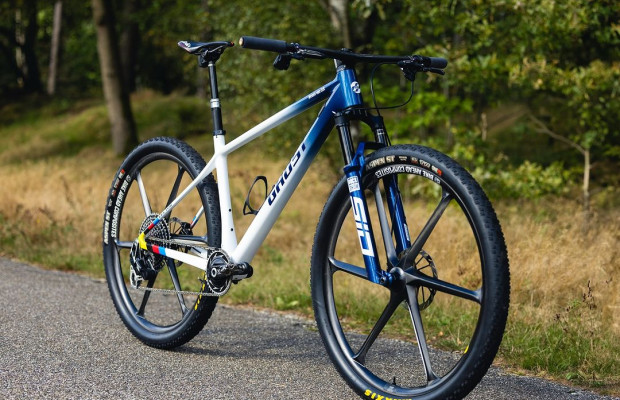
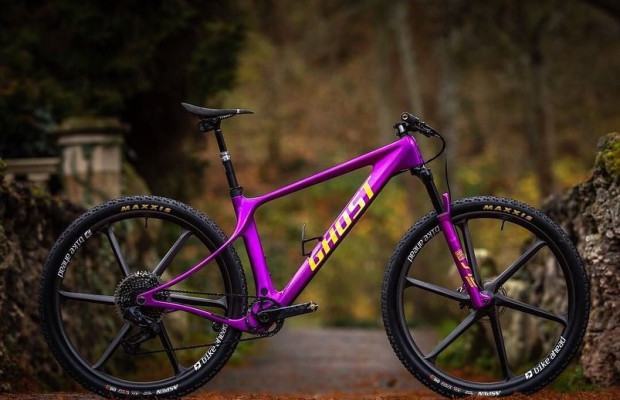
Ghost never had the international commercial presence of other major MTB manufacturers, but it achieved something that is not always accomplished with a wide distribution network: making a place in the collective imagination of enthusiasts. Its bikes, with aggressive aesthetics, became very recognizable thanks, in large part, to its powerful World Cup XCO team.

In fact, Ghost was one of the last brands to maintain a hardtail in the elite of XCO when dual suspensions already dominated much of the circuits. Its Lector sparked enormous interest, and when the Lector FS finally arrived, it also did not leave anyone indifferent. But behind those bikes was a story that began in a small German garage and has a curious connection with one of the most unsettling characters in film history.
RECOMENDADO
Lapierre’s problems reach the WorldTour and put Picnic PostNL under pressure
Unexpected turn for Ghost: German MTB brand finds a buyer at the last minute
Ghost announces it is shutting down for good after 33 years, becoming another victim of Accell’s crisis
The highest-paid cyclists of 2026: updated rankings and the special case of Paul Seixas
“Can’t help myself”: Van der Poel gets competitive with a cycling group in Alicante and admits it with a laugh
16 scouts around the world and talent as young as 15: how teams are searching for the next Pogačar
It all began in 1993 in Waldsassen, a small town in Bavaria located near the border with the Czech Republic. There, two cycling enthusiasts, Uwe Kalliwoda and Klaus Möhwald, decided to turn their hobby into a business. In a garage of just 75 square meters, they began assembling their first mountain bikes using frames from Taiwan and components from various manufacturers. Their first production was 73 hardtails, and that modest project quickly began to grow.
Among the first models of Ghost was a hardtail that would become one of its great symbols: the Lector. And here enters Hannibal Lecter, the famous character played by Anthony Hopkins in The Silence of the Lambs (1991). According to Ghost's story, the founders were inspired by the character to name a bike that, following that peculiar association, had to be capable of devouring kilometers and elevation.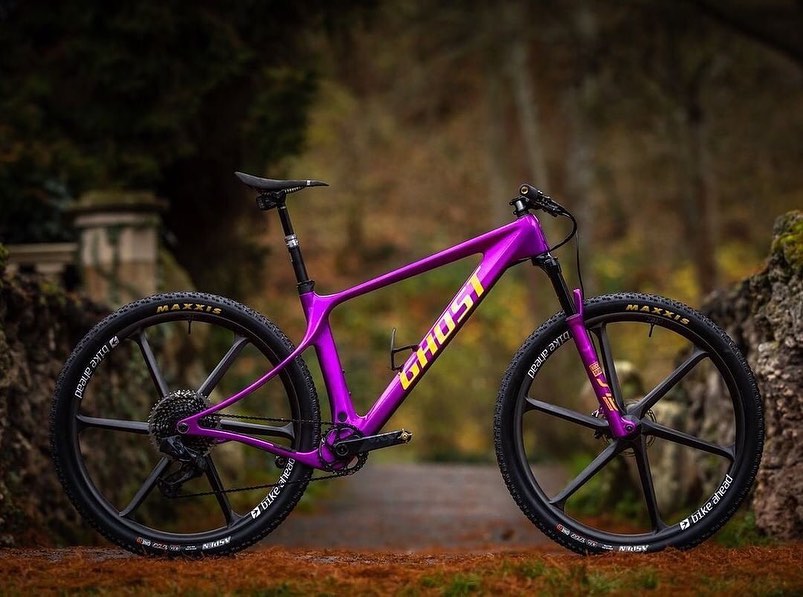
The company's growth was rapid. Ghost expanded its catalog, developed dual suspension models, and began to build a sporting reputation that would reach one of its most important moments in 2008 when Sabine Spitz won the Olympic gold in XCO in Beijing on a Ghost. That same year, the company was acquired by the Dutch group Accell, starting a new phase in which it continued to grow and strengthen its presence in the World Cup.

The most important dates in Ghost's 33 years
-
1993: Uwe Kalliwoda and Klaus Möhwald found Ghost in Waldsassen and begin assembling their first mountain bikes.
-
1994: the brand's catalog already includes the Lector as a high-end model, and an assembly line is established in Cheb, Czech Republic.
-
2003: downhill specialist Marcus Klausmann becomes one of the first major sports names linked to Ghost.
-
2008: Sabine Spitz wins the Olympic gold in Beijing, and Accell Group acquires the German company.
-
2011: Ghost Factory Racing is born, which will become one of the most recognizable structures in women's XCO.
-
2018: Uwe Kalliwoda leaves the company's management, ten years after its sale to Accell.
-
2020–2021: Ghost makes the definitive leap to competition duals in XCO with the Lector FS.
-
2023: Accell moves bike assembly out of Germany, resulting in the loss of 83 jobs in Waldsassen.
-
2026: the group's reorganization ends Ghost Factory Racing and transfers its sporting legacy to Lapierre. The subsequent insolvency of Accell leads to the closure of Ghost-Bikes GmbH, although Bike Tree ultimately acquires the brand rights in November.
Ghost lost its racing identity before bankruptcy arrived
The recent history of Ghost also reflects how a brand can end up being conditioned by the decisions of a large corporate group. After nearly two decades within Accell, the German manufacturer ceased to be an independent bet and became just another piece within the group's commercial strategy.

In early 2026, with the crisis already very pronounced, Accell decided to reorganize its brands and distribute its specialties. Ghost was to focus on Gravity and adventure modalities, while Lapierre would take the lead in road, gravel, and XCO. That decision marked the end of the historic Ghost Factory Racing, a structure that had seen riders like Anne Terpstra, Sina Frei, Nicole Koller, or Caroline Bohé pass through.
The team did not immediately disappear from the competitive scene. Much of its technical and sporting structure passed to the new Lapierre PXR Racing, although that solution had little longevity. The financial crisis of Accell turned out to be much deeper than expected, and a few months later, Lapierre also suspended funding for its World Cup team.
Now Ghost faces another stage under the ownership of Bike Tree, the same group that has acquired Haibike and Winora. It has not yet been specified what catalog the brand will have, where its future bikes will be developed, or what role it will play within the new corporate structure.
What does seem difficult is that any potential new Ghost will immediately regain that unique racing identity it built over decades. An identity that began with two friends assembling bikes in a garage and ended up taking their riders to the highest levels of the World Cup.
También puede interesarte
Road
Lapierre’s problems reach the WorldTour and put Picnic PostNL under pressure
Mountain bike
Unexpected turn for Ghost: German MTB brand finds a buyer at the last minute
Mountain bike
Ghost announces it is shutting down for good after 33 years, becoming another victim of Accell’s crisis
Road
The highest-paid cyclists of 2026: updated rankings and the special case of Paul Seixas
Road
“Can’t help myself”: Van der Poel gets competitive with a cycling group in Alicante and admits it with a laugh
Road
