What does DMT mean? From a small Italian workshop to Pogačar and Ducati’s new bikes
DMT is one of those brands whose logo is immediately recognizable to almost all cyclists. Its shoes have been present in the peloton for decades and are currently inevitably associated with Tadej Pogačar. However, it is much less known what those three letters really mean and, above all, everything that lies behind them.
DMT began its story long before the brand existed
The short answer is that DMT comes from Diamant in its abbreviation, the company founded by Federico Zecchetto which would eventually become the origin of the current Gruppo Zecchetto. But to understand how handcrafted shoes ended up giving rise to a group currently related to DMT, Alé, carbon bicycles, and even Ducati, we must go back almost half a century.

It all began in 1978, when Federico Zecchetto founded Diamant di Federico Zecchetto. It was not yet DMT nor a company dedicated exclusively to cycling. Its initial activity consisted of handcrafted manufacturing in small quantities of footwear for cycling and football.
RECOMENDADO
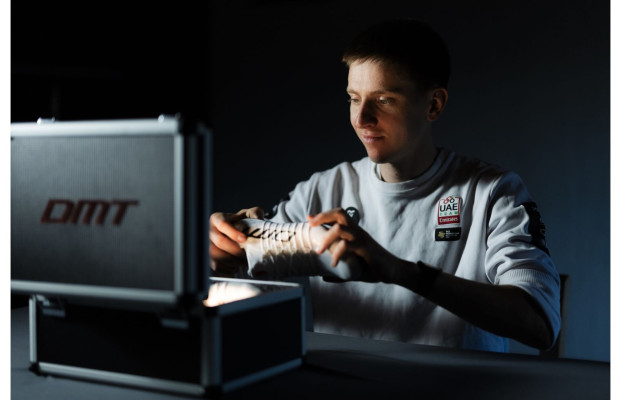
Pogacar signs a lifetime contract with DMT: he will continue to wear their shoes forever
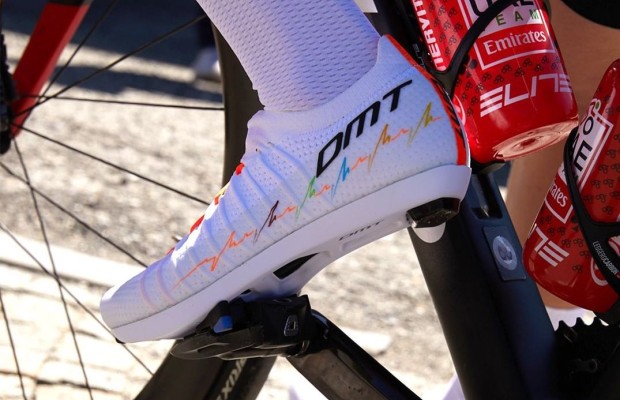
DMT presents the new Pogis 2024
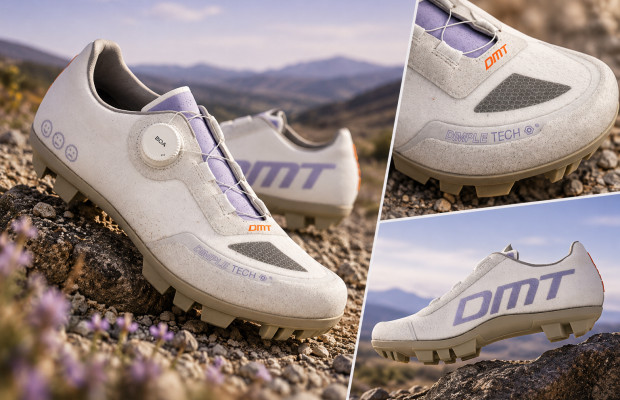
The new DMT IAAN Gravel shoes take inspiration from golf balls to make them faster
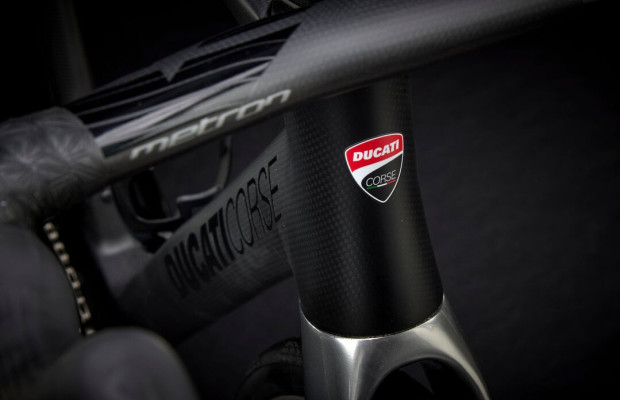
Ducati swaps horsepower for watts in its new cycling era: meet the Monoscocca and GraviaX with Italian carbon
More power, less fatigue: how nitrates could help you on the bike
An indoor trainer can do more for your training than you think: here are 7 reasons to own one
In fact, one of the first important steps of that small company was a collaboration with Diadora, for which Zecchetto manufactured football shoes.
The gradual incorporation of new techniques, materials, and industrial processes allowed that handcrafted production to scale up. In 1982 Gruppo Zecchetto was born, a structure aimed at bringing together manufacturing, research, and product development under one system.
And four years later, the name that almost any cycling enthusiast knows today finally appeared.
DMT was born in 1986 as the cycling brand of Diamant
After years of manufacturing for others, in 1986 Federico Zecchetto created DMT as a brand specialized in professional cycling shoes. The chosen name did not come out of nowhere: DMT is an abbreviation of the name Diamant, the company from which it originated.
That is to say, DMT emerged from the knowledge accumulated by Diamant in the manufacturing of sports footwear.

And cycling did not make the other half of that initial business disappear. The group has continued to develop and manufacture footwear for football, even working for some of the most important companies in the world.
One of the major leaps came in 1997, when Diamant reached an agreement with Nike to design and develop football boots for its professional athletes. This consolidated the group as a specialized industrial supplier of high-performance sports products.
From a small Italian workshop to an international industrial structure
Manufacturing also grew outside of Italy. Diamant entered Bosnia and Herzegovina during the 90s and in 2002 established Sportek d.o.o., a company fully owned by Diamant that would become the production center for the various lines of the group.
The very history of DMT includes another intermediate step, in 2009, when Diamant acquired a stake in the newly created Odesa Co d.o.o., initially specialized in the manufacturing of uppers. Subsequently, the linked companies would integrate into a single entity under Sportek, whose industrial structure came to include nine production units in Kotor Varoš.
The result is very different from the image that someone who knows DMT only from a pair of shoes displayed in a bike shop might have. Behind it lies a structure that combines product development, technical footwear manufacturing, textiles, and work with composite materials.
Viviani, BOA, and the 3D Knit: DMT was building its identity within cycling
The industrial evolution was accompanied by an increasing presence in professional cycling.
In 2005 the collaboration with Elia Viviani began, who also became one of the cyclists used as a reference to test and develop new products. Ten years later, Viviani returned to compete with DMT and achieved his first stage victory in the Giro d'Italia with the brand.

In 2012 DMT began its collaboration with BOA Fit System, progressively incorporating its well-known dials and adjustment systems into different models.
But one of the technical changes that has most defined modern DMT shoes came in 2018 with the Engineered 3D Knit technology. The brand developed a shoe with a fully knitted upper and later transferred this construction to its road range. It was a particularly striking solution because it allowed for a lightweight and adaptable wrap with a structure very different from traditional uppers.
Along the way, important sports results also arrived. In 2016, Elia Viviani won the Olympic gold in track cycling in Rio de Janeiro using DMT RS1 shoes.

Pogačar joins DMT for life
The next major chapter of the company is inevitably linked to Tadej Pogačar.
DMT began its relationship with the Slovenian in 2019, coinciding with his first season as a professional, and the relationship has gone much further than just placing the DMT logo on the Slovenian's shoes. Pogačar has participated in the development of his models and, together with the brand, has evolved the particular concept of lace-up shoes that currently has its maximum expression in the DMT Pogi's Superlight.

And in 2026 both parties took a very unusual step within sports sponsorship.
On July 4, 2026, DMT announced a lifetime agreement with Tadej Pogačar. This is not only about keeping the Slovenian as a sponsored cyclist until the end of his professional career; the agreement includes that he will remain linked to DMT even after his retirement.
According to the company itself, Pogačar will continue to use his shoes for the rest of his career and also when cycling is no longer his profession. The relationship that began when he was still taking his first steps in the WorldTour thus becomes a partnership without an expiration date.
It is probably the best example of how far DMT has come from being a small brand born from an Italian footwear manufacturer to having one of the most powerful commercial partnerships in current cycling.
But DMT is just one piece: behind it is Gruppo Zecchetto
Here appears another lesser-known part of the story. DMT is part of a much larger industrial framework, Gruppo Zecchetto, which over the years has entered different areas related to cycling.
In 2009, from the meeting between Federico Zecchetto and Mario Cipollini emerged MCipollini, the carbon bicycle brand created around the experience of one of the best sprinters of his generation.

In 2014 Alé was born, within APG Srl, as a proprietary brand specialized in technical cycling clothing. In this way, the group no longer had knowledge only in footwear but also in technical textiles, bicycle development, and later manufacturing and processing of composite materials.

Currently, Gruppo Zecchetto itself defines itself as an industrial group dedicated to sports, cycling, and composites, with companies and brands such as DMT, Alé Cycling, and Diamant within its structure.
And in 2026 this industrial capacity has led to a partnership that takes the group far beyond its well-known shoes.
From making shoes to manufacturing the new Ducati bicycles
One of the latest major milestones of Gruppo Zecchetto is its alliance with Ducati to develop, produce, and market the new generation of Ducati Cycling bicycles.
The relationship is not just about licensing the name of the Italian company. Gruppo Zecchetto acts as a development and industrial partner of Ducati, providing its production chain and its knowledge of cycling and composite materials.
The result has been seen recently at the Italian Bike Festival in Misano with the presentation of the new 2027 range. Among its protagonists are the Ducati Monoscocca road and GraviaX gravel, whose monocoque carbon frames are manufactured in Italy, as well as the new e-MTB DM-160 R and DM-170 RR.
In the development and validation of the bicycles, names closely related to the history of the group also appear, such as Elia Viviani, along with Vincenzo Nibali and Alessandro Petacchi.

All this helps to better understand what really lies behind the three letters we often see printed on shoes. DMT comes from Diamant, a company that began in 1978 by handcrafting footwear for cyclists and football players. From that small workshop emerged an industrial structure that today works in technical footwear, cycling clothing, carbon, and bicycles.
And almost fifty years after Federico Zecchetto sewed those first shoes, the story connects seemingly distant points such as football boots, Nike, Pogačar's shoes, Alé, and the new Ducati bicycles.
También puede interesarte
Road
Pogacar signs a lifetime contract with DMT: he will continue to wear their shoes forever
Road
DMT presents the new Pogis 2024
Bike Equipment
The new DMT IAAN Gravel shoes take inspiration from golf balls to make them faster
Road
Ducati swaps horsepower for watts in its new cycling era: meet the Monoscocca and GraviaX with Italian carbon
Nutrition
More power, less fatigue: how nitrates could help you on the bike
Training
