We face the Orbea Terra and the Terra Race 2025: two interpretations of gravel, one same DNA
The consolidation of gravel in the cycling universe has brought with it a clear polarization. On one hand, there is the adventurous side, which includes everything from bikepacking to those rides where the only goal is to cover miles on a comfortable and versatile bike. On the other hand, there is the competitive option, where performance and maximum speed are sought above all else. Orbea has seen this clearly, and in the latest update of their Terra, they have opted to create two specific versions to offer the best performance according to what the user is looking for. We have tested each of the models, pitted them against each other, and here we share our impressions.
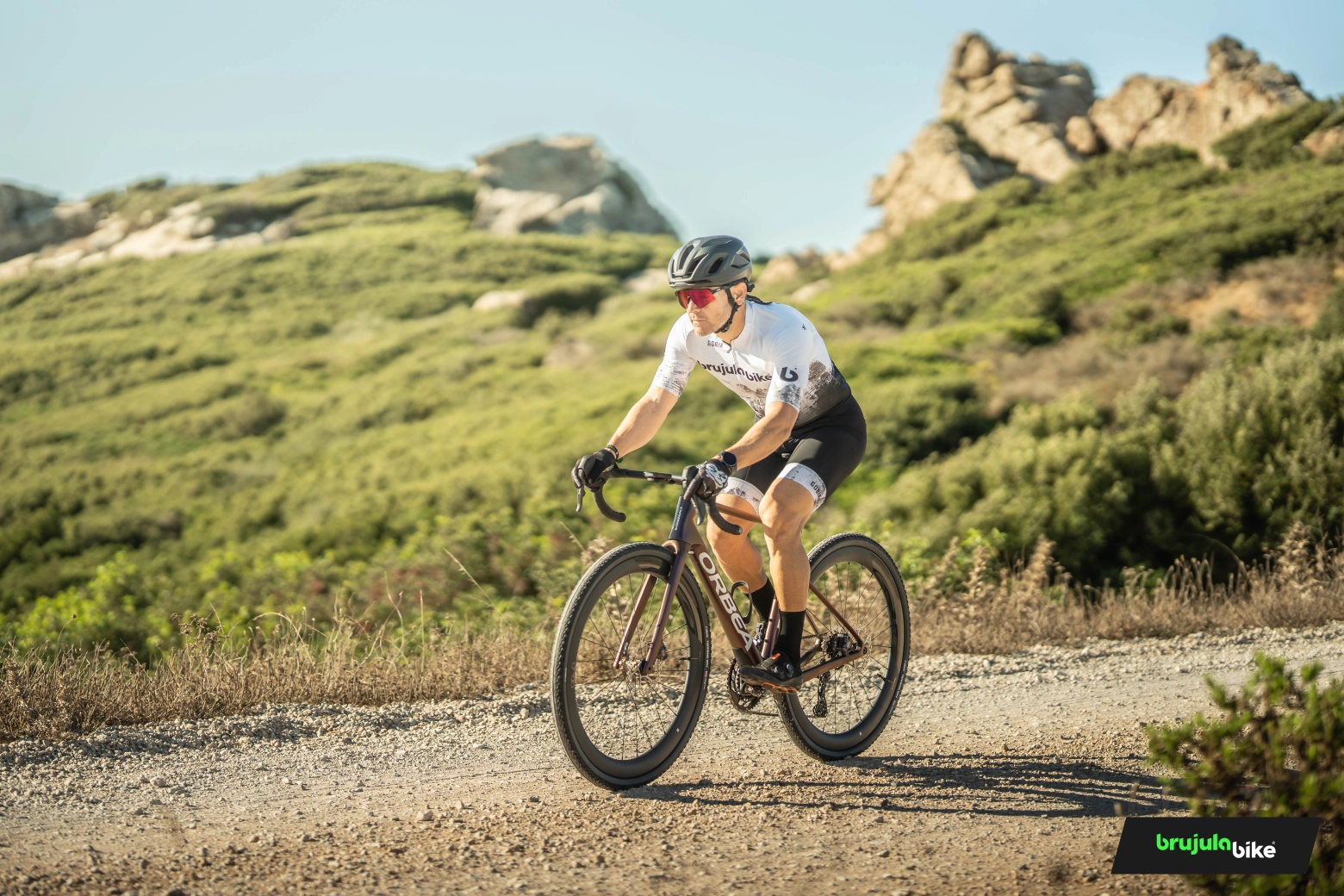
Orbea Terra vs Terra Race: main differences
The Orbea Terra has been one of the most well-known and appreciated gravel bikes for years. Since the explosion of gravel worldwide, bikes have primarily sought versatility and comfort, distinguishing themselves from the cyclocross models that already existed in many catalogs.
However, in recent times, competition in gravel has gained prominence, as well as a more performance-focused and speed-oriented use. This is why many brands, including Orbea, have chosen to diversify their gravel offerings into two branches.
Orbea Terra
RECOMENDADO
Why does Pogacar attack while sitting?
Cycling shorts vs underwear: ultimate guide to not ruining your outings
What are the five monuments of cycling?
How much time would a professional cyclist take out on an amateur in a race?
The calorie trap: eating less does not always mean losing weight

Why do most cyclists wear their glasses outside their helmets?
On one hand, we have the Terra, which in its latest version has moved much closer to the versatile and adventurous side.
In the Terra, we find a geometry that leans heavily towards control and stability. The reach has increased in this latest version, combined with a shorter stem. The chainstays are also relatively long, at 430mm, which, in addition to seeking that stability and control, allows for the generous tire clearance that the new Terra offers. The result is a very generous wheelbase that provides great stability and control.
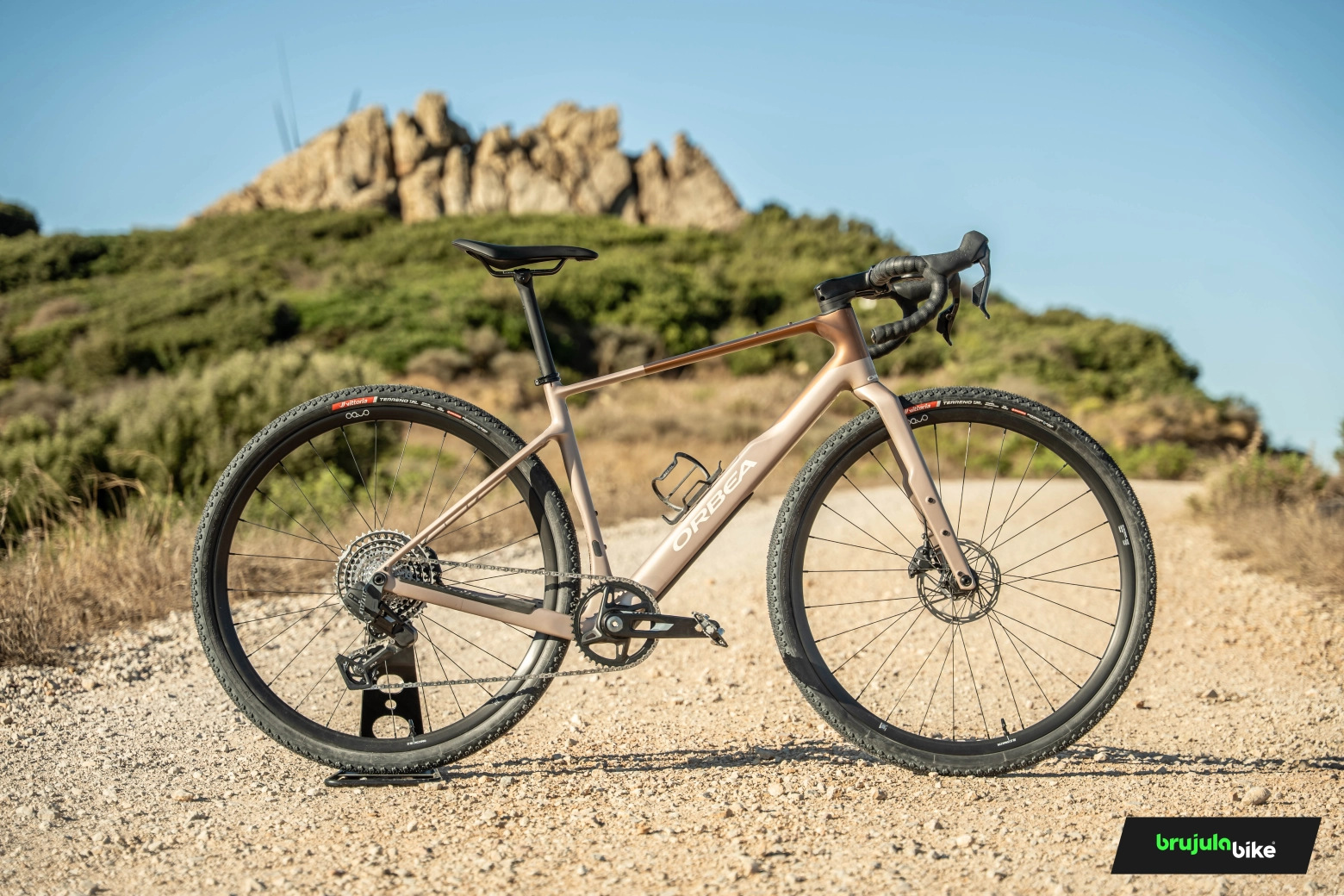
Regarding the tire clearance mentioned, it allows for mounting tires up to 50mm, greatly expanding the range of possible uses for the Terra, allowing for options from fast rolling tires to wider versions with good grip.
In an adventurous bike like the Terra, there had to be storage space within the frame. In this case, Orbea has increased it by 35%, even modifying the shape of the tube itself. Orbea calls it LOCKR XXL, and it allows for storing everything from tools to food or a windbreaker, with very good accessibility.
On the frame, we can see anchor points for all kinds of accessories or extra bottle holders, as well as the possibility of mounting fenders.
The components of the Terra are also more focused on versatility, such as the choice of a specific gravel handlebar with compact measurements and a certain angle of opening.
In the Terra range, the frame construction relies on Orbea's OMR carbon, more suited to the intended use of the bike and allowing for a more affordable final price for a range that generally offers a more accessible price range than its sister Terra Race.
Orbea Terra Race
The Terra Race has been Orbea's big news. A model that seeks above all performance and efficiency. Designed for competition or for a much more sporty use.
In the Terra Race, we have a more compact geometry, with a shorter overall length, short chainstays, and a slightly more vertical head angle, which will give the bike greater agility and responsiveness.
In the frame, we do not find internal storage space, and we do see aerodynamic shapes typical of a bike designed to go very fast.
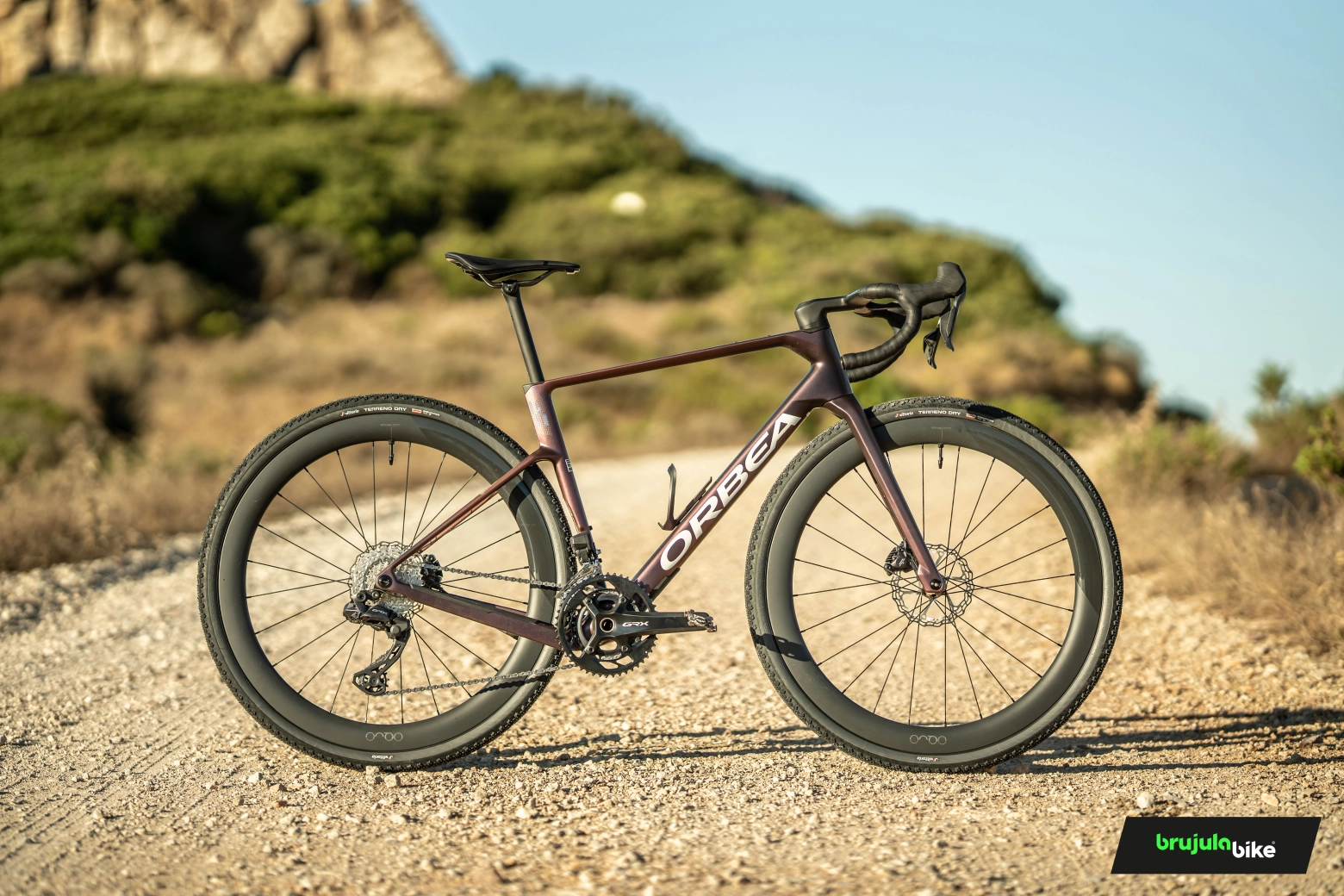
For the Terra Race, they use OMX carbon construction, achieving high stiffness and great lightness, with a frame weight of 910 grams.
The tire clearance of the Terra Race allows for mounting tires up to 45mm, also offering a wide margin, but not reaching what the Terra offers.
In the components, the trend towards performance and speed is also noticeable, generally opting for larger profiles in the wheels or specific road handlebars.
Our tests with the Orbea Terra
Our test bike was the Terra M31eTEAM 1X, the third in the range in terms of price. With a really interesting setup, as it featured the new Sram Rival XPLR group, a single chainring setup with 13 rear cogs and a 10-46 cassette.
This model comes with aluminum rims, but of very good quality, such as the Oquo RC25PRO. On these, Vittoria Terreno T30 tires with a width of 45mm.
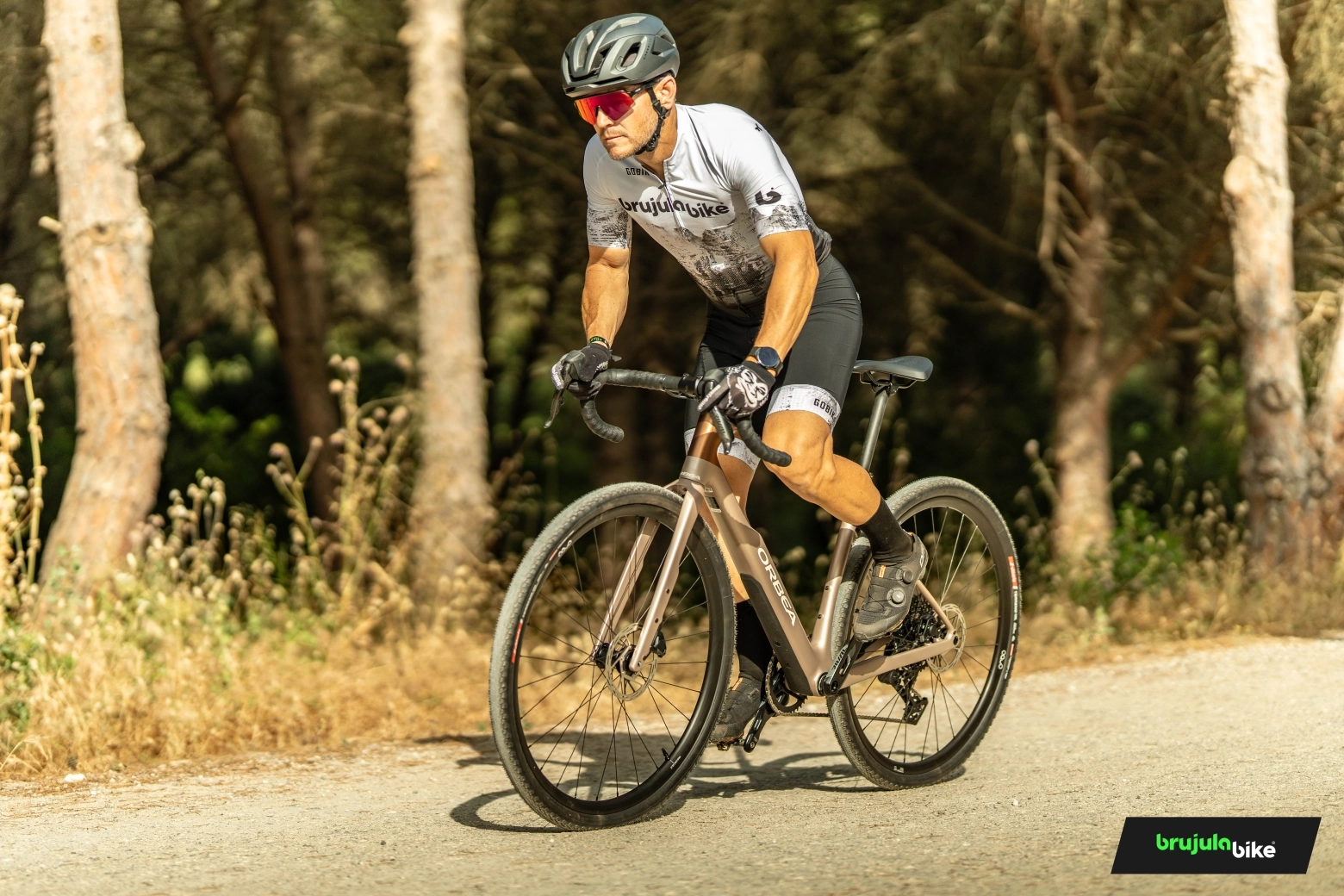
The components are from the in-house brand OC, with very good finishes, highlighting the carbon XP10 seatpost, which has a clear impact on shock absorption.
The price of this version of the Orbea Terra is €4,199.
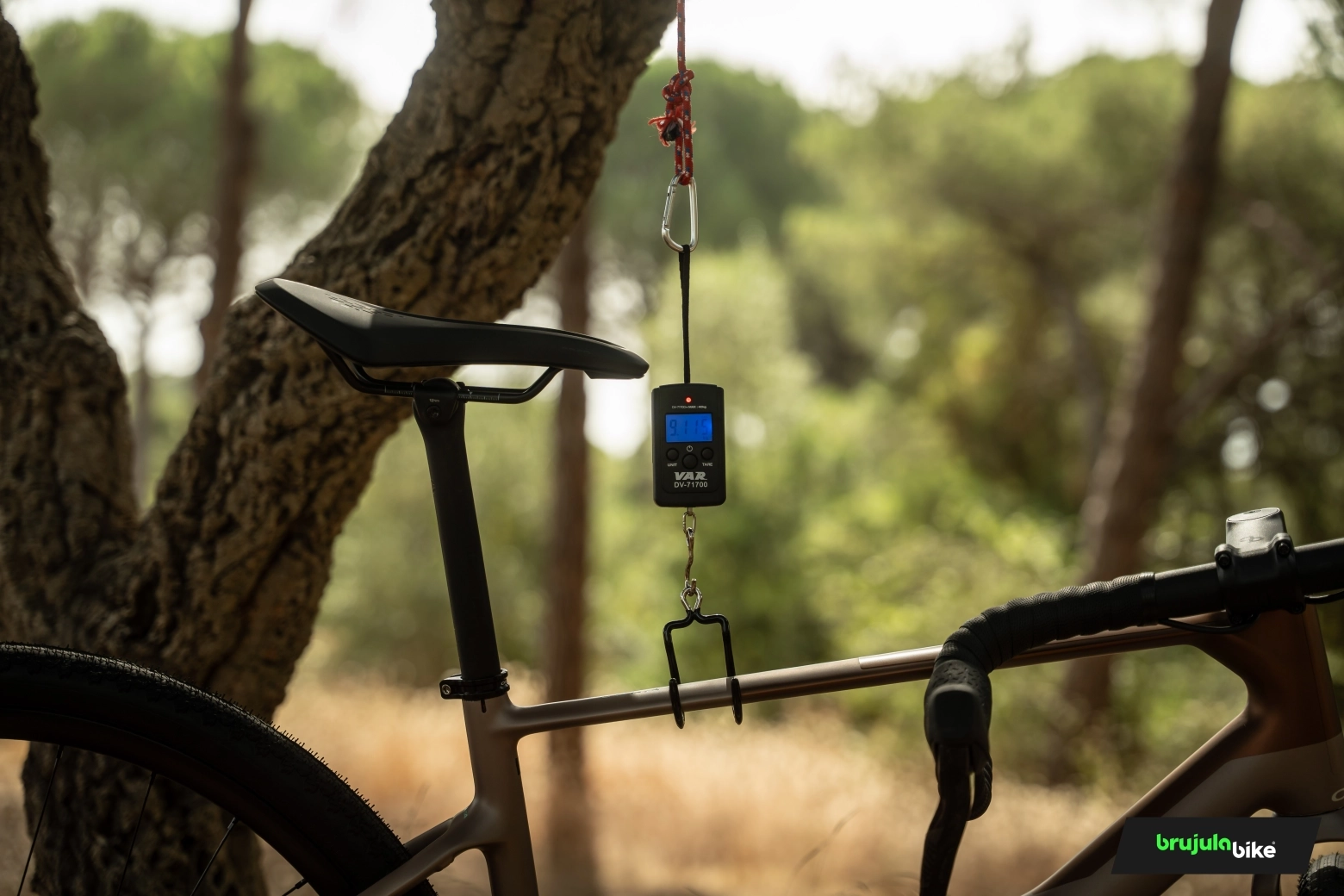
The Orbea Terra M31eTEAM 1X weighed 9.11kg on our scale, a figure that does not break records for lightness but is relatively contained for the capabilities and price that the bike offers.
From the first pedal strokes with the Terra, we felt comfortable. It is a bike that is very easy to adapt to. It has a generous reach, but its compact handlebar makes it very comfortable.
The 74º angle of its seat tube, combined with the straight seatpost, makes us sit quite above the bottom bracket and facilitates climbs.
The fact that it is a versatile gravel bike does not mean it feels slow or heavy. It is easy to roll very fast on well-paved tracks. Its compact handlebar offers comfort, but also encourages us to grip lower more frequently, as this is not a forced position, and these posture variations make the kilometers feel light.
The Terra also offers great capability when the terrain is not in the best condition, and the absorption of irregularities achieved by the combination of frame and fork, along with the 27.2mm carbon seatpost and those 45mm tires that we can run at relatively low pressure, allows us to continue rolling with some comfort on slightly rougher terrain.
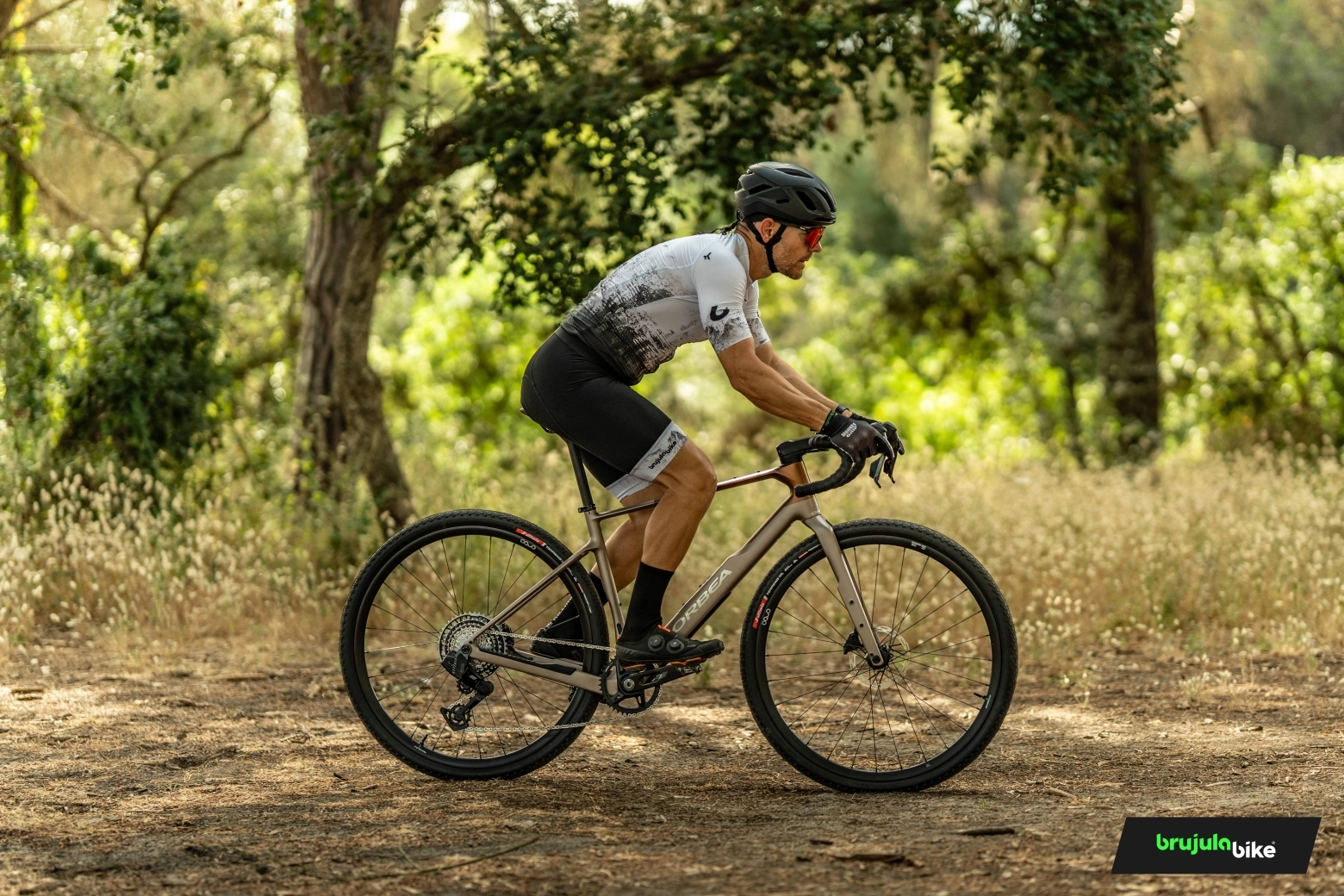
On rocky and broken terrain, we cannot expect the capability of an MTB, but thanks to the control position we adopt on the Terra, we absorb bumps with the help of our limbs and pass through with relative ease.
Regarding the transmission on our test bike, we find the single chainring option with the 10-46 cassette to be a good choice. It does not have the same capacity to climb extreme slopes as we would have with an MTB or a mullet transmission, but it offers a sufficiently wide range, and the lightness and efficiency of the bike help in those situations.
Terra Race: a thoroughbred disguised as gravel
The Terra Race we tested is also the third in the range, but as we said, the Terra Race generally offers higher levels of equipment, and even in its frame, Orbea uses OMX carbon, so the price of our test model M20iLTD rises to €5,999.
The bike came with a Shimano GRX Di2 RX825 group, with a double chainring configuration of 31/48 and an 11-34 cassette.
The setup is accompanied by more premium components, such as its integrated OC SH-RA10 cockpit with an aero shape, or the Oquo RP50LTD wheels, with a 50mm profile that stands out a lot on a gravel bike.
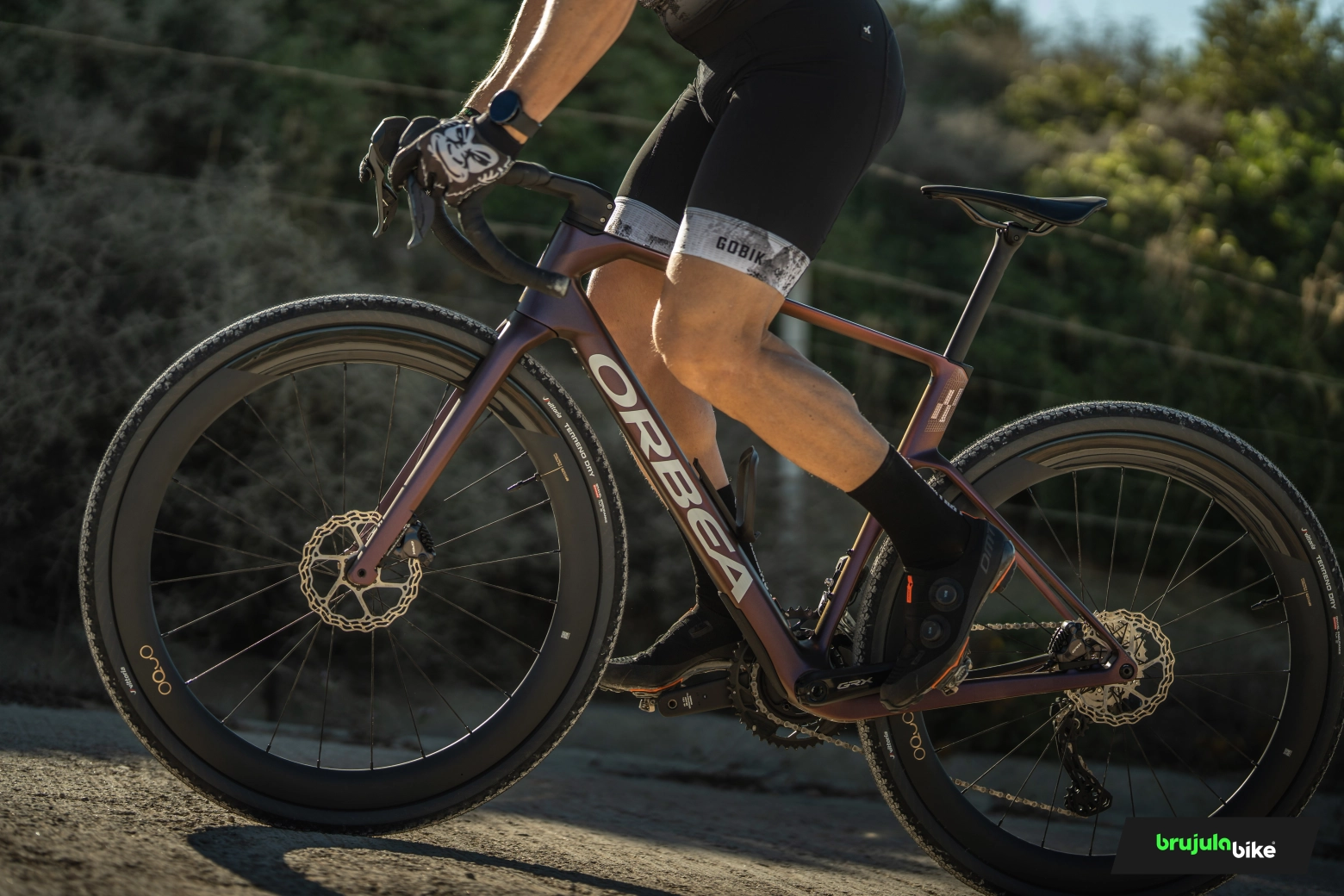
Despite the aerodynamic profile we see on the seat tube, it shares with the Terra the OC XP10 seatpost with its round profile of 27.2mm, so it does not give up the shock absorption that the seatpost can provide.
The Terra Race boasts great lightness, and on our scale, it registered a weight of 8.095kg, just over a kilo lighter than its sister Terra.
From the first pedal stroke, it is clear that we are not dealing with an ordinary gravel bike. The position clearly reminds us of a road bike. This has a lot to do with its integrated road cockpit.
On asphalt, it has very little to envy from specialists. Its lightness and stiffness transmit every watt of power to the rear wheel, and it is very easy to reach high speeds. Only the tire makes a slight difference, although when the asphalt is very rough, it even becomes an advantage.
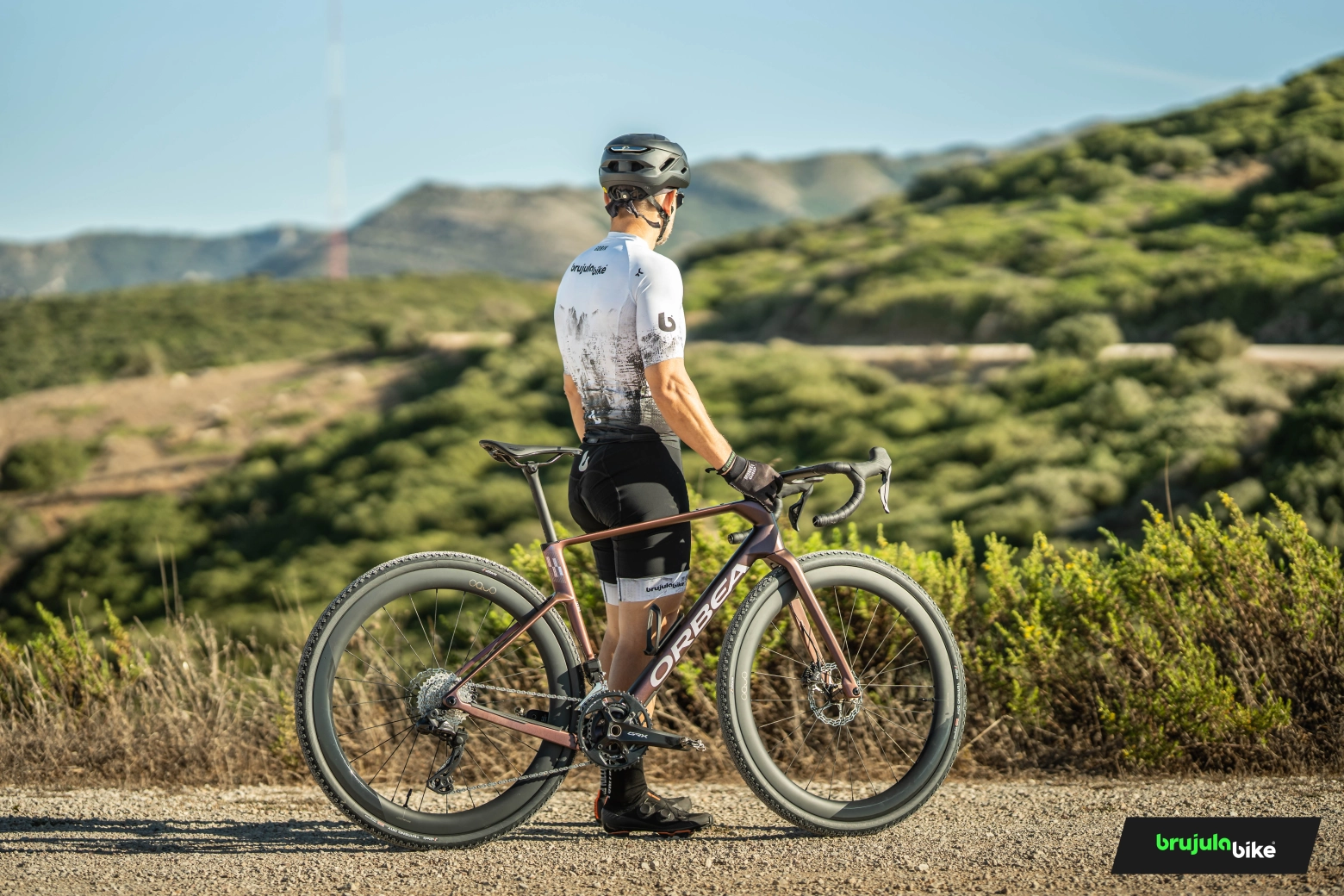
Already immersed in the terrain typical of a gravel bike, with the Terra Race we can really go fast on well-paved tracks, to the point that we have to be careful in the curves, as lateral grip is the main limitation.
But when the terrain becomes rougher and more rugged, we miss the upright and control position we had on the Terra. It is not that the Terra Race is particularly harsh, as it offers some absorption capacity thanks to the design of its rear triangle and the collaboration of the seatpost, but the racing position that the handlebar puts us in is not as conducive to facing the impacts of the terrain.
The Terra Race requires more attention to driving and is more demanding, but in return, it offers us speed and a sporting sensation that is hard to match off the asphalt.
The Terra Race is wonderfully complemented by the double chainring transmission, as, apart from a more continuous stepping in gear changes, it offers us a greater range at high speeds, and this is a bike designed to go very fast, whether on tracks or paved sections.
Terra or Terra Race: which one is yours?
This is the big question that many users will ask themselves in light of the diversification of Orbea's gravel range. And the truth is that for some users, the decision will not be easy, as both offer advantages in their terrain.
The extremes are clear. For the user considering bikepacking trips or long adventure and improvisation routes, they will find in the Terra their ideal bike due to its ability to mount accessories, storage capacity, and the greater comfort that the Terra offers for spending many hours pedaling.
On the other hand, those who only know how to go out with a knife between their teeth, or consider a gravel bike mainly for competition, will appreciate the sporting capabilities of the Terra Race.
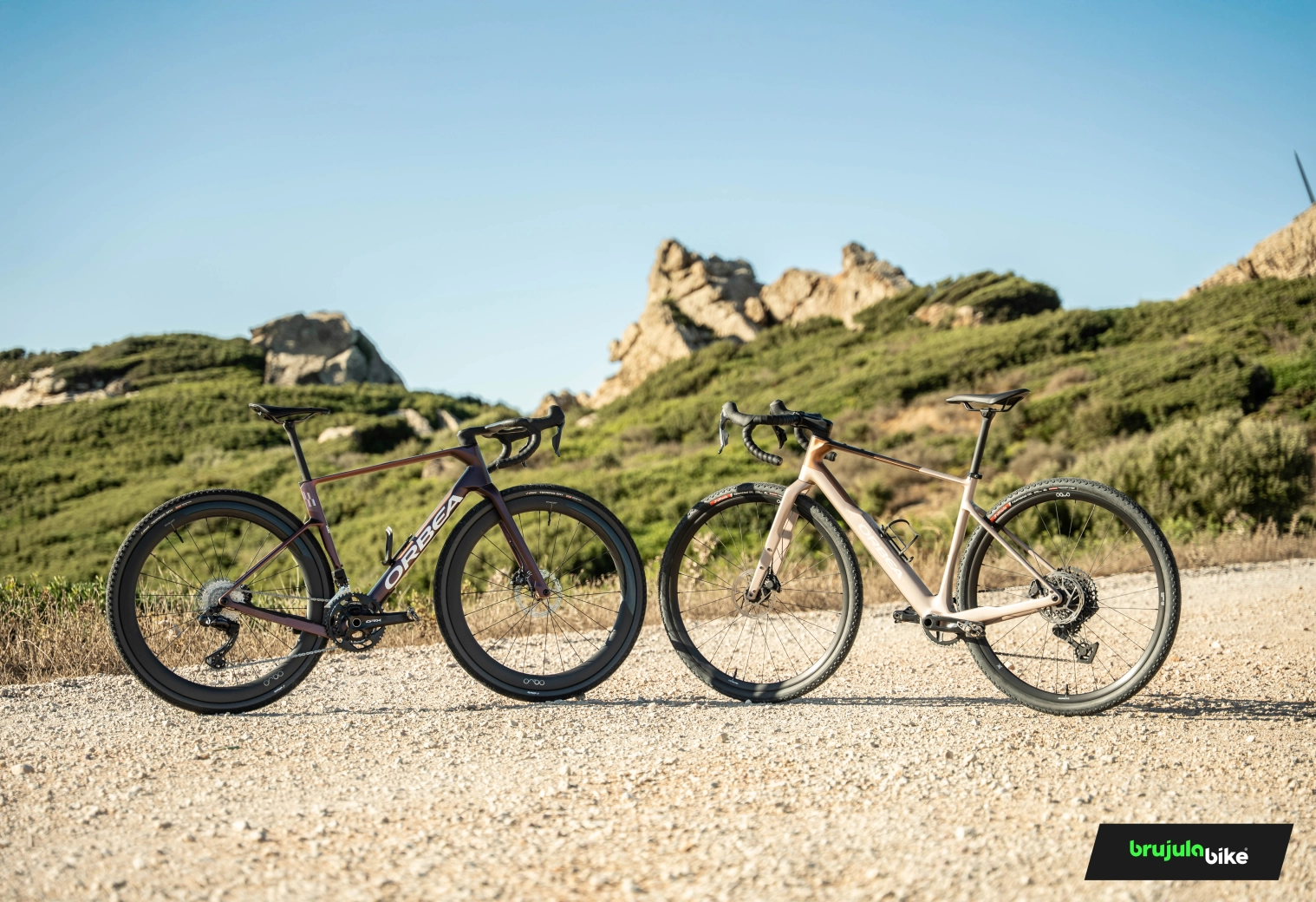
But not all cyclists are at the extremes, and in the search for a certain balance, we must say that the bike we see with the greatest adaptability is the Terra. The Terra is a more chameleonic bike. By removing the spacers under the stem, it offers us a very efficient position, in addition to the possibility of opting for a less compact handlebar.
Even for occasional competition, the Terra offers great qualities, as it is a bike that can also roll very fast, and moreover, we benefit from greater comfort.
The Terra Race is more focused on performance and, although a recreational user who does not intend to compete can also enjoy that sensation of speed and efficiency, they would be more limited when it comes to improvising routes or tackling complicated terrains.
That said, the Terra Race can also be ideal for those looking for a bike that serves both for the road and for tracks, as with a second set of wheels we can turn it into a road bike with very little to envy from asphalt specialists.
También puede interesarte
Road
Why does Pogacar attack while sitting?
Bike Equipment
Cycling shorts vs underwear: ultimate guide to not ruining your outings
Road
What are the five monuments of cycling?
Training
How much time would a professional cyclist take out on an amateur in a race?
Nutrition
The calorie trap: eating less does not always mean losing weight
Road