Visma is seeking a multi-million sponsorship deal in the midst of the Tour, with WorldTour budgets skyrocketing: Vingegaard’s crash changes the landscape
While the Tour de France captured sports attention, in the offices of Visma-Lease a Bike, another equally important race is being fought: finding the main sponsor to replace Visma starting in 2027. The Dutch team took advantage of the biggest media showcase in cycling to advance negotiations that will mark its future, an operation that, however, has received a severe blow with the withdrawal of Jonas Vingegaard in this edition of the French round.

Visma seeks a millionaire sponsor at the Tour and Vingegaard's withdrawal comes at the worst time
The search for a new partner comes after a year in which the financial situation of the team became one of the major topics in the peloton. As we reported in Brujulabike, the reduction of Visma's role as the main sponsor forced Richard Plugge to find a company capable of covering a significant budget gap without losing competitiveness against the new economic giants of the WorldTour.

RECOMENDADO
Nike could return to the WorldTour as a main sponsor: "Our first goal is to return to this sport"
"You can't buy someone, not even for 13 million euros": Visma and Decathlon play their cards for Seixas
"That's how cycling is": Vingegaard will undergo surgery on his collarbone and avoids blaming anyone for his crash in the Tour
Vingegaard abandons the 2026 Tour after a hard crash (Video)
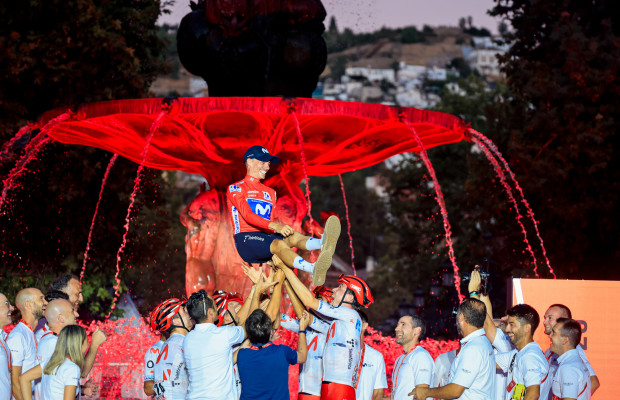
How much prize money does La Vuelta 2026 offer? Here’s what Enric Mas has earned and how it compares with the Tour and Giro
Sign up first, train later: why entering a race can change the way you train
The context has changed radically in just a few years. If a decade ago a budget close to 30 million euros allowed for aspirations to everything, today the big teams operate with figures close to 60 million annually. UAE Team Emirates-XRG continues to be the economic reference of the peloton (60M), followed by structures like Lidl-Trek, Red Bull-BORA-hansgrohe, and Decathlon CMA CGM, all of which have estimated budgets above 50 million euros. Visma-Lease a Bike is also in that leading group, although maintaining that level requires finding a new million-dollar investment.
With Jonas Vingegaard recently proclaimed the winner of the 2026 Giro d'Italia and again a contender for the Tour, the French race represented the best possible showcase to convince a large company to associate its image with the Dutch team.
In statements to Cycling Weekly, Jasper Saeijs, business director of Visma-Lease a Bike, conveyed calm despite the fact that the agreement was still not closed.
“We are talking with Visma about the best way to move forward and what the future will look like with them. They are also changing their strategy a bit, but they believe they can still play an important role within the team. They definitely want to continue with us”.

The executive explained that there is business interest and that the goal is not only to find financing but the right partner.
“Everything is going really well; we are having many conversations. It's not that there aren't companies interested in coming in. And we are not just talking about artificial intelligence or cybersecurity companies; there are many brands showing interest. For us, it is important to find the right company that fits with our culture and our future plans”.
Saeijs also downplayed the importance of the negotiations taking longer than expected.
“When you talk to many companies, sometimes you are close and other times you are not. In the end, there is an agreement or there is not. It's no different from signing a rider”.
Moreover, he recalled that the team does not depend exclusively on a single sponsor thanks to a solid network of business partners.
“We have a really strong group of sponsors. We have about 80 partners and the main sponsor does not represent 75% of our budget. We are one of the biggest opportunities in cycling, and even in sports sponsorship. Being the main sponsor of one of the best teams in the world can bring a lot of value to any company”.

Precisely that strategy helps to understand some of the movements that have surrounded Visma in recent weeks. The reports about the spectacular offer made to Paul Seixas, one of the biggest promises in world cycling, not only responded to a sporting objective. A signing of such impact also increases the commercial appeal of the project for any multinational considering becoming the main sponsor.
Similarly, recently Nike's statements emerged, leaving the door open for a return to the WorldTour as the main sponsor. The American brand acknowledged that it is once again looking at cycling with interest, and a team with the prestige and winning history of Visma-Lease a Bike, with which they already have a relationship, fits perfectly into the profile of a structure that a company of that size would seek if it decided to return to the peloton.
However, the scenario has changed abruptly in just a few hours. Jonas Vingegaard's withdrawal after his fall in stage 15 of the Tour represents a significant setback for this operation.
Beyond the sporting blow, the team loses its main media asset during the biggest cycling event in the world just when it was trying to convince a major brand to invest tens of millions of euros in the project for the coming years. Although negotiations continue and Visma remains confident in closing a deal, the showcase of the Tour will no longer have the Giro winner fighting for the yellow jersey, a factor that can hardly be considered good news in the midst of the search for the most important sponsor of its future.
También puede interesarte
Road
Nike could return to the WorldTour as a main sponsor: "Our first goal is to return to this sport"
Road
"You can't buy someone, not even for 13 million euros": Visma and Decathlon play their cards for Seixas
Road
"That's how cycling is": Vingegaard will undergo surgery on his collarbone and avoids blaming anyone for his crash in the Tour
Road
Vingegaard abandons the 2026 Tour after a hard crash (Video)
Road
How much prize money does La Vuelta 2026 offer? Here’s what Enric Mas has earned and how it compares with the Tour and Giro
Training
