This SCOTT Spark RC is the most extreme gravel bike ever conceived
Gravel is probably the discipline with the most difficult-to-categorize bikes today. Projects like this SCOTT Spark RC Gravel only reinforce that idea. It is an experimental, extreme, and deliberately provocative build that uses a SCOTT Spark RC XC as its base, taking it to a hybrid territory where gravel, MTB, and aerodynamics intersect without complexes.
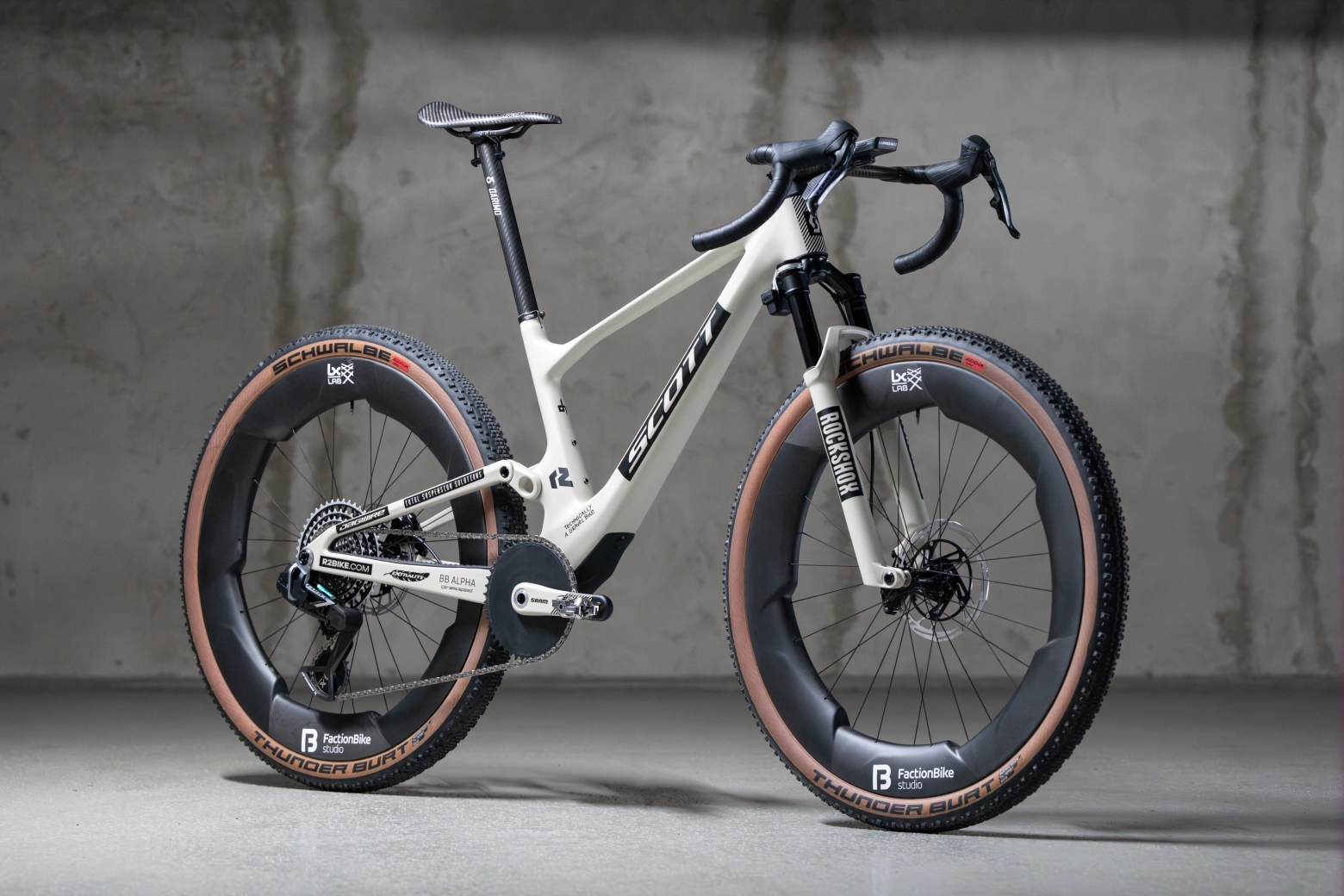
SCOTT Spark RC Gravel: when gravel breaks its own rules
Behind this project is the popular builder Dangerhol, and before continuing, he himself warns that this is not a bike intended for production or the general public, but a technical exercise that seeks to explore the current limits of modern gravel.
For years, gravel has been treated as a unique category, almost exclusively associated with bikes featuring drop handlebars, tires between 40 and 45 mm, and a clear heritage from road cycling. However, the reality is that contemporary gravel encompasses very different scenarios, from fast, compact tracks to extremely broken sections where a rigid mountain bike or even a lightweight dual-suspension bike may prove more effective. This project arises precisely from that reflection that not all gravel is tackled with the same bike, and perhaps it is time to talk about more defined subcategories, just as happens in road cycling or MTB.
RECOMENDADO
Cobblestones, mud, and legend. Why cycling never abandoned the cobblestones
Boost your watts, boost your level: that's how you improve your FTP
What are the five monuments of cycling?

The most reliable method for determining how many calories you burn while cycling
The highest-paid cyclists in the world in 2026: Pogacar continues to lead the ranking.
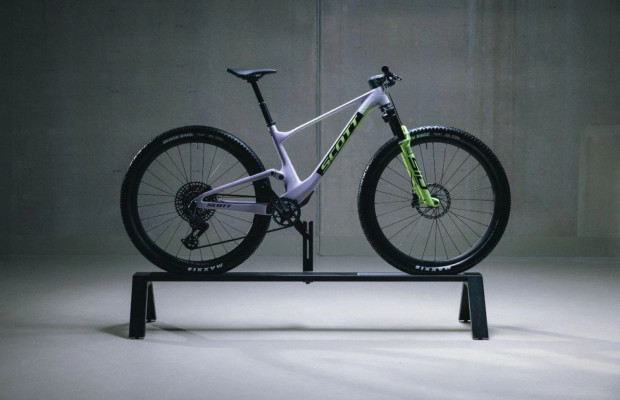
SCOTT Spark RC 2026 Range: updated models, prices, and weights
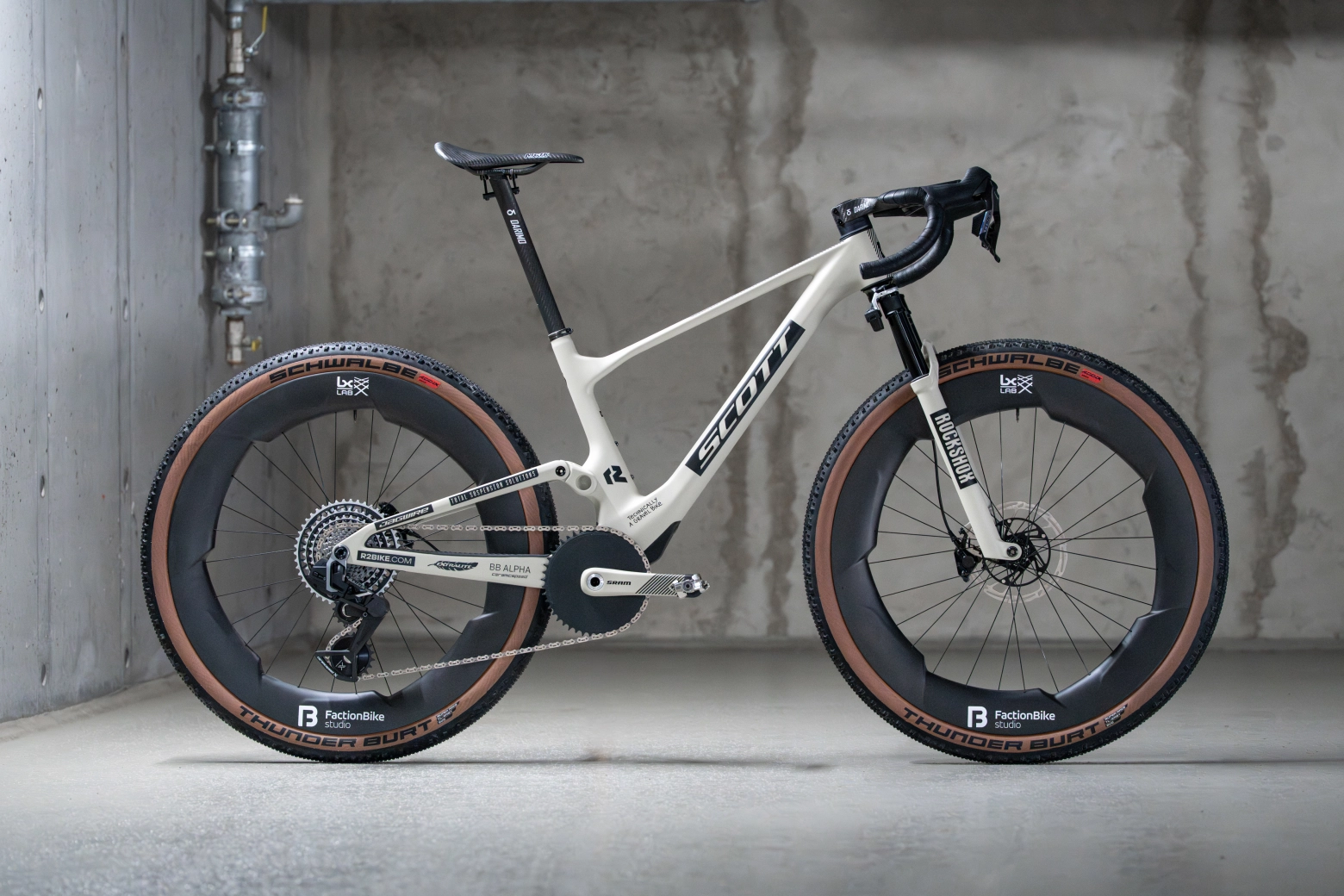
The foundation of the project is a SCOTT Spark RC frame made of HMX carbon, although with key decisions that deviate from the usual XC approach. Instead of opting for size L, a size M has been chosen even though the cyclist is 183 cm tall. The goal is to slightly reduce the wheelbase and achieve a more agile and responsive behavior on fast terrain. Additionally, the adjustable head tube has been mounted in its most vertical position to further refine the geometry for gravel use, moving away from the longer and more stretched character typical of modern XC.
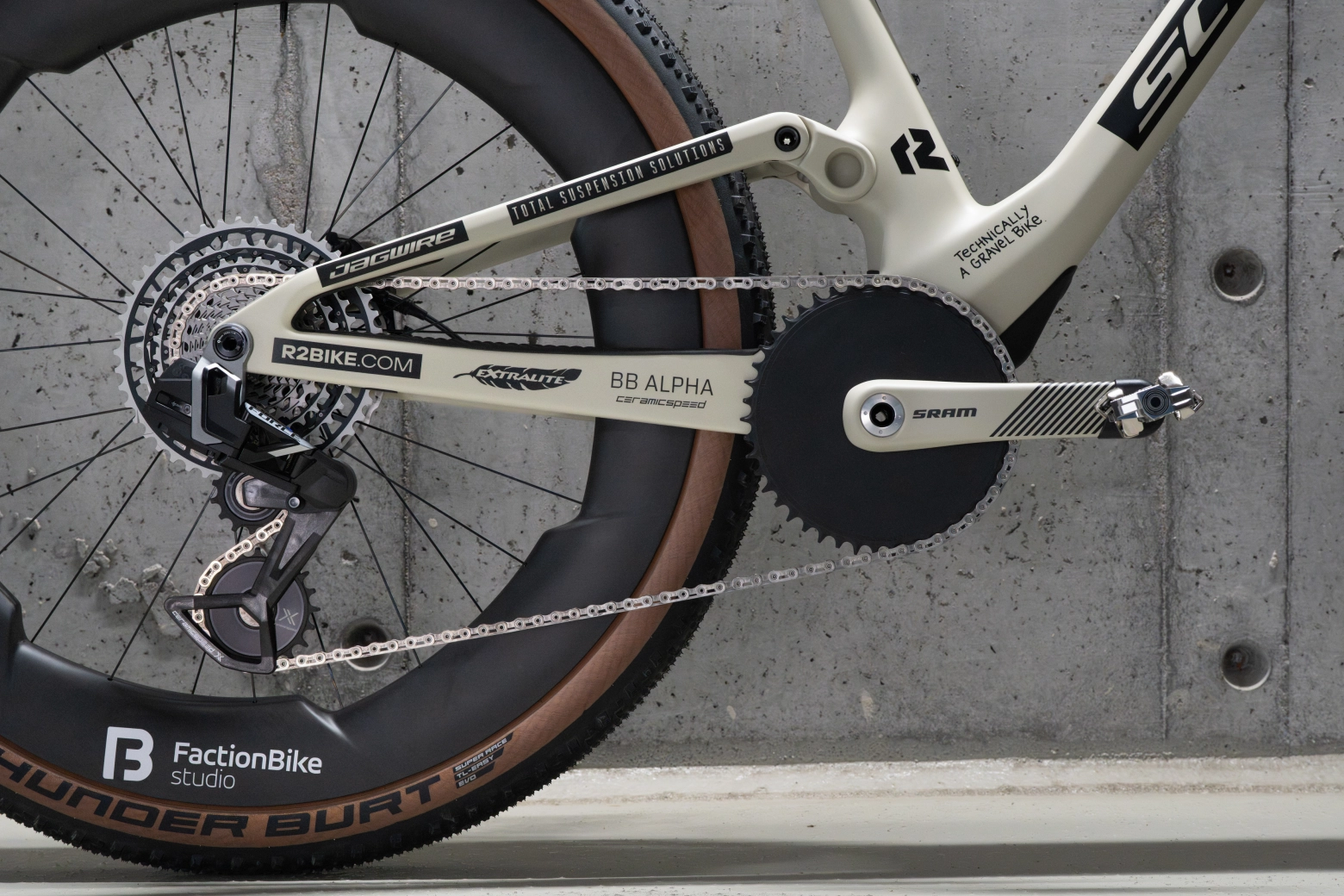
The biggest structural challenge has been the size of the chainring. As standard, the Spark RC accepts a maximum of 38 teeth, a figure clearly insufficient for fast gravel use. To overcome this limitation, the rear triangle has been deeply modified, opening it up to create additional space and subsequently reinforcing it, which has allowed for the installation of chainrings of up to 46 teeth. This is a radical intervention that makes it clear from the outset that this build is not intended to be replicated.
The suspension is another fundamental pillar of the project. The RockShox Flight Attendant system is, in fact, the element that makes a dual-suspension bike with drop handlebars oriented towards gravel viable. The electronic suspension control, integrated directly into the SRAM AXS levers, allows for changing operating modes without the need for additional controls, something especially critical in a gravel cockpit. The final configuration slightly reduces the travel compared to pure XC, with a RockShox SID SL Flight Attendant fork of 110 mm and a modified SIDLuxe rear shock internally to reduce its travel, leaving a more contained and efficiency-focused effective travel. The result is a bike that is firmer when pedaling but maintains a high level of control on fast descents and very uneven terrain.
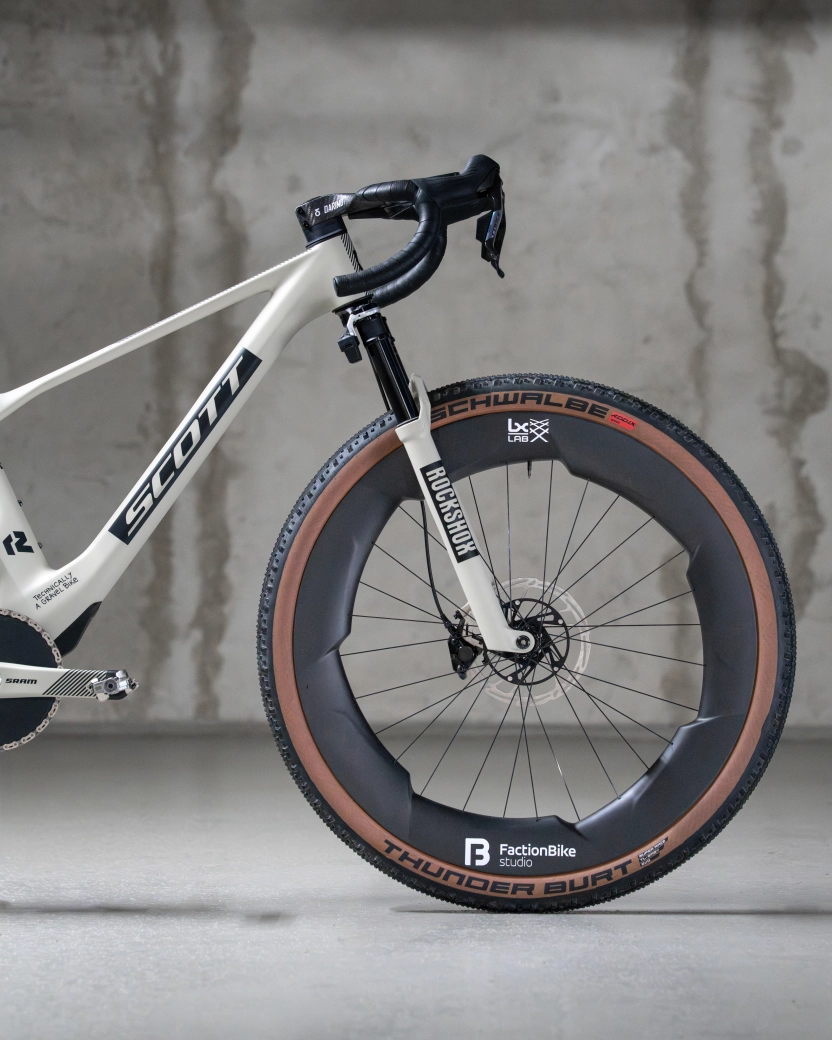
If there is one element that visually defines this project, it is the wheelset. It is an absolutely extreme set, with a 70 mm profile, an external width of 52 mm, and no less than 45 mm of internal width. These rims have been developed specifically for this project by Faction Bike Studio along with LX Sim and LX Lab, and only four units have been manufactured with no intention of commercializing them. They are completely functional but should be understood as a concept and a real test on the ground.
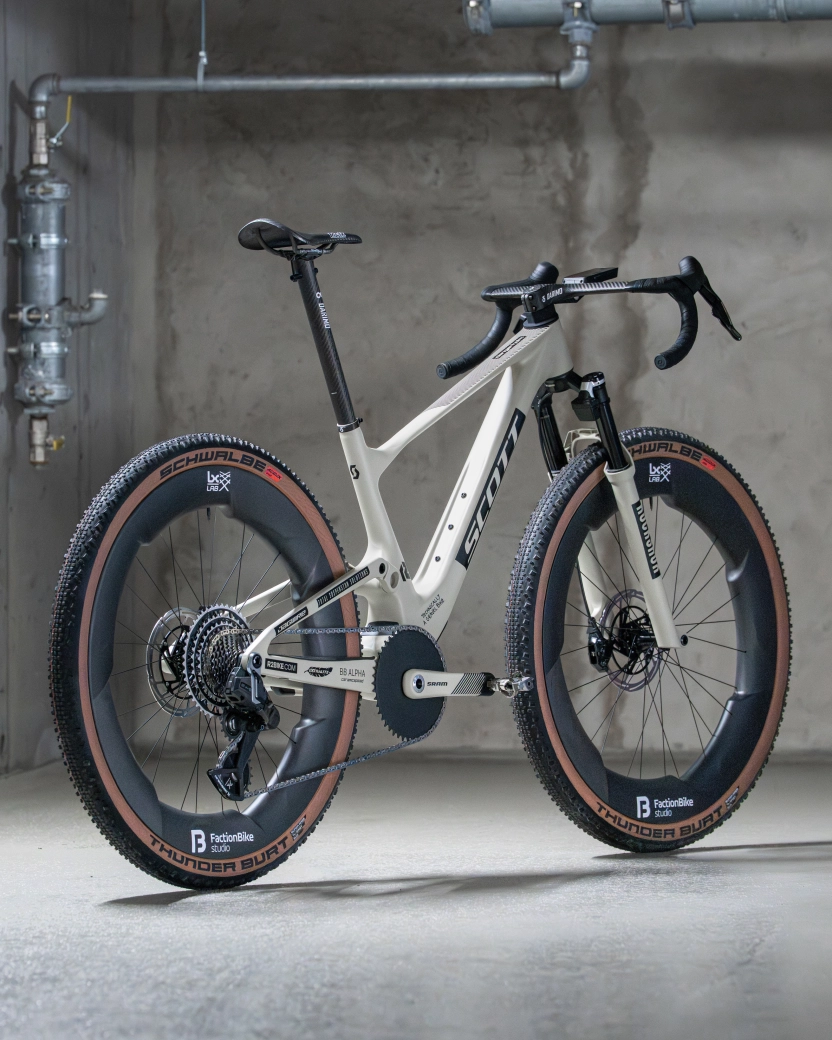
The goal of these wheels is twofold. On one hand, to improve aerodynamics when using large-volume tires, something little explored so far in gravel. On the other, to improve tire stability, avoiding the sensation of rolling or lateral folding that can occur with narrow rims and wide tires. Mounted with Schwalbe Thunder Burt Super Race tires of 2.25 inches, they reach almost 60 mm of actual width at low pressure, prioritizing stability, traction, and speed on broken terrain. Obviously, this approach also has compromises, such as greater exposure of the tire's sidewalls or a more linear response of the casing, but it is a conscious choice within the philosophy of the project.
In the transmission section, the build again challenges established norms. A SRAM RED XPLR AXS 13-speed group with a 10-46 cassette has been used, a system specifically designed for rigid gravel bikes. In a dual-suspension frame, the problem of chain growth when the suspension works arises, something that this group does not account for as standard. Nevertheless, the transmission has been installed extremely carefully, assuming that it is not a solution intended to be reproduced. To optimize performance, a CeramicSpeed OSPW X cage, CeramicSpeed UFO Drip lubrication, and a CeramicSpeed BB ALPHA bottom bracket have been used. The SRAM XX SL cranks, with a narrow Q-factor, also reinforce the aerodynamic focus of the set.
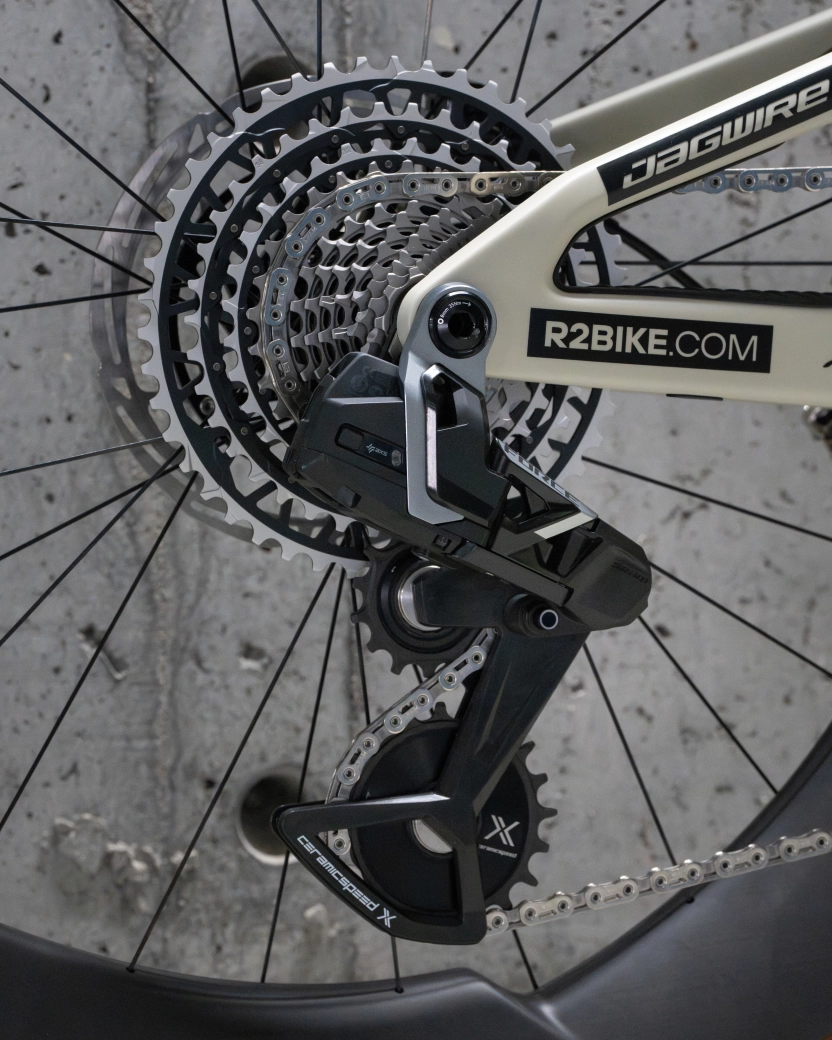
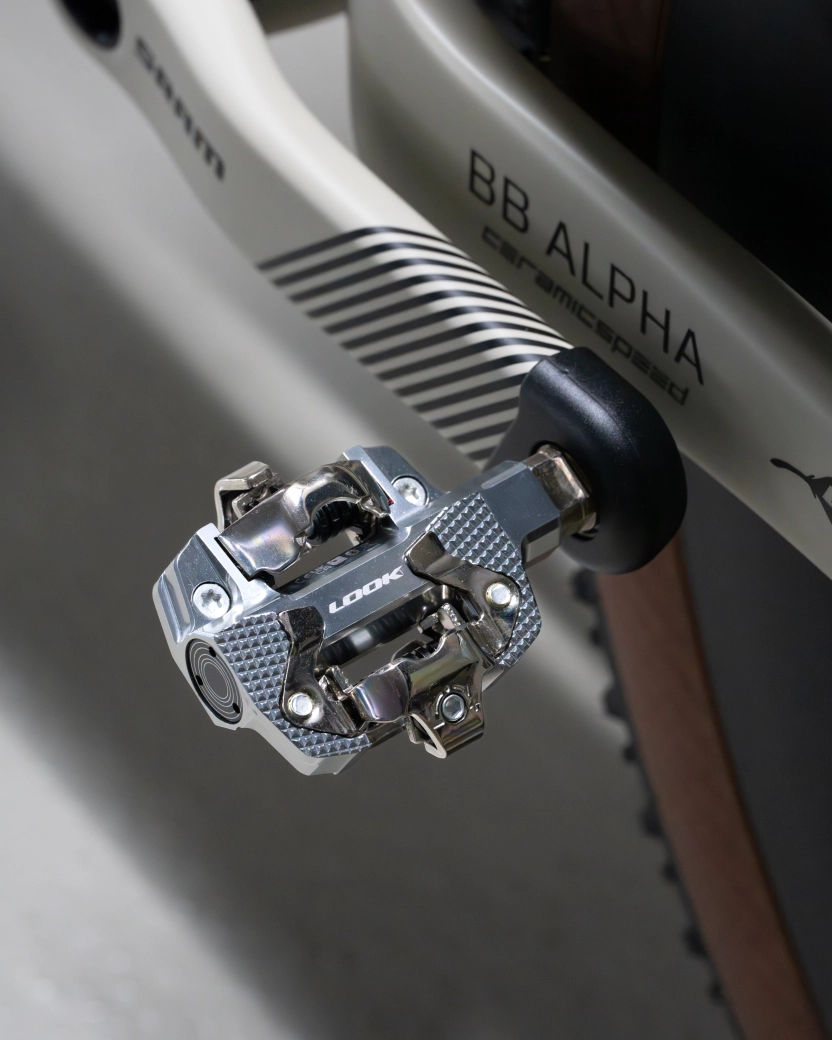
Power measurement is resolved through LOOK X-Track Power Dual pedals, as it was not possible to use a conventional SRAM power meter due to the chainline and the size of the custom chainrings. These chainrings, custom-made by Garbaruk, are available in 42 and 46 teeth and feature a matte black finish that fits with the overall aesthetic of the bike.
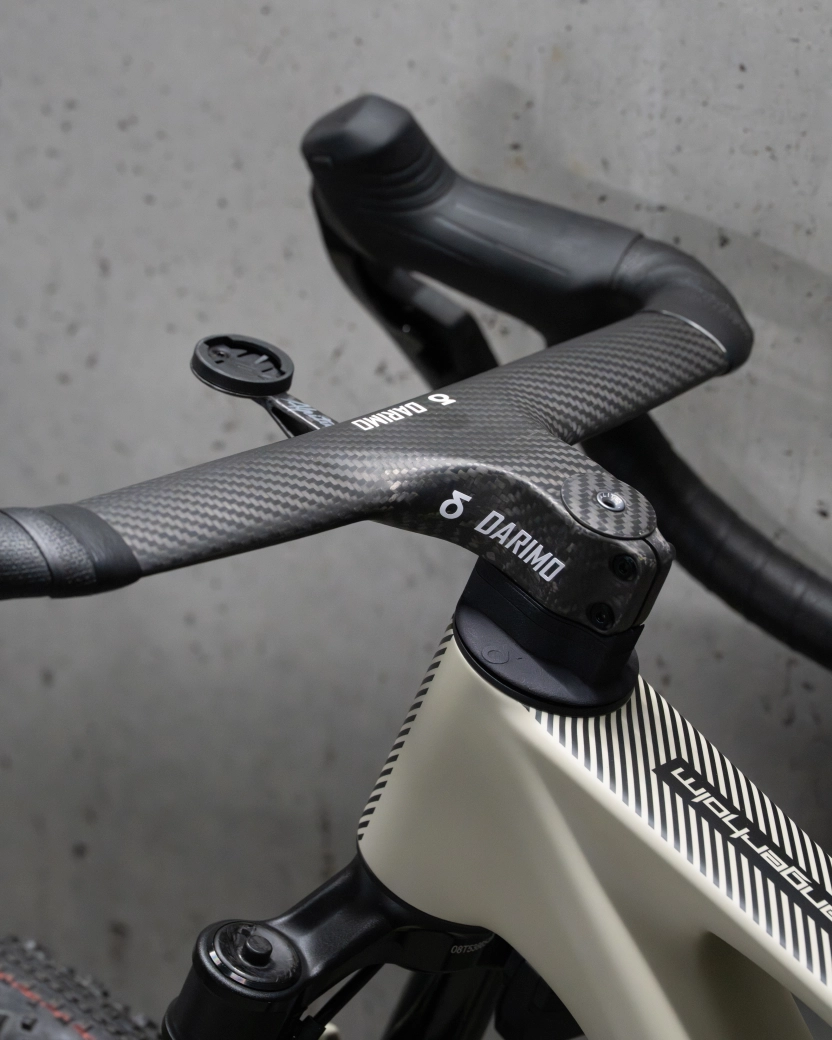
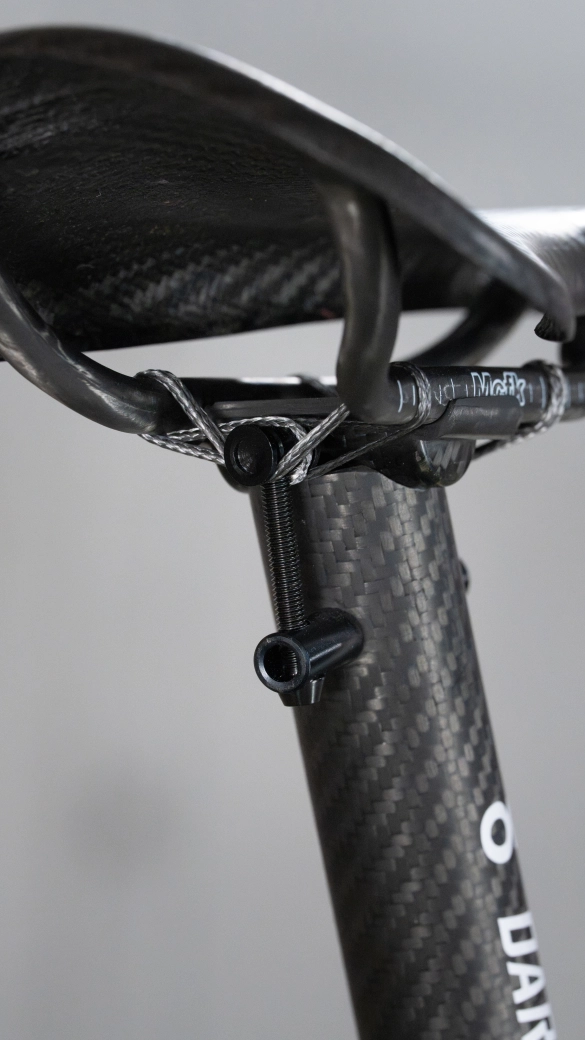
The cockpit is another of the major protagonists. From the beginning, it was clear that it had to be an aerodynamic one-piece solution, but the geometry of the MTB frame complicated the choice. Finally, Darimo specifically developed an integrated handlebar with 80 mm of reach, a -12 degree angle, and 380 mm of width for this project, a combination that did not exist until now and has ended up becoming part of their commercial catalog. The rest of the build maintains that obsession with weight and aesthetics, with a Darimo T1 Loop seatpost held by Dyneema cords, a high-flex MCFK saddle, and a SRAM Force AXS braking system with Jagwire Pro LR2 180 mm discs.
The final declared weight is 10.33 kg without pedals, a figure largely conditioned by the prototype wheels, which have not been optimized for lightness. In a hypothetical scenario with production-designed rims, the set could clearly drop below 9.7 kg, and even approach 9 kg with more conventional and lower-profile wheels.
This SCOTT Spark RC Gravel does not aim to set an immediate trend or anticipate a commercial product. Rather, it is a statement of intent and a demonstration that gravel remains a territory open to experimentation. As the discipline matures, projects like this invite us to reconsider whether a single bike can cover all scenarios or if, as happens in other modalities, the future lies in increasingly specialized machines.
También puede interesarte
Road
Cobblestones, mud, and legend. Why cycling never abandoned the cobblestones
Training
Boost your watts, boost your level: that's how you improve your FTP
Road
What are the five monuments of cycling?
Nutrition
The most reliable method for determining how many calories you burn while cycling
Road
The highest-paid cyclists in the world in 2026: Pogacar continues to lead the ranking.
Mountain bike