This cycling bell goes through the noise-canceling headphones
Skoda has presented a proposal that directly addresses one of the emerging problems of current urban mobility. The rise of active noise-cancelling headphones has changed the way pedestrians and cyclists interact in the city, and the Czech brand, always committed to cycling, has decided to intervene with a solution that is as simple as it is unexpected.
Škoda DuoBell is the bell designed to be heard even with noise cancellation
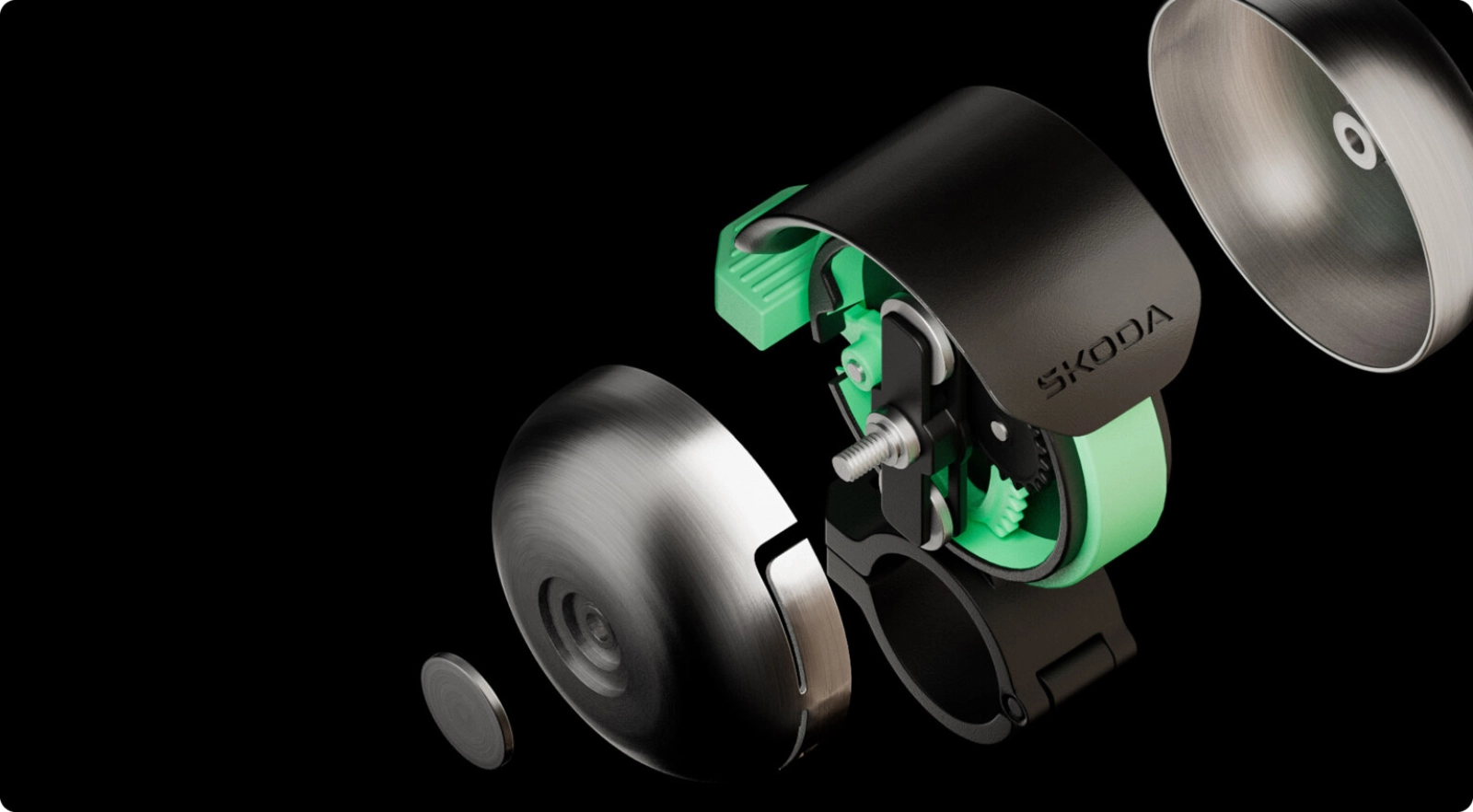
In collaboration with the University of Salford and several creative and technological agencies, Škoda has developed a new bicycle bell capable of "breaking through" noise cancellation systems. The project, named DuoBell, is not intended as a closed product, but as an open platform that other manufacturers could adopt to improve safety in increasingly crowded urban environments.
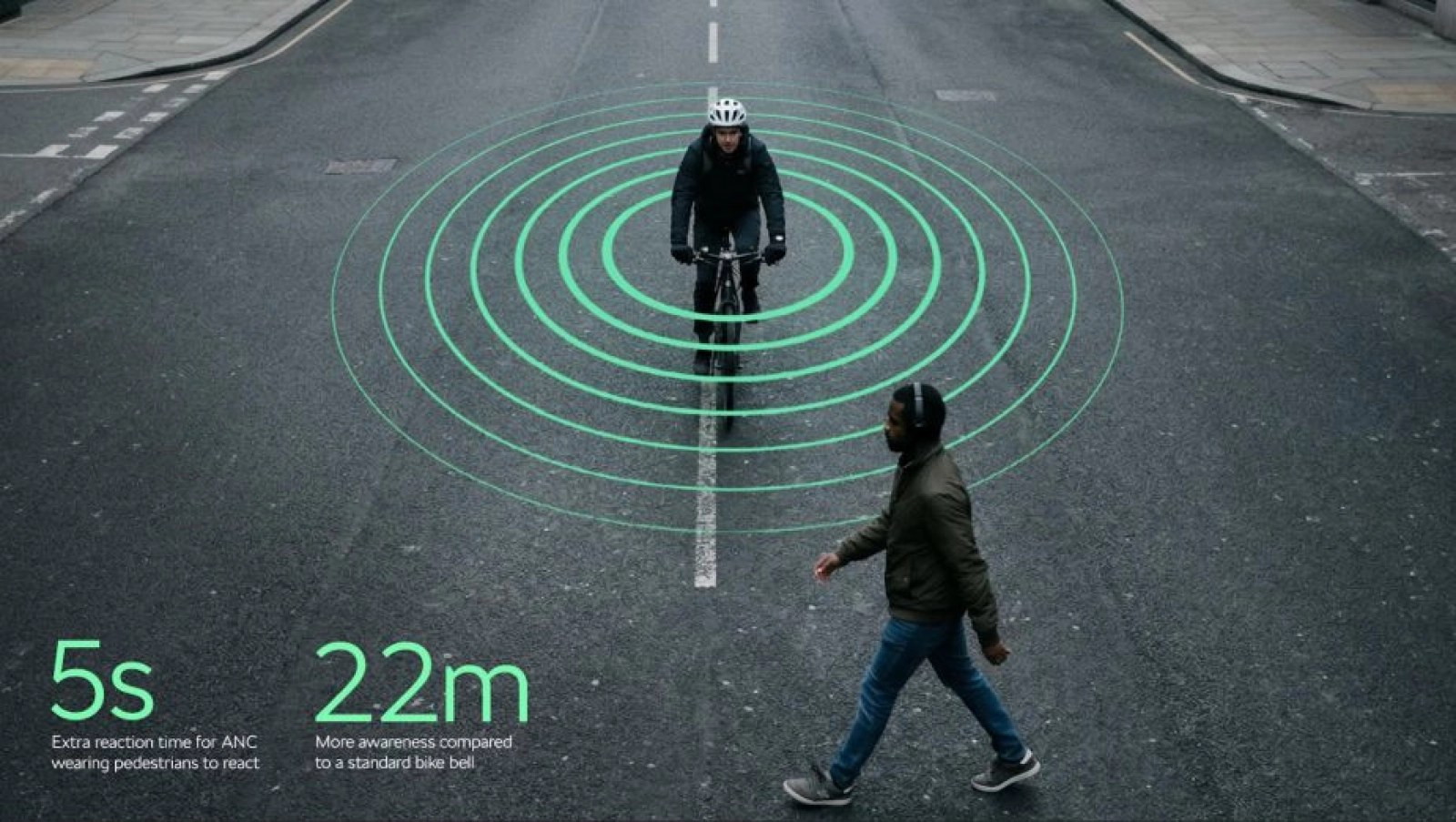
The context is not minor. The brand itself points out that in cities like London, cyclists are about to outnumber drivers, while transport data reflects a 24% increase in collisions between bicycles and pedestrians in 2024. In that scenario, the loss of auditory perception caused by ANC systems has become a clear risk factor.
RECOMENDADO
Evenepoel loses the coach who was supposed to bring him closer to Pogačar
New generation RockShox Lyrik and ZEB: debuting LinearXL and redefining performance in trail and enduro
RockShox updates the Super Deluxe and Vivid with LinearXL

It really works, and science backs it up: just running isn't enough anymore—strength training helps you improve

More than 600W under fatigue, this is how Pogacar blew up the Tour of Flanders with constant attacks
Seixas becomes a reference after beating Roglic, Del Toro, and Ayuso in the Itzulia time trial
The development of the DuoBell is based on a scientific approach. Researchers analyzed how active cancellation algorithms eliminate sounds from the environment and identified a frequency range that manages to evade that filtering. This "safety gap," located between 750 and 780 Hz, allows the sound alert to reach the user even when wearing advanced headphones.
From there, the design of the bell combines two resonators and an irregular impact mechanism that generates a signal difficult for algorithms to interpret. The result, according to the tests conducted, is a warning that is perceptible earlier. In real conditions, pedestrians with headphones were able to detect the signal up to five seconds earlier and at a distance of up to 22 meters compared to a conventional bell.
The development has not remained in the laboratory. Škoda tested the system for two weeks with Deliveroo couriers in real urban environments, a group particularly exposed to these types of situations. Their feedback has been key to adjusting the final prototype. One of the participating riders summarized his experience after using it, stating that with this technology, "I finally had a voice on the streets."
From the brand's perspective, the project is part of a broader vision of mobility. Meredith Kelly, global marketing manager of Škoda, states that "exploration has always been at the heart of Škoda. As the brand grows, we seek new ways to support people in their journeys. This project is a great example of how a simple idea can help make that exploration safer for everyone."
Also from the creative side, there is an emphasis on the paradigm shift. Ben Edwards and Guy Hobbs from AMV BBDO explain that "bicycle bells have hardly changed in a hundred years, but the world around them has. DuoBell is the first bell designed to penetrate noise-cancelling headphones. It is a clever analog resource that surpasses the algorithms within."
The scientific component has also been decisive. Dr. Will Bailey from the University of Salford highlights that "this project has discovered something fascinating about how we experience sound in modern environments. We are proud to have worked with Škoda to turn that knowledge into something practical that can make a real difference in the safety of our cities."
Beyond the device itself, Škoda has published all the research in an open document with the intention of encouraging the industry to adopt this approach. The idea is clear. It is not just about launching a product, but about establishing a new standard at a time when the coexistence between road users is changing rapidly.
También puede interesarte
Road
Evenepoel loses the coach who was supposed to bring him closer to Pogačar
Mountain bike
New generation RockShox Lyrik and ZEB: debuting LinearXL and redefining performance in trail and enduro
Mountain bike
RockShox updates the Super Deluxe and Vivid with LinearXL
Training
It really works, and science backs it up: just running isn't enough anymore—strength training helps you improve
Road
More than 600W under fatigue, this is how Pogacar blew up the Tour of Flanders with constant attacks
Road