The UCI prohibits the automatic inflation of Visma at the last minute and shakes up the lead-up to the Paris-Roubaix
Just a few days before the Paris-Roubaix 2026, an unexpected decision by the UCI has disrupted the preparation of one of the key teams in the race. Visma Lease a Bike will not be able to use its on-the-fly pressure adjustment system, a technology they had been working on for several seasons and considered an important part of their performance on the cobblestones.
The UCI bans the self-inflating system without prior notice
It was through the Dutch podcast In de Waaier that Mathieu Heijboer, performance manager at Visma, explained that the ban came via a letter sent just two weeks before the race.
“We developed it further and tested it intensively during the winter, but two weeks ago we received a letter saying it is banned by the UCI. Then everything stops suddenly”
The team claims there was no prior warning, which has caused internal unrest. In fact, the system was used without issues recently at the GP Denain, one of the most important events on cobblestones before Roubaix.
RECOMENDADO
We tested the Megamo Reason 2027: the eMTB that has changed the market evolves and raises the bar
Avinox M2 and M2S, more powerful motors, removable batteries, and total control from the app
Amflow launches the PX and PR starting at €4,500, with up to 150 Nm, removable battery, and full geometry adjustment
FOX takes a major step forward with the new GRIP X: prices for the new range
Del Toro abandons due to a fall and Axel Laurance wins stage 3 of the Itzulia 2026
Nino Schurter and David Valero will share the starting line again this weekend
“Heijboer also pointed out that there was no prior notice. That letter just arrived. After Denain, nothing happened, and now it has. That’s not a coincidence.”
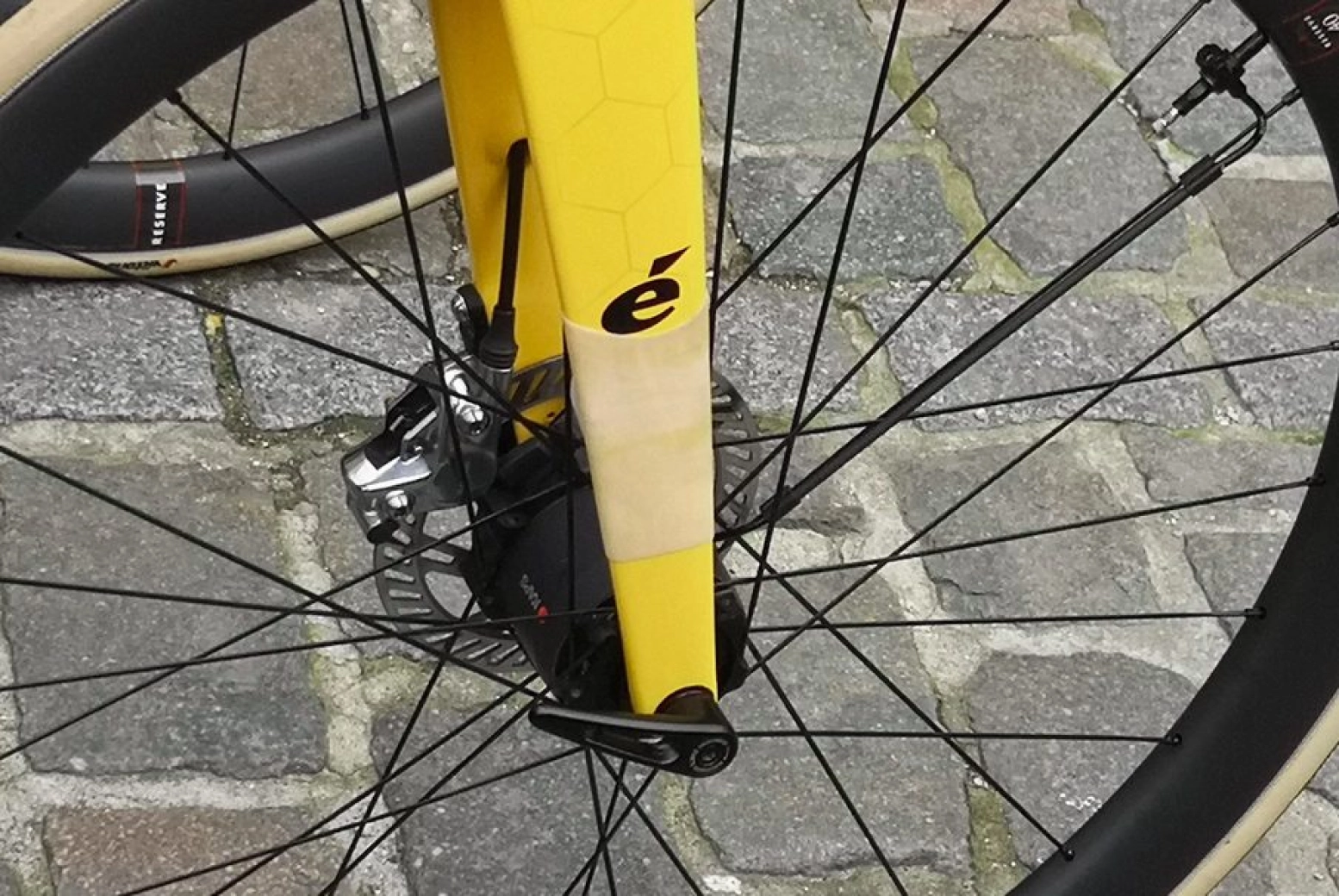
The device in question is the KAPS developed by the Dutch company Gravaa. It is a system that allows for modifying tire pressure during the race, adapting it to each section of the course.
In practice, this allowed for riding with lower pressures in the cobblestone sectors to gain traction and comfort, and then increasing them on asphalt to improve efficiency and speed.
This was not a one-off experimental technology. The team had been using and evolving it over the past few years, even with notable results. One of the most well-known examples was its use in Marianne Vos's victory at the 2025 Gravel World Championship.
The origin of the ban lies in the UCI's technical regulations, specifically in the article that requires that the equipment used in competition be commercially available to any cyclist.
According to the organization's interpretation, Gravaa's business situation, which went bankrupt earlier this year, raises doubts about the actual availability of the product.
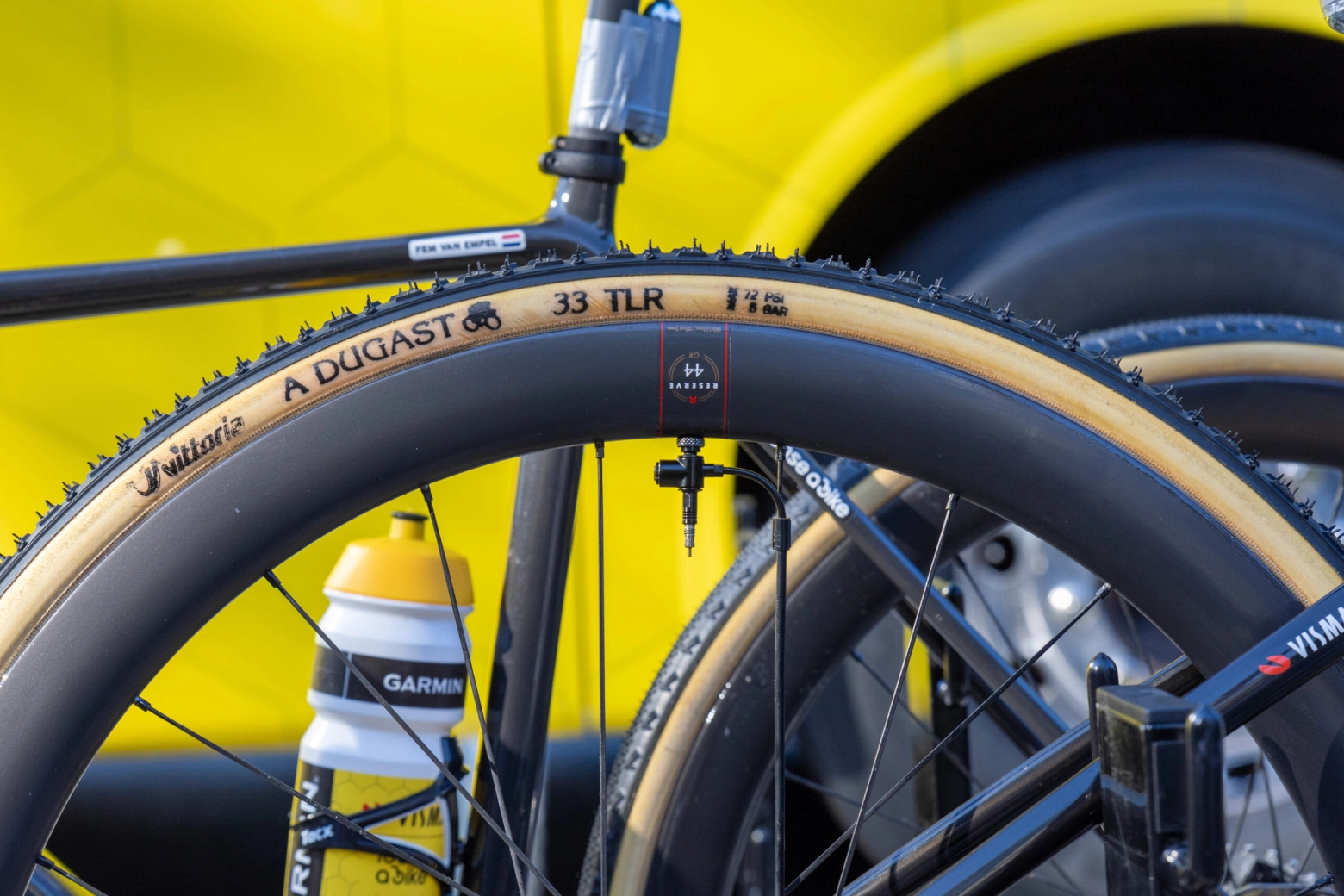
However, Visma defends that the system remains accessible after the company's relaunch. “You can order one if you want. So you can understand that we are completely surprised.”
Heijboer himself questions the criteria applied. “There is no rule that says a tire must be available two weeks or two months in advance. The moment is the race, and if it is commercially available at that moment, you comply with the rule.”
Beyond the substance of the matter, the major problem for the team has been the timing of the decision. Preparing for Roubaix involves weeks of logistical and technical work, especially in something as critical as the wheels.
Heijboer summarized it this way: “The sanction ranges from a warning to disqualification, and you are not going to take that risk. Moreover, Roubaix requires a lot of preparation. In the last few weeks, our mechanics have prepared hundreds of wheels. You can’t leave it for Saturday.”
The team considered appealing the decision but ruled it out due to lack of time and few chances of immediate success. “We thought about appealing, but that involves a complete procedure, and we don’t believe it would succeed in such a short time. We have decided to absorb the losses for now.”
The absence of this system is not a minor detail in a race like the Paris-Roubaix, where every technical adjustment can make decisive differences.
The ban also comes at a time when Wout van Aert seemed to be approaching his best level after two seasons complicated by falls. His recent performance in classics indicated that he could be in a position to contest victory against names like Van der Poel or Pogacar.
Now he will have to do it without one of the technical tools the team relied on the most.
También puede interesarte
Mountain bike
We tested the Megamo Reason 2027: the eMTB that has changed the market evolves and raises the bar
Mountain bike
Avinox M2 and M2S, more powerful motors, removable batteries, and total control from the app
Mountain bike
Amflow launches the PX and PR starting at €4,500, with up to 150 Nm, removable battery, and full geometry adjustment
Mountain bike
FOX takes a major step forward with the new GRIP X: prices for the new range
Road
Del Toro abandons due to a fall and Axel Laurance wins stage 3 of the Itzulia 2026
Gravel