The lightest saddle in the world is 100% handmade in Portugal and remains unbeatable
When the Gelu K-3 appeared a little over four years ago, it did so with a resounding message: to become the lightest saddle in the world. To this day, the Portuguese brand maintains that this statement is still valid, and the truth is that no other manufacturer has managed to present a homologated model that weighs less than the 40-gram barrier. That is the magic number that defines the K-3, a piece of handcrafted engineering made 100% in Portugal that has become an icon within the world of ultralight carbon.
Gelu K-3: the lightest saddle in the world remains unmatched
Weight is undoubtedly the feature that has given it fame. The most extreme version, with a polished finish without varnish, weighs 38 grams on the technical sheet, and independent measurements have consistently placed it around 39 grams actual weight. This represents a staggering difference compared to other superlight saddles that usually range between 60 and 80 grams. This achievement is possible thanks to a complete construction in high-modulus pre-preg carbon, both in the base and in the oval rails of 6x7 mm, which allow for weight reduction without compromising structural stability.
View this post on Instagram
In addition to its lightness, the production process is another of its strong arguments. Gelu manufactures the K-3 completely by hand in Portugal, controlling every phase of the lamination and curing of the carbon. The absence of varnish, a decision that adds lightness and makes the material's weave visible, is part of that artisanal identity. This is complemented by the possibility of customizing colors, names, or logos, a service that is uncommon in components of this level of specialization.
RECOMENDADO

When do helmets have to be changed? Do they have an expiration date?
What benefits does bicarbonate have for cyclists?
Is a cyclist born or made? The eternal debate between talent and training
Why do you prefer a certain type of training? What does that mean?
Why does Pogacar attack while sitting?
Cycling shorts vs underwear: ultimate guide to not ruining your outings
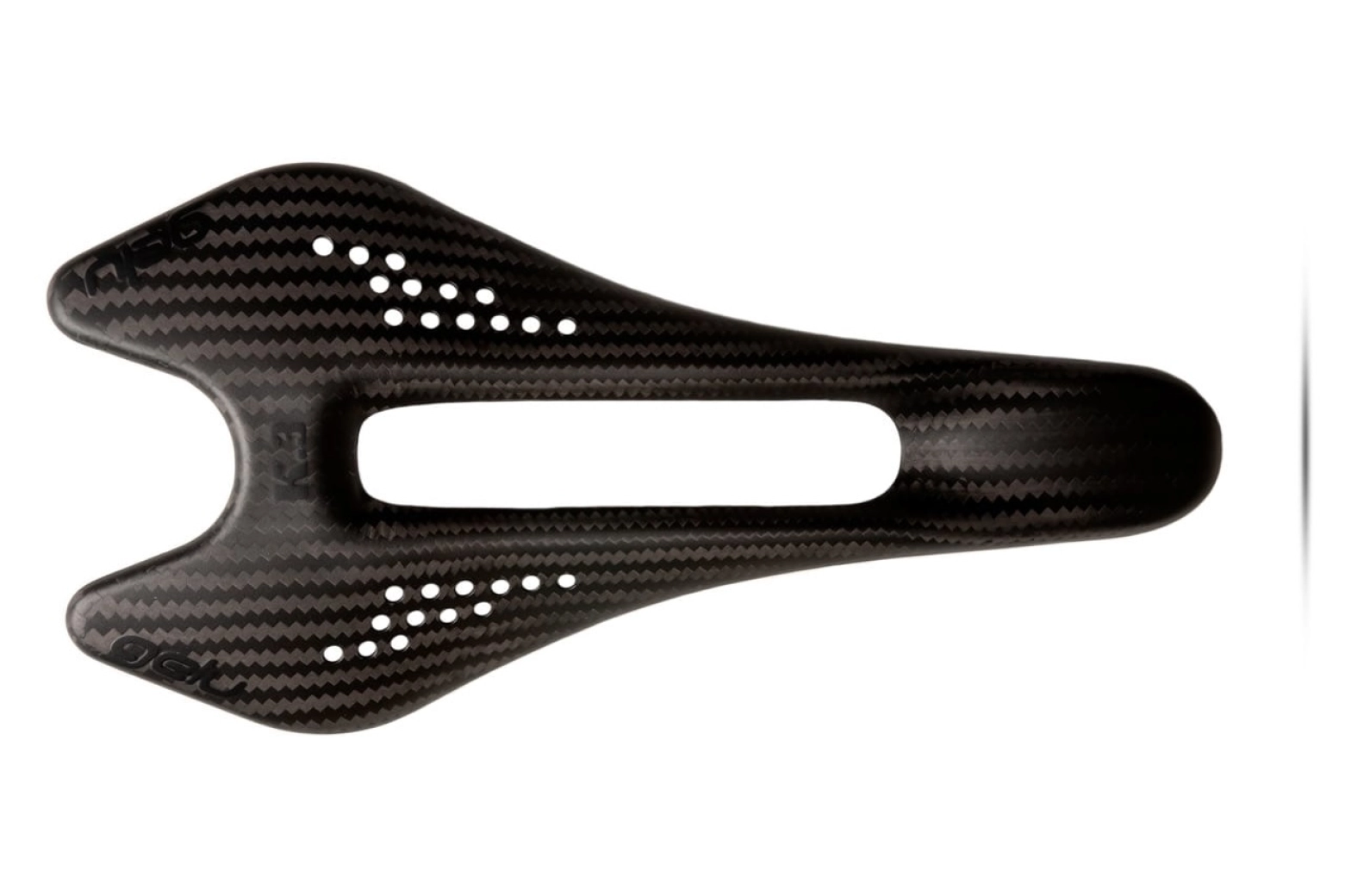
The design is radical in every sense. The K-3 is extremely flat and narrow, with a width of 122 mm and a length of 242 mm, a combination that places it in the realm of the most aggressive saddles on the market. It includes a large central channel, designed to relieve perineal pressure, and 26 perforations distributed on the sides that, in addition to reducing mass, reinforce its minimalist aesthetic. Cyclists who have tried it highlight its rigidity, a trait that is part of its DNA: this saddle is designed to minimize weight to the maximum, not to offer a level of comfort comparable to models with greater flex or padding.
The manufacturer itself indicates a user weight limit of 80 kg, a figure consistent with its ultralight construction. This, combined with its dimensions and rigidity, makes it a saddle aimed at a very specific profile of lightweight cyclists, with stable technique, who seek extreme weight optimization for road setups or minimalist bicycles where every gram counts. For those who prioritize comfort on long rides, there are more suitable options.
Another detail is that the K-3 has an official price of 529 €, a high cost but consistent with a handcrafted, exclusive, and exceptionally light product. Its positioning is not that of a conventional saddle, but rather that of a cult piece among those looking to push their bicycles to the limit of weight.
Specifications of the Gelu K-3
- Price: 529 €
- Declared weight: 38 g (varnish-free version)
- Real weight verified by third parties: approx. 39 g
- Dimensions: 242 x 122 mm
- Nose width: 38 mm
- Rails: pre-preg carbon 6x7 mm
- Base: pre-preg carbon / epoxy resin
- Maximum user weight: 80 kg
- Manufacturing: 100% in Portugal
- Options: customization with colors, names, and logos
También puede interesarte
Bike Equipment
When do helmets have to be changed? Do they have an expiration date?
Nutrition
What benefits does bicarbonate have for cyclists?
Training
Is a cyclist born or made? The eternal debate between talent and training
Training
Why do you prefer a certain type of training? What does that mean?
Road
Why does Pogacar attack while sitting?
Bike Equipment