Schedules and keys for stage 5 of the Tour: first chance for the sprinters?
They have had to wait five days, but the moment for the sprinters finally arrives in the Tour de France 2026. After a particularly demanding start, the fifth stage will take the peloton from Lannemezan to Pau with a route of 158 kilometers that presents the most favorable scenario so far for a mass finish.
Tour de France 2026: stage 5 | The sprinters face their first opportunity on the way to Pau
It will not be a completely flat day. The route accumulates 1,505 meters of total ascent and concentrates several small climbs within the last 40 kilometers that can complicate the race. The teams of the sprinters will have to control the breakaway, protect their leaders, and overcome one last particularly explosive climb before they can think about the finish in Pau.
Key points of stage 5 of the Tour de France 2026
- July 8, 2026
- Start: 14:15 h (CEST)
- Expected finish: between 17:37 and 17:56 h (CEST)
- Route: Lannemezan - Pau
- Distance: 158 km
- Total ascent: 1,505 meters
- Type of stage: flat
Stage 5 has a fundamental difference compared to the previous four days: this time there will be many teams interested in arriving grouped at the finish.
So far, the sprinters have been mere spectators of a Tour dominated by the team time trial, explosive finishes, mountains, and breakaways. Pau represents the first opportunity to justify the presence of the great sprinters and the teammates who have come to the race solely to work for them. This considerably reduces the chances of the breakaway.
RECOMENDADO
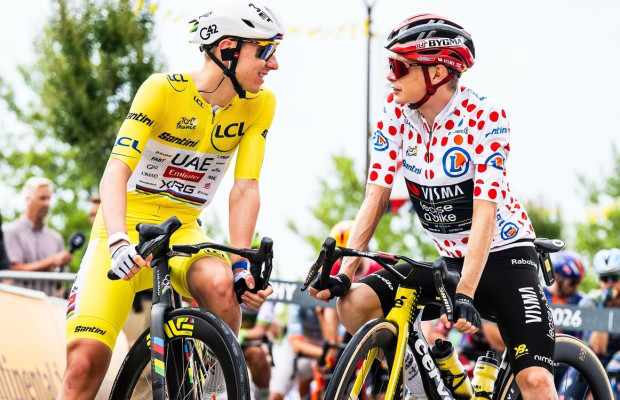
2026 Tour de France: The Meaning of Each Jersey and How to Win It
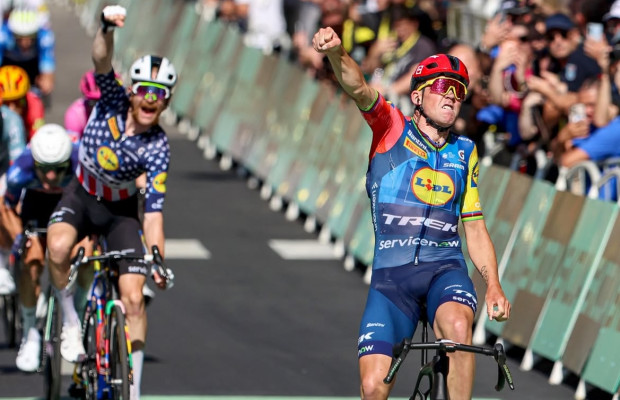
Pedersen wins, Traeen takes the yellow jersey, and Pogacar drops to fourth place in the overall standings in stage 4 of the Tour
Sign up first, train later: why entering a race can change the way you train
Cycling improves how we think, remember and process information: a new study confirms it
From struggling to enjoying it: tips to build confidence on descents
Are you properly positioned on your bike? These are the measurements you should check
Alpecin-Premier Tech, Soudal Quick-Step, Decathlon CMA CGM, or NSN have enough reasons to collaborate in the chase. The difficulty for the adventurers will not only be to gain a significant advantage but also to face several teams with the same goal.
Therefore, unless a particularly large and strong group forms, the most likely scenario is that the breakaway will always remain under the control of the peloton.
The real danger is less than 40 kilometers from Pau
The route between Lannemezan and Pau is not completely flat, but most of its difficulties should not pose a serious problem for the sprinters. The situation changes in the final part.
Between kilometers 118 and 132, three climbs are concentrated that can offer an opportunity to change the course of the stage. First will come Lamayou, with 1.3 kilometers at 5.5%. Shortly after, Maure will be ascended, 900 meters at 7%, and finally, the Côte de Baleix will appear.
This last climb will be the most interesting point of the day. It is only 1.1 kilometers long, but its average gradient of 7.9% allows it to be climbed at a high enough speed to create differences if any team decides to increase the pace. From its summit, there will be 25.8 kilometers to Pau.
The distance seems sufficient for the dropped riders to return to the peloton, but it will all depend on the interest ahead. If teams like Lidl-Trek decide to maintain a high pace after the climb, the chase could become a much more complicated situation.
The sprinters have their first big opportunity today
Mads Pedersen could be one of the riders capable of altering the expected script of the day. The Dane comes from winning in Foix, and a completely clean sprint against specialists like Philipsen, Merlier, or Kooij does not necessarily represent his best scenario. The greater the accumulated fatigue before Pau, the more his options will increase. Lidl-Trek has, therefore, reasons to attempt a different race.
A high pace in the last climbs could put some sprinters in difficulty and reduce the number of Pedersen's rivals. Even if no one is definitively dropped, the effort made to return to the group can be significant when it comes to contesting the sprint.
Biniam Girmay should also benefit from a more demanding day, as should riders like Michael Matthews, Pavel Bittner, or Søren Wærenskjold.
Philipsen, Merlier, and Kooij face off for the first time
If attempts to harden the stage are unsuccessful, Pau will allow for the first major confrontation between the best sprinters of the Tour.
Jasper Philipsen starts with the advantage of having a strong team to prepare for the finish and a route that should not be particularly complicated for him. Tim Merlier may be the fastest man in a pure sprint, although his ability to handle the final part with enough freshness will be one of the day's unknowns. Olav Kooij arrives at his first Tour de France after proving before the race that he can beat both. The Dutchman has already surpassed Philipsen and Merlier in the Baloise Belgium Tour and will now have his first opportunity to transfer that speed to the most important race on the calendar.
Biniam Girmay completes the group of major candidates. The small ascents before Pau should favor him, and any increase in fatigue will play to the advantage of a rider who has already demonstrated his ability to win difficult stages in the Tour.
Behind them are numerous contenders ready to take advantage of any mistakes from the favorites. Max Kanter, Milan Fretin, Fernando Gaviria, Phil Bauhaus, Arvid de Kleijn, and Pascal Ackermann will have their first opportunity to measure their speed in a mass finish.
After four days of waiting, the sprinters will finally have their chance. But before launching the sprint, some will have to overcome one last battle to reach it.
También puede interesarte
Road
2026 Tour de France: The Meaning of Each Jersey and How to Win It
Road
Pedersen wins, Traeen takes the yellow jersey, and Pogacar drops to fourth place in the overall standings in stage 4 of the Tour
Training
Sign up first, train later: why entering a race can change the way you train
Training
Cycling improves how we think, remember and process information: a new study confirms it
Road
From struggling to enjoying it: tips to build confidence on descents
Road
