Pogacar's VO2max would be close to the human limit
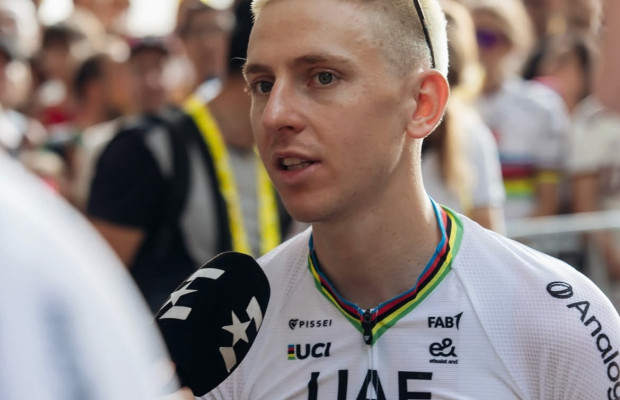
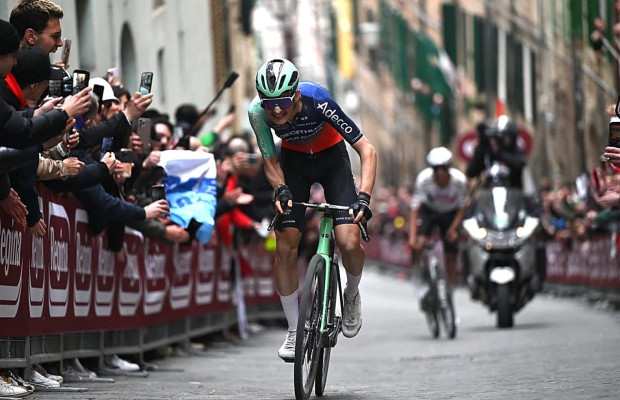
A new scientific study places Tadej Pogačar back in a physiological territory previously reserved for theory. The research, published in the International Journal of Sports Physiology and Performance, estimates that the Slovenian would have needed a VO₂max of between 90 and 102 ml/kg/min, with an average close to 96 ml/kg/min, to produce some of his best performances in high mountains. According to the authors, depending on the assumptions used in the model, Pogačar could even approach the symbolic barrier of 100 ml/kg/min, a level never officially measured in a cyclist.
A new study places Tadej Pogačar's VO₂max on the verge of 100 ml/kg/min
This work comes just a few months after the study by Norwegian professor Ole Kristian Berg, published in the Journal of Science & Cycling, which already estimated a VO₂max close to 96 ml/kg/min after analyzing Pogačar's performances in the Tour de France. Now, Berg himself co-authors a new study with Pedro L. Valenzuela and Sebastian Sitko, in which the model is refined and expanded to try to estimate the aerobic capacity of the four-time Tour winner with greater precision.
A validated model before applying it to Pogačar
The researchers began by developing a model to estimate power based on climbing speed, incorporating variables such as the cyclist's mass, air density, and the characteristics of each climb. To verify its reliability, they used public data from other riders who had shared their power records, obtaining an approximate margin of error of 10 watts.
The next step was to convert those power estimates into a maximum oxygen consumption. To do this, they used widely accepted knowledge about the relationship between sustainable power during efforts of 20 to 40 minutes, the percentage of VO₂max at which a professional cyclist can compete, and the performance loss caused by altitude.
RECOMENDADO
"They have changed my life since January": Pogacar undergoes another test and explains how he is experiencing the anti-doping operation
"Don't drop me": the message to Pogacar that changed the outcome of stage 15 of the Tour
Doping controls wake Pogacar and Vingegaard in the early morning
An indoor trainer can do more for your training than you think: here are 7 reasons to own one
Goodbye to watts per kilogram as the sole benchmark—fatigue decides who’s the best
The Megamo West 2027 gets a new range from €2,399 and remains a great choice
Before analyzing Pogačar, the model was tested with Chris Froome. Applying it to one of his most memorable performances in the 2015 Tour de France, the authors estimated a VO₂max of 82 to 89 ml/kg/min, a range that matches the value of approximately 85 ml/kg/min obtained by the Briton in actual physiological tests.
More than 440 watts for up to 40 minutes
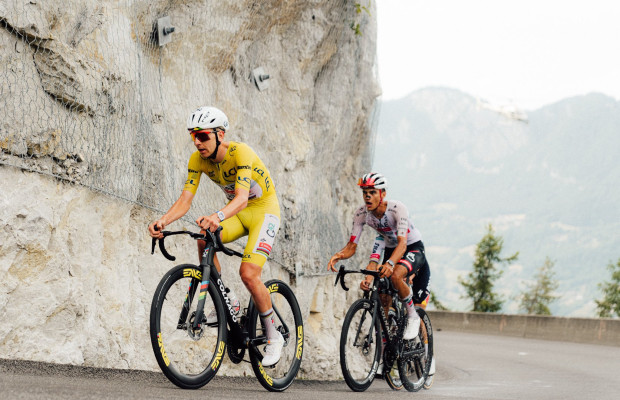
Once the method was validated, the researchers analyzed four of Pogačar's most outstanding performances in the last two seasons. According to their calculations, the Slovenian sustained more than 440 watts during efforts ranging from 17 to 40 minutes, also performed on climbs located between 723 and 1,444 meters in altitude.

With this data, the model concludes that Pogačar would have needed a VO₂max between 90 and 102 ml/kg/min, with an average estimate of 96 ml/kg/min.
Efficiency can change the result
The authors themselves emphasize that these figures do not come from a stress test conducted on the UAE Team Emirates-XRG rider, but from estimates based on physiological models. Therefore, they analyzed how the results change when modifying some variables.
The factor with the greatest influence was the cyclist's mechanical efficiency. If Pogačar were extraordinarily efficient (25%), his estimated VO₂max would drop to about 88 ml/kg/min. In contrast, with a lower efficiency (21%), the figure would rise to 105 ml/kg/min.
Altitude also plays an important role. The study is based on the hypothesis that a rider so accustomed to training at altitude hardly loses performance with elevation. However, if that penalty were greater, the model concludes that the VO₂max needed to sustain those same powers would exceed 100 ml/kg/min.
To date, the highest value officially measured in a cyclist belongs to Norwegian Oskar Svendsen, who reached 97.5 ml/kg/min during a stress test conducted in 2012. Precisely for this reason, the estimates placing Pogačar around 96 ml/kg/min, and even considering the possibility of exceeding 100 ml/kg/min in certain scenarios, give an idea of the magnitude of the performance attributed to him by these physiological models.
The researchers stress that all these figures depend on physiological assumptions and do not replace a direct measurement in the laboratory. However, they believe that even using conservative hypotheses, the result suggests that Tadej Pogačar possesses extraordinary aerobic capacity, likely among the highest ever estimated for an endurance athlete.
También puede interesarte
Road
"They have changed my life since January": Pogacar undergoes another test and explains how he is experiencing the anti-doping operation
Road
"Don't drop me": the message to Pogacar that changed the outcome of stage 15 of the Tour
Road
Doping controls wake Pogacar and Vingegaard in the early morning
Training
An indoor trainer can do more for your training than you think: here are 7 reasons to own one
Road
Goodbye to watts per kilogram as the sole benchmark—fatigue decides who’s the best
Gravel
