Pogacar and Vingegaard arrive at Tourmalet: schedules and key points of stage 6
The Tour de France arrives this Thursday at one of those venues that need no introduction. After five stages with time trials, explosive finishes, medium mountains, and the first opportunity for sprinters, the peloton faces the Pyrenees and the first day where the main contenders for yellow will have to tackle two significant climbs.
Tour de France 2026: stage 6 | The Tourmalet measures Pogacar and Vingegaard for the first time in the high mountains
The 186 kilometers between Pau and Gavarnie-Gèdre accumulate a total ascent of 4,080 meters, but almost all the attention will be focused on the second half of the route. The Col d’Aspin and the Col du Tourmalet appear chained before a long and unusual approach to the finish. Because this time the most important summit will not be at the finish line: after reaching the Tourmalet, there will still be 38.5 kilometers to complete the stage.
Schedule and key points of stage 6 of the Tour de France 2026
- Start: 12:40 h
- Expected finish: around 17:29 h
- Route: Pau - Gavarnie-Gèdre
- Distance: 186 km
- Total ascent: 4,080 meters
- Type of stage: high mountain
The first half of the day should serve to form the breakaway and accumulate wear before entering the true decisive terrain. The Côte de Loucroup, a fourth-category climb, and the Côte de Mauvezin, a third-category climb, will be the only scoring difficulties during the first 100 kilometers. From there, another race begins.

RECOMENDADO
Olav Kooij wins the first battle among sprinters in the Tour de France and fulfills Decathlon's bet
Pedersen wins, Traeen takes the yellow jersey, and Pogacar drops to fourth place in the overall standings in stage 4 of the Tour
When to skip training and rest without feeling guilty
Free aero gains for your bike: small changes that make you faster
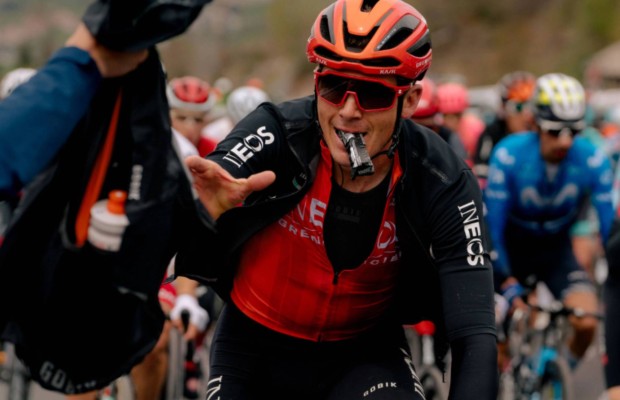
More power, less fatigue: how nitrates could help you on the bike
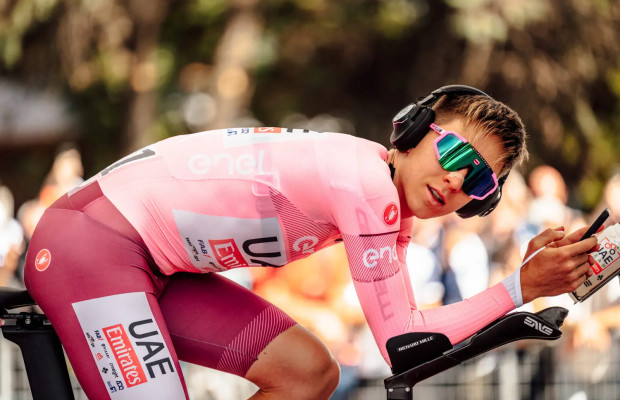
An indoor trainer can do more for your training than you think: here are 7 reasons to own one
The Col d’Aspin will be the first climb capable of seriously reducing the peloton. Its 9.8 kilometers at 7% appear 68 kilometers from the finish and should serve to eliminate domestiques, increase wear, and position the teams of the favorites for the first tactical decisions.
The importance of the Aspin will lie less in the attacks it may provoke than in how it organizes the race before the Tourmalet. Any rider who loses teammates too early may find themselves completely isolated at the most crucial moment of the day.
And then the Tourmalet will arrive.
Its 12.4 kilometers at 8.7% represent the first major mountain test of this Tour. There will be no need to look for specific ramps or exceptional percentages. The combination of length, gradient, and altitude is enough to establish differences among the best climbers. But the location of the climb completely changes the way to approach the stage.
Gaining time on the Tourmalet will be only half the job. Attacking nearly 40 kilometers from the finish involves considerable risk. After reaching the Tourmalet, a long descent awaits, followed by nearly 20 kilometers of ascending and irregular terrain to Gavarnie-Gèdre. That final stretch can be as important as the climb itself.
A rider who gains a few seconds on the Tourmalet will have to defend them for many kilometers. Behind, alliances may form among rivals, while cyclists who summit isolated will be forced to bear all the effort.

Pogacar and Vingegaard face the first major test
Tadej Pogacar reappears as the main favorite in a stage that offers him different possibilities. He can use the toughness of the Tourmalet to try to distance Jonas Vingegaard, take advantage of the numerical superiority of UAE Team Emirates-XRG, or wait for the final stretch if neither can break the race. Isaac del Toro could be a key piece for the Emirati team, both as Pogacar's last support and in any tactical move that forces Visma to react.
Vingegaard faces the first terrain of the Tour where his level can truly be tested against the Slovenian. His goal will be to get over the Tourmalet without conceding differences and, above all, to avoid being isolated for the subsequent kilometers. Remco Evenepoel, Florian Lipowitz, Paul Seixas, Juan Ayuso, and Tobias Halland Johannessen will also have their first serious reference on their real possibilities against the two main favorites in this stage.
Behind, Richard Carapaz, Mattias Skjelmose, Lenny Martinez, Antonio Tiberi, and Tom Pidcock are part of the group of riders who can take advantage of any tactical move or a day less controlled than expected. In a stage where the main climb finishes far from the finish line, the ability to find allies and manage the last 38 kilometers can be almost as important as climbing the Tourmalet among the best.
The sixth stage will not decide the Tour de France, but it should provide the first reliable image of the hierarchy in the high mountains. The Aspin will begin the selection, the Tourmalet will show who has the best legs, and the long road to Gavarnie-Gèdre will force any differences gained to be transformed into a real advantage.
También puede interesarte
Road
Olav Kooij wins the first battle among sprinters in the Tour de France and fulfills Decathlon's bet
Road
Pedersen wins, Traeen takes the yellow jersey, and Pogacar drops to fourth place in the overall standings in stage 4 of the Tour
Training
When to skip training and rest without feeling guilty
Road
Free aero gains for your bike: small changes that make you faster
Nutrition
More power, less fatigue: how nitrates could help you on the bike
Training
