New S-Works Tarmac SL9: one bike to settle the aero vs. climbing bike debate
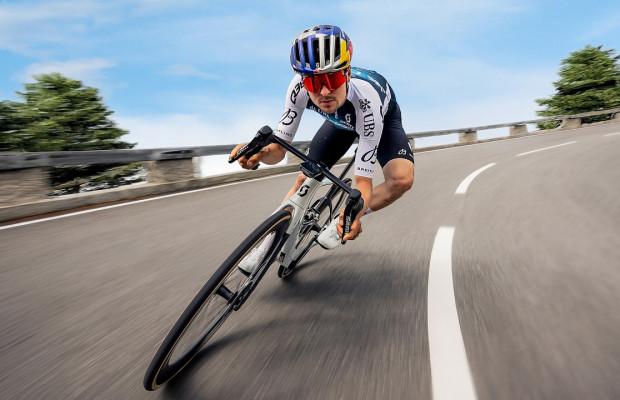
Specialized has just presented the new S-Works Tarmac SL9, a bicycle that represents a shift in approach from the traditional way of developing road bikes. Rather than chasing isolated figures of aerodynamics, weight, or stiffness, the American brand claims to have designed the entire platform around a single parameter: the actual time needed to complete a race.

Specialized presents the new S-Works Tarmac SL9: faster, lighter, and developed around a single goal, to reduce the time to the finish line
The Morgan Hill brand defines this concept as “Time To Finish,” a metric we first heard a few weeks ago during the presentation of the new Crux Gravel, which combines aerodynamics, total system mass, rolling resistance, mechanical efficiency, cyclist power, terrain, wind, and real competition conditions to determine which bike allows for the fastest completion of a given course. According to Specialized, the new Tarmac SL9 is the fastest road bike they have ever developed precisely because it achieves the lowest “Time To Finish” of all the bikes they have tested.

From the wind tunnel to the final result
RECOMENDADO
The possible Specialized Tarmac SL9 is already competing: three appearances in three races fuel the rumors
What appears to be the new Specialized Tarmac SL9 was spotted during a Red Bull-BORA-hansgrohe training session

History of the Specialized Tarmac: eight generations of records, evolution, and an unbeatable legacy
Sign up first, train later: why entering a race can change the way you train
Cycling improves how we think, remember and process information: a new study confirms it
From struggling to enjoying it: tips to build confidence on descents
For years, the industry has used aerodynamic drag as the main argument to measure a bike's speed. Specialized does not abandon that philosophy, but believes that a racing bike cannot be evaluated solely by the watts it saves in a wind tunnel.

The brand argues that a race is decided by the interaction of numerous factors that are constantly changing: variable speeds, wind, accelerations, climbs, descents, cyclist position, or accumulated fatigue. Therefore, they developed their own tool called “Equation of Speed,” a physical model that integrates all these parameters to calculate the total time taken to complete a real course.
According to Specialized, this system is inspired by methodologies used in disciplines such as Formula 1 or professional sailing, where the goal is not to optimize a specific data point but the overall performance on a given circuit.
Four watts faster than the Tarmac SL8
The visible result of this work is a bike that, according to measurements taken by Specialized with their Win Tunnel testing system, reduces aerodynamic drag by 4 watts compared to the Tarmac SL8 at a speed of 45 km/h.

The improvement does not come from a single element but from a complete revision of all the surfaces of the frame. Specialized claims that each tube has been redesigned to achieve aerodynamic gains without increasing the overall weight.
The company developed numerous experimental prototypes based on platforms derived from the Tarmac SL8 to evaluate different solutions before arriving at the final design. The goal was to find aerodynamic gains without sacrificing the low weight that characterized both the SL8 and the Aethos.
A completely new front end
Much of the aerodynamic gains are concentrated in the front area.
The well-known “Speed Sniffer” design evolves into a 4 mm narrower head tube with 10% less frontal area. To achieve this, Specialized had to develop a new steering system called Offset Steerer, pending patent, which shifts the routing of the rear brake cable to the right side of the steering to free up space in the front.

This solution is complemented by a new dropped down tube (“Dropped Down Tube”) that reduces the existing space between the wheel, fork, head tube, and frame, helping to better control the airflow in one of the most critical areas from an aerodynamic perspective.

A new fork called Flow Fork also appears. Its legs are not only deeper but also have a specific twist outward to better direct the air coming from the front wheel and keep the airflow attached around the frame for a longer time.
The curious origin of the new “Win Fin”
One of the most striking solutions of the Tarmac SL9 comes directly from the analysis of competition data.
Specialized engineers observed that in most professional breakaways, riders only use one water bottle. The constant proximity of team cars makes it unnecessary to carry two bottles for long periods.

This detail completely modifies the airflow behavior around the seat tube and the rear triangle. From that observation, the so-called “Win Fin” was born, a complete redesign of the rear of the frame specifically optimized for that common racing configuration.
According to Specialized, this solution alone provides an approximate savings of 0.5 watts.
A new concept of aerodynamic testing
Another significant aspect in the development of the SL9 is the use of the sixth generation of their “Moving Leg Mannequin.”
Unlike traditional tests conducted only with the bike or with static mannequins, Specialized uses a mannequin capable of pedaling to more realistically reproduce the airflow alterations caused by leg movement.

The company claims that the cyclist modifies the overall aerodynamics of the setup so significantly that any measurement taken without them offers an incomplete picture of the actual performance.
The precision of the system is such that the brand itself states that an error of just half a centimeter in the mannequin's position can generate aerodynamic differences greater than those that exist between some bikes.
687 grams for the S-Works frame
The other significant figure of the new Tarmac SL9 is its weight.
The S-Works frame made from FACT 12r carbon weighs only 687 grams, a figure that Specialized places at the high end of the aerodynamic competition bike segment. Additionally, complete builds start at 6.5 kg.

To achieve this, the brand has continued to develop the Flow State Design concept initially introduced in the Aethos family.
The philosophy consists of using the shape of the tubes to support structural loads more efficiently, allowing for the removal of unnecessary carbon layers without compromising stiffness or strength. Engineers analyzed the deformation patterns of the frame under load and used that data to optimize each structural section.

Specialized claims that the frame exceeds 100,000 test cycles equivalent to a power of 2,377 watts.
Same stiffness and comfort as the Tarmac SL8
Despite the new aerodynamic profiles and structural modifications, Specialized asserts that it has maintained exactly the same stiffness and vibration absorption targets as in the Tarmac SL8.
The brand believes that speed does not solely depend on aerodynamic efficiency but also on the cyclist's ability to maintain power for longer. Reducing fatigue, improving control, and increasing the rider's confidence are also part of the performance equation.
The new SL9 also maintains the Rider First Engineered philosophy, with specific layups for each size between 44 and 61 cm to ensure consistent behavior regardless of the cyclist's height.
How much faster is it really?
Specialized has conducted simulations using real profiles from stages of the Tour de France, Tour de France Femmes, Liège-Bastogne-Liège, and the Montreal World Championships 2026.
One of the most striking examples corresponds to the final stage of the Tour de France Femmes 2024, where Demi Vollering made her decisive 80-kilometer breakaway towards Alpe d’Huez.

According to the simulation conducted by the brand using the complete data of the course, a Tarmac SL9 would have allowed for the completion of that stage 14 seconds faster than a Tarmac SL8. Specialized reminds us that that edition of the Tour was decided by just five seconds in the overall classification.

The brand's internal simulations also place the SL9 ahead of models like the Cervélo S5, the Colnago Y1RS, or the Factor ONE in several of the analyzed scenarios, especially when the course includes climbs and continuous changes of pace.
One bike for everything
Specialized's conclusion is clear: the new Tarmac SL9 does not aim to be a climbing bike or an aero bike in the traditional sense.
The brand defines it as a unique platform capable of adapting to sprinters, classic racers, and general classification contenders because it has been designed around a single variable: to complete the course faster.

In the words of the company's own technical white paper, the Tarmac SL9 has not been developed to win isolated metrics, but to be “the fastest bike according to the only parameter that decides who wins a race: the time to the finish line.”
S-Works Tarmac SL9 range: prices and available versions
As is customary with Specialized, the Tarmac SL9 range will be structured in several levels of equipment to cater to different user profiles, although all share the same development philosophy based on the Time To Finish concept.

At the top of the range are the S-Works versions, conceived without concessions and equipped with the brand's most advanced components. These builds use FACT 12r frame and fork, Roval Rapide CLX III wheels, CeramicSpeed bearings in both the bottom bracket and the headset, S-Works Power saddle with Mirror technology, and the new integrated Rapide cockpit. Customers will be able to choose between SRAM RED AXS or Shimano Dura-Ace Di2 drivetrains.
Below, we expect more options to be available soon, but the truth is that only the S-Works models have been presented so far.
The Tarmac SL9 family is configured as follows:
- S-Works Tarmac SL9 SRAM RED AXS — 13,999 €
- S-Works Tarmac SL9 Shimano Dura-Ace Di2 — 13,999 €
- S-Works Tarmac SL9 Team Replica Frameset — 5,999 €
- S-Works Tarmac SL9 Frameset — 5,799 €
S-Works Tarmac SL9 SRAM RED AXS - 13,999 €- 6.6kg
The top-of-the-line model, equipped with the new SRAM RED AXS E1 groupset and carefully selected components that make no compromises in weight or performance.

- Frame: S-Works Tarmac SL9 FACT 12r Carbon
- Fork: S-Works FACT 12r Carbon
- Headsrt: CeramicSpeed SLT
- Groupset: SRAM RED AXS E1 12s
- Power meter: Quarq integrated
- Crankset: SRAM RED AXS E1 50/37
- Cassette: SRAM RED XG-1290 E1 10-36
- Bottom bracket: CeramicSpeed BB Alpha BSA DUB
- Wheels: Roval Rapide CLX III
- Tires: Cotton TLR 700x30
- Cockpit: Roval Rapide Integrated
- Saddle: S-Works Power Mirror
- Seatpost: S-Works Rapide Carbon
- Weight: 6,6 kg
- Price: 13.999 €
S-Works Tarmac SL9 Shimano Dura-Ace Di2 - 13,999 €- 6.6kg
The alternative for users who prefer Shimano's electronic groupset while maintaining exactly the same level of equipment in terms of wheels, cockpit, and premium components.
- Frame: S-Works Tarmac SL9 FACT 12r Carbon
- Fork: S-Works FACT 12r Carbon
- Headset: CeramicSpeed SLT
- Groupset: Shimano Dura-Ace Di2 R9200 12s
- Power meter: 4iiii Precision Pro dual-sided
- Crankset: Shimano Dura-Ace FC-R9200 52/36
- Cassette: Shimano Dura-Ace 11-34
- Bottom bracket: CeramicSpeed Alpha
- Wheels: Roval Rapide CLX III
- Tires: Cotton TLR 700x30
- Cockpit: Roval Rapide Integrated
- Saddle: S-Works Power Mirror
- Seatpost: S-Works Rapide Carbon
- Weight: 6,6 kg
- Price: 13,999 €
S-Works Tarmac SL9 Frameset
The option for those who want to build a completely custom bike using Specialized's most advanced frame.
- Frame: S-Works Tarmac SL9 FACT 12r Carbon
- Fork: S-Works FACT 12r Carbon
- Headset: CeramicSpeed SLT
- Seatpost: S-Works Rapide Carbon
- Weight: 1.39 kg
- Price: 5,799 €
S-Works Tarmac SL9 Team Replica 

- Frame: S-Works Tarmac SL9 FACT 12r Carbon
- Fork: S-Works FACT 12r Carbon
- Headset: CeramicSpeed SLT
- Seatpost: S-Works Rapide Carbon
- Weight: 1.45 kg
- Price: 5,999 €
You can find further details about the setups on the Specialized website.
También puede interesarte
Road
The possible Specialized Tarmac SL9 is already competing: three appearances in three races fuel the rumors
Road
What appears to be the new Specialized Tarmac SL9 was spotted during a Red Bull-BORA-hansgrohe training session
Road
History of the Specialized Tarmac: eight generations of records, evolution, and an unbeatable legacy
Training
Sign up first, train later: why entering a race can change the way you train
Training
Cycling improves how we think, remember and process information: a new study confirms it
Road
