It makes them gain weight, but professional cyclists do not give up this supplement
Although it has traditionally been considered a gym supplement for those obsessed with gaining muscle mass, cycling is discovering that the benefits of using creatine as a supplement may outweigh the drawbacks in a sport where strength and high-intensity efforts are becoming increasingly relevant.

Creatine: the secret to continuing to improve the Weight/Power equation
A few days ago, we echoed the statements from Tadej Pogacar's coaches, and it was interesting how they insisted that strength training had become an essential aspect in the performance improvement that the Slovenian has experienced over the last two seasons.
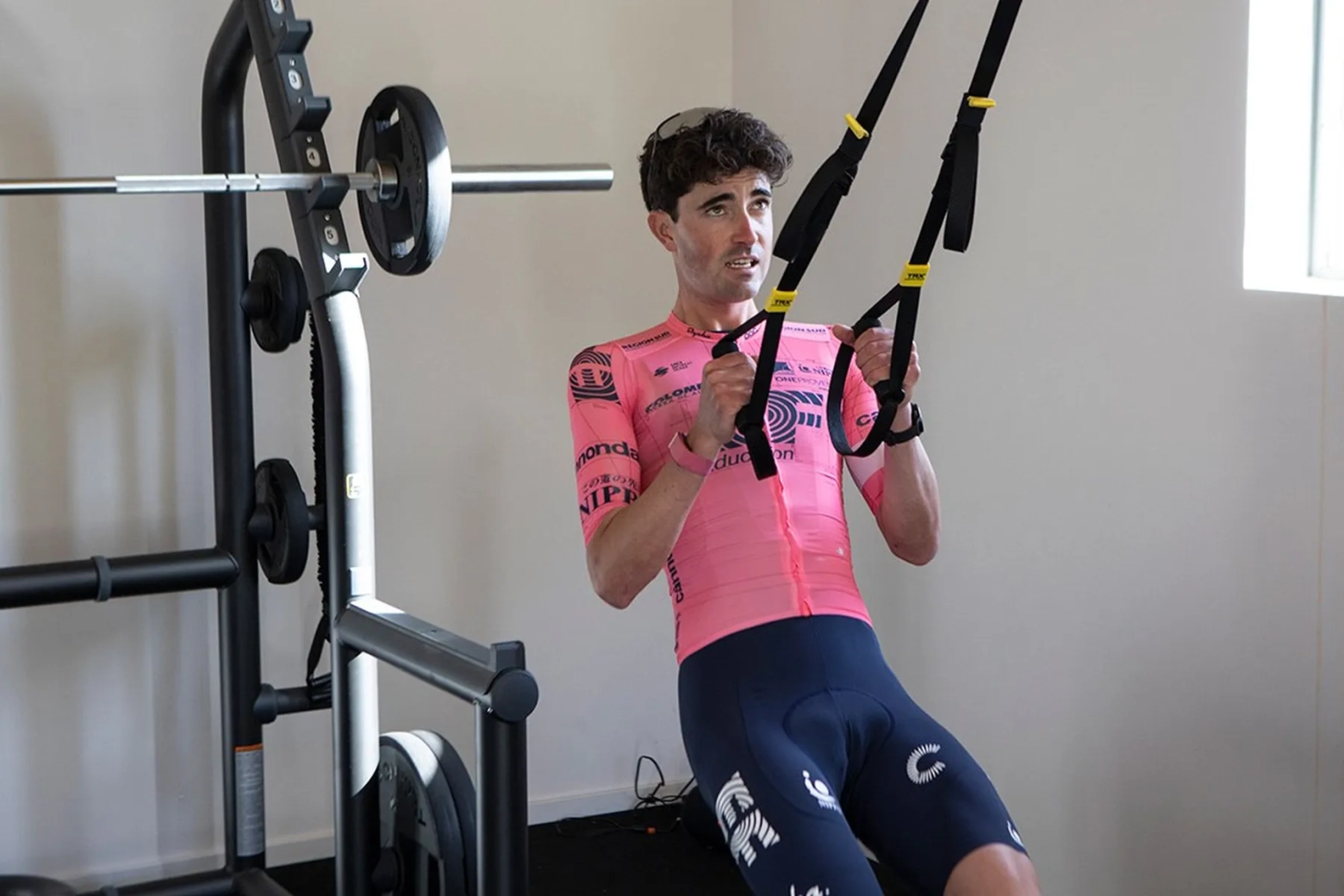
With cyclists already at the limit of a healthy weight, the only way for coaches to continue improving performance is to enhance the other aspect of the weight/power ratio, meaning that the cyclist must be able to produce more watts, which inevitably involves increasing strength. Hence, gym work, which was traditionally limited to the preseason, is now integrated into the cyclist's training throughout the year.
RECOMENDADO

Cobblestones, mud, and legend. Why cycling never abandoned the cobblestones

Boost your watts, boost your level: that's how you improve your FTP
What are the five monuments of cycling?

The most reliable method for determining how many calories you burn while cycling

The highest-paid cyclists in the world in 2026: Pogacar continues to lead the ranking.

SCOTT Spark RC 2026 Range: updated models, prices, and weights

When it comes to gaining strength, creatine has proven to be one of the most effective supplements for maximizing the effects of this gym work, a product that has traditionally been used by those seeking to increase muscle mass.
Obviously, with this effect associated with creatine, the question is whether it will be counterproductive for a cyclist, who always tries to be as light as possible, to take a substance that causes weight gain. And, in reality, there is no single answer; it depends on many factors such as the type of cyclist or the stage of the season we are in.
Creatine is naturally produced by the body in the liver, kidneys, and pancreas and is used by muscles during maximum intensity efforts. Additionally, it is ingested through the diet in protein-rich foods. However, supplementation improves the body's ability to handle high-intensity efforts.
However, its use is associated with water retention in the muscles, which translates into weight gain that adds to the increase in muscle mass that always accompanies strength gains. This is where the evaluation of whether creatine is beneficial or not for the cyclist comes into play in a sport where weighing as little as possible is often a basic aspect.

While weight is crucial when facing mountainous stages, the reality is that, for most of the year, the routes are not as brutal as a stage of the Tour de France in the Alps. The truth is that cyclists are pedaling faster than ever, and having good doses of raw power is becoming increasingly relevant, even more so than weight. This means that the slight weight gain associated with the use of creatine is often offset by the extra power gained.
This is especially important for sprinters and classic riders. The simple solution is to use creatine when facing races where power is the key factor while discontinuing its use when the grand tours and other more demanding events arrive, where minimal weight takes precedence over the ability to generate watts.
También puede interesarte
Road
Cobblestones, mud, and legend. Why cycling never abandoned the cobblestones
Training
Boost your watts, boost your level: that's how you improve your FTP
Road
What are the five monuments of cycling?
Nutrition
The most reliable method for determining how many calories you burn while cycling
Road
The highest-paid cyclists in the world in 2026: Pogacar continues to lead the ranking.
Mountain bike