"I am working on my tan": Why did Roglic compete with invisible socks
Primož Roglič was once again a protagonist in the Tour de France, but this time it was not because of his performance. No. The Slovenian has set social media on fire for showing his ankle.
Roglic's socks go viral
During stage 12, marked by sweltering heat (over 33°C) and a devastating finish in Hautacam, the leader of the Red Bull-Bora-Hansgrohe team appeared at the start line with no trace of the traditional aerodynamic socks that are worshipped in cycling today. Instead, he wore very discreet ankle socks - the so-called "invisible" ones - barely peeking out over his cycling shoes.
The image quickly flooded social media and everyone was looking for an explanation.

RECOMENDADO
Free aero gains for your bike: small changes that make you faster
More power, less fatigue: how nitrates could help you on the bike
What do the colours of the rainbow jersey mean, and who was the first World Champion?
How much prize money does La Vuelta 2026 offer? Here’s what Enric Mas has earned and how it compares with the Tour and Giro
Sign up first, train later: why entering a race can change the way you train
From struggling to enjoying it: tips to build confidence on descents
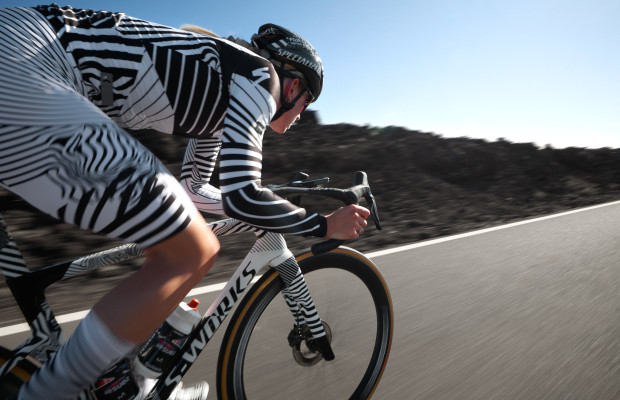
Aerodynamic socks have been the norm in professional cycling for years. With ribbed fabric, they promise small gains in watts, but at the cost of less breathability. And that can be crucial in big climbs, where speeds drop and aerodynamics become less important. Thermal comfort can be much more decisive.
That's the explanation for Roglič's decision to forgo both the aero helmet and long socks yesterday. His goal was to keep his temperature as cool as possible.
At the end of the stage, Roglic was asked about this: "It's hot, isn't it? I'm working on getting rid of my tan lines for the summer."
Roglič has undoubtedly broken a nearly sacred aesthetic code of cycling. But what was once unthinkable is now being questioned. In a discipline increasingly dominated by performance, the visual aspect loses ground. If something works, even if it doesn't look good in photos, it starts to be accepted.
También puede interesarte
Road
Free aero gains for your bike: small changes that make you faster
Nutrition
More power, less fatigue: how nitrates could help you on the bike
Road
What do the colours of the rainbow jersey mean, and who was the first World Champion?
Road
How much prize money does La Vuelta 2026 offer? Here’s what Enric Mas has earned and how it compares with the Tour and Giro
Training
Sign up first, train later: why entering a race can change the way you train
Road
