How to change the feel of the brakes without having to buy new ones
There are cyclists who prefer brakes with a strong bite from the very first moment, as we saw in Boichi's Epic 9, and others who seek a more progressive response that allows for better modulation of the braking, as we saw in the SCOTT Spark of Riley. Although much of that character is determined by the design of the brake itself, there are several adjustments and components with which we can significantly modify its behavior without the need to replace it.
How to make your MTB brakes have more bite or be more progressive
Brakes are one of those components where personal preferences carry a huge weight. Two cyclists can try exactly the same model, and while one is delighted with its feel, another may find it too abrupt, spongy, or lacking in bite.
We often simply talk about more or less powerful brakes, but the sensation we receive at the lever is much more complex. It involves the travel until the pads reach the disc, the force needed to actuate the lever, the initial bite, and the way in which the power increases as we continue to squeeze.
Part of these characteristics is defined by the hydraulic ratio of the brake, the kinematics of the lever, the size and number of pistons, or the stiffness of the assembly. However, there are others that we can act upon and that allow us to appreciably transform the behavior of brakes that, otherwise, work perfectly.
Before touching anything, the brake must work correctly
RECOMENDADO
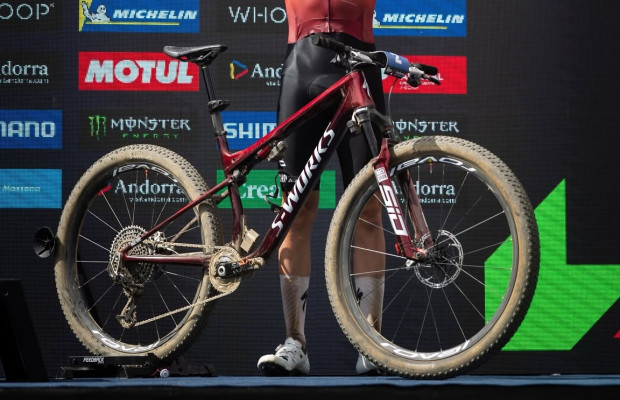
"Instant" brakes, 110 mm stem, and a bib number with history: this is how Adrien Boichis configures his Epic 9
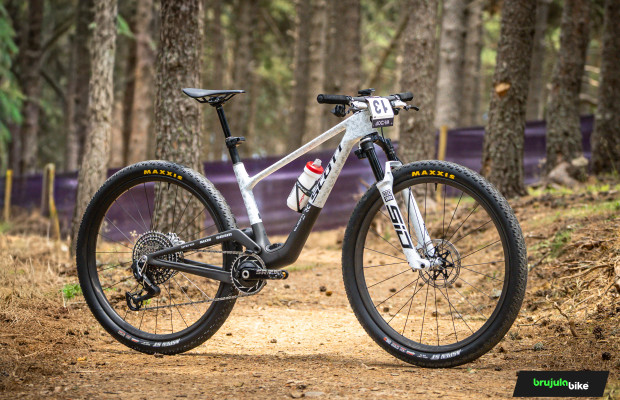
650 mm handlebars, "used" feel brakes, and customized Flight Attendant: A Closer Look at Bjorn Riley's New SCOTT Spark RC
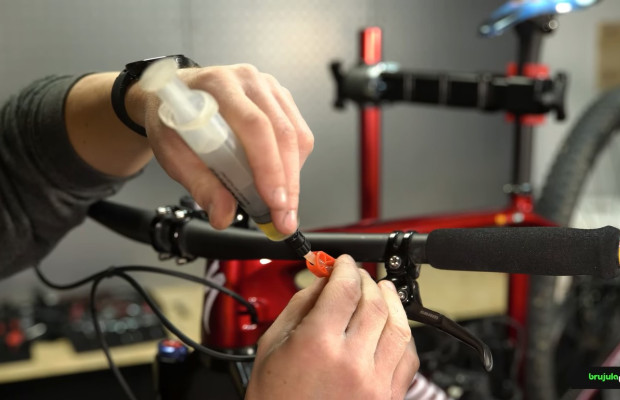
How to bleed SRAM brakes
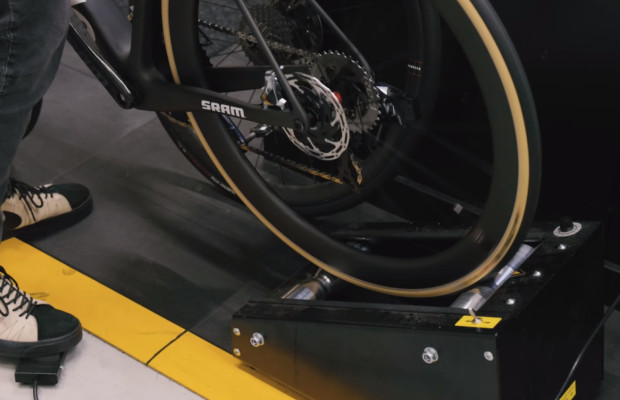
How to properly bed in brake pads
The Megamo West 2027 gets a new range from €2,399 and remains a great choice

The new cycling regulations in Spain are here: everything that changes from 1 October (this Thursday)
There is an important difference between wanting to modify the feel of a brake and trying to solve a problem.
If a lever that previously worked correctly starts to feel spongy, the contact point changes during a descent, we have to bring it too close to the handlebar, or the power has decreased without changing any components, the first thing to do is check the state of the system.
A circuit that has air in it needs to be bled (here we explain how to bleed SRAM brakes step by step) pistons that do not move correctly need maintenance, and pads dirty from road oil must be cleaned or replaced depending on their condition. The wear of pads and discs must also be kept within the limits established by each manufacturer.
It makes no sense to try to fine-tune the feel until these problems have been ruled out. With the system working correctly, these are the main options we have.
Adjusting the lever: the distance of the lever and the contact point at which it starts to brake are not the same
This is one of the most common confusions.
The reach adjustment brings the lever closer to or further away from the handlebar to adapt it to the size of our hand. It mainly changes the ergonomics.
The contact point (Contact Point or Free Stroke, depending on the manufacturer) modifies how much we have to move the lever before the pads contact the disc. This does allow for a more immediate response or to have more travel before starting to brake.

Not all brakes allow this second adjustment, so you need to check the specifications of your model. It also matters where we place the lever on the handlebar. The closer we place our finger to its end, the greater the lever arm available will be.
Pads can transform the character of the brake
Changing the compound is probably one of the simplest and most economical ways to modify braking.
The two main families are organic and metallic or sintered, although each manufacturer uses its own formulations and there are intermediate options.
It is not correct to simply state that some brake better than others. SRAM, for example, recommends its organic pads when a strong initial bite and quiet operation are sought, while sintered pads handle high temperatures and wet and muddy conditions better.
Therefore, we can use the compound to adapt the behavior, but always resorting to pads that are expressly compatible with our caliper.
There can also be significant differences between compatible pads that slightly alter the travel or feel of the lever. For example, the thickness of the pad can change the feel immediately.
The diameter of the disc significantly changes the power
Increasing the diameter of the brake disc is one of the most effective ways to achieve greater power without replacing the brakes.
A larger disc increases the lever arm over the wheel. SRAM estimates, for its Maven brakes, that the mechanical power increases by approximately 14% for every additional 20 mm of diameter. Moving from 180 to 200 mm represents approximately that increase, while moving from 180 to 220 mm would reach 28% according to the brand's data.
We can also do the opposite. A light cyclist who finds their brake excessively powerful may consider a smaller rotor.
But we cannot mount any diameter. The maximum front is determined by the fork and the rear by the frame, and we must consult their respective manuals or technical sheets. Additionally, we need to check the compatibility of the caliper and adapter.
A larger disc is not automatically better. It increases thermal capacity and is particularly interesting for heavy cyclists, eMTB, enduro, or downhill, but brands like SRAM and MAGURA remind us that the size must be adapted to the cyclist and the use.
However, the diameter is only part of the equation. Construction, braking track, mass, and thermal capacity also modify performance.
So before trying options, remember to check the thickness accepted by the caliper, diameter, braking track, compatible pads, and hub attachment, as well as the restrictions of the frame and fork.
New pads need bedding in
Before judging the behavior of newly installed pads, they need to be properly bedded in. Bjorn Riley himself assures that he likes to ride with brakes that have quite a bit of bedding in.
During this process, the surfaces of the pad and rotor are conditioned until stable operation is achieved. SRAM warns that skipping this procedure reduces the available power and increases the chances of generating noise. Here we explain how to properly bed in your new pads.
Even when changing between compounds, it is advisable to consult the manufacturer's indications regarding the state of the rotor, as the material previously deposited on its track can affect the operation of the new compound.
What to change according to the behavior we seek in our brakes
- More initial bite: try a compound specifically designed to offer it. SRAM's organic pads are an example, but the behavior depends on each manufacturer.
- More power: increase the diameter of the rotor within the accepted limits or use a compatible rotor aimed at providing greater performance.
- Less power: consider a smaller diameter rotor if the frame, fork, and braking system allow it.
- Less travel before braking: use Contact Point or Free Stroke if our brake incorporates this adjustment. Reach does not do the same.
- Better performance on long descents: consider pads capable of working at high temperatures and a rotor with greater thermal capacity.
- Spongy lever or irregular behavior: do not attempt to modify the configuration. First, check bleeding, pistons, pads, discs, and wiring.
In the end, the same brakes can offer very different sensations depending on how they are configured. Before spending money on new ones, it is worth checking if different pads, another size or model of rotor, and a good adjustment of the levers can provide exactly the feel we are looking for.
También puede interesarte
Mountain bike
"Instant" brakes, 110 mm stem, and a bib number with history: this is how Adrien Boichis configures his Epic 9
Mountain bike
650 mm handlebars, "used" feel brakes, and customized Flight Attendant: A Closer Look at Bjorn Riley's New SCOTT Spark RC
Mechanics
How to bleed SRAM brakes
Mechanics
How to properly bed in brake pads
Gravel
The Megamo West 2027 gets a new range from €2,399 and remains a great choice
Road
