“He was working for McNulty”: Did trade teams influence the World Championships?
The surprising victory of Brandon McNulty at the World Championship in Montreal continues to leave tactical interpretations. Some cyclists, like Tom Pidcock and Michael Matthews, have pointed out that some riders seemed to collaborate with teammates from their trade teams despite competing for national selections.
Pidcock points out Del Toro's role in McNulty's victory
Brandon McNulty was crowned world champion after attacking 33 kilometers from the finish at a moment when the race had left a chasing group full of favorites.
The tactical situation was particularly complex. Behind the American were, among others, Mathieu van der Poel, Michael Matthews, Tom Pidcock, and Isaac Del Toro. But McNulty also had his compatriots Matteo Jorgenson and Quinn Simmons available to slow down the chase. Jorgenson ultimately finished eighth and Simmons fourth.

RECOMENDADO
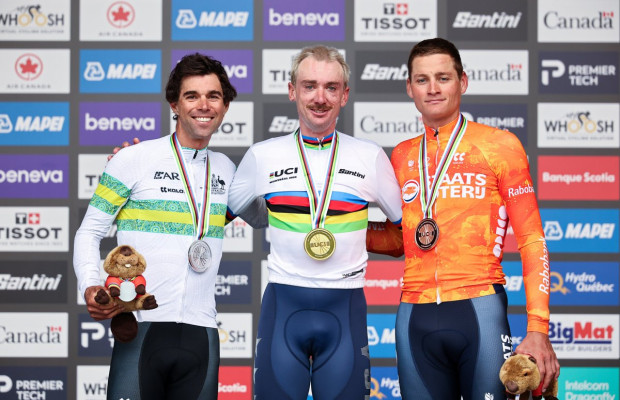
“A miracle was needed, and today it happened”: McNulty and the World Championships that seemed impossible
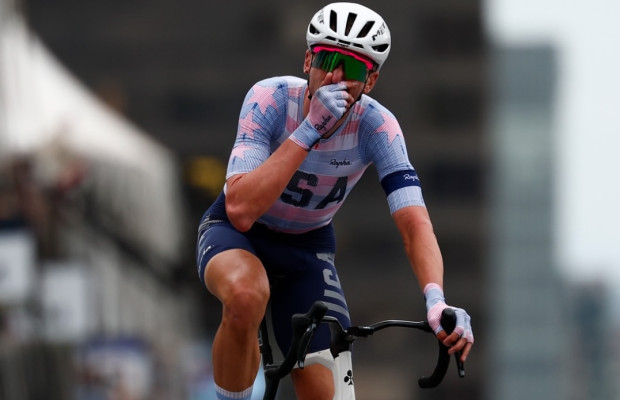
Brandon McNulty stuns everyone and is crowned World Champion in Montréal
How to change the feel of the brakes without having to buy new ones
Goodbye to watts per kilogram as the sole benchmark—fatigue decides who’s the best
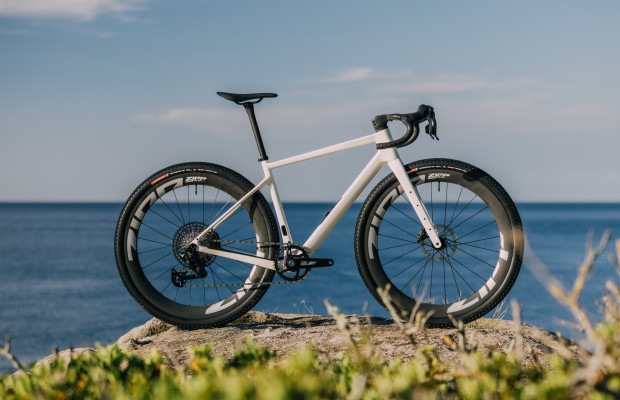
The Megamo West 2027 gets a new range from €2,399 and remains a great choice

The new cycling regulations in Spain are here: everything that changes from 1 October (this Thursday)
Additionally, Del Toro and McNulty are teammates at UAE Team Emirates-XRG, although in Montreal they were competing for Mexico and the United States respectively.
Pidcock believes that this circumstance influenced the chase.
"It was hard to make a difference, to open the gap with the wind as it was, with the US team and with Matteo, who was super strong once Brandon attacked, and obviously Isaac is on the same team too," the Brit explained to Eurosport after finishing seventh.
Pidcock was precisely one of the riders who was closest to changing the outcome. On the last lap, he attacked alongside Giulio Ciccone and managed to significantly reduce the American's lead. The difference got down to around ten seconds, but the understanding among the chasers disappeared again. McNulty was then able to regain some margin and held on until the finish.
Matthews also talks about "teamwork" among selections
Michael Matthews, second at 13 seconds, offered a similar reading although he was much more cautious in pointing fingers.
The Australian did not directly mention Del Toro or any other rider, but he did tell Sporza that during the chase he observed behaviors typical of teammates among cyclists who were officially defending different selections. "There was a bit of teamwork (trade teams) among some riders."
Matthews then elaborated on that idea. "They were racing a bit together. If fewer teams had worked together crossing the borders of national selections, we would have caught McNulty. That's how it is."
His statements do not allow us to assert exactly who he was referring to. However, they came after a finish in which the commercial relationship between McNulty and Del Toro became one of the tactical factors of the chasing group, precisely the situation that Pidcock did mention explicitly.
McNulty acknowledged that the United States perfectly controlled the chase
Pidcock's and Matthews' readings add another perspective to what the world champion himself explained immediately after the race. McNulty highlighted the collective work of the United States as one of the keys to his victory.
"We had been saying for weeks that we had a very strong team and today we raced incredibly well. We were in all the moves, we always had riders in front and behind we could control."
The situation was practically perfect for the United States. While McNulty advanced alone, Jorgenson and Simmons were in the battle for medals and had no reason to collaborate in the chase. The most controversial question is what happened with riders from other selections.
Del Toro had been one of the most aggressive cyclists for much of the World Championship. His accelerations had repeatedly selected the group of favorites and had put even men like Remco Evenepoel and Van der Poel in difficulty. But when McNulty was ahead, the dynamic changed.
Even so, the Mexican did not remain completely passive. On the last lap, it was precisely Del Toro who closed an attack from Evenepoel when McNulty still had a 53-second lead. That detail reflects how much more complex the situation was than a simple collaboration among commercial teammates.
The only indisputable fact is that the lack of collaboration behind was decisive. McNulty attacked at 33 kilometers, had more than a minute, saw his lead reduced to about ten seconds, and ultimately won by just 13.
También puede interesarte
Road
“A miracle was needed, and today it happened”: McNulty and the World Championships that seemed impossible
Road
Brandon McNulty stuns everyone and is crowned World Champion in Montréal
Mechanics
How to change the feel of the brakes without having to buy new ones
Road
Goodbye to watts per kilogram as the sole benchmark—fatigue decides who’s the best
Gravel
The Megamo West 2027 gets a new range from €2,399 and remains a great choice
Road
