From accompanying leaders to leading them: Escámez's step forward at Movistar
The Movistar Team continues to strengthen its sports structure with a clear commitment to internal talent. Juan Carlos Escámez, one of the key figures in the staff over the last decades, is promoted from assistant and physiotherapist to Sports Director, culminating a career built from within the team and closely linked to its great sports references.
Juan Carlos Escámez takes the leap to the sports management of the Movistar Team after more than 15 years in the shadows
Originally from Novelda (Alicante), Escámez is a widely respected figure in the professional peloton. A trained physiotherapist, his work has been alongside some of the best cyclists on the team for years, becoming a man of absolute trust for riders like Alejandro Valverde and, in recent seasons, Enric Mas. A discreet but decisive role, from which he has accumulated direct experience that is hard to find.
Escámez's appointment is not a sudden decision. From the team's management, Eusebio Unzué and Sebastián Unzué had been evaluating his fit in the Sports Management as part of the natural evolution of the structure. Escámez himself acknowledges that the proposal arose years ago, when Valverde's career was nearing its end, and that since then he has been seen as capable of taking on greater tactical and management responsibilities.

RECOMENDADO
Cobblestones, mud, and legend. Why cycling never abandoned the cobblestones
Boost your watts, boost your level: that's how you improve your FTP
What are the five monuments of cycling?
The most reliable method for determining how many calories you burn while cycling
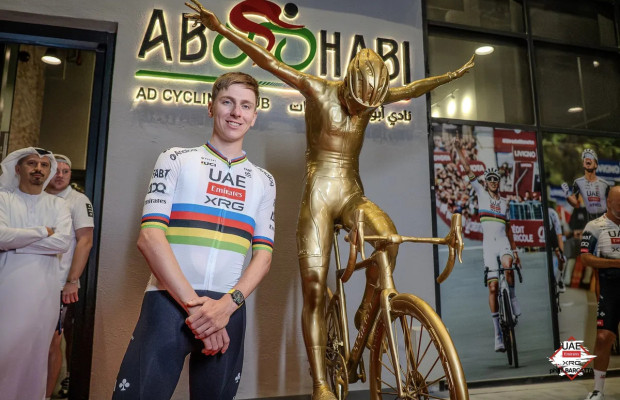
The highest-paid cyclists in the world in 2026: Pogacar continues to lead the ranking.

SCOTT Spark RC 2026 Range: updated models, prices, and weights
However, the moment was not then. Escámez preferred to complete his work alongside Valverde and later accompany Enric Mas in his sporting growth, prolonging a relationship based on total trust between rider and staff. Only now, with the internal changes in the team and a new sporting context, has he considered it the right time to take on the challenge.
The new Sports Director faces this stage with caution, but also with enthusiasm. The leap means leaving behind a very specific technical role to fully engage in sports decision-making, race management, and strategic work from the car. A transition that Escámez himself sees as a gradual adaptation process, supported by the deep knowledge he has of the team and its riders.
With this move, the Movistar Team reinforces a continuity line in its project, betting on profiles trained in-house and with a real understanding of the internal functioning of the structure. Escámez's promotion conveys the message that the experience accumulated behind the scenes of professional cycling remains a top-level strategic asset.
También puede interesarte
Road
Cobblestones, mud, and legend. Why cycling never abandoned the cobblestones
Training
Boost your watts, boost your level: that's how you improve your FTP
Road
What are the five monuments of cycling?
Nutrition
The most reliable method for determining how many calories you burn while cycling
Road
The highest-paid cyclists in the world in 2026: Pogacar continues to lead the ranking.
Mountain bike