“Every race and as quickly as possible”: the UCI takes a tougher stance and wants GPS trackers on every bike and vehicle in the peloton
The UCI wants to definitively accelerate the implementation of real-time tracking systems in professional cycling. After months of discussions and tests, the international body believes that waiting for all parties to reach an agreement is no longer an option and demands that cyclists and vehicles be monitored "in all races" and "as quickly as possible," starting with the men's and women's WorldTour.
The new push comes just weeks after the death of Finlay Tarling during the Volta a Portugal. The British rider, only 19 years old, lost his life on August 14 after suffering an accident during the eighth stage of the Portuguese race.
The tragedy has once again placed safety at the center of the debate, and this time, the UCI seems willing to accelerate a measure it has been trying to introduce for over a year.
The UCI wants to know in real time where all cyclists and vehicles are during a race
The Professional Cycling Council (PCC) met on September 1 and 2 at the UCI headquarters in Aigle. Much of the discussions focused on safety and, in particular, on GPS tracking systems. The problem is that the different parties involved have yet to present a joint proposal.
RECOMENDADO

Finlay Tarling dies at 19 in the Volta a Portugal after a car accident
All cyclists will wear a GPS locator at the World Championships following the death of Muriel Furrer
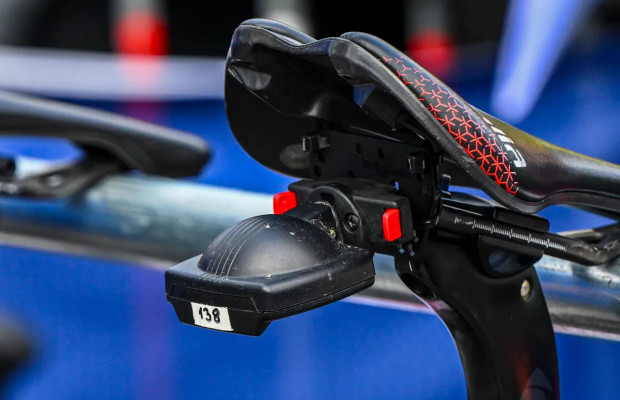
The UCI expels six teams for rejecting their new tracking device
More power, less fatigue: how nitrates could help you on the bike
An indoor trainer can do more for your training than you think: here are 7 reasons to own one
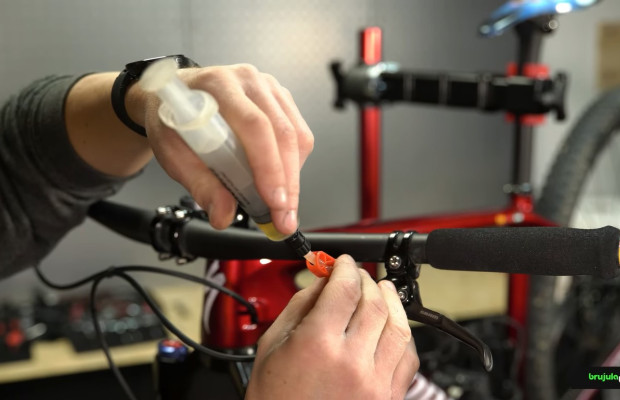
How to change the feel of the brakes without having to buy new ones
In light of this lack of agreement, the UCI has decided to take the initiative and has announced that it will work on the necessary protocols and regulatory framework to introduce a specific system capable of knowing in real time the position of cyclists and vehicles during professional races. The intention is to start with UCI WorldTour and UCI Women's WorldTour events and later extend the system.
The main objective is not to provide new data for broadcasts or generate commercial information, but to have a safety tool capable of quickly detecting abnormal situations. If a cyclist stops unexpectedly or goes off course without anyone noticing their absence, their position could be immediately known by race officials and emergency services.
David Lappartient has also intensified the message directed at the various parties in professional cycling. The UCI president believes it is time to put aside disagreements when safety is at stake and insists that it should not be subordinated to commercial interests.

A measure that was born after the death of Muriel Furrer and has been stalled for over a year
The idea is not new. Its origin is directly related to one of the hardest episodes recently experienced in cycling. Muriel Furrer suffered a serious fall during the junior women's event at the Zurich 2024 World Championships and remained unlocated for a long period. Following the incident, the UCI decided to promote a system that would allow GPS geolocation for all cyclists at the World Championships.
The project then moved from theory to the first real tests. The UCI chose the 2025 Women's Tour de Romandie to conduct a trial in which one cyclist from each team had to use the device. And that’s when the problems arose.
Six teams —Lidl-Trek, Canyon SRAM, EF Education-Oatly, AG Insurance-Soudal, Visma-Lease a Bike, and Picnic PostNL— were excluded from the Women's Tour de Romandie after refusing to install the device. Among the issues raised were responsibility in case of incidents and the coexistence with investments made by some teams in other tracking systems.
That conflict highlighted that while practically everyone could share the goal of improving the location of riders, they did not necessarily agree on how to implement the system.

The UCI seems willing to move forward even without consensus
A year later, the tone of the international body has changed. The phrase used in its latest statement is particularly significant: the UCI explicitly mentions acting in the face of "the absence of a joint proposal" among the different parties. In other words, the consensus that was previously sought has not been reached, and the intention is for that not to delay the measure any further.
The system was already used for all categories at the 2025 road World Championships in Kigali and will be used again at the 2026 World Championships in Montreal, in addition to being maintained in future editions of the World Championships. The next step proposed by the UCI is to bring this type of tracking to the regular professional calendar.
There is still no specific date for when all WorldTour riders will be required to compete with these devices. The final technical specifications, who will provide the trackers, or how all the generated data will be managed have not been detailed either. What has changed is the UCI's position, which now does not want to wait any longer.
New mandatory safety barriers starting in 2027
GPS tracking is not the only safety measure addressed in the PCC meeting. At the proposal of SafeR, the UCI also aims to establish specific standards for the barriers installed in the last few hundred meters of races. The new requirements will come from a study conducted by the Haute École Spécialisée de Suisse Occidentale Valais-Wallis.
The introduction will be gradual. UCI WorldTour and UCI Women's WorldTour races will be the first to have to use barriers adapted to these standards starting in the 2027 season, before extending the obligation to the rest of the categories.
The proposals discussed by the Professional Cycling Council will be submitted to the UCI Management Committee, so they still need to receive final approval to come into effect.
También puede interesarte
Road
Finlay Tarling dies at 19 in the Volta a Portugal after a car accident
Road
All cyclists will wear a GPS locator at the World Championships following the death of Muriel Furrer
Road
The UCI expels six teams for rejecting their new tracking device
Nutrition
More power, less fatigue: how nitrates could help you on the bike
Training
An indoor trainer can do more for your training than you think: here are 7 reasons to own one
Mechanics
