Evenepoel, Seixas, Van der Poel, Del Toro... the most wide-open World Championships in years are looking for a new champion
The rainbow changes owner. This Sunday, Montreal will close the 2026 World Cycling Championship with a men's Elite race that arrives without Tadej Pogačar and with something we don't always find in a race at this level: many riders can imagine a different way to win it.
It will be 273.7 kilometers and 3,803 meters of elevation, but the numbers only tell part of the story. The World Championship will be decided on a Mont-Royal circuit that has no climb long enough to sort the race by itself. Here, riders will have to survive the accumulation of efforts, find the right moment to move, and likely take risks.
2026 Road World Championship: Montreal seeks a new world champion
The men's Elite road race takes place this Sunday, September 27, starting in Brossard and finishing in Montreal. After a long first stretch of approach, the race will flow into Mont-Royal, where a succession of 12 laps of a 13.4-kilometer circuit will ultimately bring the total elevation to 3,803 meters.
The absence of Pogačar completely changes the scenario. Not only because the champion of the last two editions is missing, but because it is hard to find another rider around whom everyone else must build their strategy. Montreal offers terrain for explosive climbers, classics specialists, and endurance race experts. Each will need the World Championship to unfold in a different way.
Keys to the Montreal 2026 World Championship
- Date: Sunday, September 27
- Start: Quartier Dix30, Brossard
- Finish: Parc Jeanne-Mance, Montreal
- Distance: 273.7 km
- Positive elevation: 3,803 m
- Start time: 15:00, Spanish peninsular time
- Estimated finish: 21:40
- Mont-Royal circuit: 13.4 km
- Laps: 12
- Elevation per lap: 269 m
- Main climb: Camillien-Houde, 1.6 km at 7.4%
- Profile: broken, explosive, and very demanding
- Where to watch: RTVE and RTVE Play. Here you can check the schedules and where to watch all the events of the Montreal 2026 World Championship.
The route: no single climb decides the World Championship, but all can do so together
RECOMENDADO
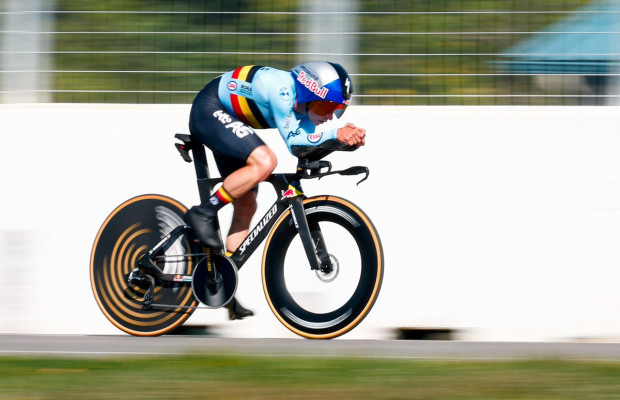
Evenepoel dominates and makes history by winning his fourth consecutive time trial World Championship, while Seixas takes a surprise bronze
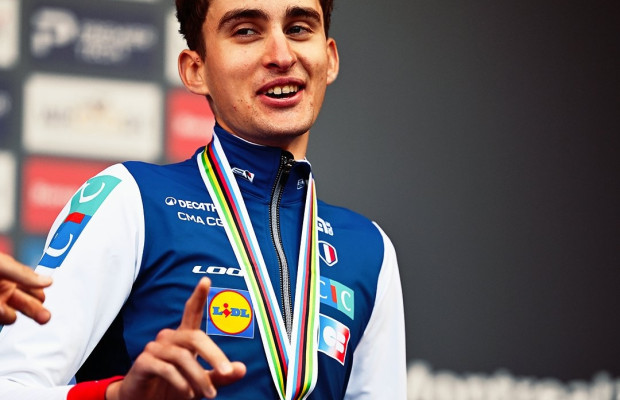
“Anything other than the rainbow jersey will be a disappointment”: Paul Seixas sets the bar as high as possible ahead of the World Championships
Goodbye to watts per kilogram as the sole benchmark—fatigue decides who’s the best
The Megamo West 2027 gets a new range from €2,399 and remains a great choice
The new cycling regulations in Spain are here: everything that changes from 1 October (this Thursday)
Slovakia claim the U23 rainbow jersey with Viktória Chladoňová
Montreal presents a different toughness compared to the last World Championships. The nearly 3,800 meters of elevation is far from the approximately 5,000 in Kigali 2025 and also below Zurich 2024. This allows riders who might have been left out in a more mountainous course to re-enter the equation. The key will be how those 3,803 meters are reached.

Once inside Mont-Royal, there will be little time to stabilize the race. The most important climb will be Camillien-Houde, with 1.6 kilometers at 7.4%. It may not seem like a climb capable of completely breaking a World Championship, but it has enough length and gradient to cause damage when approached at maximum speed.
Next comes Chemin de la Polytechnique, shorter and with ramps of up to 11%, before facing another ascending area on Avenue Pagnuelo and returning towards Avenue du Parc. Descents, curves, small rises, and accelerations complete a circuit where regaining positions will also come at a cost. And the peloton already knows what can happen there.
The GP of Montreal held a few days ago ended with Isaac Del Toro and Paul Seixas fighting for victory. The Frenchman used Camillien-Houde to launch one of the decisive moves, and Del Toro was able to respond before surpassing him later at the finish line.
This Sunday, the difference will be that the World Championship adds almost 60 kilometers compared to the GP of Montreal.
Therefore, it will probably matter less who can climb Camillien-Houde the fastest than who will continue to do so powerfully after having over 250 kilometers in their legs. In the early laps, many riders will be able to surpass those thresholds. In the final laps, every acceleration can become a definitive selection.
Additionally, the finish line itself rises slightly towards the end, so if no one manages to break away, we won't be facing a conventional sprint either.
Favorites: many ways to try to conquer the rainbow
Remco Evenepoel arrives at the race in a privileged situation. He has spent much of his preparation in Canada, won the GP of Quebec, and just claimed in Montreal his fourth consecutive World Championship in the time trial.
But perhaps the most interesting aspect is the number of scenarios he can handle. Evenepoel can anticipate, select from afar, or take advantage of a race that is already broken to move away with power. Belgium also has Wout van Aert, a completely different and especially dangerous second card if a small group reaches the final kilometers together.
Mathieu van der Poel faces almost the opposite problem. The more selective the race is in terms of elevation, the less favorable it will be for him; the more placement, endurance, technique, and short accelerations weigh, the more his options will grow. The Dutchman arrives two kilos lighter than in spring and after finishing his preparation in Luxembourg with an extraordinary 175-kilometer breakaway. He was already third in Zurich 2024 on a World Championship with more elevation than this one.
The most recent reference of the circuit itself, however, belongs to Isaac Del Toro. Winning the GP of Montreal does not guarantee anything in a race almost 60 kilometers longer, but it confirms two important issues: he can respond to attacks on Camillien-Houde and maintains speed to finish later. Mexico will have fewer tactical resources than other teams, so much of their chances will depend on keeping Del Toro protected until the race enters its decisive phase.

Paul Seixas perhaps represents the most explosive option. Just a few days ago, he was the one who managed to break the race in Mont-Royal and arrives after also finishing third in the time trial. His power is hard to dispute; the question is how to manage a World Championship of almost 274 kilometers against much more experienced riders.
And Tom Pidcock fits particularly well in a race that is difficult to control. He has been fourth in Quebec and sixth in Montreal, handles technical circuits extraordinarily well, and has enough explosiveness to follow moves on the climbs. The Brit has already pointed out Evenepoel, Del Toro, and Seixas among the major references for this World Championship.
From there, a huge second group of candidates appears: Ben Healy, Giulio Ciccone, Brandon McNulty, Quinn Simmons, Jhonatan Narváez, Mads Pedersen, or Primož Roglič have arguments to enter a race that breaks before the main names decide to act.
Spain will mainly come with Enric Mas and Juan Ayuso. Mas arrives after winning the Vuelta a España and has his eighth place in Zurich 2024 as a reference, where he was in the group that ended up fighting for bronze. Ayuso, also eighth in the Kigali 2025 World Championship, offers a more explosive alternative.
Montreal thus presents one of those World Championships where the route matters as much for what it allows as for what it demands. It is tough enough to eliminate many riders, but perhaps not so much as to indicate in advance who should be at the front.
Without Pogačar to impose a common reference, the teams will have to decide when to stop waiting. And in a 273-kilometer World Championship, doing so one lap too early or one lap too late can make all the difference between wearing the rainbow and watching it go ahead.
También puede interesarte
Road
Evenepoel dominates and makes history by winning his fourth consecutive time trial World Championship, while Seixas takes a surprise bronze
Road
“Anything other than the rainbow jersey will be a disappointment”: Paul Seixas sets the bar as high as possible ahead of the World Championships
Road
Goodbye to watts per kilogram as the sole benchmark—fatigue decides who’s the best
Gravel
The Megamo West 2027 gets a new range from €2,399 and remains a great choice
Road
The new cycling regulations in Spain are here: everything that changes from 1 October (this Thursday)
Road
