Can Pogacar continue to improve? This is what his coach says
“Pogacar has not yet reached the limit of his abilities” announced Javier Sola, coach of Tadej Pogacar, who in 2024 will take over from Iñigo San Millán, the former coach of the Slovenian since his arrival at UAE in 2019. These abilities are based on a meticulous application of all aspects of performance science, which the Emirati team refines each season to ensure that Tadej Pogacar remains number 1.
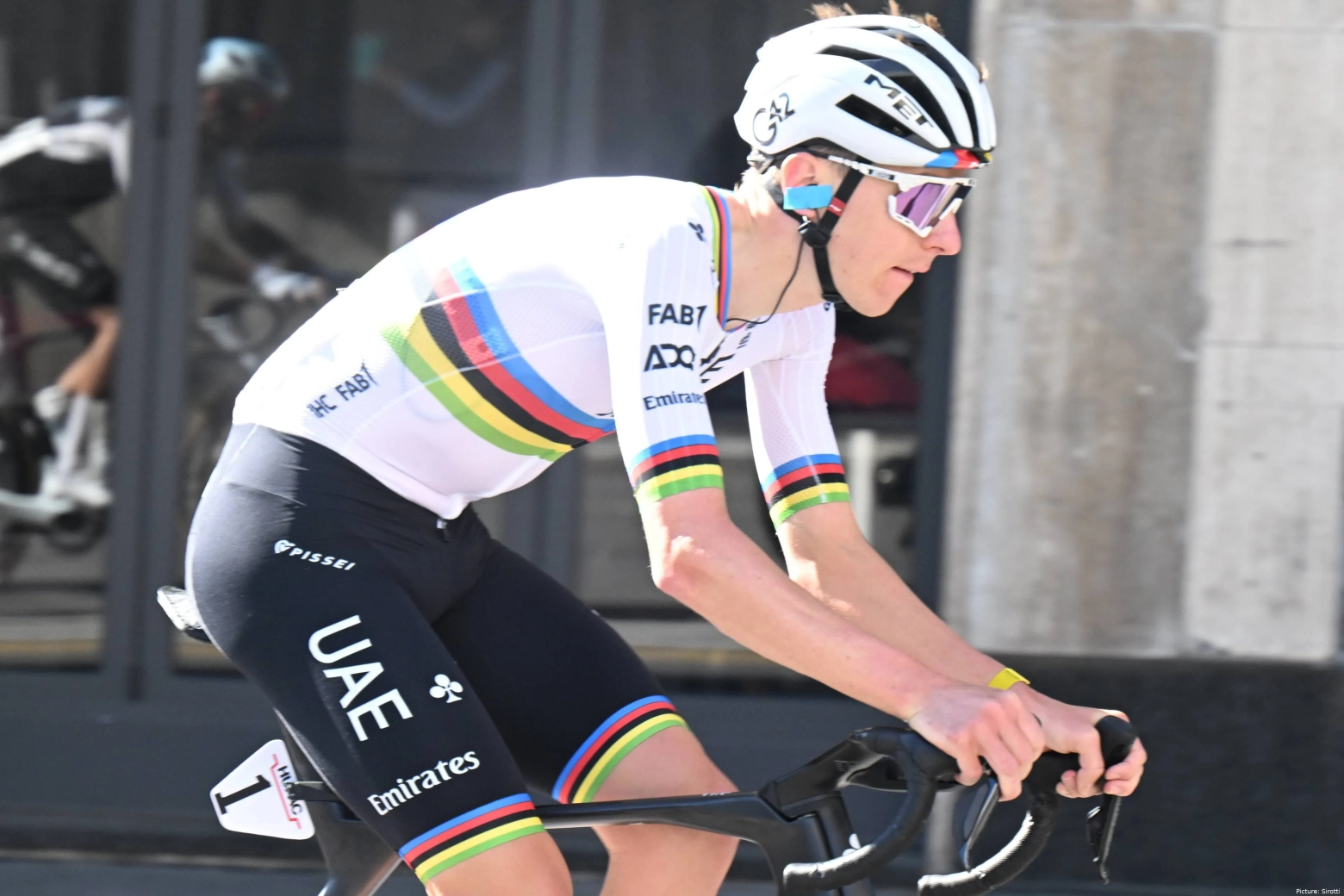
The performance team of UAE Team Emirates-XRG reveals the keys to Pogacar's preparation
During the pre-season training camp currently being held by UAE Team Emirates-XRG in Alicante, both Tadej Pogacar's coach, Javier Sola, and the team's performance manager, Jeroen Swart, provided details about all the aspects that are monitored and worked on to ensure that the Slovenian's preparation is perfect, allowing him to fully realize his potential on the road.
The first thing that stands out about Tadej Pogacar's training is that, beyond cycling, strength training off the bike has become an essential factor in performance. In fact, the improvement experienced in 2025 is due to placing greater emphasis on strength within the preparation, an aspect that Javier Sola describes as a “fundamental pillar”.
RECOMENDADO
Cobblestones, mud, and legend. Why cycling never abandoned the cobblestones
Boost your watts, boost your level: that's how you improve your FTP
What are the five monuments of cycling?
The most reliable method for determining how many calories you burn while cycling
The highest-paid cyclists in the world in 2026: Pogacar continues to lead the ranking.
SCOTT Spark RC 2026 Range: updated models, prices, and weights
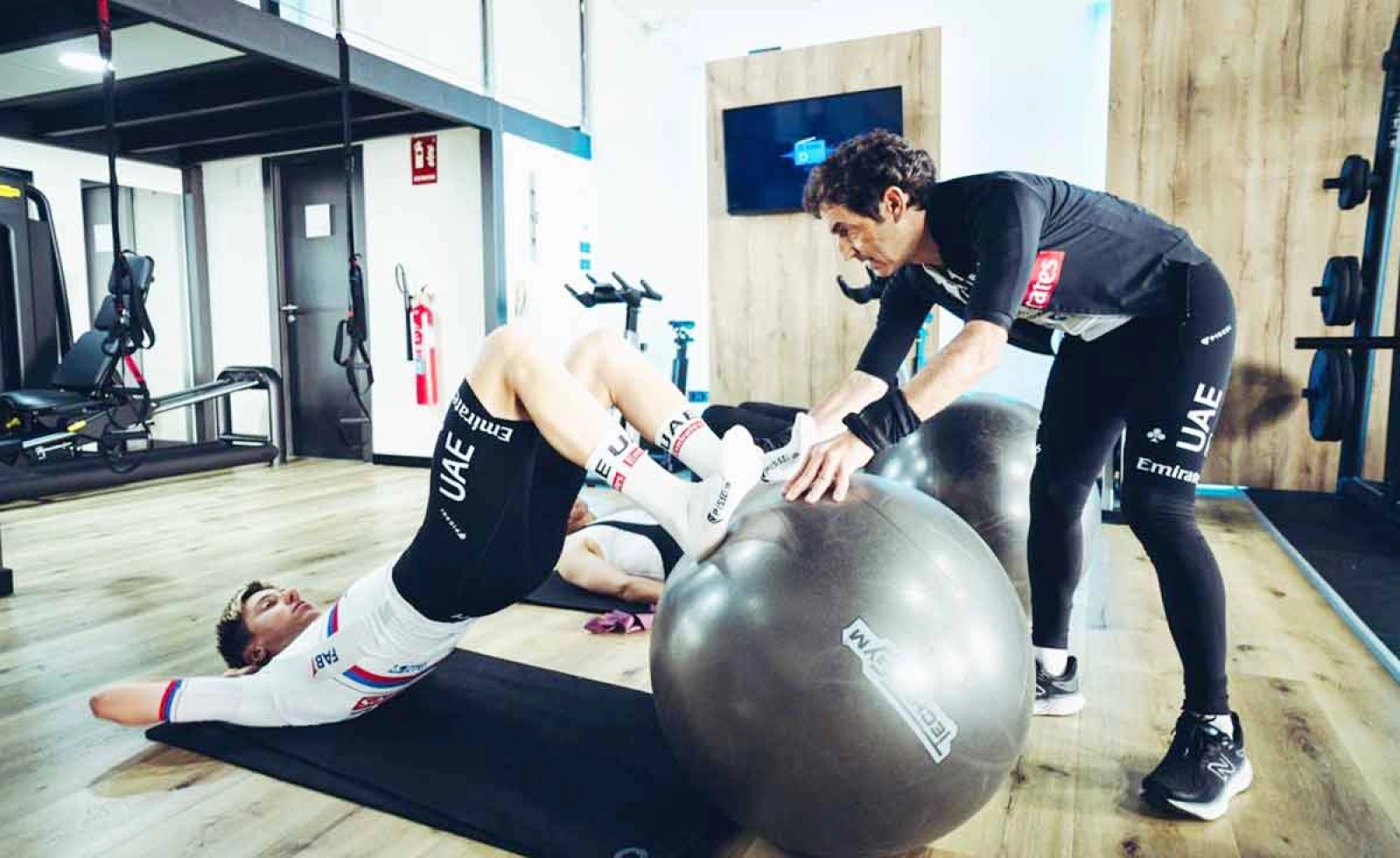
According to Sola, “there is no risk in his solo attacks” due to the balance between aerobic endurance and muscular strength that Pogacar has built over the years, along with the experience he is accumulating, which allows him to be more efficient in his efforts. This aspect, efficiency, is particularly evident in time trials.
Looking ahead to 2026, they will aim to increase strength training and the intensity of his workouts while maintaining the high volume of aerobic work that the Slovenian cyclist was already doing. This was evident during training camps, where, when his teammates finished their workout, Pogacar would still ride for an additional hour.
As Swart states, “it’s not about increasing volume but optimizing training. Applying small but significant changes that can transform what was already excellent into extraordinary”.
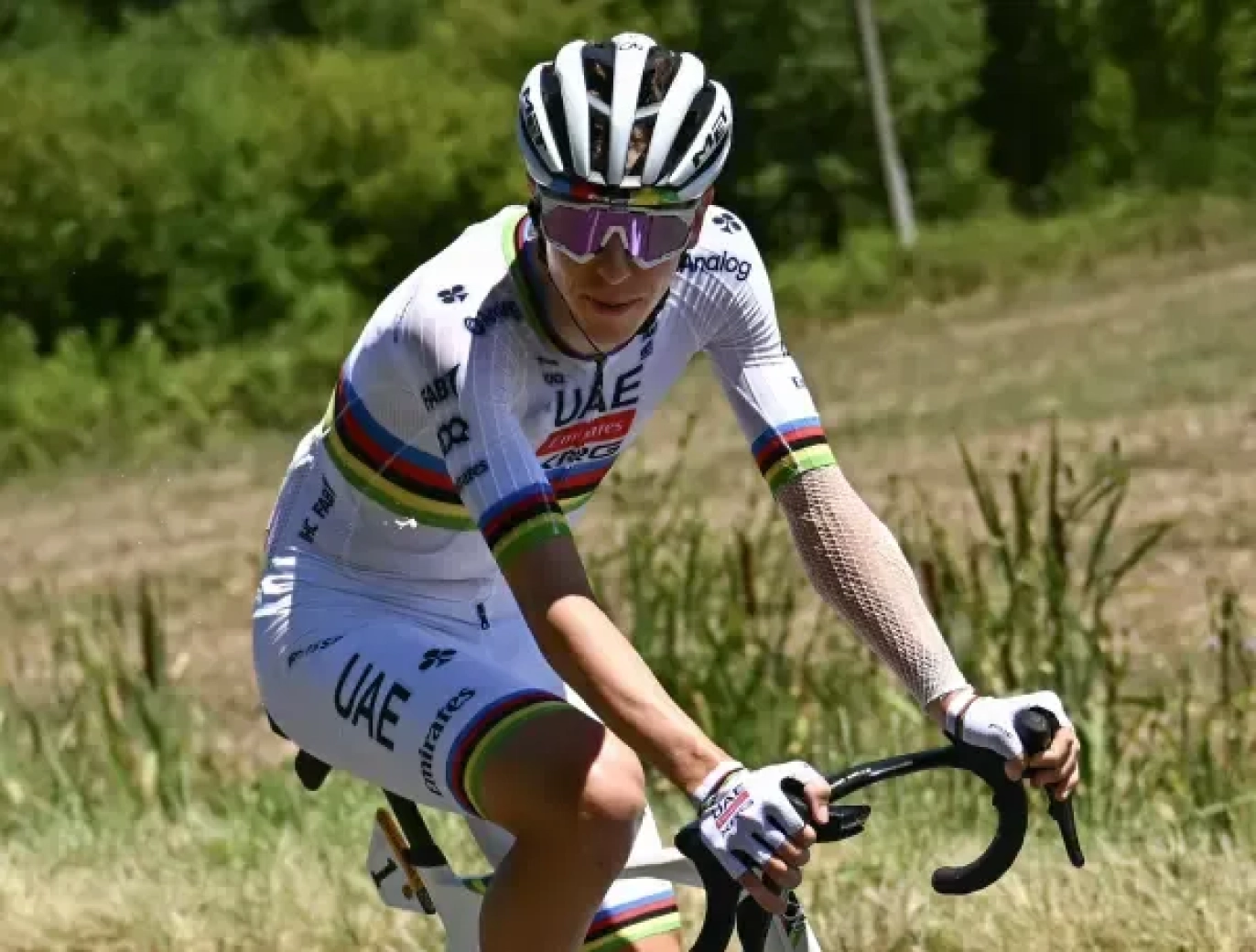
One aspect of the preparation that stands out is what his coaches refer to as compartmentalization of training, meaning that Tadej Pogacar clearly separates, even into different cycles, aerobic training from high-intensity training.
The other pillar that both Swart and Sola emphasize in Pogacar's preparation is the importance of nutrition, something that no one who follows cycling even minimally finds surprising. “Just 10 years ago, consuming 60 grams of carbohydrates per hour seemed impossible; today, 120 grams per hour is the norm”.
Of course, both the training, nutrition, and physiological parameters of Tadej Pogacar are constantly monitored to make informed decisions when fine-tuning the preparation with all the data on the table.
También puede interesarte
Road
Cobblestones, mud, and legend. Why cycling never abandoned the cobblestones
Training
Boost your watts, boost your level: that's how you improve your FTP
Road
What are the five monuments of cycling?
Nutrition
The most reliable method for determining how many calories you burn while cycling
Road
The highest-paid cyclists in the world in 2026: Pogacar continues to lead the ranking.
Mountain bike