Are they arriving too late, or does jet lag not affect Van Aert and Van der Poel?
Wout van Aert and Mathieu van der Poel have chosen a very different preparation compared to many of their rivals for the World Championship in Montreal. While Remco Evenepoel, Isaac del Toro, or Paul Seixas have been in Canada for over a week, the two will arrive this Tuesday, just five days before the men's road race. With a six-hour difference from Europe, the question many are asking is: are they arriving too late to adapt to the time change?
Five days to change the internal clock by six hours
The answer is not as simple as applying the well-known rule of one day of adaptation for each hour of difference. The doctor of the Belgian team, Kris Van der Mieren, states in an interview with Het Nieuwsblad that elite athletes can adapt considerably faster.
Van Aert and Van der Poel were still in Europe on Tuesday morning. Their flight to Montreal leaves them with approximately five full days before a 273-kilometer race where any detail can end up being important.
The contrast with some of their main rivals is evident. Evenepoel, Del Toro, or Seixas traveled to Canada earlier to compete in the Grand Prix of Quebec and Montreal. Evenepoel has also already competed in the World Championship and was crowned world time trial champion on Sunday.
RECOMENDADO
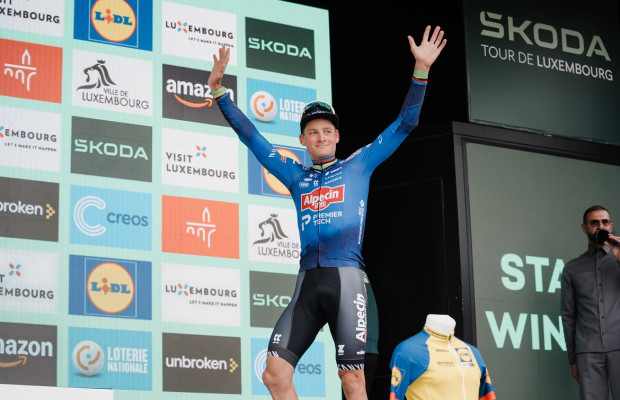
“It wasn’t the plan, but my legs were incredible”: even Van der Poel hadn’t planned his historic ride in Luxembourg
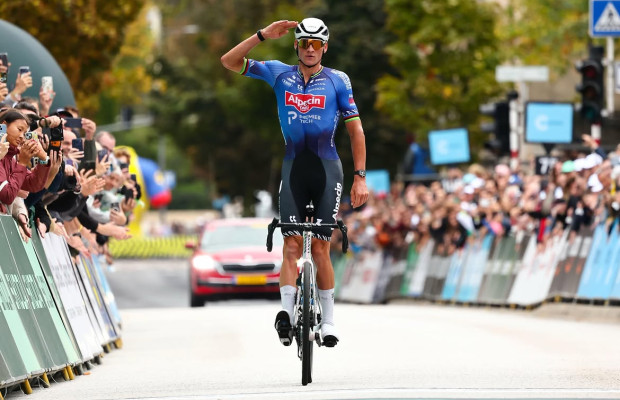
Van der Poel wins with the longest breakaway in memory: 175 km solo and victory
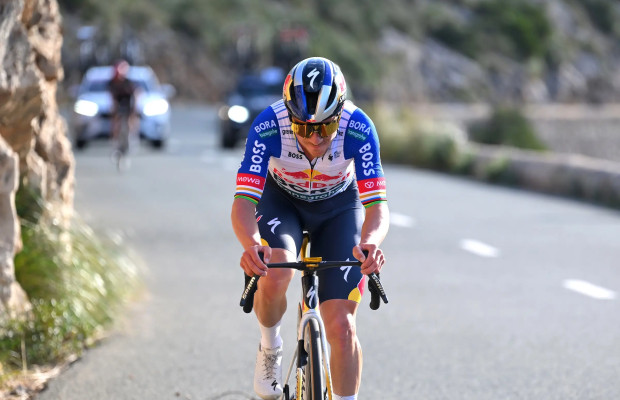
“It’s really difficult for the heavier riders”: Evenepoel warns Van der Poel and Van Aert ahead of the World Championships

What will happen to 29-inch MTBs when 32-inch bikes arrive?
How the Mixed Relay works at the Montréal World Championships: favourites, schedule and where to watch
FSA launches its new World Cup wheels: meet the FSA KFX i30
On paper, they arrive at the weekend with the adaptation process practically completed. Van Aert and Van der Poel now have to do it.
The usual rule for combating jet lag typically establishes about one day for each hour of time difference. In that scenario, five days might seem insufficient. But Van der Mieren believes that this reference is not appropriate when talking about professional cyclists of this level.
"For a normal person, that calculation can be used, but here we are talking about elite athletes," explained the doctor of Belgian Cycling to Het Nieuwsblad.
According to Van der Mieren, in these cases it would be more reasonable to calculate one day for every hour and a half or even two hours of difference. Applied to the six hours that separate Europe from Montreal, the necessary period could be reduced to about three or four days.
That is why his conclusion is reassuring: "No one needs to worry." The doctor admits that during the first days, feelings of heavy legs may appear, but he believes that Van Aert should be fully adapted by Sunday.
The problem is not just sleeping well
That does not mean that jet lag disappears as a factor. Van der Mieren explains that the sleep-wake rhythm is regulated very precisely, and shifting it six hours causes a significant disruption. And here comes a particularly interesting detail for such a long race.
If the World Championship ends around 16:00 in Montreal, a body that still functions according to European time could interpret that it is approximately 22:00. That is, a time when physiologically it begins to prepare for rest.
"The body starts to prepare for the night. Cortisol production decreases, testosterone drops, and the body begins to enter recovery mode," explains Van der Mieren in Het Nieuwsblad. Just the opposite of what is needed when there is still one of the decisive efforts of a World Championship to be made.
The Belgian federation has been working for months precisely on this scenario. According to the doctor, the federation prepared a pre-travel protocol together with the coaches. Some measures are as simple as gradually advancing the bedtime and also modifying meal times before flying. Therefore, adaptation can begin even before stepping foot in Canada.
Bakelants is not so sure: "There is no advantage in traveling so late"
Former professional Jan Bakelants offers a much less optimistic view. In an analysis published by Het Laatste Nieuws, he questions whether Van Aert and Van der Poel should have waited until Tuesday to cross the Atlantic.
"The only thing I would have done differently in their case is the timing of the trip to Canada," explains Bakelants. "There is simply no advantage in leaving so late."
The Belgian, however, understands the reasons behind both decisions. Van Aert wanted to spend a few days at home after several weeks away competing, while Van der Poel decided to compete in the Tour of Luxembourg as preparation for the World Championship.
"I understand that Wout would want to be home for a while and I understand that Mathieu would prefer to compete in Luxembourg, but I fear that jet lag may still be present in their bodies," points out Bakelants in Het Laatste Nieuws.
His argument also comes from his own experience competing in Canada. Bakelants recalls that during his participations in Quebec and Montreal, he found significant differences between both races despite being held just a few days apart.
As he explains, in Quebec he never managed to get his body to respond completely, while several days later, in Montreal, the feelings were much better.
Van der Poel and Van Aert arrive by very different paths
Beyond the time change, both arrive at the World Championship after very different preparations. Van Aert has prioritized recovery and staying a few days at home before traveling. He did not compete in the time trial on Sunday and will arrive in Canada directly to prepare for the road race.
Van der Poel has chosen just the opposite: to compete. The Dutchman finished the Tour of Luxembourg on Sunday and did so with one of the most remarkable performances of the season, with a long breakaway that ended in victory. His form seems beyond doubt, although now he will have to combine recovery from that effort with the transatlantic journey and time adaptation.
There will also be another factor for Van der Poel. While Van Aert has previously competed in Montreal, the Dutchman has not raced the Canadian WorldTour classics. His training on Wednesday on the final circuit will therefore be his first direct contact with part of the World Championship route.
Not all riders consider this will become a problem. Gianni Vermeersch, who is also traveling to Canada now, explained before flying that over the last two years he has made similar trips quite late and that personally he hardly suffers from jet lag on the outbound journey. For him, the return to Europe is more complicated.
También puede interesarte
Road
“It wasn’t the plan, but my legs were incredible”: even Van der Poel hadn’t planned his historic ride in Luxembourg
Road
Van der Poel wins with the longest breakaway in memory: 175 km solo and victory
Road
“It’s really difficult for the heavier riders”: Evenepoel warns Van der Poel and Van Aert ahead of the World Championships
Mountain bike
What will happen to 29-inch MTBs when 32-inch bikes arrive?
Road
How the Mixed Relay works at the Montréal World Championships: favourites, schedule and where to watch
Mountain bike
