Almost 100 kilometers linking climbs: schedules and key points of stage 10 of the Tour
The 2026 Tour de France returns from the first rest day with a stage that is difficult to categorize and even more complicated to control. The 166.9 kilometers between Aurillac and Le Lioran accumulate a total of 3,822 meters of ascent, eight categorized climbs, and a second half of the route where the climbs will leave little room to reorganize the race.
Stage 10 of the Tour will not give any respite: eight climbs and an explosive finish in Le Lioran
There is no major climb that concentrates all the difficulty. The challenge will lie in the accumulation of efforts and, especially, in the last 35 kilometers where Puy Mary, Col du Pertus, and Col de Font de Cère can provoke a new battle among the favorites.
The route also recovers the setting of one of the most memorable duels from the 2024 Tour. Jonas Vingegaard managed to withstand Tadej Pogacar's attack then and ended up surpassing the Slovenian in the head-to-head for the victory. Two years later, both return to Le Lioran with a different sporting situation and with UAE Team Emirates-XRG becoming the team that has the initiative in the race.
Key points and schedule for Stage 10 of the 2026 Tour de France
- Start: 13:25 h (CEST)
- Expected finish: between 17:02 and 17:26 h (CEST)
- Route: Aurillac - Le Lioran
- Distance: 166.9 km
- Total ascent: 3,822 meters
- Type of stage: medium mountain

Almost 100 kilometers chaining climbs
RECOMENDADO
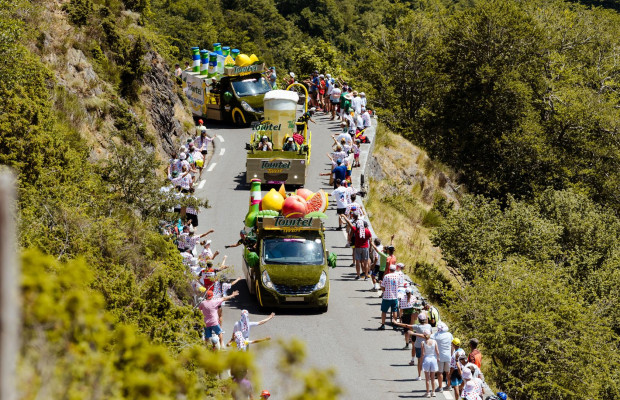
A vehicle from the Tour de France caravan crashes into the crowd, leaving eight people injured
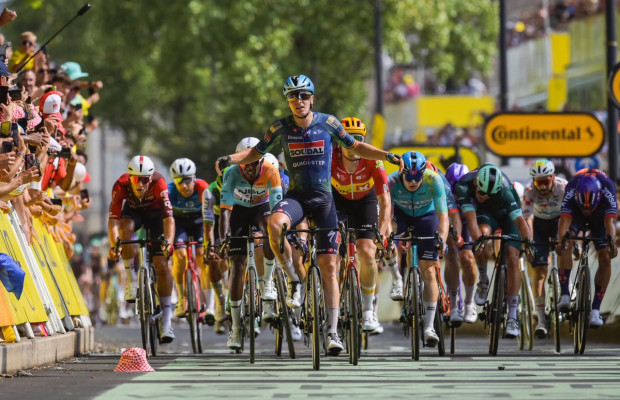
Tim Merlier wins in Bordeaux and gives Belgium its first victory in the 2026 Tour de France
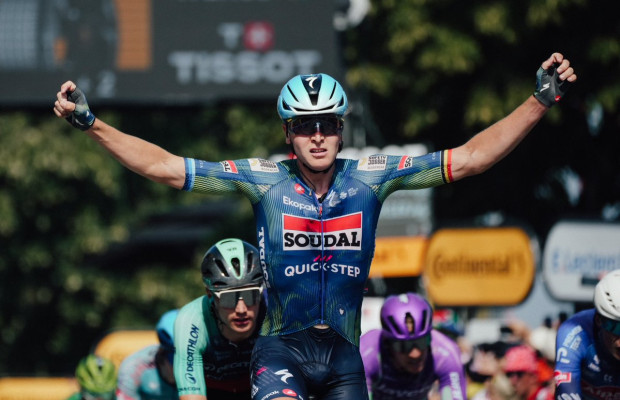
Tim Merlier secures his second victory in the Tour with a stunning comeback in Bergerac
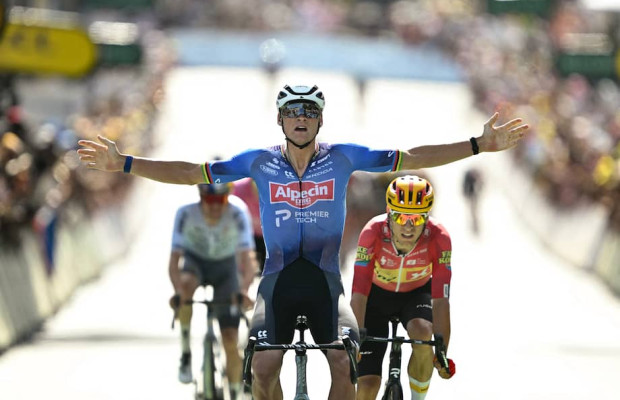
Van der Poel wins stage 9 of the Tour after a frantic escape with Pidcock, Johannessen and Baudin
When to skip training and rest without feeling guilty
Free aero gains for your bike: small changes that make you faster
The riders will not have to wait long to test the character of the stage. At kilometer 14, there is a non-categorized climb of 1.1 km at 8.7% and the terrain will continue to be uneven throughout the first part of the route.
This will be a particularly favorable start for forming a large breakaway. The constant changes in gradient will make it difficult to control the peloton and will allow climbers, classics specialists, and riders distanced from the general classification to attempt to join the front group.
The real succession of climbs will begin with approximately 100 kilometers still to go. Côte de Pailherols (3.1 km at 6.9%), Col de la Griffoul (6.8 km at 6.2%), Col de Prat de Bouc (2.9 km at 6.1%), and Côte de Murat (5.1 km at 5.1%) will appear almost consecutively.
More than provoking attacks among the top favorites, this stretch should take care of eliminating riders, reducing the number of available domestiques, and accumulating fatigue before reaching the truly decisive part.
The last 35 kilometers can break the race
The fight for the stage and the possible differences in the general classification should begin to define themselves at Puy Mary. Its 7.8 km at 5.8% may seem relatively manageable, but the data changes completely when analyzing its final part: the last 1.7 kilometers ascend at 9.4%.
This will be the first point where a high pace can leave the leaders without teammates. Furthermore, the summit will be located 31 kilometers from the finish, so any movement will still have a lot of ground ahead to develop.

After a descent of about 12 kilometers, the Col du Pertus, the most explosive climb of the day, will arrive. It is 4.3 kilometers at 8.5%, but its gradients are distributed in a particularly uncomfortable way. The first 2.1 kilometers reach 10.2% and the last 1.3 approach 10% again.
This is where the definitive attack can occur. From the summit, there will be 15 kilometers to the finish, and the differences will be difficult to close because the Col de Font de Cère will still be left.
This last ascent, of 6.1 km at 4.8%, ends three kilometers from the finish. After that, there will be a quick descent and a final climb of 700 meters at 5.9% before reaching the finish in Le Lioran.
Breakaway or a new battle for the general classification?
The stage has all the necessary ingredients for the victory to come from a breakaway. The start is difficult to control, there are seven categorized climbs concentrated in the last 100 kilometers, and many riders have already lost enough time to receive freedom from the teams fighting for the general classification.
The main threat to the breakaway will be the strategy of UAE Team Emirates-XRG. Pogacar's team has shown a clear willingness to harden stages that, in principle, seemed destined for attackers during the first week. In Les Angles, they took on a very demanding chase to end up contesting the victory, and on the Ussel stage, they again kept the breakaway under pressure for a good part of the route.
This time, however, controlling the race will be considerably more complicated. UAE would have to work for many kilometers on broken terrain and then face a final succession where they will also need to conserve domestiques to protect Pogacar.
The composition of the breakaway and the difference when starting Puy Mary will be decisive. If there are top-level climbers ahead with several minutes of advantage, the victory may be in the hands of the attackers. If UAE reaches the last 35 kilometers with the race under control, the scenario will change completely, and another battle among the general classification men will begin.

Pogacar, Vingegaard, and a long list of alternatives
Tadej Pogacar returns as the main reference if the stage is decided among the favorites. The short climbs, steep gradients, and constant changes of pace suit his characteristics, while UAE also has Isaac del Toro to play tactically at the finish. Jonas Vingegaard already knows what it means to defeat the Slovenian in Le Lioran, although this time he arrives with the need to find a way to reduce the differences shown during the first week. Remco Evenepoel, third in this same finish in 2024, completes the group of main candidates among the general classification men.
The stage can also clarify the situation of riders like Paul Seixas and Juan Ayuso after the rest day, while Florian Lipowitz, Lenny Martinez, Lennert Van Eetvelt, and Mattias Skjelmose have a favorable route to try to gain positions. Tom Pidcock and Tobias Halland Johannessen deserve special attention after their prominence on the way to Ussel: both have the explosiveness needed for the final climbs and can take advantage of a less controlled race.
The possibilities increase even more if the breakaway manages to contest the victory. Richard Carapaz, Valentin Paret-Peintre, Alex Baudin, Ben O’Connor, Luke Plapp, Mathias Vacek, or Pablo Castrillo fit into different scenarios of a stage where it will not be enough to climb well. To win in Le Lioran, it will be necessary to overcome almost 100 kilometers of wear, survive the steep gradients of the Pertus, and conserve strength for a finish where any tactical doubt can decide the victory.
También puede interesarte
Road
A vehicle from the Tour de France caravan crashes into the crowd, leaving eight people injured
Road
Tim Merlier wins in Bordeaux and gives Belgium its first victory in the 2026 Tour de France
Road
Tim Merlier secures his second victory in the Tour with a stunning comeback in Bergerac
Road
Van der Poel wins stage 9 of the Tour after a frantic escape with Pidcock, Johannessen and Baudin
Training
When to skip training and rest without feeling guilty
Road
