A 2026 edition of La Vuelta a España with an Andalusian flavor is presented
Presentation of the last of the three major events that had yet to reveal its route after the last-minute surprise of the Canary Islands' refusal to host the final stage as initially planned. The community of Andalusia takes over, hosting almost two of the three weeks of a race that will kick off on August 22 in the streets of Monaco.
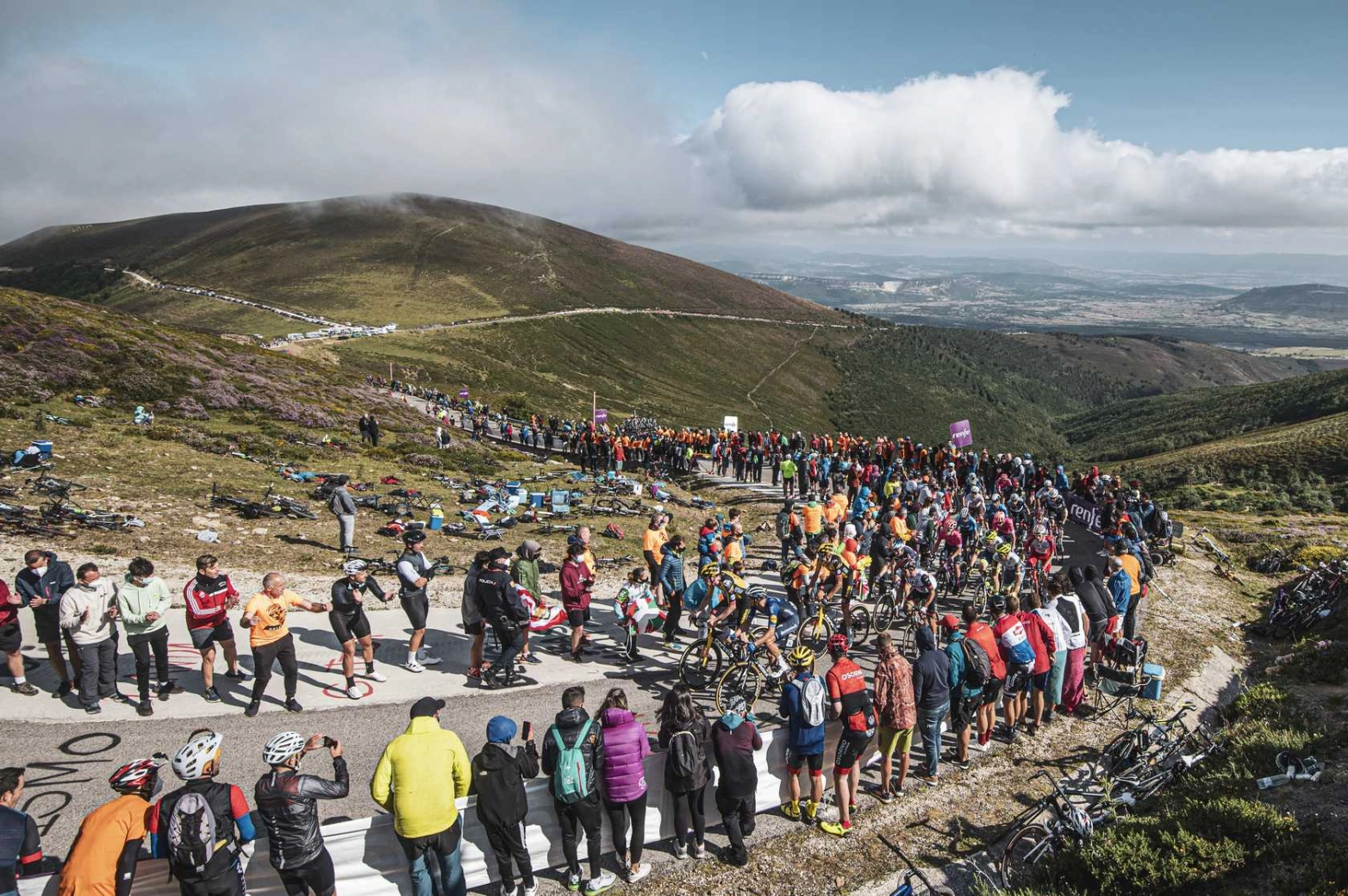
La Vuelta a España 2026 proposes a route filled with mountains
We really had to look twice at the route of La Vuelta to realize the script twist, after some recent editions with a frankly questionable route. The organization led by Javier Guillen offers us an edition with a lot of toughness spread throughout the race, paying attention to the often-forgotten medium mountains that are the essence of Spanish territory, with a long time trial to add to the initial time trial in Monaco, distances suitable for a race of the highest level, and even a stage that includes a section of dirt road.
The race will start with an individual time trial of just 9 kilometers set in the streets of Monaco, including the layout of its famous Formula 1 circuit. A flat route that will only serve to initially order the classification and showcase the host city on television. The second stage should not be of much relevance either, due to the mountains that rise towards France along the Côte d'Azur, leading the peloton to the town of Manosque. A stage notable for its 215 kilometers, a completely atypical distance in the Spanish round, although only two of them exceed 200 km.
RECOMENDADO

The most reliable method for determining how many calories you burn while cycling

The highest-paid cyclists in the world in 2026: Pogacar continues to lead the ranking.

SCOTT Spark RC 2026 Range: updated models, prices, and weights

When do helmets have to be changed? Do they have an expiration date?
What benefits does bicarbonate have for cyclists?
Is a cyclist born or made? The eternal debate between talent and training
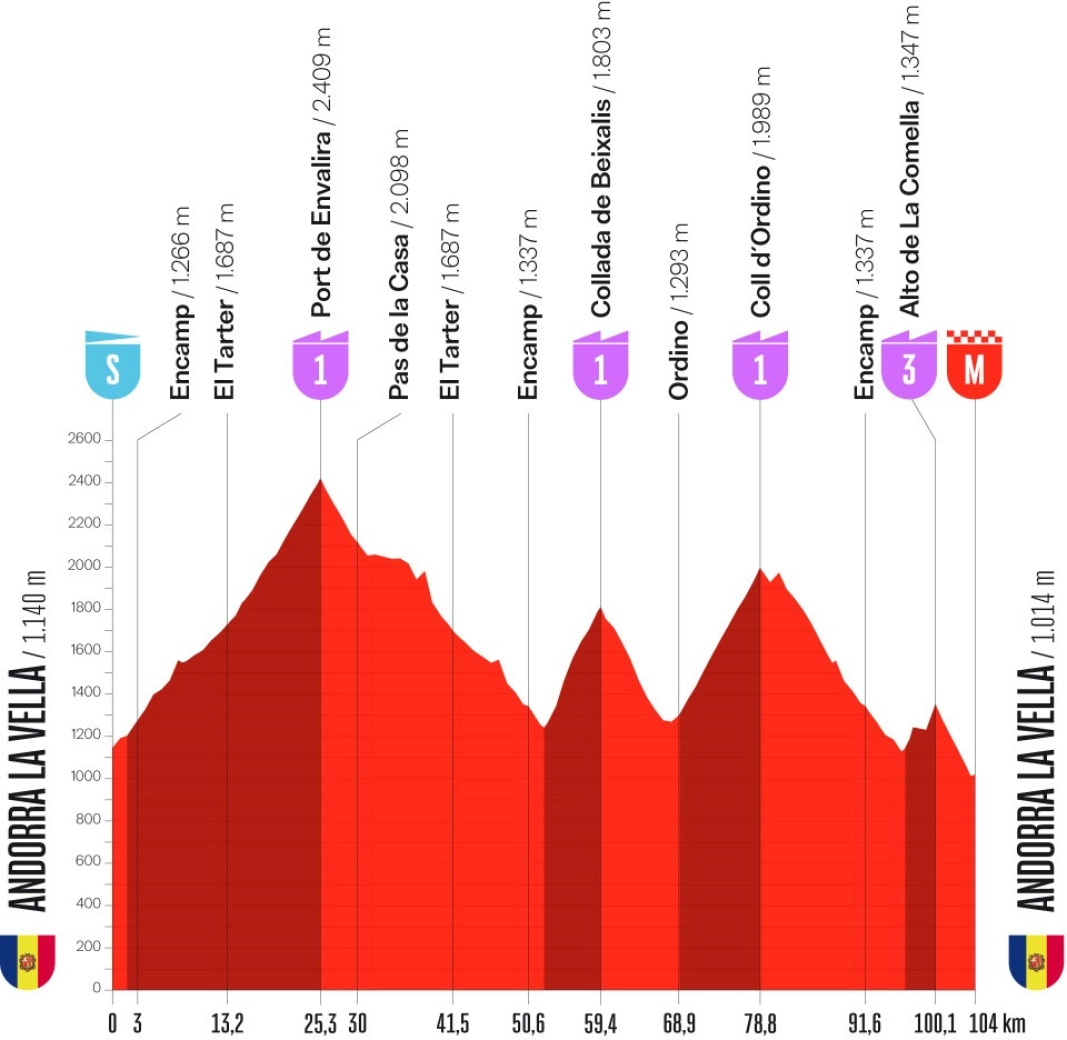
And again, as in recent years, the mountains arrive early at La Vuelta a España 2026. A first contact that will lead cyclists to Font Romeu on a single-port route. Just a warm-up for the following day's stage, which will start and finish in Andorra. The only discordant stage in terms of mileage with its mere 104 km but, yes, with tremendous toughness: starting with the Port de Envalira, after returning to the valley through the tunnel that runs under this pass, the Collada de Beixalis, Ordino, and finally La Comella to finish descending to the capital of the principality. A stage that probably won't mark too many differences among the favorites but, as is often said, could mean the end of some riders' options for the general classification.
The Ebro Lands will be the setting for the fifth stage with a flat stage that should represent one of the few opportunities for sprinters in the race. The next day, La Vuelta continues south to Castellón to face a typical medium mountain route for this province, where the essential pass for local cyclists cannot be missed: The Desert of Las Palmas, which will be tackled twice, the second time known as Puerto de El Bartolo with an alternative that climbs a dirt section.
With hardly any rest, the medium mountains will continue to take their toll on the peloton's legs through Teruel lands. A route without a flat meter that will take cyclists to Valdelinares. Let's remember that a day like this was what made Sepp Kuss take the lead in the race a couple of editions ago and he never let it go until the finish in Madrid.
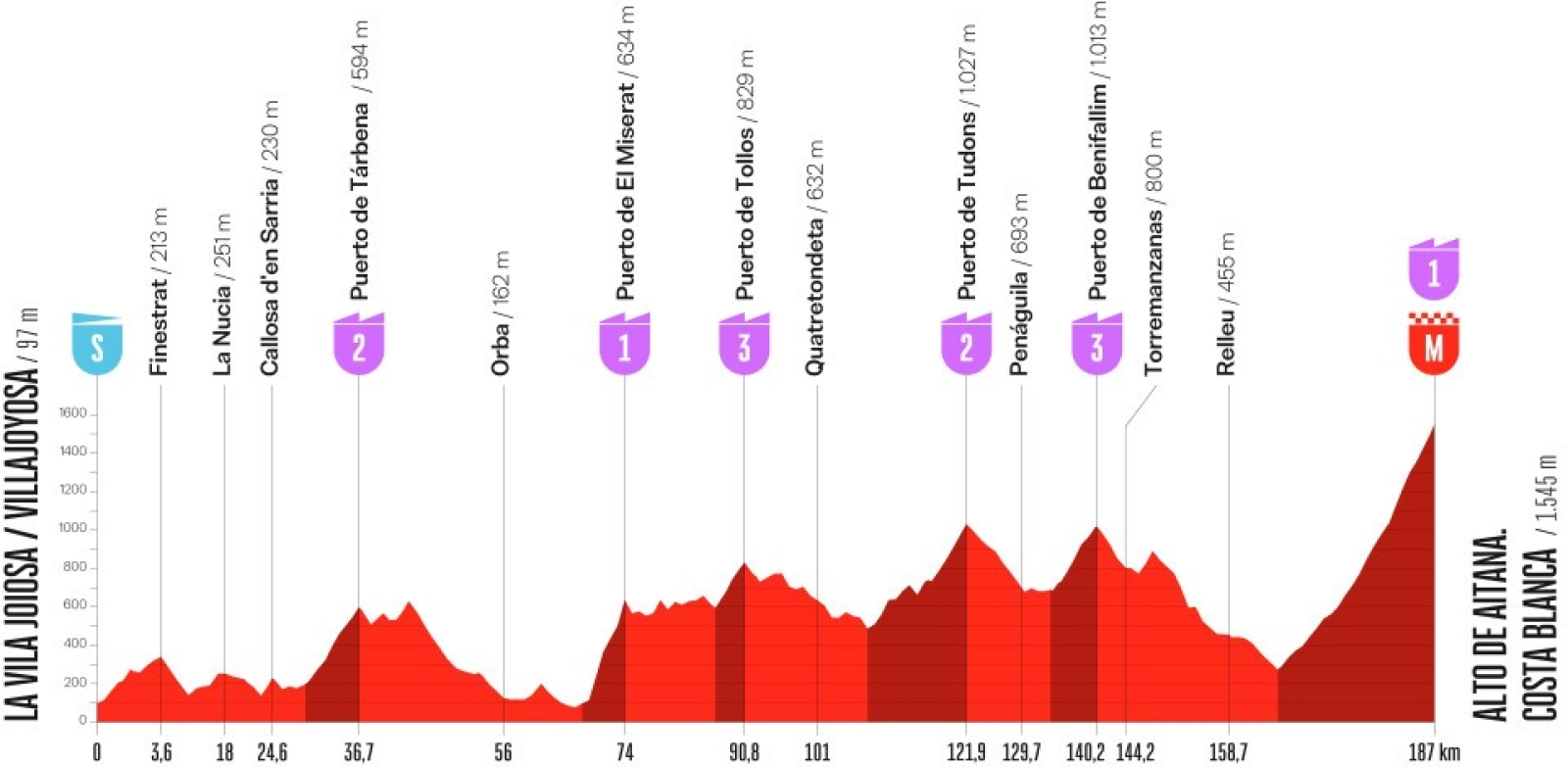
A new flat stage in Valencia, between Puçol and Xeraco, will allow cyclists to catch their breath before the grueling day that closes the first week of racing. A massive stage with over 5,000 m of elevation gain through the ports of Marina Alta in Alicante, well-known terrain for the entire peloton, which will conclude with the endless climb to Aitana.
The second week begins with a stage through the Sierra de Alcaraz, which, by location and profile, is clearly suitable for the favorites to treat it as a second day of relaxation while a breakaway takes all the honors. A calmness that should continue the next day, between Cartagena and Lorca, on a day ripe for a mass arrival.
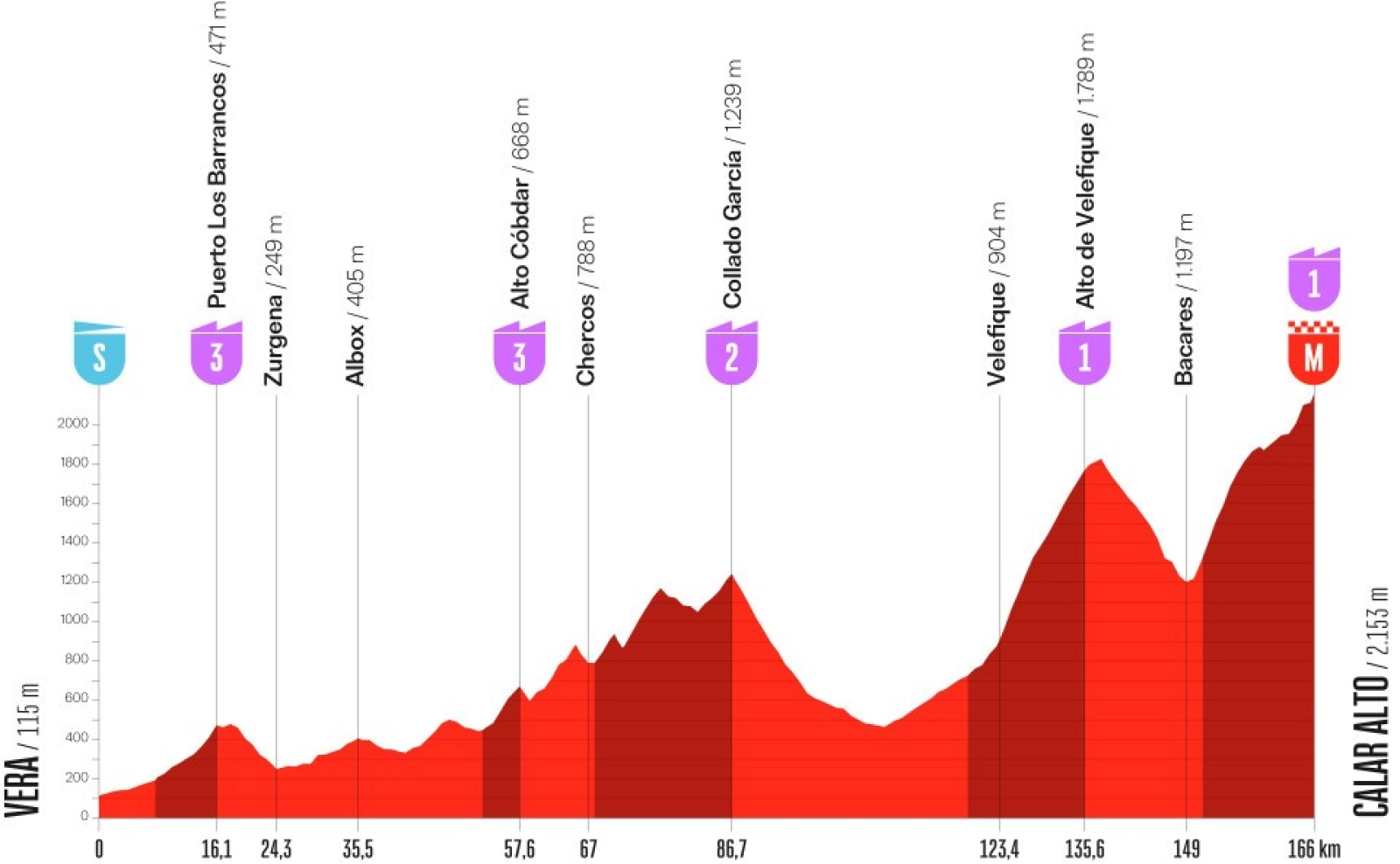
In any case, these are days that the favorites must take advantage of to conserve as much strength as possible since the next confrontation with the mountains will be another of the queen stages of the race. The arrival at Calar Alto returns to the route of La Vuelta a España, preceded in the profile by the ascent to Velefique, one of those chains that contradict the common saying that high mountain stages cannot be made in Spain.
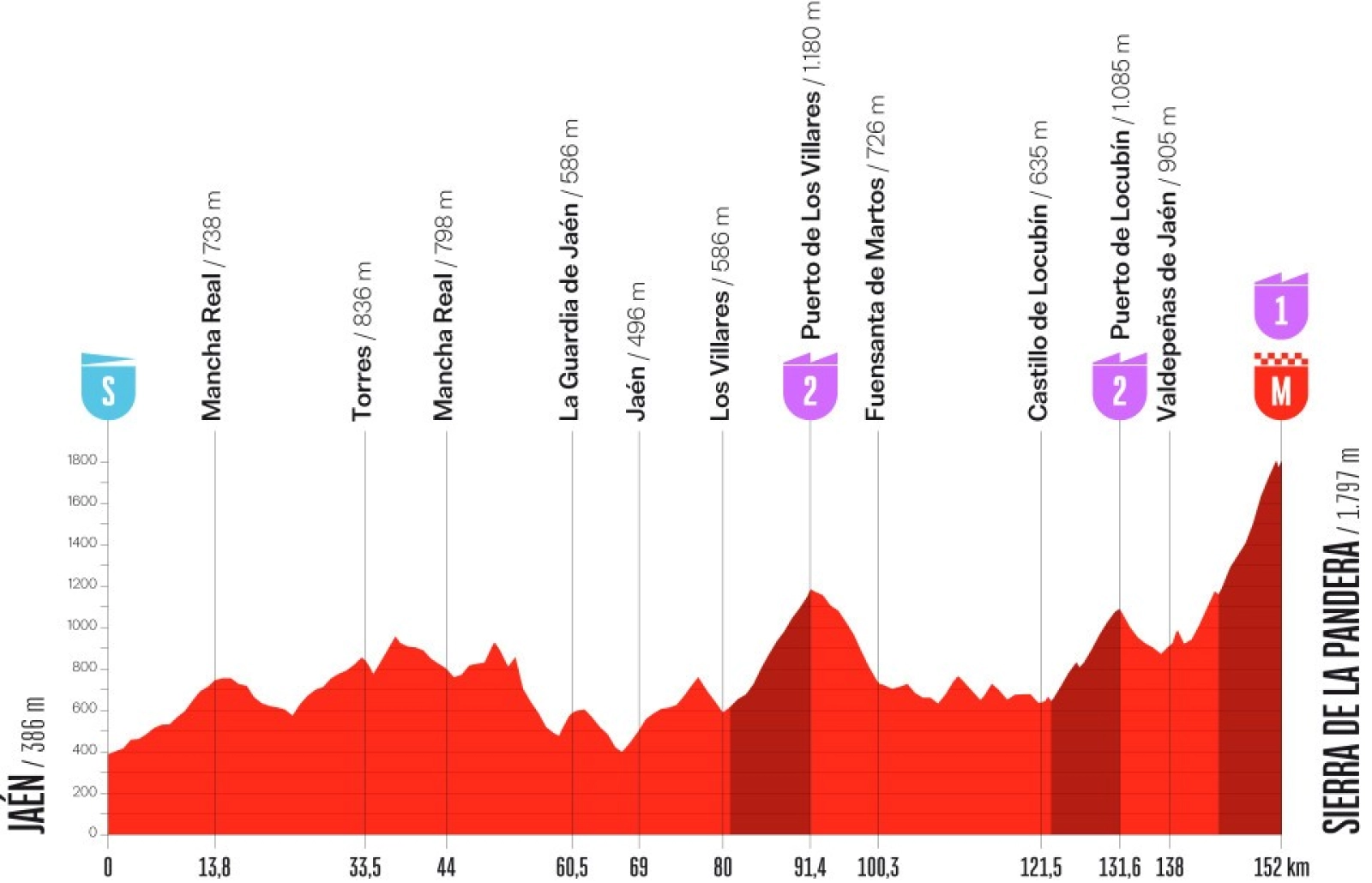
Stage 13 will take place between Almuñécar and Loja, again in medium mountain terrain that will presumably be favorable to a breakaway, surely of high caliber at this point in the race, and, now entering the weekend, the province of Jaén takes center stage to offer us the arrival at Alto de La Pandera, a climb that always marks differences and will be preceded by the ascents to Los Villares and Locubín, as well as all the comanche territory of this province where elevation gain accumulates almost with every pedal stroke.
To finish the second week, a leg-breaking stage that again seems to suggest that a breakaway will take the spotlight.
The final week of the race will start on the way to Palos de la Frontera with another of those rare opportunities to see a sprint finish, along with the following day's stage, also flat like the Guadalquivir valley through which the race will roll towards Seville. As happened in the previous week, a necessary rest for the favorites to arrive in full strength for the 18th stage, where they will face a completely flat time trial between Puerto de Santa María and Jerez de la Frontera, covering a respectable 32 kilometers.
From here to the end of La Vuelta 2026, there will be no respite. First with Estepona as the protagonist of a single-port stage that will culminate in Peñas Blancas and is the other stage of this edition that exceeds 200 kilometers. It will not be a decisive day but rather a day to generate fatigue that will surely be decisive the following day.
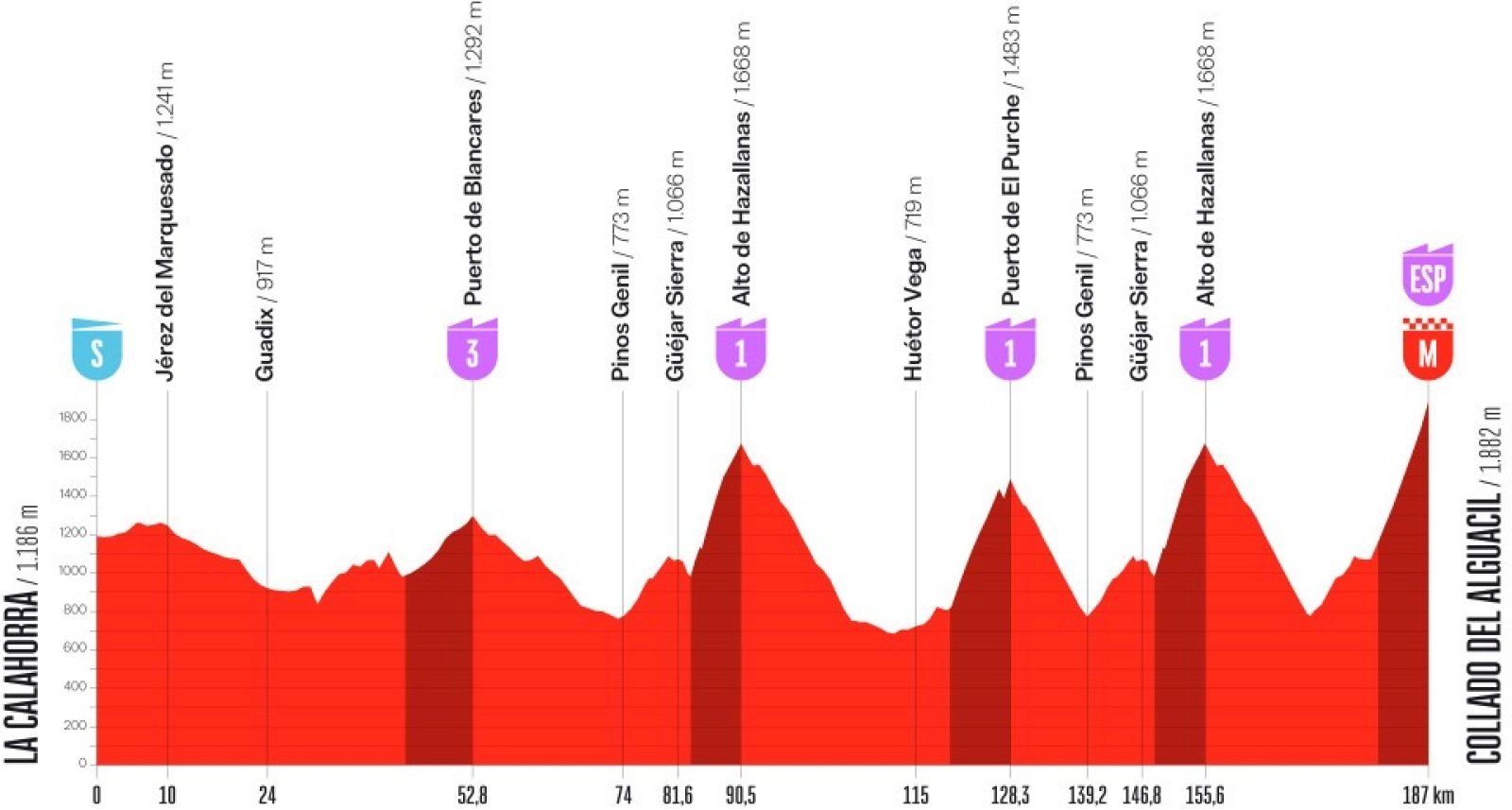
And as has become customary, the true queen stage of La Vuelta will again be the penultimate one, this time with Sierra Nevada as an unparalleled setting and a grueling route that exceeds 5,000 meters of accumulated elevation gain in a chain that includes the pass of Blancares, Hazallanas, the extremely tough Purche, and again Hazallanas before facing the terrible finish that involves ascending the Collado del Alguacil, one of the hardest passes in the Sierra, according to locals, who have been eager for years for La Vuelta to include this unprecedented climb.
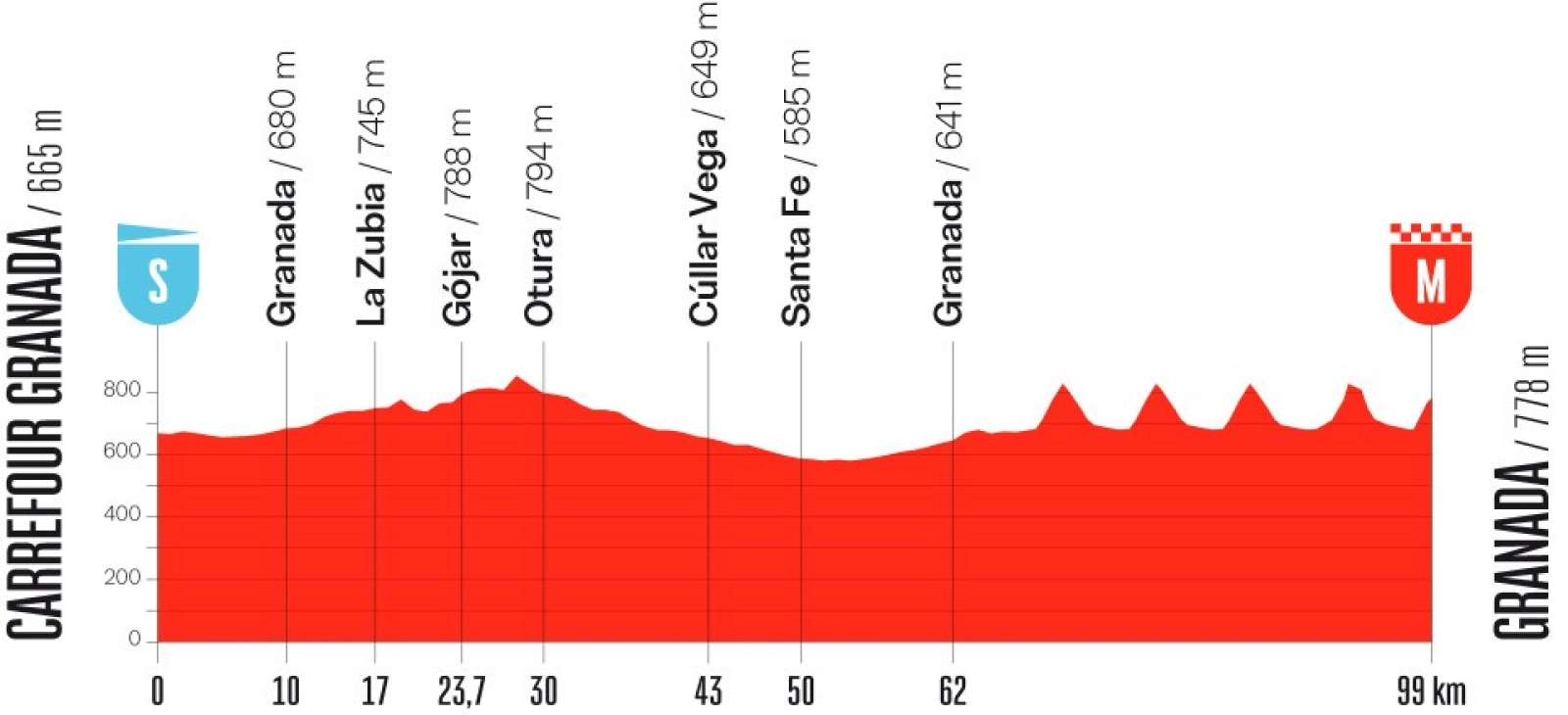
And we will still have a competitive stage on the 21st day since La Vuelta, in light of the success of last year's Tour de France finish with the inclusion of Montmartre, has wanted to emulate the formula with a final circuit that ascends to the Alhambra, with the difference that, surely, no fast man will sign up for this last stage since the finish is located at the last of the ascents.
The change of approach that La Vuelta has made is surprising, as well as the fact of dispensing with the roads of northern Spain in a risky bet that could have its downside in the heat that still prevails in early September in Andalusia. In any case, this is an edition of La Vuelta that undoubtedly addresses several of the demands of cycling fans, tired of seeing uphill finishes almost every day that hardly contributed anything.
También puede interesarte
Nutrition
The most reliable method for determining how many calories you burn while cycling
Road
The highest-paid cyclists in the world in 2026: Pogacar continues to lead the ranking.
Mountain bike
SCOTT Spark RC 2026 Range: updated models, prices, and weights
Bike Equipment
When do helmets have to be changed? Do they have an expiration date?
Nutrition
What benefits does bicarbonate have for cyclists?
Training