48.91 km/h on cobblestones: how Van Aert and Pogacar shattered the speed record in Roubaix?
The Paris-Roubaix 2026 will go down in history for the duel between Wout van Aert and Tadej Pogacar, for the chaos in Arenberg, and for the outcome in the velodrome. But it also left another fact that helps explain the real dimension of what happened on the cobblestones and the radical change in modern cycling. The Hell of the North has never been raced so fast.
The wildest Roubaix is also the fastest, Van Aert marks a new era
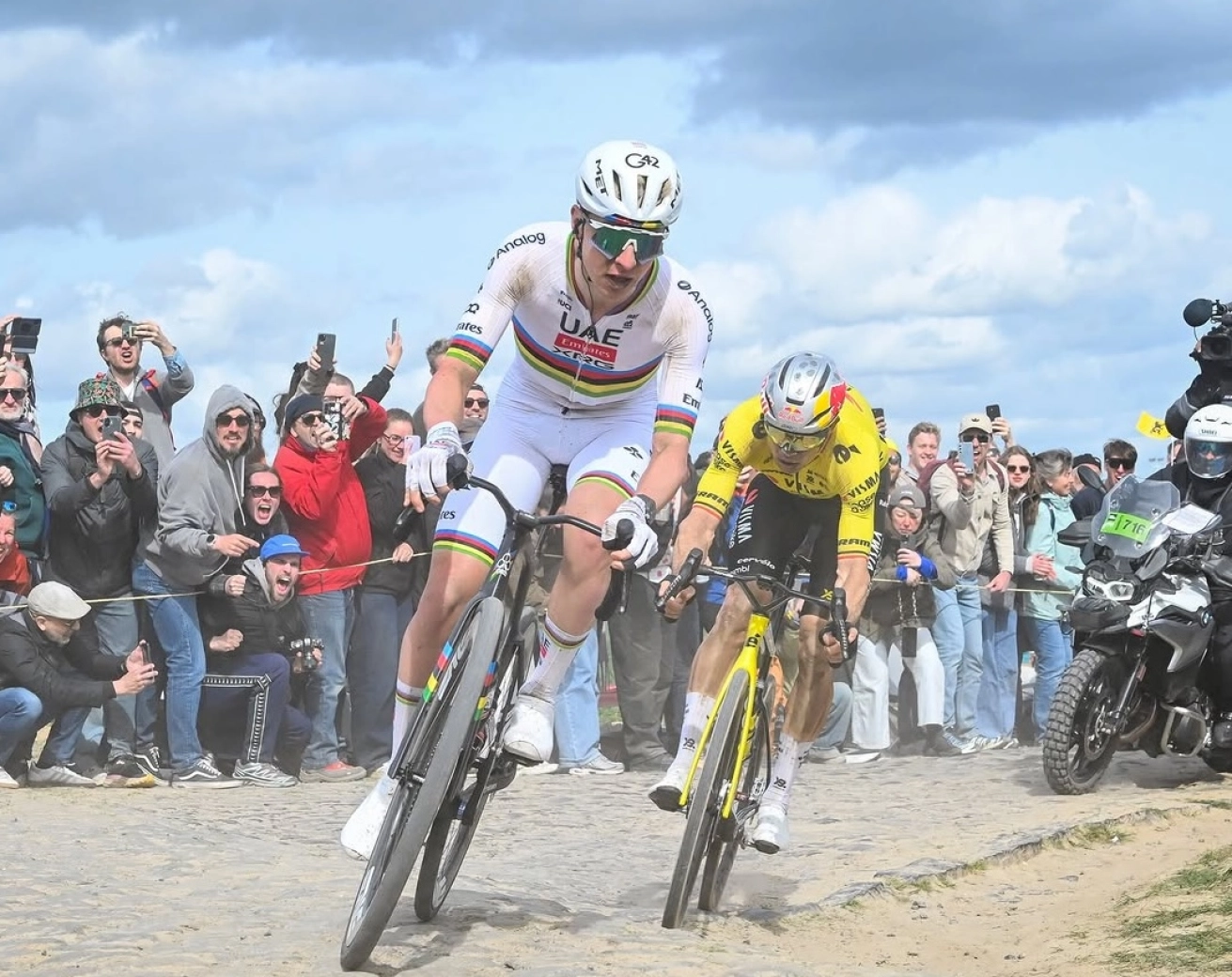
Van Aert completed the 258.3 kilometers in 5 hours, 16 minutes, and 52 seconds, resulting in a mean speed of 48.91 kilometers per hour. This is the new historical record for the event and clearly improves the previous best mark, set in 2024 by Mathieu van der Poel at 47.80 kilometers per hour. The difference exceeds one kilometer per hour, a staggering amount in a race of this distance, with 30 sectors of cobblestones and 54.8 kilometers on cobblestones.
The record began to be built from the start
The key was not only in the outcome but in how the race was run from Compiègne. The Paris-Roubaix 2026 started at a breakneck speed and for a good part of the first half of the race, there was no consolidated breakaway that allowed for a stabilized pace. Each attempt was neutralized almost immediately, turning the approach to the cobblestones into a continuous battle.
RECOMENDADO
This Zefal bell is a genius invention for MTB and gravel
Schwalbe reorganizes its entire MTB range and launches the new Romy to simplify tire selection
The radial technology of Schwalbe is consolidated with an expansion in models and sizes
The BH Coloma Team dominates the Superprestigio MTB Estella-Lizarra with victories from Teocchi and Cullell
New Shimano SAINT and DEORE XT flats, wider platforms and thinner profile
Understanding the RPE scale is key to training based on how you feel
This detail is fundamental to understanding the record. In a race like Roubaix, when there is no clear break and all teams want to be at the front before the chaos arrives, the peloton rolls with constant tension and no respite. That is exactly what happened. The group reached the first cobblestone sector with an average of around 53 kilometers per hour, an enormous figure for that point in the race.
The wind pushed, but Pogacar, Van der Poel, and Van Aert pushed harder
The favorable wind played a very important role. Both the 2026 and 2024 editions benefited from a strong tailwind for a good part of the route, which helps maintain extremely high speeds even when the race enters its wear phase.
But reducing the record solely to the weather would be an understatement. The way the race was run also decisively influenced the outcome. The tension to enter the break, the absence of a good split from afar, the pace set by the favorites, and the subsequent chases turned the race into a chain of maximum efforts.
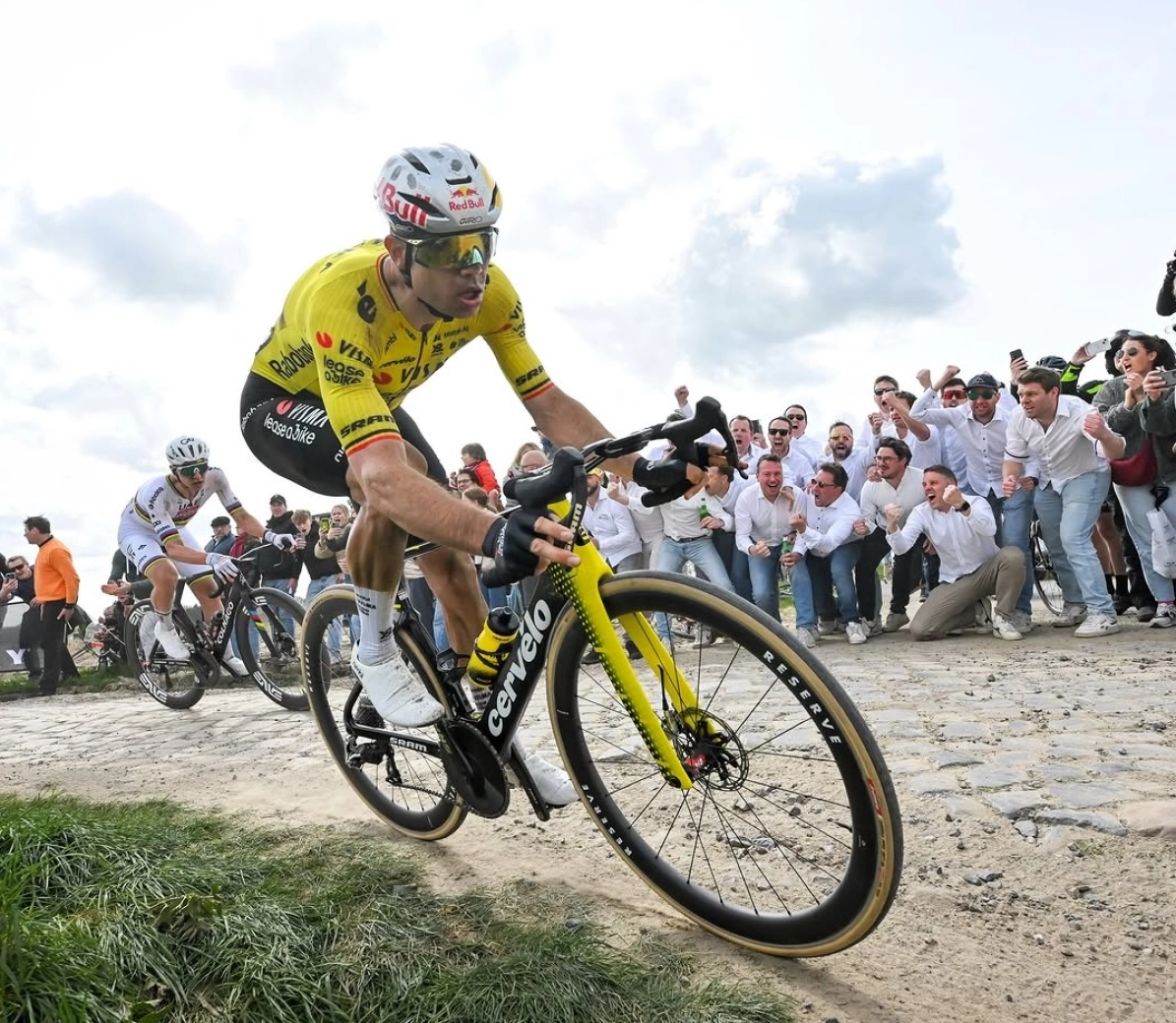
The race development helped to further increase the average speed. Pogacar suffered a flat tire and had to go through a very long chase before Arenberg to reconnect with the group of favorites. His sustained and intense effort prevented any moment of relaxation at the front.
Then came Van der Poel's disaster in the Arenberg Forest. The Dutchman was cut off by a double mechanical failure, but instead of sinking, he initiated a fierce comeback from behind. That chase forced the leaders to maintain a very high pace for many kilometers to avoid his return.
In other words, the record does not arise solely from a fast race due to external conditions. It also comes from a merciless race, with both major blocks forced to push themselves time and again.
There is another fact that adds even more depth to what happened. From Arenberg onwards, Van Aert was marking times in the key sectors very close to the best existing records on Strava, which is particularly striking because we are not talking about isolated attempts, but about times achieved in the middle of the race, after more than 150 kilometers of accumulated effort.

In the Trouée d’Arenberg, he recorded the best reference time. In Wallers à Hélèsmes, he was just 3 seconds off. In Hornaing à Wandignies-Hamage, he lost 1 second. In Warlaing à Brillon, he again fell short by 1 second. In Beuvry-la-Foret à Orchies, he lost 3 seconds. In Auchy-lez-Orchies à Bersée, where he also launched his attack, he was just 2 seconds off. In Pont-Thibault à Ennevelin, he equaled the best reference time again, and in Carrefour de l’Arbre, he lost only 1 second.
The only clear exception was Tilloy à Sars-et-Rosières, where he lost about 35 seconds due to a flat tire. That detail is also important because even in a record edition, incidents remained a central part of the script.
The record also speaks of the evolution of cycling
The speed of this Roubaix cannot be understood without looking beyond the wind and tactical development. The technology of bicycles continues to advance, and Roubaix has become, for years, the great showcase for brands to demonstrate how far they can go in efficiency, stability, and absorption.
In addition, there is the constant improvement in aerodynamics, not only in the frame or wheels but also in clothing, position, and every detail of the setup. These are small gains on paper, but in a race lasting more than five hours, they end up being cumulative.
Preparation has also completely changed. The level of training is higher, and above all, race nutrition allows for sustaining efforts that not long ago were impossible. Today, riders can absorb enormous amounts of carbohydrates per hour and maintain a very high intensity from the start to the velodrome.
A leap that places the 2026 edition in another dimension
The comparison with recent years makes the size of the leap very clear. The five fastest editions in history are now led by 2026 with 48.91 kilometers per hour, followed by 2024 with 47.80, 2025 with 46.92, 2023 with 46.84, and 2022 with 45.79.
This means that the Roubaix won by Van Aert was not only the fastest ever but also opened a very serious gap compared to the already very fast edition of Van der Poel in 2024. In such an extreme event, this represented a significant blow to the clock.
A Roubaix difficult to repeat
The Paris-Roubaix 2026 brought together too many exceptional factors at once. Favorable wind, absence of a stable break, wild fighting for positioning, chases from favorites, increasingly refined technology, and two riders like Van Aert and Pogacar pushing the race to the limit during the last 90 kilometers.
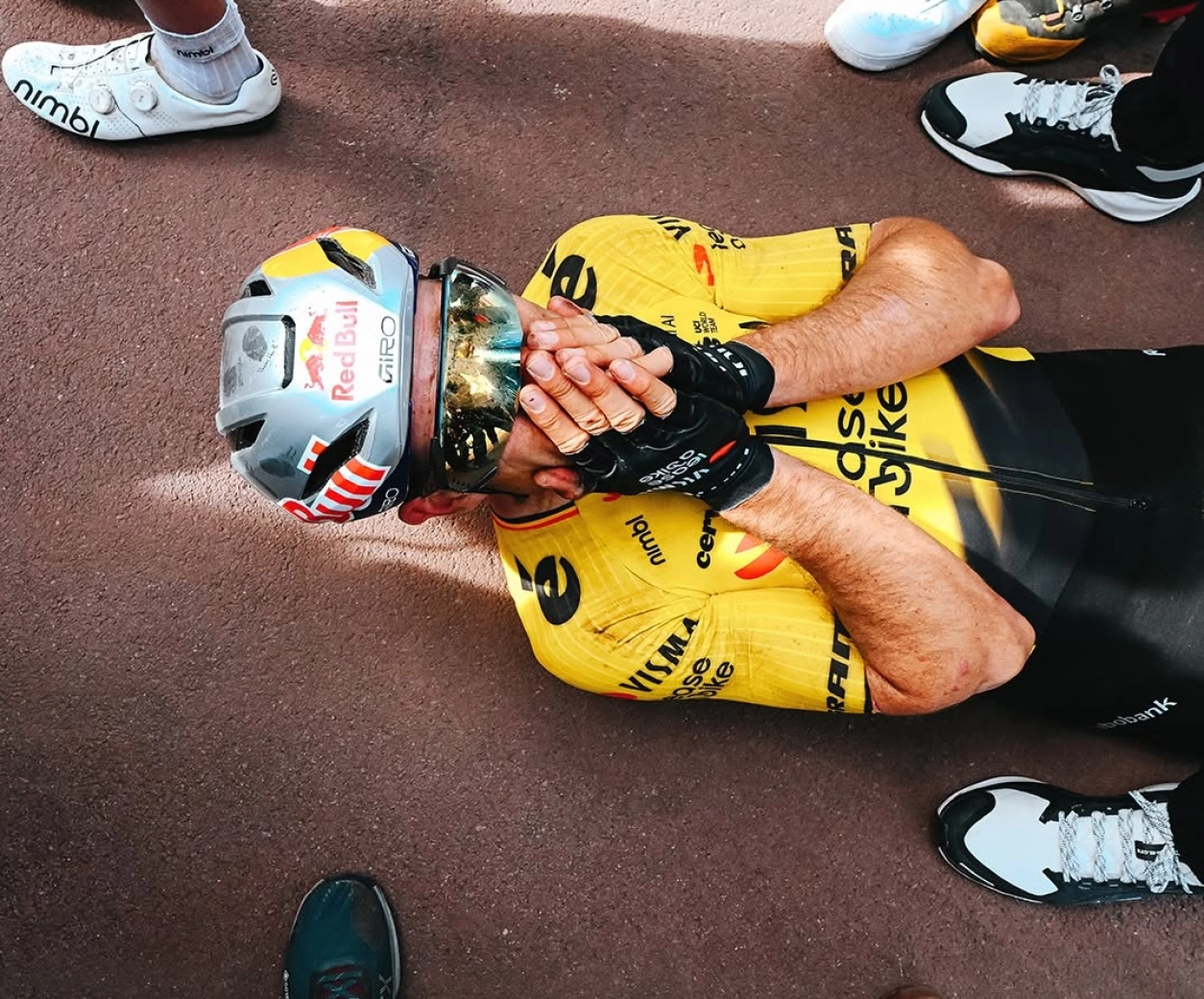
That is why the record is so valuable. It is not just a number. It is the direct consequence of a fiercely run, violent, and technically extraordinary edition. The Roubaix of 2026 not only crowned Wout van Aert. It also left a speed reference that better explains how wild this race was.
También puede interesarte
Mountain bike
This Zefal bell is a genius invention for MTB and gravel
Mountain bike
Schwalbe reorganizes its entire MTB range and launches the new Romy to simplify tire selection
Mountain bike
The radial technology of Schwalbe is consolidated with an expansion in models and sizes
Mountain bike
The BH Coloma Team dominates the Superprestigio MTB Estella-Lizarra with victories from Teocchi and Cullell
Mountain bike
New Shimano SAINT and DEORE XT flats, wider platforms and thinner profile
Training